




Scoliosis and Training: What Is Safe, and What Helps
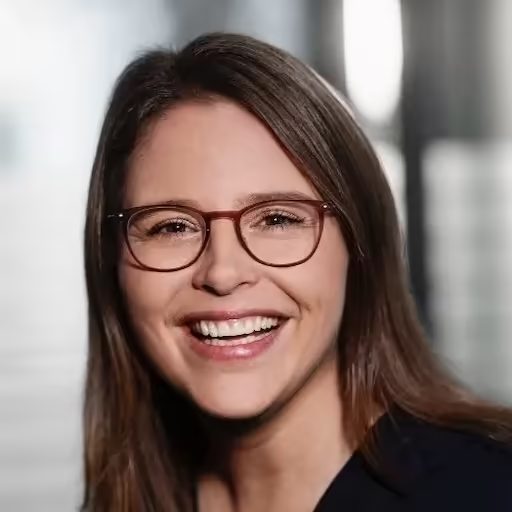
Kristine, 31, communications consultant from Nørrebro, was diagnosed with scoliosis at age 14. A lateral curve in the mid-back of moderate degree — approximately 29 degrees according to the most recent measurement. She was followed by a spinal surgeon throughout her teenage years but was never operated on, and at age 18 she was "discharged" from the system with a single sentence she never forgot: "You just need to be careful with your back."
She took that sentence with her through her entire adult life. She avoided heavy lifting. She said no to team sports. And when she in her late 20s started strength training at a gym, she tried three times to ask physiotherapists for advice. She received contradictory answers. One said she should avoid asymmetrical exercises. Another said she should avoid loaded rotations. A third said she should "be careful with heavy overhead lifting." None of them explained why.
In those 17 years, she had gradually felt weaker and weaker. She had back pain after a day at the desk. She had pain after a walk in the park. It wasn't the scoliosis she was feeling, but a body that hadn't been used.
She read our client stories and reached out with a specific question: "Can I even strength train with this back?"
The first thing we explained to Kristine was that her scoliosis is not an injury. It is a shape. The spine has a curve, and it has had that curve since she was very young. It has been stable for many years, and it is not a reason for her body to be spared. On the contrary: a muscularly stronger body around the curve is the best thing she can do for her back in the long term.
We started calmly. Basic movement patterns in our training machines with low load. We systematically increased the load over weeks and months. After three months, she had significantly less pain and had begun to have confidence in her own body's abilities. After six months, the pain was largely gone, and she was just focused on getting stronger. After a year, where she trained 1x per week with us, she was stronger than she had ever been — and had forgotten all about her scoliosis.
The scoliosis is still there, however. The Cobb angle has not changed, and it was also never the goal for it to change. But Kristine's back no longer hurts after a day at work. She has signed up for the obstacle race Nordic Race with a friend. And most importantly: she is no longer afraid of her own body.
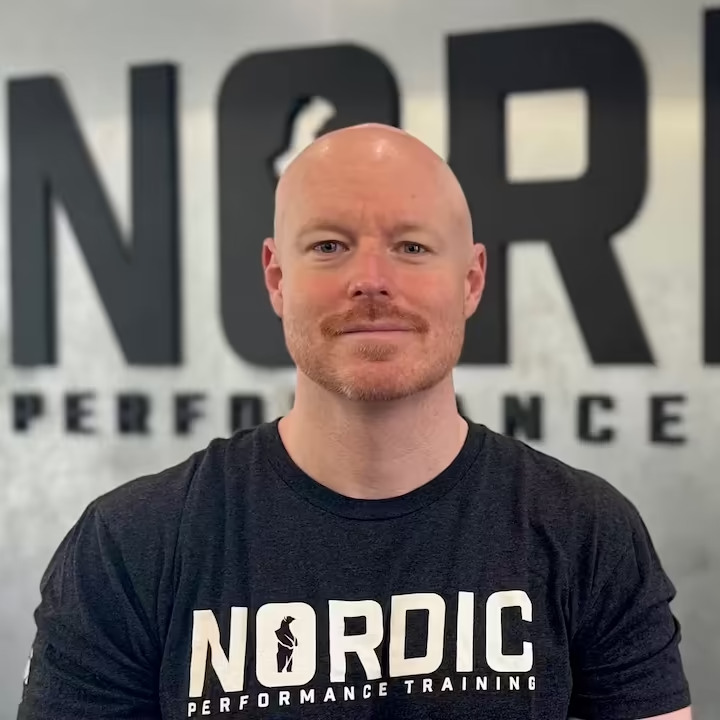
"We see it often. An adult with scoliosis who was told as a young teenager that she needs to 'be careful with her back,' and who has lived with that fear for 15, 20, 30 years without ever being explained what that actually means. Scoliosis is a shape, not a fragility. The spine can absolutely handle loading — it just needs the loading gradually. What we do is build a strong body around the curve that is already there. We don't straighten it, and that is not the goal either. The goal is a body that works — for life." — Mikkel Krause, personal trainer & physiotherapist
What is scoliosis?
Scoliosis is a lateral curvature of the spine, often with a slight rotation of the vertebrae. On a scan, it is seen as an S- or C-shaped arc, where the spine — viewed from the front — bends to one side or the other instead of being vertical.
The degree of scoliosis is described with a Cobb angle, which is the angle you can draw between the most tilted vertebrae at the top and bottom of the curve. Less than 10 degrees is not considered scoliosis. 10-25 degrees is mild. 25-40 degrees is moderate. Over 40 degrees is severe and typically requires medical follow-up.
Scoliosis affects approximately 2-3% of the population. In most adults, the curve became stable many years ago and causes no problems in daily life. In others, it causes mild back fatigue, tension or cosmetic concerns. Only a small proportion experience serious pain or functional impairment.
Types and degrees
Scoliosis can be categorized by cause and form:
Idiopathic scoliosis is by far the most common type. "Idiopathic" means "of unknown cause," and it typically develops during the teenage years during the growth spurt. The majority of adult scoliosis cases are idiopathic scoliosis that has been stable since the cessation of growth.
Functional scoliosis is a temporary curve, often as a result of muscle tension, leg length discrepancy or an acute injury. It is not a structural curve and disappears when the underlying cause is addressed.
Degenerative scoliosis develops later in life, typically after the age of 50, as a result of age-related changes in vertebrae and discs.
Neuromuscular scoliosis is seen with neurological or muscular diseases and is an entirely different clinical category.
The curve can be located at different places on the spine — thoracic (chest), lumbar (lower back) or thoracolumbar (the transition between chest and lower back). It can be C-shaped (a single curve) or S-shaped (two opposing curves that balance each other).
Symptoms of scoliosis
Many adults with scoliosis have no symptoms at all, and the curve is often discovered incidentally during a scan for another reason. When scoliosis causes symptoms, the typical ones are:
- Back fatigue after extended periods of standing or seated work
- Muscle tension on one side of the back
- Mild to moderate back pain, often in the lower back
- Cosmetic concerns — asymmetry in shoulders, hips or waist
- With more severe curves: limited range of motion or impact on breathing
Pain with scoliosis rarely comes from the curve itself. It typically comes from muscles that have become weak, meaning used too little, or overloaded — meaning used beyond capacity, or from a generally inactive lifestyle where the body has become less robust over the years.
Why do you get scoliosis?
For the majority of adults with scoliosis, the honest answer is: we don't know. The idiopathic form, which is by far the most common, has no clear cause. There is probably a hereditary component. But the precise mechanism is still not fully mapped.
It is worth emphasizing: scoliosis is not a result of "bad posture," heavy school bags or incorrect sitting position. That is a myth that has persisted for a long time, but it is not supported by research.
Can you train with scoliosis?
For the vast majority of adults with scoliosis, the answer is a clear yes.
Scoliosis is a shape — an anatomical variation, not an injury. A spine with a scoliosis curve tolerates loading in the same way as a spine without one. It just needs the loading gradually, with good technique and over time.
This is the most important point in the entire article, and it is the point that many adults with scoliosis are never properly explained: you are not fragile. A stable scoliosis curve that has been there since the teenage years does not get worse because you squat, deadlift or lift your child. There is no good evidence that strength training worsens scoliosis in adults — on the contrary, the research we have points to training generally improving pain, function and quality of life.
There are few situations where you should see a specialist first:
- If you are a teenager in growth with a newly diagnosed or worsening curve
- If your curve is documented as rapidly worsening (more than 5 degrees per year in adults)
- If you have serious, persistent pain that does not improve with structured strength training
- If the scoliosis affects your breathing or causes neurological symptoms (numbness, loss of strength, bladder/bowel problems)
If you are in doubt, talk to your doctor before starting a training program. But in the vast majority of cases, scoliosis is not a reason to stay away from strength training. It is a reason to get started.
What does the research say?
Here it is important to be precise, because there are two entirely different research areas that are often mixed together.
Scoliosis-specific training in teenagers. There are well-documented programs — Schroth, SEAS, PSSE (Physiotherapy Scoliosis-Specific Exercises) — that are developed for young people with idiopathic scoliosis during growth. These programs can reduce the Cobb angle and slow progression in teenagers where the spine is still growing. This is recognized in international guidelines such as SOSORT 2016 and confirmed in systematic reviews and meta-analyses.
Adult strength training with scoliosis. This is a different area. In adults, where the spine has been fully grown for many years, general strength training cannot straighten the structural curve. That is a mistaken promise that has been made in some places, but it is not evidence-based. On the other hand, there is good evidence that structured strength training in adults with scoliosis can:
- Reduce back pain
- Improve function in daily life
- Increase quality of life
- Build capacity in the muscles around the curve
What we offer at Nordic Performance Training is not Schroth or PSSE. We are not scoliosis specialists in that sense. What we offer is structured strength training for adults — including adults with scoliosis. And the research supports that approach.
How to train with scoliosis
We don't have a special "scoliosis protocol." We have a structured full body program with carefully selected exercises that we adapt to the individual client. For clients like Kristine, it is these fundamental principles and exercises that do by far the most of the work:
Basic exercises, not special exercises. We train the movements that build the general, functional strength the body needs. For the lower body, that is: a form of squat (Hack Squat, Pendulum Squat or Split Squat), a hamstring-focused exercise (Lying Leg Curl or Seated Leg Curl) and possibly a form of hinge movement (Romanian Deadlift or Glute Bridge). For the upper body, that is: a press exercise (Machine Chest Press, Dumbbell Chest Press or Dumbbell Shoulder Press) and a pull exercise (Cable Pulldown or Cable Row). No exotic "corrective exercises" — just good, classic strength training adjusted to the individual.
Progressive loading over time. Capacity is built by gradually asking the body to do more. We use the double progression method: you work your way up in repetitions with the same weight, and when you hit the top of the range, you increase the weight. It is the simplest and most sustainable way to build strength over time. You can read more about the double progression method here.
Unilateral work where it makes sense. Single-leg exercises like Split Squat and unilateral pulldown variants can be particularly valuable with scoliosis, because they build strength in each side of the body individually. This does not mean that bilateral exercises are bad — they are actually our first choice for back training in the program. But unilateral work provides the opportunity to address any strength differences between the right and left side, which many with scoliosis have, and can therefore be a valuable tool during the training program.
Exercise switching is not progression. This is a trap many fall into when they train "for" a condition. They constantly switch between new exercises in the belief that variation is the key. It is not. Variation without measurable progression is just movement. What builds a stronger body is sticking with the same exercises over many weeks and months, with gradually more load and technique improvements.
Classic basic exercises we use:
- Hack Squat, Pendulum Squat or Split Squat — for the lower body, with Hack Squat and Pendulum Squat as bilateral exercises or Split Squat as a unilateral exercise
- Leg Curl — for the hamstrings and posterior chain
- Glute Bridge — for direct glute strength
- Romanian Deadlift — for general posterior chain strength and as a confidence exercise
- Leg Extension — for direct quadriceps strength
- Machine Chest Press — for strengthening the muscles on the front of the upper body
- Cable Pulldown or Cable Row — for strengthening the muscles on the back of the upper body
- Dumbbell Lateral Raise — for shoulder strength, stability and general strength of the neck region
For most of our clients, a squat variant, a leg curl variant, a press variant and a pulldown variant is enough to create positive and lasting results, and we only add more exercises if it makes sense for the individual client.
Beginner
If you are new to strength training or have been afraid to use your body for a long time, we start carefully. Low load, high movement quality, focus on learning basic movement patterns without fear. The goal in this phase is not to become stronger, but to build confidence and belief in your body's abilities. This typically takes 6-12 weeks.
Lightly trained
When the basic movements feel safe, belief in the body's abilities has been built, and the client themselves feels ready to push, the systematic building of strength is intensified. We work in 6-8 repetitions relatively close to muscular exhaustion and increase the weight over time. This is where most clients experience the greatest improvements — both in strength and in confidence around the body. This typically takes an additional 6-12 weeks.
Advanced
For the experienced scoliosis client who has built a solid base, the training resembles any other advanced client's training: heavy, progressive, consistent strength training. There is no special ceiling for how strong you can become with scoliosis. There is no "safety limit" beyond the one any other body also has. This is often from month 6 and onward.
When should you see a doctor?
Most adults with scoliosis do not need medical follow-up, but some situations require evaluation:
- Rapidly worsening curve (more than 5 degrees per year in adults)
- Severe, persistent pain that does not improve with structured strength training over 6-12 weeks
- Impact on breathing
- Neurological symptoms: numbness, loss of strength, tingling or radiating pain down the legs
- Changes in bladder or bowel control (acute, should be evaluated immediately)
- Teenager in growth with newly diagnosed or worsening scoliosis (should be followed by a specialist)
If you are in doubt, contact your doctor.
Frequently asked questions about scoliosis
Can you train with scoliosis?
Yes. For the vast majority of adults with stable scoliosis, structured strength training is both safe and beneficial. Scoliosis is a shape, not a fragility, and there is no good evidence that strength training worsens the curve in adults. On the contrary, the research points to training being able to reduce pain, improve function and increase quality of life.
Can scoliosis be cured?
No, not in adults. The structural curve cannot be straightened with training or other conservative treatment when the spine has been fully grown for many years. The curve has typically been stable since the teenage years. What training can do is build a stronger body around the curve, reduce pain and improve function in daily life. The goal is not a straight spine — it is a well-functioning body.
What are symptoms of scoliosis?
Many adults with scoliosis have no symptoms at all, and the curve is often discovered incidentally during a scan. When scoliosis causes symptoms, the typical ones are: back fatigue after extended periods of standing or seated work, muscle tension on one side of the back, mild to moderate back pain (often in the lower back) and cosmetic asymmetries in shoulders, hips or waist.
Is scoliosis hereditary?
Partially. There is probably a hereditary component. But the precise mechanism is not fully understood. For the majority of adults with idiopathic scoliosis — by far the most common type — the underlying cause is unknown. Scoliosis is not a result of bad posture, heavy school bags or sitting position.
Is scoliosis a disability?
No, not for the vast majority. A stable scoliosis curve at a moderate level is an anatomical variation, not a functional impairment. Most adults with scoliosis live completely normal lives — including playing sports, strength training and working physically demanding jobs. Only with more severe curves that affect breathing or cause neurological symptoms does one clinically speak of actual functional impairment.
Is it dangerous to lift heavy weights with scoliosis?
No. Progressive strength training with good technique is safe for adults with scoliosis. There is no good evidence that heavy lifting worsens the curve. What can be negative is not heavy strength training in itself — it is heavy strength training without a good plan, without good technique or without gradual building. But that applies to all bodies, not just bodies with scoliosis.
Ready to train without fear?
If you have lived with scoliosis and a fear of using your body — perhaps for years, perhaps for decades — we understand. It is a fear that more often comes from what you have been told by others, and not necessarily from your body's actual abilities.
It is also a fear that typically disappears when you experience how strong your body can actually become, and how little it actually cares that the spine is not perfectly vertical.
The most important things are two. The first: That it is structured strength training with gradually increased loading — not isolated "corrective exercises." The second: That it is something you can stick with for the rest of your life, so your body continues to be strong around the curve that is there.
Book a free start-up conversation and hear how personal training in Copenhagen can look for you — either at our private training center or as a call, if that suits you better.
References
Alanazi, M. H., Parent, E. C., & Dennett, E. (2018). Effect of stabilization exercise on back pain, disability and quality of life in adults with scoliosis: A systematic review. European Journal of Physical and Rehabilitation Medicine, 54(5), 647-653. https://doi.org/10.23736/S1973-9087.17.05062-6
Fan, Y., Ren, Q., To, M. K. T., & Cheung, J. P. Y. (2020). Effectiveness of scoliosis-specific exercises for alleviating adolescent idiopathic scoliosis: A systematic review. BMC Musculoskeletal Disorders, 21(1), 495. https://doi.org/10.1186/s12891-020-03517-6
Negrini, S., Donzelli, S., Aulisa, A. G., Czaprowski, D., Schreiber, S., de Mauroy, J. C., Diers, H., Grivas, T. B., Knott, P., Kotwicki, T., Lebel, A., Marti, C., Maruyama, T., O'Brien, J., Price, N., Parent, E., Rigo, M., Romano, M., Stikeleather, L., Wynne, J., & Zaina, F. (2018). 2016 SOSORT guidelines: Orthopaedic and rehabilitation treatment of idiopathic scoliosis during growth. Scoliosis and Spinal Disorders, 13, 3. https://doi.org/10.1186/s13013-017-0145-8
Romano, M., Minozzi, S., Bettany-Saltikov, J., Zaina, F., Chockalingam, N., Kotwicki, T., Maier-Hennes, A., & Negrini, S. (2012). Exercises for adolescent idiopathic scoliosis. Cochrane Database of Systematic Reviews, (8), CD007837. https://doi.org/10.1002/14651858.CD007837.pub2
Table of Contents
Related Blog Posts


I have worked as a personal trainer and physiotherapist for many years, and I bring a calm, attentive approach to every session — taking the time to listen and understand the person I'm working with. I believe the best results come when training fits your life and your body, not the other way around.
My background in clinical practice gives me a solid foundation for working with people at any starting point — and I'm always mindful of when to push and when to hold back.
On this blog, I share the same methods and insights we use every day at Nordic — so you can train smarter, stay consistent, and achieve results that last.



Related Blog Posts
.svg)