







Pendulum Squat: Technique and Benefits
Pendulum squat is one of the most effective leg machines you've probably never tried before.
Anders, 33, works as an IT consultant and trained regularly when he came to us. He was strong — he could hack squat over 150 kg. But he had developed persistent pain in the middle of his back, between the shoulder blades, and the mobility in his upper back was reduced after years at a desk. Heavy squats with weight on the shoulders provoked the pain directly.
He didn't want to stop training. He wanted help to continue — just in a way that didn't constantly provoke what was already hurting.
The solution was simple: we swapped hack squat for pendulum squat. Same movement pattern, same muscle groups — but with significantly lower axial loading on the spine. Anders could still train his legs hard and systematically, and we worked simultaneously on mobility and strength in his upper back and shoulders. Already after 3 weeks, the pain began to subside.
"One of the most important things we can do for a client is to find a way around what hurts — not ignore it, but not stop training either. It requires knowing enough about technique and exercise selection to make the right decision there and then, and being able to explain it in a way the client understands why. Pendulum squat was the simple change that made a huge difference for Anders." — Kasper, physiotherapist at Nordic Performance Training
What is pendulum squat?
Pendulum squat is a machine-based squat variation where the body moves in a curved path — like a pendulum. Unlike hack squat, which runs in a linear 45-degree path, pendulum squat follows a circular movement path guided by the machine's arm.
One of the practical advantages of pendulum squat is that you lift significantly less total weight to achieve the same leg stimulus as in a squat. If you can for example hack squat 150 kg, you'll typically be able to take around 50 kg on pendulum — and it's not easier. This means the axial loading on the spine is significantly lower, which makes pendulum squat an obvious choice for clients with back problems, reduced thoracic mobility, or shoulder issues.
Pendulum squat primarily trains the quadriceps — the front of the thigh. The curved path and the deep position provide powerful stimulus to vastus lateralis, vastus medialis, and vastus intermedius over a large range of motion. Rectus femoris — the part of the quadriceps that crosses the hip joint — is activated to a lesser degree as the hip is flexed throughout the movement. Additionally, gluteus maximus and adductor magnus are activated, particularly at the bottom of the movement. The hamstrings are activated to a lesser degree, and the calf muscles work hard isometrically.
Pendulum squat vs. hack squat
Both exercises are part of our training system and in practice solve the same task — effective and progressive training of the squat pattern in an environment that's easy to execute in practice. But they're not the same.
Hack squat runs in a fixed linear 45-degree path. It's the squat isolation exercise that most resembles a traditional squat and the exercise most clients start out with.
Pendulum squat runs in a curved path and places slightly different demands on knee and hip mobility. The upright torso and the deep position feel natural for many — and as mentioned, it requires significantly less total weight to provide the same leg stimulus. This makes it particularly relevant when hack squat for one reason or another isn't the right choice — or you need a bit of variation.
At Nordic Performance Training, we use both hack squat and pendulum squat — the latter especially in cases like Anders's, where axial loading on the spine needs to be minimised, or where the client for other reasons can't or shouldn't load the shoulders and back heavily. For some clients, we switch variant from one program to the next.
Read more about hack squat in our hack squat guide and about squat as a movement pattern in our squat guide.
Technique: How to do pendulum squat correctly
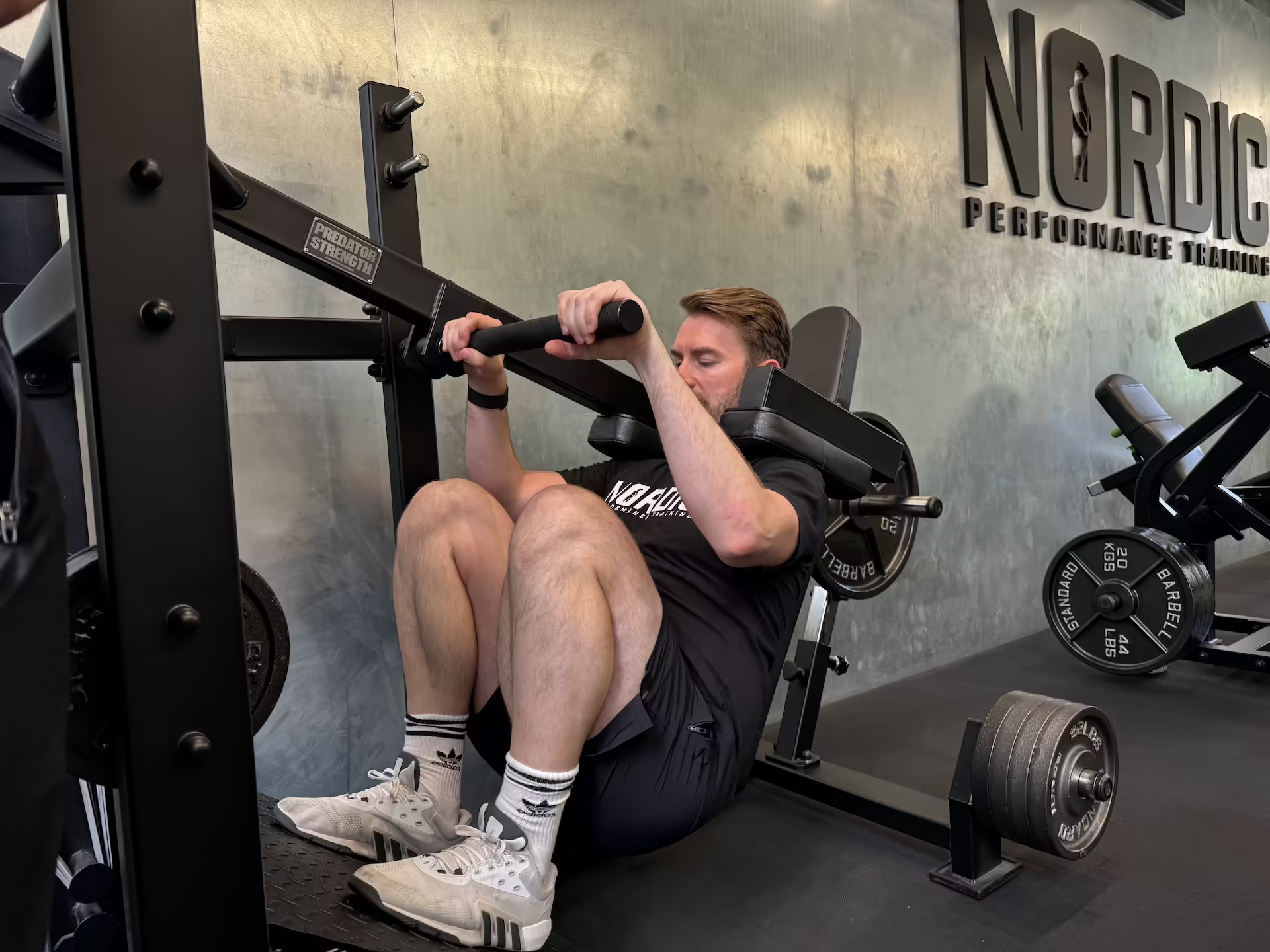
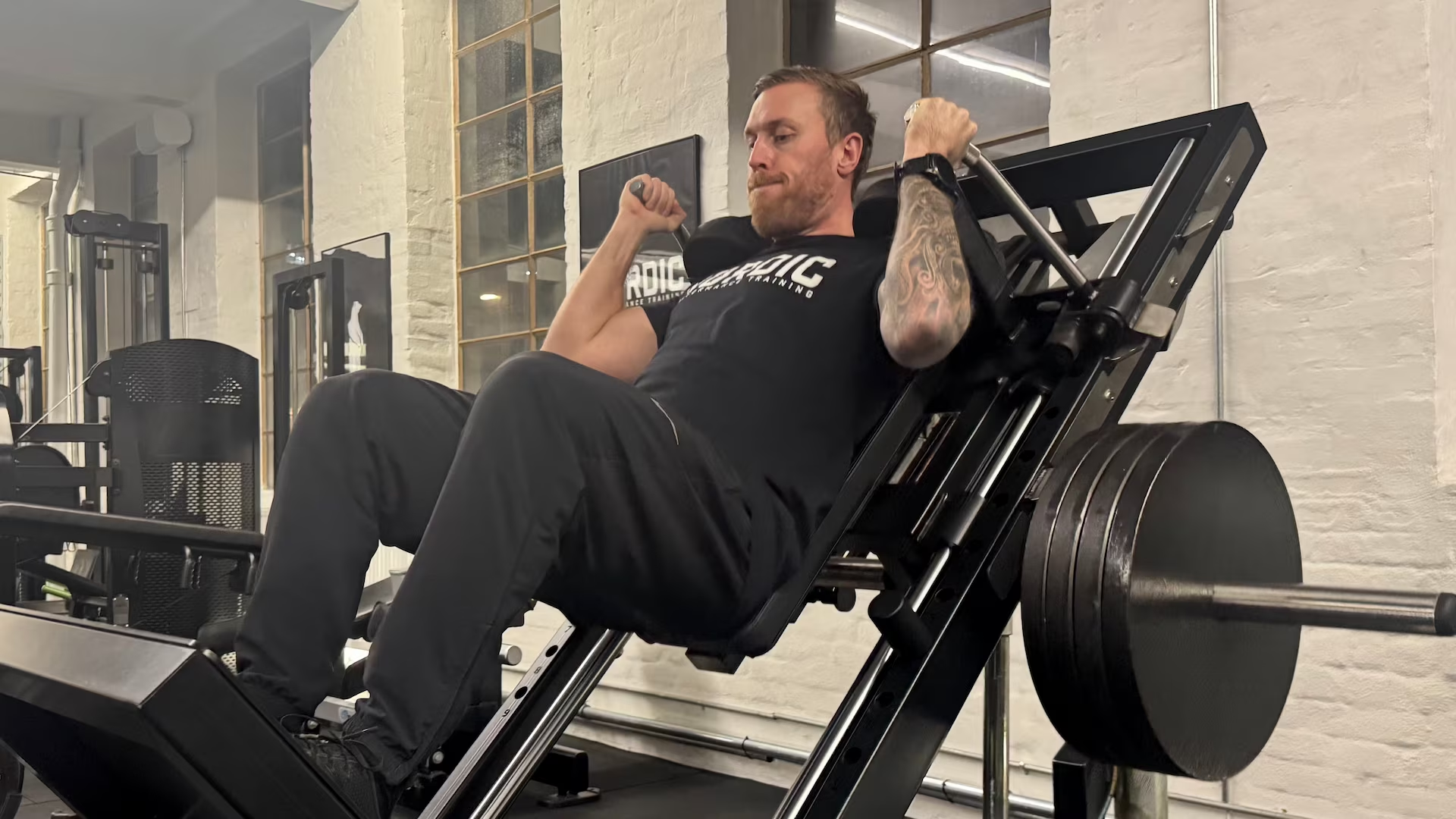
Setup: Place the shoulders solidly against the pads, the back of the pelvis in contact with the back rest, feet placed on the foot plate. Foot width and angle are adjusted individually — start with shoulder width and toes pointing slightly outward. Grip the handle in front of you and push your torso backward into the back rest.
Execution: Lower yourself in a controlled manner into a deep position — strive for the hamstrings to come in contact with the calves. Keep the heels in contact with the plate the entire way. At the bottom: a controlled deceleration before you press in a controlled manner upward — avoid bouncing up. Extend the knees almost fully at the top.
Tempo: Lower yourself in a controlled manner in 3 seconds, press in a controlled manner upward. You should control the weight throughout the entire movement and not let the weight control you.
Once you've found the right starting point, pendulum squat can almost always be done to full depth — that's one of the exercise's great advantages. The curved path and the machine's geometry make it natural to get deep without the heels lifting or the back rounding.
The most common mistakes
Heels lift at the bottom or the hip leaves the back rest. The most frequent mistake. The heels lift from the plate or the lower back leaves the back rest at the bottom — typically because the feet are placed too high or too low on the foot plate respectively. Adjust foot placement so you can reach full knee flexion with the heels on the plate while simultaneously maintaining contact with the back rest.
Too heavy too early. Pendulum squat requires control over a large range of motion. With too heavy weight, the technique breaks down and makes the exercise unnecessarily challenging for the body. Start light and build up gradually — remember that 50 kg on pendulum corresponds to far more on hack squat. Training is about always training heavy enough, not as heavy as possible.
Bounce at the bottom. Often connected to using too heavy weight and using momentum at the bottom to get back up instead of braking in a controlled manner and then pressing up again. Additionally, many haven't learned what it means to lower a weight in a controlled manner, so it's always a primary focus at the start of a program. Always brake in a controlled manner at the bottom — it reduces the risk of discomfort in the knees and we can more easily standardise the technique and measure real progress, rather than merely cheating the weight up.
Not full range of motion. Many stop too early and don't get down to full depth. This reduces the muscle stimulus markedly and is often a sign that the weight is too heavy or the setup doesn't suit your body. Full depth is one of pendulum squat's primary advantages — utilise it.
Frequently Asked Questions About Pendulum Squat
What's the difference between pendulum squat and hack squat?
Hack squat runs in a linear 45-degree path. Pendulum squat runs in a curved path and requires significantly less total weight to provide the same leg stimulus. This makes pendulum squat particularly relevant for clients who can't or shouldn't load the spine heavily — e.g. with back problems, reduced thoracic mobility, or shoulder issues.
Which muscles does pendulum squat train?
Pendulum squat primarily trains vastus lateralis, vastus medialis, and vastus intermedius — the three parts of the quadriceps that don't cross the hip joint. Rectus femoris is activated to a lesser degree as the hip is flexed throughout the movement. Gluteus maximus and adductor magnus are activated particularly at the bottom. The hamstrings are activated to a lesser degree and the calf muscles work hard isometrically.
Is pendulum squat better than back squat?
For most of our clients, machine-based squat — either hack squat or pendulum squat — is a better starting point than back squat. Back squat is very demanding from a learning and technical perspective. Pendulum squat provides a comparable leg stimulus without these demands and is easier to standardise and increase weight systematically. It's not about back squat being bad — but about choosing the tool that gives the best result in the most practical way. Our clients want to train hard and see progress — not spend months learning a technique before they can challenge the muscles for real. Read more in our squat guide.
Want to train with us?
We have the machines, the expertise, and the concept to keep you going — regardless of which part of the body happens to be bothering you. If you want to train effectively and see real progress, we're ready to help you.
Book a free start-up conversation and hear how personal training in Copenhagen can look for you — either in our private gym or as a call, if that suits you better.
References
Haugen, M. E., Vårvik, F. T., Larsen, S., Haugen, A. S., van den Tillaar, R., & Bjørnsen, T. (2023). Effect of free-weight vs. machine-based strength training on maximal strength, hypertrophy and jump performance — a systematic review and meta-analysis. BMC Sports Science, Medicine and Rehabilitation, 15(1), 103. https://doi.org/10.1186/s13102-023-00713-4
Hernández-Belmonte, A., Martínez-Cava, A., Buendía-Romero, Á., Franco-López, F., & Pallarés, J. G. (2023). Free-weight and machine-based training are equally effective on strength and hypertrophy: Challenging a traditional myth. Medicine & Science in Sports & Exercise, 55(12), 2316–2327. https://doi.org/10.1249/MSS.0000000000003271
Table of Contents
Related Blog Posts

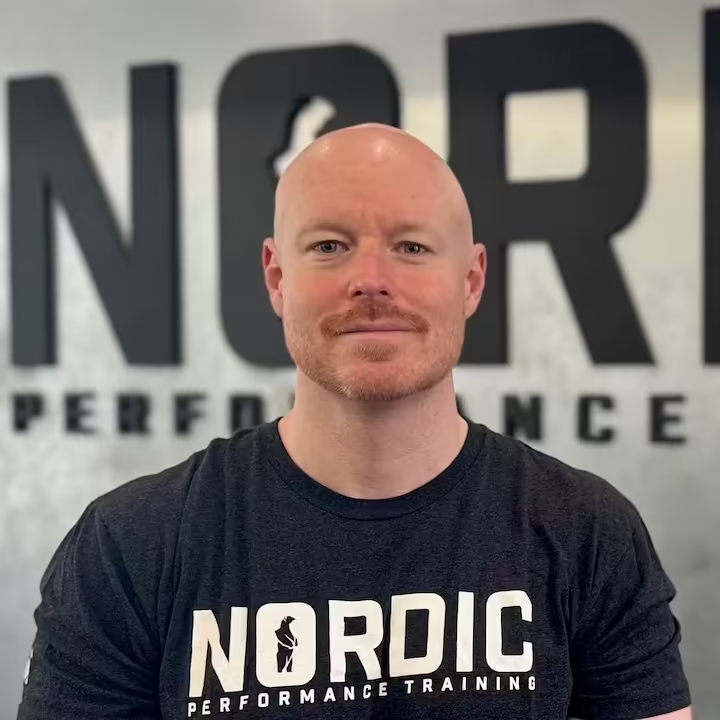
I’ve worked as a personal trainer for over 12 years and as a physiotherapist for over 10 years — and co-founded Nordic Performance Training with Lucas 8 years ago to give clients a professional and structured way to train. Since then, I’ve helped hundreds of people build strength, stay consistent, and feel better through evidence-based methods that actually work.
Along the way, I’ve completed advanced certifications and mentored under leading experts in various fields, and I’ve taught many trainers and physiotherapists internationally.
On this blog, I share the same practical tools, insights, and strategies we use every day at Nordic — so you can train smarter, stay consistent, and get real results.



Related Blog Posts
.svg)