







Every transformation here is real — written by the client’s own coach.
These stories show how structured, consistent strength training works across different goals, ages, and starting points.
Each story shows a real process — what the client struggled with, how we structured the training, and the results that followed.
Anders, 32: From Partially Paralyzed to 6km Runs and Stronger
Anders was sitting on a chair in the hallway of his apartment, about to take his shoes off. He had broken a rib at jiujitsu the day before, he knew something had gone wrong, but not how wrong. Suddenly the pain became so intense that he fainted. He fell off the chair. And broke his neck.
When the ambulance arrived, he was paralyzed from the chest down. His life changed instantly.
What followed was months at highly specialized hospitals in Denmark and Montebello in Spain. Long, hard rehabilitation. From completely paralyzed to being able to move his arms a little. From immobile to slowly being able to walk again.
Anders came a long way. But after months of intensive rehabilitation, he reached a point where the progress stalled. He could walk approximately 400 meters. His legs worked, but with reduced strength and endurance. He had constant neck pain during everyday activities. And knee pain plagued him every time he tried to load his legs more.
"I honestly thought I had reached the ceiling for what my body could do," Anders said. "I felt like a patient — like a person who was injured and sick, and where special considerations would always be necessary."
After 6 months of structured strength training three times a week, Anders is not only pain-free in everyday life. He runs 6 kilometers. He strength trains without limitations. And most importantly: He no longer considers himself a patient.
Here is how a 32-year-old soldier discovered that even after a spinal cord injury, the body can get stronger — when it is treated as robust, not fragile.
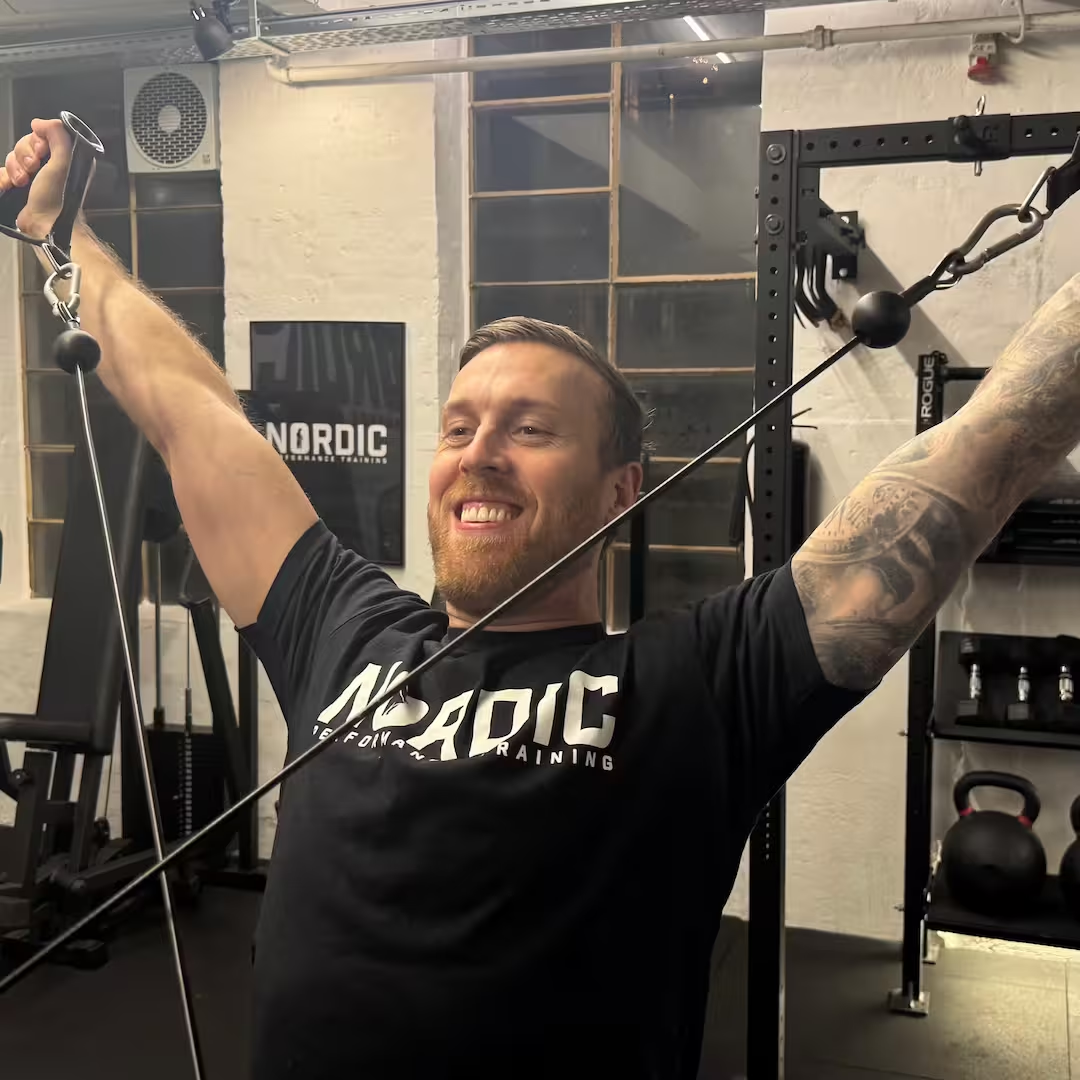
When the Body Becomes Your Limitation
After months of rehabilitation, Anders had reached a point where the progress stopped. He could walk. He could use his arms again. But his strength was reduced. His endurance was minimal. And the pain was constant.
"After my course in the public system, I experienced that I had stagnated, and my development had come to a standstill," Anders said. "I had come a long way from being paralyzed in the beginning. But I felt that I had hit a ceiling for how far I could go."
Worse than the physical limitations was the mental frame that the rehabilitation had created.
"I was put in a 'patient box' and began to live within its boundaries myself," Anders said. "Everywhere I was treated as fragile. 'Be careful.' 'Take it easy.' 'You need to be cautious.' I began to believe that my body was so broken that I would always need to be careful."
The fear became his reality. Fear of making it worse. Fear of becoming paralyzed again. Fear that the body couldn't handle more.
"I was afraid that more training would just cause more pain," Anders continued. "I felt fragile and was afraid of setbacks."
From Patient to Person
When Anders came to us for personal training, the first step was not to design a rehabilitation program. It was to change the frame.
"What made the biggest difference was that the trainers didn't treat me as a fragile patient," Anders said. "Their way of meeting me created a sense of safety and gave me a feeling that I was still capable of more than I had believed."
We treated Anders as a person who was training — not a patient who was rehabilitating. The difference is fundamental.
- Patient approach: "You are injured. We need to be careful. Cautious progression. Avoid loading. Focus on what you can't do."
- Training approach: "You are training now. We build strength systematically. We respect limitations but don't let them take over. Focus on what you can do — and how we expand it."
"The environment and the positive, safety-creating communication from the trainers meant that I was no longer put in a 'patient' box," Anders explained. "Their approach to training showed me that I could do much more than I thought."
This mindset shift was crucial. It changed Anders' relationship with his own body.
"For me, it made a big difference that the trainers didn't treat me as a fragile patient. Their way of meeting me created a sense of safety and gave me a feeling that I was still capable of more than I had believed. It changed my perception of my injury and gave me greater confidence in my body." — Anders
Structured Progression, Not Cautious Rehabilitation
With the frame changed, we designed a structured strength training program.
"We took the complexity into account — but didn't become paralyzed by it," I explained. "Anders had a neurological injury, complex pain, and limitations. But that didn't mean he should be wrapped in cotton wool."
The exercises Anders trained:
- Machine Chest Press
- Cable Pulldown
- Hack Squat
- Lying Leg Curl
- Leg Extension
- Glute Bridge
- Cable Y-Raise
- Running training
Three sessions per week. Same exercises. Gradually heavier weights. Systematic progression.
"The most important principle was: Not to wrap Anders in cotton wool — but to listen, assess, and guide with professional calm," I continued. "We respected his limitations. But we didn't let them take over the entire training."
Pain was not overprotected. It was assessed, adjusted, and worked with systematically.
"Some weeks I had more pain in the knee," Anders said. "But instead of stopping completely, we adjusted the load. And then we continued. That taught me that pain doesn't always mean injury and that you should stop completely."
The breakthrough came gradually.
"It changed when I started experiencing progress week after week — without pain," Anders said. "Suddenly I was lifting heavier. Running longer. The function in my legs improved. And I realized: My body is not broken. It can actually get stronger."
Anders' Transformation
After 6 months of structured strength training three times per week:
Strength gains:
- Machine Chest Press: 60 kg → 92.5 kg (+54%)
- Cable Pulldown: 60 kg → 92 kg (+53%)
- Hack Squat: 50 kg → 82.5 kg (+65%)
- Seated Leg Curl: 40 kg → 72 kg (+80%)
- Glute Bridge: 20 kg → 125 kg (+525%)
- Cable Y-Raise: 6 kg → 18 kg (+200%)
Functional capacity:
- From approx. 400 meters of pain-affected walking to 6 kilometers of running in under 30 minutes
- Significantly improved leg function
- Experiences weekly progression
Pain-free:
- Strength trains without pain in knees and neck
- Everyday activities that were previously limited by pain can now be completed without problems
Mental transformation:
- Increased sense of safety, courage, and self-confidence
- No longer considers himself a patient
- From "My body is damaged" to "My body can do more than I thought"
Identity shift:
- From "I am a patient and need to be careful" to "I am a person who trains"
- From fragile to robust
- From fear of setbacks to trust in progression
"I no longer consider myself fragile and injured, but as someone who has been in an accident, and who still hasn't reached his ceiling." — Anders
What Can Others Learn From Anders' Story?
Anders' transformation proves something fundamental: Even very complex injuries don't always set a fixed ceiling for function and strength.
"What I have learned is how much structured training and the right approach matter," Anders reflected. "I thought I had reached my ceiling. But I hadn't. I just needed the right approach."
Three crucial principles made the difference:
1. Treat the body as robust, not fragile "The patient approach taught me to be careful," Anders said. "The training approach taught me to be brave — but smart."
2. Structure and continuity beat cautious waiting "Systematic progression week after week created results that months of cautious rehabilitation didn't," Anders continued.
3. Mental frame affects physical capacity "When I stopped seeing myself as a patient, it opened possibilities I didn't think existed," Anders said.

Ready to Discover What Your Body Can Still Do?
Anders broke his neck and was partially paralyzed from the chest down. 6 months of structured strength training later, he runs 6 kilometers and is stronger than ever.
If you have been through injury, rehabilitation, or stagnation, and believe you have reached your ceiling — maybe you just need a different approach.
Book a free start-up conversation at our private gym in Copenhagen, and experience how structured strength training — with professional calm and the right frame — can create progress where cautious waiting creates stagnation.
Because even after serious injury, the body can get stronger. It just takes structure, continuity, professional calm — and the will to dare to keep developing.
Important: Anders' situation is unique. Any rehabilitation after neurological injury requires professional assessment. This story represents one person's experience under healthcare professional guidance.
Table of Contents
Other Client Stories


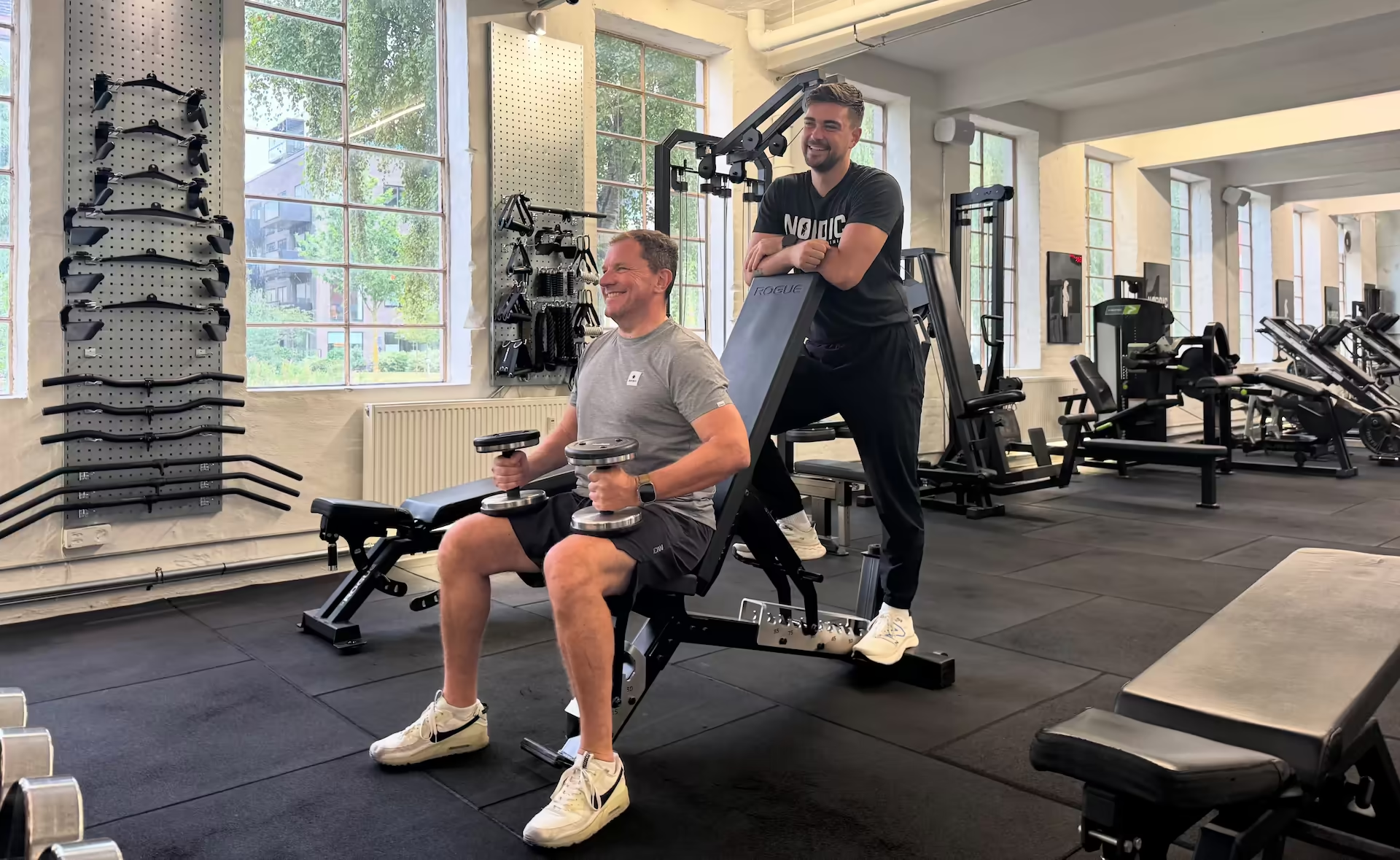
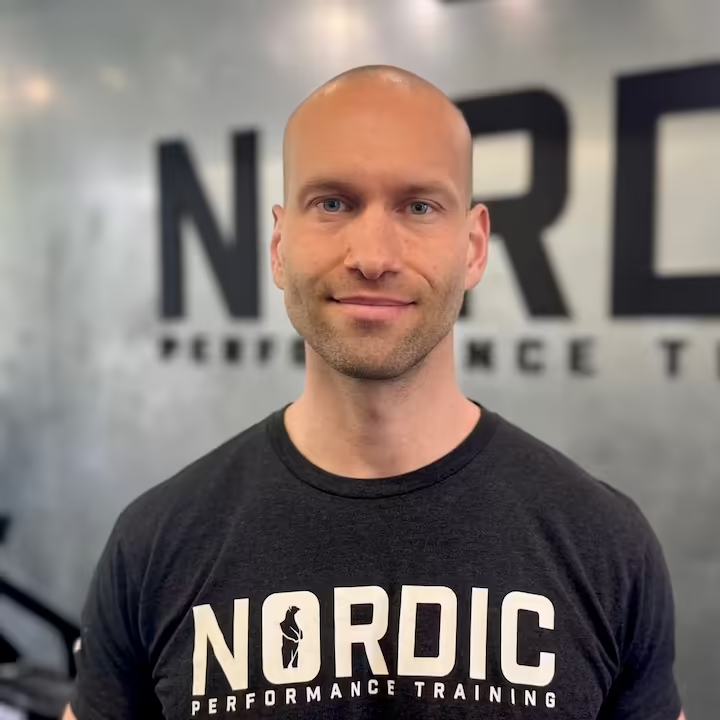
I’ve worked as a personal trainer for over 14 years and as a physiotherapist for 8 years — and co-founded Nordic Performance Training with Kasper to give clients a professional, private, and structured training environment where results actually last. In that time, I’ve overseen more than 50,000 sessions and helped thousands of clients rebuild after injuries, gain strength, improve their health, and stay consistent.
My approach combines practical experience with evidence from the latest research, making training both effective and realistic.
On this page, I share real client stories — so you can see what structured, consistent training looks like in practice.


Other Client Stories


.svg)