






Squat: Complete Guide to Technique and Variations
Squat is one of the body's most fundamental movement patterns. You do it every time you sit down and stand back up — from a chair, from the floor, from a car. It's not an exercise reserved for athletes or fitness enthusiasts. It's a basic movement pattern you use in everyday life.
As a strength exercise, squat is one of the most effective ways to build strength, muscle mass, and bone density in the lower body. Whether the goal is to become stronger for a sport, prevent osteoporosis, improve balance and functional capacity with age — or simply to get in better shape and feel better in your own body — a squat variant is almost always part of the programme.
The big question is not whether you should squat. You should. But how you do it technically — and which variant suits you best.
This guide explains precisely what a squat is, which muscles it trains, and how you find the variant that gives you the best results. We cover technique, the most common mistakes, all relevant variations — and explain why we at Nordic Performance Training always choose either one of our machine-based squat variations or a split squat, instead of the traditional back squat with barbell.
What is a squat?
Squat — or knæbøjning as it's called in Danish — is a compound exercise that involves the hip, knee, and ankle at the same time. In its basic form, you lower the body by bending all three joints and then press yourself back up to the starting position.
This makes squat one of the exercises that activates the most muscle mass at the same time. The primary muscles are the quads (quadriceps), the glutes (gluteus maximus), and the large inner thigh muscle (adductor magnus). Secondarily, the deepest calf muscle as well as the core musculature and back muscles work stabilisingly — particularly in free weight variants like back squat or front squat, where there are greater demands on maintaining the upper body's position under load.
Which muscles work the most depends on the variant and the way it's performed. A deeper squat with more knee flexion and a relatively upright torso position involves the quads more. A squat with more hip flexion activates the glutes and inner thighs more, the latter especially with a wider foot stance. The ground rule is that the joint that bends first — and most — is loaded more, and that the muscles that create movement over the joint where the weight is furthest from the joint's axis of rotation work the hardest. Precisely as in all other exercises.
Squat is also one of the exercises with the most direct transfer to everyday life and sport. Standing up from a chair, carrying heavy things, landing from a jump — all these movements use the squat pattern.
That's one of the reasons squat is included in almost all strength training programmes, regardless of goal and level. Read more about how squat fits into a complete programme in our Full Body program guide.
Squat is furthermore one of the most accessible strength exercises that exists. You can do it anywhere — without equipment, at home, on a trip. With body weight, you get a good starting point for learning the movement, and you can hold on to e.g. a door frame if you need support and don't yet have the strength to perform a full squat with body weight. With a kettlebell, dumbbell, or barbell, you can increase the load. And with the right machine, you can optimise both load, practicality, and the possibility for constant systematic progress in weight — and get the maximum out of the exercise. It's the same basic movement, just with different conditions.
Squat technique: How to do a correct squat
Squat technique is not one universal set of rules. It's principles that are adapted to your body type, your goal, and your mobility. The most important thing is not just that the squat should look a certain way — it's that the movement feels controlled and stable, and that the body is loaded appropriately.
Foot stance
Start with the feet at shoulder-width distance with the toes pointing slightly outward — typically 15-30 degrees. That's the starting point for most people. But body type plays a big role: the width of your hips, the length of your femurs, and your ankle mobility all determine what the natural foot stance is for you.
A moderately wide stance gives more room for the hips and makes it easier to go deep without the lower back rounding. A narrower stance places greater demands on ankle mobility. There is no universal answer — find the one that gives a controlled and natural movement for you.
Downward movement
Start the movement by approximately simultaneously pushing the hips backward and the knees forward. We recommend starting with a slight bend in the hip, then both joints bend simultaneously all the way down. This activates the glutes and the other hip extensors early in the movement, so the pelvis is stabilised and the knee extensors have a good, solid base to generate force from.
The knees follow the direction of the toes throughout the entire descent. The myth that "knees over toes is dangerous" is precisely a myth — research shows that knees moving forward over the toes is completely normal and necessary for a deep squat. What matters more is that they are actively guided in the direction of the toes.
The upper body naturally leans slightly forward and the chest points more or less toward the floor during the descent as the hip flexes. The degree of forward lean depends on your body type — long femurs require more forward lean to keep the weight over the midfoot.
Depth — how far should you go down?
It's one of the most asked questions about squat. And the answer is: as deep as your mobility allows with good technique — not deeper.
"Ass to grass" is not necessary for everyone. Reaching the point where the thighs are parallel with the floor is a good goal for most people. But if your lower back begins to round markedly before you reach parallel, that's a sign that your ankle mobility or hip mobility is limiting you — or that you technically don't manage to distinguish the movement in the hip from the movement in the lower back. In that case, it's better to stop slightly above parallel with good technique than to go deeper with a rounded back. And together with a trainer, practise your technique.
Upward phase and breathing
Press through the entire foot on the way up — not just the heel or the forefoot. Imagine pressing the floor away from you. This activates the entire lower body effectively and keeps the weight stable.
Take a deep breath before you lower yourself and brace in your core — as if you're preparing for a punch in the stomach. Hold the tension throughout the entire descent. Breathe out calmly on the way toward the top.
The most common mistakes
Knees fall inward uncontrollably. One of the most discussed technical mistakes in squat. Uncontrolled inward movement of the knees (knee valgus) is in some research associated with pain — but it's not always a problem. It is, however, typically worth working on, as we, like in all other exercises, want a controlled and standardised execution. The knees should roughly follow the direction of the toes — actively think about bending them in the direction of the toes during the downward phase. If you can't manage this, you can simply reduce the weight and focus on the knees tracking correctly and build systematically in weight and repetitions from there. Read more in our guide to knee exercises.
The heels lift. A sign of limited ankle mobility or strength. A temporary solution can be to place something under the heels while squatting and/or have it as a focus point to keep the heels on the floor throughout the entire movement.
The lower back rounds at the bottom (butt wink). Typically happens when you go deeper than your mobility allows. Stop the descent before the lower back begins to round markedly. It's not dangerous in itself, but it reduces control and makes it harder to standardise, measure real progress, and presumably train the muscles you want as effectively as possible. It can often be solved by finding the right setup for your body type and actively focusing on bending at the hip and knees in the downward part of the movement — and guiding yourself down into the correct bottom position, rather than merely "resisting."
Too much forward lean. When the upper body tips too far forward, the back takes over too much of the work. It's typically a sign that the weight is too heavy, that ankle mobility is limited, that the foot stance doesn't suit the body type, or that the technique hasn't been learned yet. Reduce the weight slightly and experiment with a different setup or get technical advice from a trainer.
Too heavy too early. The technique crumbles and you begin to compensate in ways that make it difficult to standardise and measure real progress. Increase weight systematically — not because you feel like lifting more, but because you've actually gotten stronger. Read more about how to increase weight correctly with our guide to double progression.
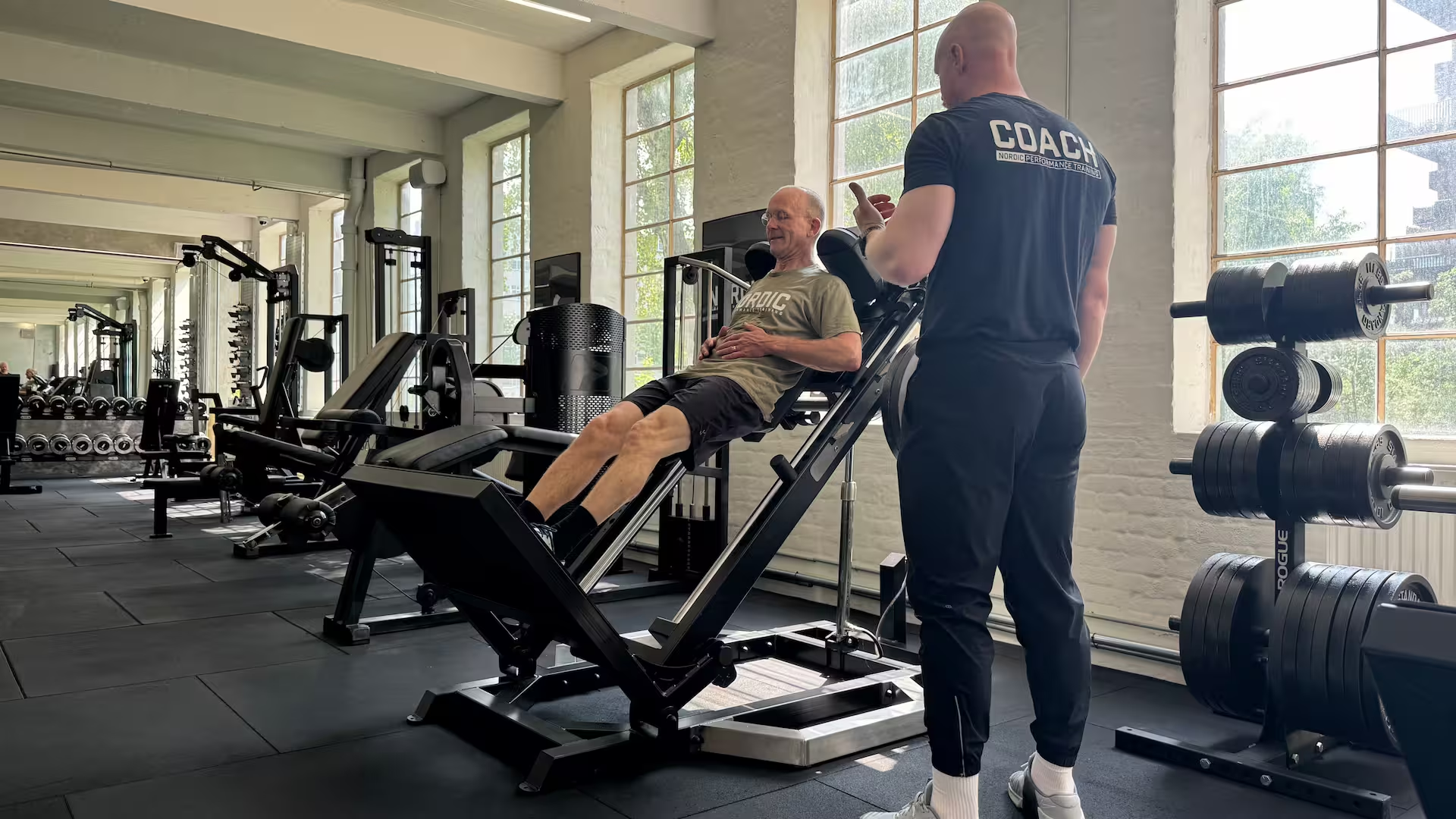
Lars, 67, from Christianshavn, had never strength trained before. He lives on the 4th floor without an elevator and had for years struggled with back pain. When he came to us, we started him directly on hack squat — low learning curve, guided movement path, controlled load from day one. Already after 12 weeks, he could again carry his groceries up the stairs without problems. The back pain was markedly reduced. And he now knew that he would continue with strength training for the rest of his life.
"Lars came in thinking he was too old to strength train. He's not. He's just never been met with the right exercise and the right dosage. Hack squat gave him progress from the first session — and that's precisely what we want for our clients. They don't need to master difficult exercises. They just need to get stronger, as effectively as possible." — Simon, physiotherapist at Nordic Performance Training
Read our guide to exercises for back pain if you experience back pain in connection with squat.
Squat variations: Which one is right for you?
Squat is not one exercise — it's a category of movements that all solve the same task, but with different conditions. We choose a variation based on the client's experience, goal, body type, and access to equipment.
Air squat / bodyweight squat
Here you use no weight and stand freely or hold on to something for support and balance. It can be a good way to learn the movement and work on mobility. An interesting observation: if you hold on to something — e.g. a door frame — many can suddenly get all the way down to the bottom of a squat that they can't do freestanding. This is because the external support helps with staying over the centre of mass and provides an increased sense of security in the movement. If you're not holding on, it can help to extend the arms forward in front of the body as a counterweight.
At Nordic Performance Training, we start with a machine variant — either hack squat or pendulum squat — since you get the same support and security in the machines and might as well learn them from the start.
Goblet squat
A popular beginner variant with external load — and a good supplement for home training. You hold a kettlebell or dumbbell close to the chest with both hands, elbows pointing downward. The name comes from the English word "goblet" — cup — because you hold the weight as if you're about to drink from it. The weight in front of the body acts as a counterweight and naturally helps maintain an upright torso, which makes it easier to go deep without the lower back rounding.
Technique: hold the weight close to the chest — not extended. Elbows point down and in. Toes point slightly outward. Lower yourself in a controlled manner while actively moving the knees out over the toes. At the bottom: a short pause, then press evenly up.
Goblet squat is a good home training exercise — but it will never provide the same stimulus as a good hack squat or pendulum squat machine. The load is limited by what you can hold in front of the body, and the stabilisation demand is higher than in a machine. We don't use it as a primary squat variant at our facility — but it's a good starting point for beginners who want to learn the squat pattern, or for those who train at home without access to machines.
Susanne, 46, from Amager, came to us after she broke her ankle and was diagnosed with osteopenia. With us, she does hack squats with systematic progression once per week. At home, she supplements with kettlebell goblet squats. One year after she started, a follow-up DXA scan showed increased bone density. The doctor explained that if she continues for the rest of her life, she will likely stay within the normal range for bone density — and thereby markedly reduce the risk of falls and fractures.
"Susanne is a good example that it's not about training as much as possible — it's about training right. One weekly session with us with systematic progression, supplemented with home training that follows the same principles as precisely as possible. That's enough to move bone density in the right direction." — Lucas, physiotherapist at Nordic Performance Training
Back squat
The classic free weight squat, where a barbell is placed on the upper back and taken out from a squat rack. Allows the use of a lot of weight and is one of the standard exercises in powerlifting and Olympic weightlifting. That's precisely how we see the exercise too — as part of a technically and mentally demanding sport — and to a lesser degree as a practical tool for achieving increased strength and health without a steep learning curve.
Requires good mobility in ankles, hips, upper spine, and shoulders — and frequent practice to master the technique sufficiently to train hard enough for it to have a real physical effect. Back squat is not part of our training system. For general strength and health, there are better and more practical alternatives for most people.
Front squat
The bar is placed in front on the shoulders instead of behind on the back. It requires a more upright torso and places greater demands on wrist mobility and core strength. Technically demanding — used primarily in weightlifting and CrossFit, as it's more specific to the sport's demands.
Hack squat
Our preferred squat variant. The machine provides external stability to the pelvis, a guided movement path, and a 45-degree angle that reduces the downward momentum. You can train the legs heavily and progressively from day one — without spending energy on balance and coordination.
The way we do hack squats — with a band that assists the weight on the way down — provides a resistance profile that better matches the body's strength curve. This gives a smooth and controlled movement that's easier to recover from and provides a better training stimulus than many other alternatives.
Martin, 31, from Nordhavn, is a CrossFit athlete and wanted to increase his weightlifting numbers. When he came to us, we started him on hack squat — an exercise he had never done before. Already after 8 weeks, his numbers in weightlifting started to rise. And his knee pain disappeared. After 9 months, all his weightlifting numbers had increased by 20% — and he had been doing CrossFit for over 8 years before he started with us.
"Martin didn't think hack squats would make a difference for his weightlifting. But strength is strength. When you build more muscle mass and train the brain to effectively activate more muscle fibres, it increases your strength potential — regardless of what other exercise you perform within roughly the same category." — Kasper, physiotherapist at Nordic Performance Training
Read the full walkthrough in our hack squat guide.
Pendulum squat
Pendulum squat resembles hack squat but differs in that the movement path follows a curved arc rather than a fixed 45-degree line. This provides a movement path that for some feels very natural — the body is guided down into a deep position with good control.
Like hack squat, the machine provides external stability and a guided movement path. The quads are the primary muscle. Foot placement can be adjusted to achieve a greater or lesser degree of knee flexion at the bottom — the lower the placement, the more knee flexion, while a higher placement does the opposite.
At Nordic Performance Training, we use both hack squat and pendulum squat as our primary squat variations.
Bulgarian split squat
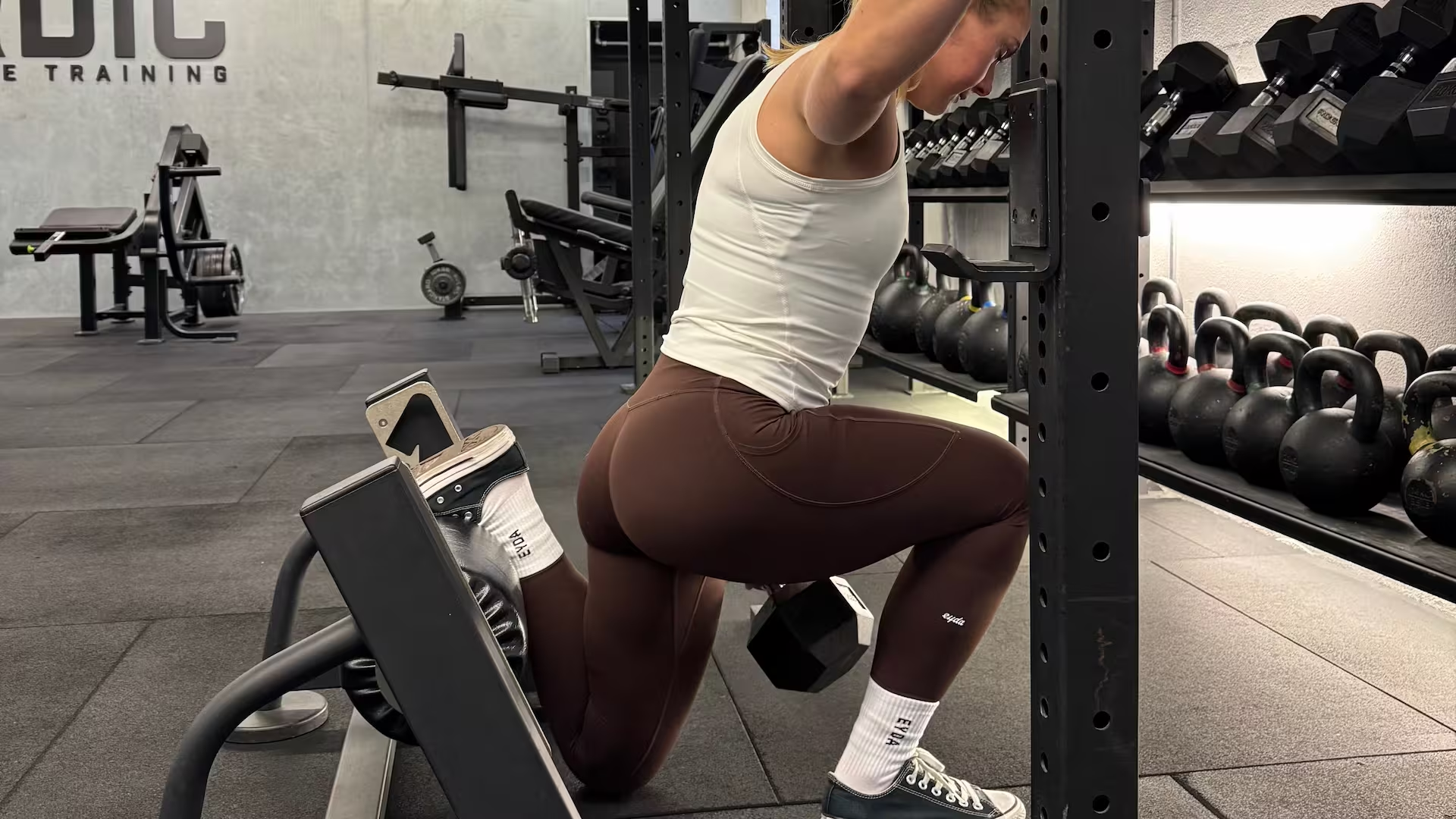
Our preferred unilateral variant and free weight variation. The back leg is placed on an elevation while the front leg carries the majority of the load. An important point: the back leg's purpose is to stabilise the pelvis by pressing down into the surface — not to be an active part of lifting the weight. Find the balance on the front leg and feel how the hip is stable and the weight guides you directly down toward the floor. Hold that feeling all the way down and up.
When clients understand this, it's as if something "clicks" — and for the first time the exercise feels precisely as it should. Trains each leg separately, reveals and works on strength imbalances, and places high demands on glutes and quads. Read the full walkthrough in our split squat guide.
Sumo squat
Wide stance with the toes pointing markedly outward. Shorter range of motion than conventional squat, more activation of the inner thighs. Used in some branches of powerlifting where you can maximise efficiency and lift as heavy as possible due to the limited range of motion. Can be done with kettlebell, dumbbell, or barbell.
Pistol squat
Single-leg squat to full depth. Places very high demands on strength, balance, and mobility. Primarily relevant in a sports context or within CrossFit.
At Nordic Performance Training, our clients squat in the hack squat or pendulum machine — or do Bulgarian split squats. Back squat and the other free weight variations are not part of our training system. We use the same exercise over a long period and follow double progression for controlled and systematic increase of load over time.
Squat primarily trains the quads, glutes, and inner thighs — but the hamstrings don't get much direct work in a squat. If you add a leg curl to the programme, you cover the entire lower body effectively. If you want to maximise glute training, you can supplement with a glute bridge — the glutes work in squat, but they are strongest and most active in the fully extended position, which glute bridge specifically trains. And if you have a leg extension, you ensure that rectus femoris — the part of the quad that crosses the hip joint — also gets proper stimulus. You actually don't need more than that.
Squat and pain
Pain during squat rarely means you should stop. It almost always means you should adapt — the variant, the depth, the load, the technique, or a more general restructuring of your entire programme.
Knee pain is the most frequent complaint during squat. It typically occurs when the knees are loaded in a way they're not used to and/or the load becomes too heavy too early. The solution is almost always technique adjustment, sensible choice of weight and number of repetitions, as well as a sensible, structured programme — not just rest and then try again. Hack squats, pendulum squats, and split squats are all good alternatives to back squat for knee pain because they provide more control over the movement and can easily be adjusted to suit the individual. Read more in our guide to knee exercises.
Back pain during squat is typically caused by too much forward lean, rounding of the lower back at the bottom, or too heavy a load. It's rarely dangerous — but it can be a signal that something needs to be adjusted. A machine-based variant like hack squat markedly reduces the demand on the upper body's position and is often the solution for clients with back pain. Read more in our guide to exercises for back pain.
Pain doesn't mean stop. It just means something needs to be adapted, so you can once again build up without running into pain that limits you.
Frequently Asked Questions About Squat
What is squat called in Danish?
Squat is called knæbøjning in Danish. Both terms are used in Denmark — "squat" is, however, the most widely used in a training context.
How do you do a correct squat?
A correct squat starts with the feet at shoulder-width distance and the toes slightly outward. Start the movement by approximately simultaneously pushing the hips backward and the knees forward, and lower yourself as deep as your mobility allows with a neutral back. Press through the entire foot on the way up. The technique is adapted to your body type — there is no universally correct squat.
How far should you go down in a squat?
As deep as your mobility allows with good technique — not deeper. For most people, parallel is a good goal. If the lower back begins to round before you reach parallel, that's a signal that you're at your current mobility limitation. Depth with bad technique is never better than parallel with good technique.
How many squats should you do?
Quality over quantity. In a structured strength training programme, 2-3 sets of 6-8 repetitions with a challenging weight is more effective than many repetitions with low load — performed 1-3 times per week depending on your programme.
Are squats bad for the knees?
No — with correct technique and appropriate load, squat strengthens the knees over time. Most knee problems from squat are caused by technique errors, wrong choice of variant, or too heavy a load too early. Machine-based variants like hack squat and pendulum squat provide more control and are often a better starting point.
Should you squat every day?
No. For most people, 1-2 times per week as part of a structured Full Body programme is more than sufficient to build strength and muscle mass progressively over time.
Want to train with us?
Squat is not one exercise — it's a movement pattern that can be adapted to all bodies and all goals. Whether you're a beginner, an experienced athlete, or somewhere in between.
If you'd like help finding the squat variant that suits your body and your programme as part of personal training in Copenhagen — then book a free start-up conversation. Either in our private gym or as a call, if that suits you better. We'll go through what makes sense for you specifically.
References
Yalfani, A., Ahmadi, M., & Asgarpoor, A. (2024). The effect of kinetic factors of dynamic knee valgus on patellofemoral pain: A systematic review and meta-analysis. Journal of Bodywork and Movement Therapies, 37, 246–253. https://doi.org/10.1016/j.jbmt.2023.11.001
Pereira, P. M., Baptista, J. S., Conceição, F., Duarte, J., & Costa, J. T. (2022). Patellofemoral pain syndrome risk associated with squats: A systematic review. International Journal of Environmental Research and Public Health, 19(15), 9241. https://doi.org/10.3390/ijerph19159241
Straub, R. K., & Powers, C. M. (2024). A biomechanical review of the squat exercise: Implications for clinical practice. International Journal of Sports Physical Therapy, 19(4), 490–501. https://doi.org/10.26603/001c.94600
Kubo, K., Ikebukuro, T., & Yata, H. (2019). Effects of squat training with different depths on lower limb muscle volumes. European Journal of Applied Physiology, 119(1), 193–203. https://doi.org/10.1007/s00421-018-4018-3
Table of Contents
Related Blog Posts
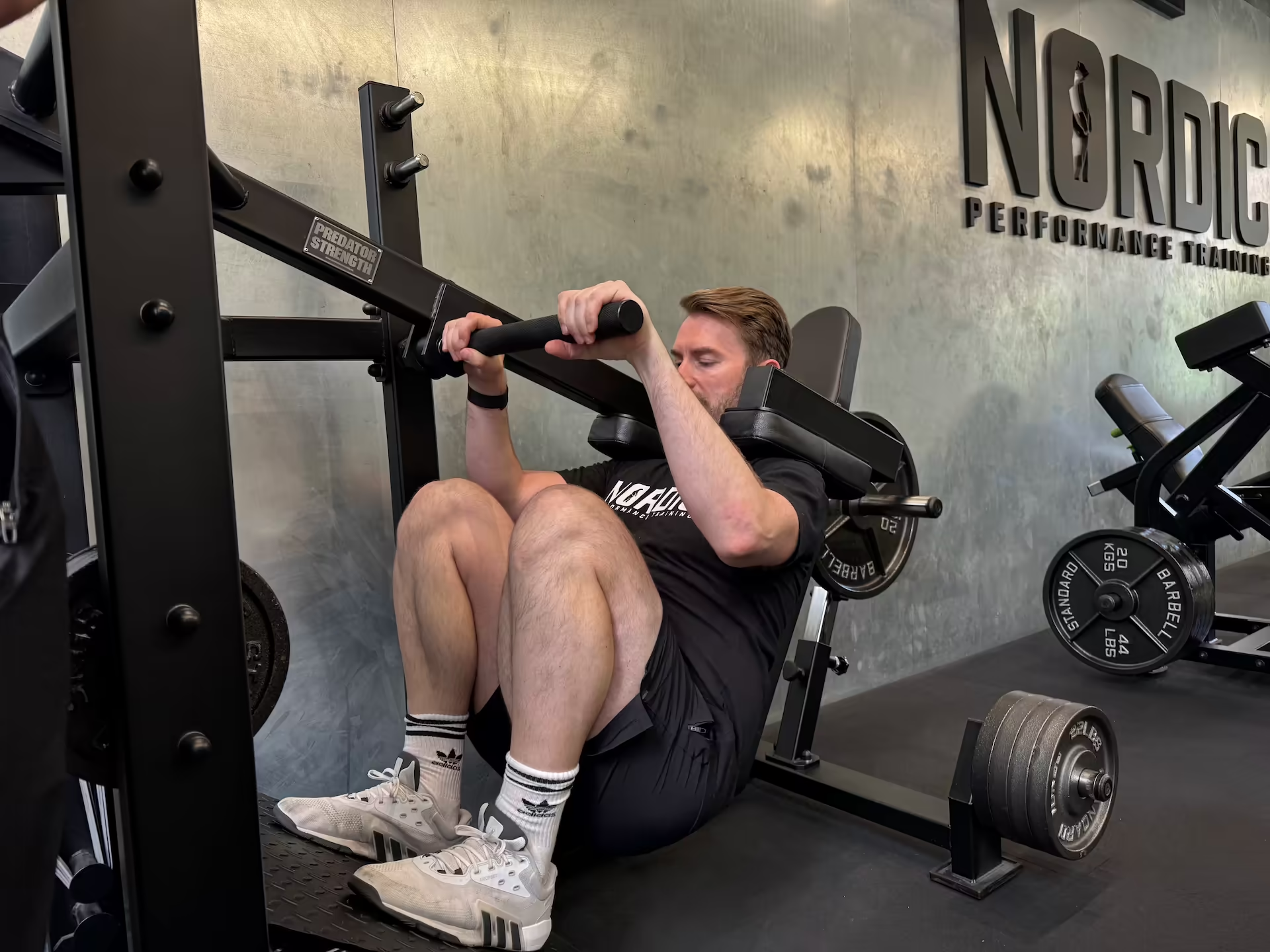
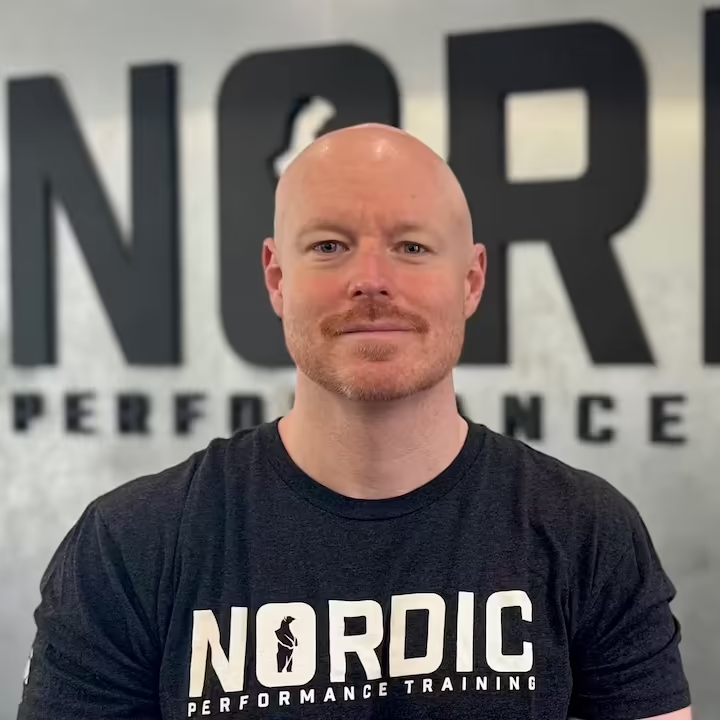
I’ve worked as a personal trainer for over 12 years and as a physiotherapist for over 10 years — and co-founded Nordic Performance Training with Lucas 8 years ago to give clients a professional and structured way to train. Since then, I’ve helped hundreds of people build strength, stay consistent, and feel better through evidence-based methods that actually work.
Along the way, I’ve completed advanced certifications and mentored under leading experts in various fields, and I’ve taught many trainers and physiotherapists internationally.
On this blog, I share the same practical tools, insights, and strategies we use every day at Nordic — so you can train smarter, stay consistent, and get real results.



Related Blog Posts
.svg)