





Glute Bridge: Technique, Benefits and Variations
Glute bridge is one of those exercises that might not look that challenging. The weight you can put on is often not particularly impressive compared to its sibling, hip thrust, which you often see performed with a barbell filled with weight plates, explosively lifted up from the floor.
Glute bridge is in contrast a shorter, much more controlled movement, where the hips are driven upward toward full hip extension.
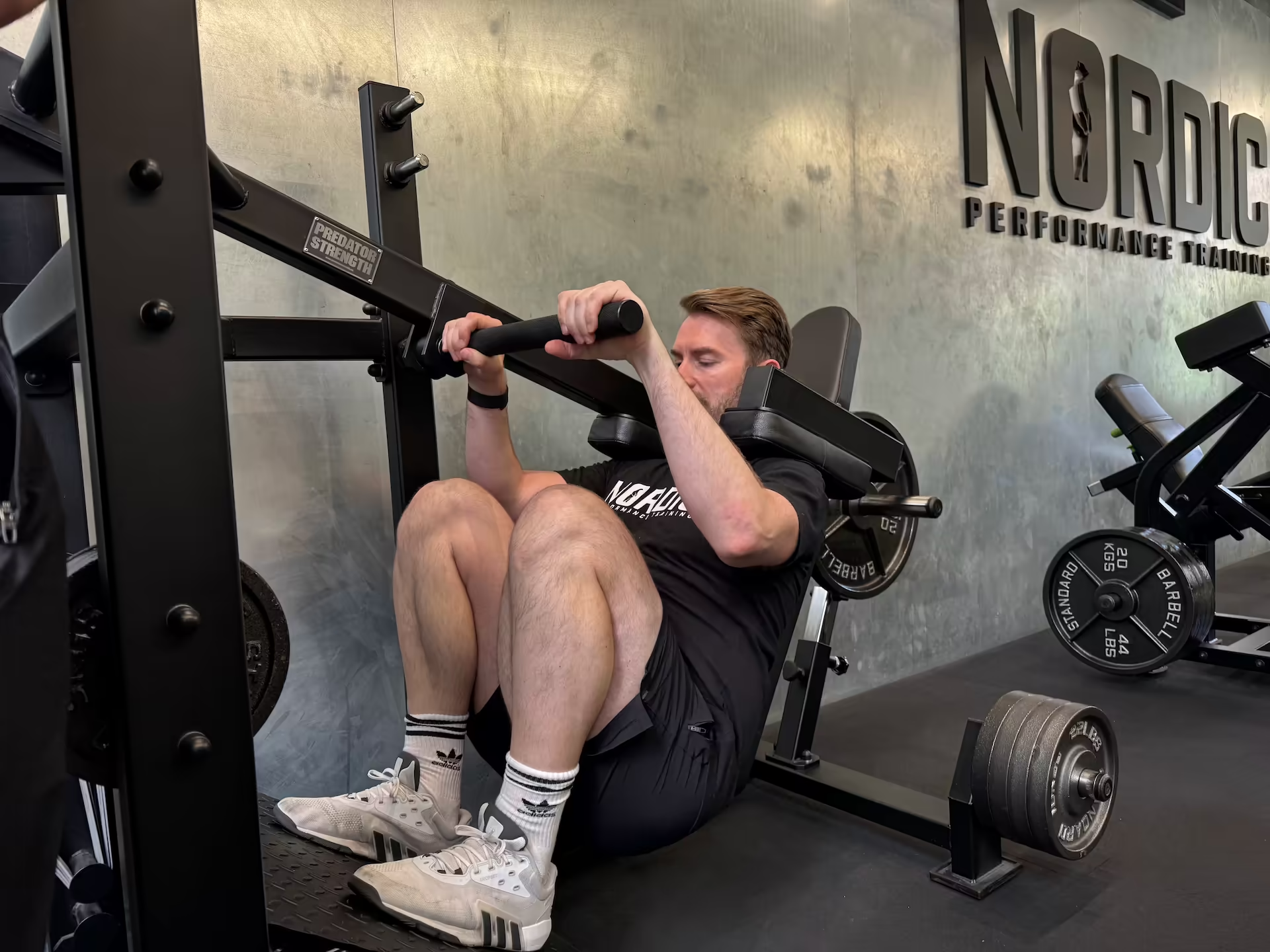
And it's precisely that simplicity that makes it both effective, practical, and better tolerated by the vast majority — and the reason why we at Nordic Performance Training use glute bridge in our glute drive machine to train the glute muscles as effectively as possible.
Sofie, 39, IT architect from Østerbro, came to us after a year of barbell hip thrusts. She was strong — but felt the exercise mostly in the lower back and quads, and to a lesser degree the glutes. On top of that, she spent a really large amount of time and energy on setup and loading and unloading the barbell, and she had difficulty finding the right rhythm in the movement. "I never really felt like it hit where it was supposed to," as she put it herself.
We put her in our glute drive machine and had her perform the movement as a glute bridge — shorter range of motion, focus on the top, controlled tempo. After two sets, it was clear: she felt it in the glutes. Not in the lower back. Not in the quads. In the glutes.
That's not a coincidence. It's a professional choice. This guide explains precisely what glute bridge is, which muscles it trains, and why we consistently choose it in our glute drive machine over classic barbell hip thrust — with the four concrete reasons behind that choice.
What is a glute bridge?
Glute bridge is one of the most popular exercises for glutes — and with good reason. It isolates gluteus maximus more effectively than most other hip extension exercises. Traditionally, glute bridge is a hip extension exercise where you lie on your back with the shoulders against the floor, knees bent, and feet flat on the floor. From that position, you drive the hips upward to full hip extension at the top — and lower them in a controlled manner back down.
The movement is simple. The purpose is to load gluteus maximus — the large glute muscle, also called glutes — directly and in the position where it is strongest and isolated most effectively.
And this is precisely where it gets interesting.
Gluteus maximus produces the most force at the top of hip extension — in the fully shortened position. That's where the muscle is strongest compared to the other muscles that can perform hip extension. Glute bridge takes place exclusively in the upper part of the movement.
And that's an advantage if you want to train the glutes as specifically and directly as possible. Just like when you want to train your quads in isolation, you choose a leg extension machine.
The hamstrings and the large inner thigh muscle adductor magnus contribute secondarily, and the core musculature works stabilisingly. The quads are minimally involved compared to hip thrust — there is simply not the same mechanical reason for them to push the back upward and backward against a bench, and therefore not the same demand on the quads.
Why we choose glute bridge at Nordic Performance Training
Mette, 51, consultant from Hellerup, had for two years attempted to train her glutes with squats and hip thrusts. She trained hard but never felt the "pump" in the glutes she had hoped for. And she didn't care for the hassle of preparing the exercise, by loading and unloading the bar and positioning herself correctly on the bench which was always too high for her torso. "I simply couldn't be bothered," she said. "The setup of the exercise was a project in itself before it even started."
We put her directly in the glute drive machine. Glute bridge movement, controlled tempo, a weight that challenged her — but not more than she could control the top position with. She felt the glutes working from the first set. And finally she got the "pump" she had been trying to get from hip thrust.
"I didn't think you could feel it that isolated there," she said. "This is a completely different feeling than everything else I've tried."
It turned out that it was more than possible. But it required the right exercise performed the right way.
Here are the four reasons why we use glute bridge:
We train the glutes where they are strongest. Glute bridge works exclusively at the top of hip extension — precisely where gluteus maximus produces the most force relative to the other hip extensors. Because the movement takes place in the fully shortened position, the role of the quads is minimal — there is simply not the same mechanical reason for them to contribute as there is in hip thrust. This means the glutes are to a far greater extent the limiting factor in the exercise.
It fits better into our programme design. We already train nearly all leg muscles effectively in our primary exercises, squats and leg curls as a part of our Full Body program — but the glutes benefit from an exercise that trains them where they are strongest and isolated most effectively, and a squat doesn't achieve that. Glute bridge is therefore used to close the gap that squats leave behind. We use the same logic with leg extensions: not because squats are insufficient, but because an isolation exercise hits what squats don't quite reach. Precisely the same applies here.
It's easier to standardise and requires less weight. Because the exercise works focused at the top and you can't use momentum from the bottom, you don't need the same heavy load as with hip thrust to give the glutes an effective training stimulus. This makes the exercise more practical, easier to set up, and far easier to manage as part of your regular programme. You actually choose to perform the exercise every time you come to training — rather than burning out on it due to the hassle.
The machine gives better control and progression. The glute drive machine removes all the setup hassle and lets you focus exclusively on the movement and the load. The controlled tempo we use — slowly down, gradually harder and harder up — is far easier to keep consistent in a machine than with a heavy barbell. We cover precisely that issue in detail in our hip thrust guide.
“Many of our clients think the glute bridge is a great exercise—but simply can’t be bothered with the setup. Our machine makes it possible to get in 2–3 effective sets in just 10 minutes. That way, you actually get it done.” — Kasper, physiotherapist at Nordic Performance Training
Technique: How to do a glute bridge correctly
Setup
Lie on your back with the shoulders against the floor. The knees are bent, feet at hip-width distance and flat on the floor — neither too close to the buttocks nor too far away. A good rule of thumb: the heels should sit approximately one hand-width from the buttocks. Too far away and the hamstrings take over; too close and the knee locks at an awkward angle.
Check the position actively at the top: when the hips are fully extended, the shin should be close to vertical and the knee placed over the ankle. If the shin leans backward, the feet are too close. If it leans more forward, they're too far away.
If you're using a barbell from the floor, it's placed low over the hips — close to the groin. Use a barbell pad or a towel to reduce discomfort. Find a neutral pelvic position before you begin.
In the glute drive machine, the setup is simpler: adjust your placement on the back rest so the buttocks sit as close to the edge as possible without sticking out over it. Place the belt over the bottom of the pelvis — use a hip thrust pad if the belt causes discomfort.
Execution
The movement starts from the hips — not from the spine. Press the hips actively upward to full hip extension at the top. The pelvis remains neutral — no arching in the lower back, no forward tilting.
Hold the top position for a moment. This is where gluteus maximus is strongest and where the exercise gives the most. Lower the hips in a controlled manner back down — but not further down than the point where the knees begin to move in toward the body. The shin should remain at approximately the same angle throughout the entire movement. If you go further down, you're moving toward a hip thrust variant and lose the focused work at the top.
The neck is neutral or slightly flexed — look forward or up at the ceiling. Both are correct. Slight neck flexion makes it harder to arch the lower back and tip the pelvis forward, and can be a good help if that's a challenge for you.
Tempo and control
Control is more important than speed. Lower slowly and gradually squeeze harder and harder on the way up — rather than launching the hips with a jerk from the bottom. This ensures the glutes do the work.
If you can't control the top position with a neutral pelvis, the weight is too heavy. Start lighter than you think you need to. See a demo-video here.
The most common mistakes
The lower back arches at the top instead of full hip extension. The most frequent mistake — and the one that ruins the most. When the weight is too heavy for full hip extension with a neutral pelvis, many tip the top of the pelvis and the stomach forward to compensate. That's not full hip extension. It cheats you out of precisely the part of the movement that provides the most glute training. Reduce the weight.
The feet are placed too far away. When the feet are too far from the buttocks, the hamstrings take over a larger part of the work. The shin should be close to vertical at the top position — check it actively.
You go too far down and do a different exercise. When the hips are lowered so far that the knees begin to move in toward the body, the movement changes character — you're approaching a hip thrust variant and lose the focused work at the top. A little bit of momentum is acceptable, but the idea is to lift the hips up, not to launch the weight from the bottom. Keep the shin at approximately the same angle throughout the entire movement.
Too fast tempo without control at the top. Glute bridge can certainly be done explosively. But if the goal is to train the glutes effectively, control is more important. A fast jerk from the bottom sends the weight up with momentum — and the glutes don't do the work they should.
The ribs flare and core not activated. When the ribs lift and the stomach drops, you lose the neutral position in the spine. Keep the ribs slightly down and brace lightly in the stomach before you begin the movement.
Too light weight without progressive overload. Glute bridge looks simple — and it's tempting to stay at a comfortable weight. But the exercise should be loaded progressively to deliver results. 3 sets of 6–8 repetitions with a weight that actually challenges you delivers markedly better results than 100 repetitions with body weight.
Variations and progressions
Body weight from the floor. A good starting point if you train at home or don't have access to equipment. Learn the movement, find full hip extension with a neutral pelvis, and feel the glutes working. Add a 2-second pause at the top to make it harder when you can't increase the weight. When you can easily do 15+ repetitions with a pause, it's time to find load.
Barbell glute bridge. Barbell low over the hips with a barbell pad or towel. A good choice without access to a glute drive machine. Note that many over time find that they slide along the floor as the weight increases — sufficient friction under the shoulders and upper back helps, but it can become a limitation.
The glute drive machine. Removes all the setup hassle and lets you focus exclusively on the movement and the load. It's the variant we use at Nordic Performance Training.
B-stance glute bridge. A middle ground between bilateral and single-leg — one foot carries the majority of the weight, the other is used primarily for balance. Gives more focus on one leg at a time without the full balance demands of single-leg.
Single-leg glute bridge. One leg extended, the other carries the entire load. Places greater demands on balance and can be used to reveal and work on imbalances. It's not a progression from bilateral — it's a specific choice with a specific purpose.
Progression is simple: a bit more weight or one more repetition than last time — with the same good technique. That's the only thing that counts. Use double progression: train within a fixed range, e.g. 6–8 reps. When you can do 8 with good technique, you increase the weight next time. Read more in our guide to progress in strength training.
Glute bridge vs. hip thrust: What's the difference?
The two exercises resemble each other and are often confused. The technical difference is simple: in glute bridge, the shoulders lie on the floor and the work takes place exclusively at the top of hip extension. In hip thrust, the upper back rests on a bench, which provides a greater range of motion — but also more quad involvement and easier access to momentum.
Both are effective exercises for glutes. We've chosen glute bridge for the reasons we've covered above. If you want the full technical comparison and understanding of when hip thrust makes sense, you can read our complete hip thrust guide.
Our choice for training glutes is glute bridge — performed in the glute drive machine, where setup and control are in place from the first rep.
If you want to supplement with an exercise that trains the gluteus maximus in its lengthened position—at the bottom of the movement—the Bulgarian split squat is a great choice.
Can I train glute bridge with pain?
Yes — and that's actually one of the reasons why we, as with all our exercises, can use it with all our clients.
Glute bridge is an exercise where the weight doesn't press down through the spine from above. This means the lower back doesn't have to bear the weight of a bar from above, as with squat or deadlift. But the most important thing is what happens when the exercise is performed correctly: you squeeze hard in the glute muscles at the top, while the lower back remains in a neutral and comfortable position. You don't anteriorly tilt the pelvis — you keep it neutral. For many, that's precisely the position the back feels best in, if you experience back pain, tension, or discomfort.
It's the combination that makes the exercise practical: full activation of gluteus maximus, no unnecessary loading of the lower back, controlled movement in a limited range of motion. You can work hard without provoking the lower back. Read more about exercises for lower back pain in our guide to lower back pain.
For knee pain, glute bridge is also relevant because strong hip muscles help stabilise the knee and make you more robust in general. See our guide to knee exercises for more on that connection.
Frequently Asked Questions About Glute Bridge
What is glute bridge good for?
Glute bridge primarily trains gluteus maximus — the body's largest muscle — in the position where it is strongest: full hip extension. The exercise is effective for training glutes, hip extension strength, and as a supplement for lower back and knee pain. It's gentle on the back and suitable for most people regardless of training level.
What happens if you do 100 glute bridges a day?
Very little — in terms of muscle growth and strength progress. High volume without progressive loading gives limited results. 3 sets of 6–8 repetitions with a weight that actually challenges you delivers markedly better results than 100 repetitions with body weight. Quality and progressive loading beats quantity.
How many sets and repetitions should you do in glute bridge?
3 sets of 6–8 repetitions is a good starting point. The weight should be challenging, but not so heavy that you can't control the top position. Use double progression: when you can do 8 repetitions with good technique, you increase the weight next time. Read more in our complete strength training guide.
Can glute bridge replace squats?
No — they train the glutes in different positions and complement each other. Squats load gluteus maximus in the stretched position at the bottom. Glute bridge loads it in the shortened position at the top. Research shows that the two exercise types produce comparable gluteus maximus hypertrophy over time — but they achieve it via different positions. If your programme already has a squat variant, glute bridge adds something the squat doesn't cover.
Is glute bridge good for lower back pain?
Yes, in most cases. The weight doesn't press down through the spine from above, and the exercise can typically be performed in a controlled manner without provoking the lower back. Building strength in the hip extensors is relevant for the stability of the lower back. Read our guide to exercises for back pain for more.
Is glute bridge good for piriformis?
Yes. Glute bridge strengthens gluteus maximus, which relieves the piriformis muscle by taking over a larger part of the hip extension work. A stronger glute muscle means less compensation from piriformis — and therefore potentially less irritation and pain.
Should I use resistance bands around the knees during glute bridge?
No — and the research is not unequivocal about the effect. Some studies find that bands increase the activation of the upper gluteus maximus, while others find that they can reduce the total gluteus maximus activation. The band places constant demands on external rotation, which takes focus away from what is actually the purpose: hip extension. The external rotation happens naturally as a byproduct of the movement — it doesn't need to be trained actively. Focus on achieving and controlling the top position with a neutral pelvis.
What's the difference between glute bridge and hip thrust?
In glute bridge, the shoulders lie on the floor and the work takes place at the top of hip extension — precisely where gluteus maximus is strongest. In hip thrust, the upper back rests on a bench with a greater range of motion and more quad involvement and explosive movement. Both are effective — we prefer glute bridge in our glute drive machine. Read our complete hip thrust guide for the full comparison.
Ready to feel it in the glutes — not in the lower back?
Glute bridge is our preferred exercise for glutes. But as with all exercises, the results depend on you performing it correctly and progressively over time.
If you'd like help getting started as part of personal training in Copenhagen — or want to make sure you actually feel it where it's supposed to hit — then book a free start-up conversation. Either in our Private Gym in Copenhagen or as a phone call, if that suits you better. We'll go through what makes sense for you specifically.
References
Contreras, B., Vigotsky, A. D., Schoenfeld, B. J., Beardsley, C., & Cronin, J. (2015). A comparison of gluteus maximus, biceps femoris, and vastus lateralis electromyographic activity in the back squat and barbell hip thrust exercises. Journal of Applied Biomechanics, 31(6), 452–458. https://doi.org/10.1123/jab.2014-0301
Contreras, B., Vigotsky, A. D., Schoenfeld, B. J., Beardsley, C., & Cronin, J. (2016). A comparison of gluteus maximus, biceps femoris, and vastus lateralis electromyography amplitude for the barbell, band, and American hip thrust variations. Journal of Applied Biomechanics, 32(3), 254–260. https://doi.org/10.1123/jab.2015-0091
Kennedy, D., Casebolt, J. B., Farren, G. L., & Bartlett, M. (2023). Effects of band-resisted abduction on muscle activity between the barbell hip thrust and barbell glute bridge. International Journal of Strength and Conditioning, 3(1). https://doi.org/10.47206/ijsc.v3i1.223
Plotkin, D. L., Rodas, M. A., Vigotsky, A. D., McIntosh, M. C., Breeze, E., Ubrik, R., Robitzsch, C., Agyin-Birikorang, A., Mattingly, M. L., Michel, J. M., Kontos, N. J., Lennon, S., Frugé, A. D., Wilburn, C. M., Weimar, W. H., Bashir, A., Beyers, R. J., Henselmans, M., Contreras, B. M., & Roberts, M. D. (2023). Hip thrust and back squat training elicit similar gluteus muscle hypertrophy and transfer similarly to the deadlift. Frontiers in Physiology, 14, 1279170. https://doi.org/10.3389/fphys.2023.1279170
Table of Contents
Related Blog Posts


I’ve worked as a personal trainer for over 12 years and as a physiotherapist for over 10 years — and co-founded Nordic Performance Training with Lucas 8 years ago to give clients a professional and structured way to train. Since then, I’ve helped hundreds of people build strength, stay consistent, and feel better through evidence-based methods that actually work.
Along the way, I’ve completed advanced certifications and mentored under leading experts in various fields, and I’ve taught many trainers and physiotherapists internationally.
On this blog, I share the same practical tools, insights, and strategies we use every day at Nordic — so you can train smarter, stay consistent, and get real results.



Related Blog Posts
.svg)