






Hack Squat: Complete Guide to Technique and Benefits
Hack squat is one of those exercises that doesn't always get the respect it deserves. Many see it as an "easier" version of back squat — a machine exercise for those who don't really want to lift heavy. An exercise that doesn't train "stabilising muscles" and is therefore less functional.
That's a misconception. And it's precisely that misconception this article clears up.
Frank, 52, lawyer from Sydhavn, came to us for personal training after a year of back squats and lower back pain. He never felt comfortable with the exercise — and most often ended up with a sore lower back rather than tired leg muscles. We introduced him to our hack squat machine. It made it easy for him to perform the squat movement from the first repetition, without being limited by technique or flexibility. His leg exercises were done in 20 minutes — and with one weekly personal training session with us as his only training, he achieved better results after three months than in an entire year with back squat — and the lower back hasn't hurt since.
André Houdet, 28, came to us with a different goal. He wanted to go to the CrossFit Games — but lacked the strength and was struggling with pain in knees and elbows from holding a barbell. He was technically skilled, but the body wasn't strong enough to match his ambitions. We built his strength up, primarily via hack squat and other machines, and removed the pain that was holding him back. He trained CrossFit 2-3 times a day and had 2 weekly personal training sessions with us. The result: he reached the Games 2x, set personal records in all his lifts — and became known as one of the strongest crossfitters in the world.
Two very different people. The same choice. And the same experience: when technique isn't a limitation, you can focus on what actually delivers results — regardless of whether you're a 52-year-old lawyer who trains once a week, or a professional athlete preparing for the world's toughest fitness competition. We don't reject barbell back squat — it's just not part of our training system. We choose what gives the highest return, works in practice, and fits into a busy everyday life.
This guide explains precisely what hack squat is, which muscles it trains, and why we at Nordic Performance Training consistently choose it over barbell back squat — with the concrete reasons behind that choice.
What is a hack squat?
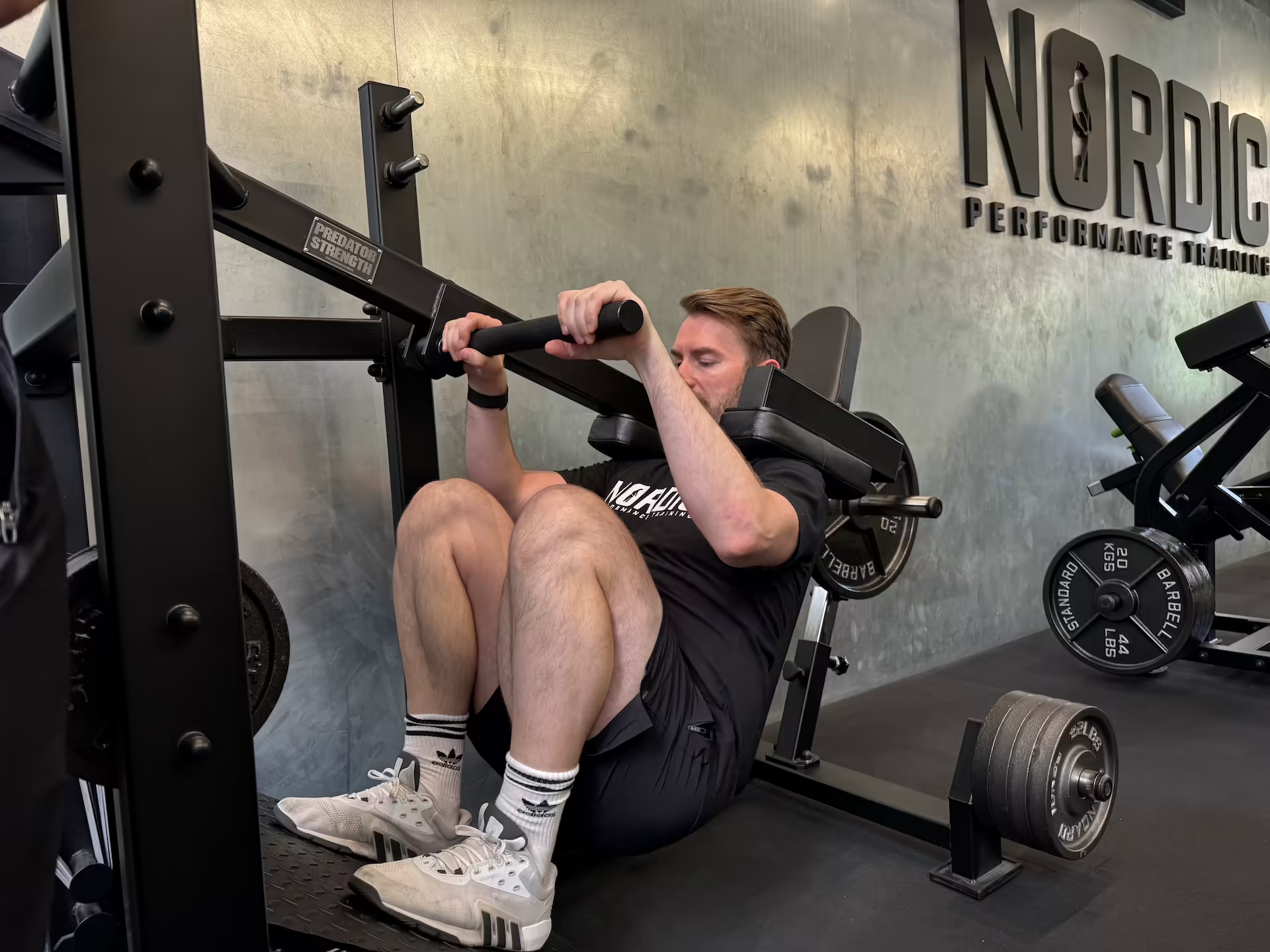
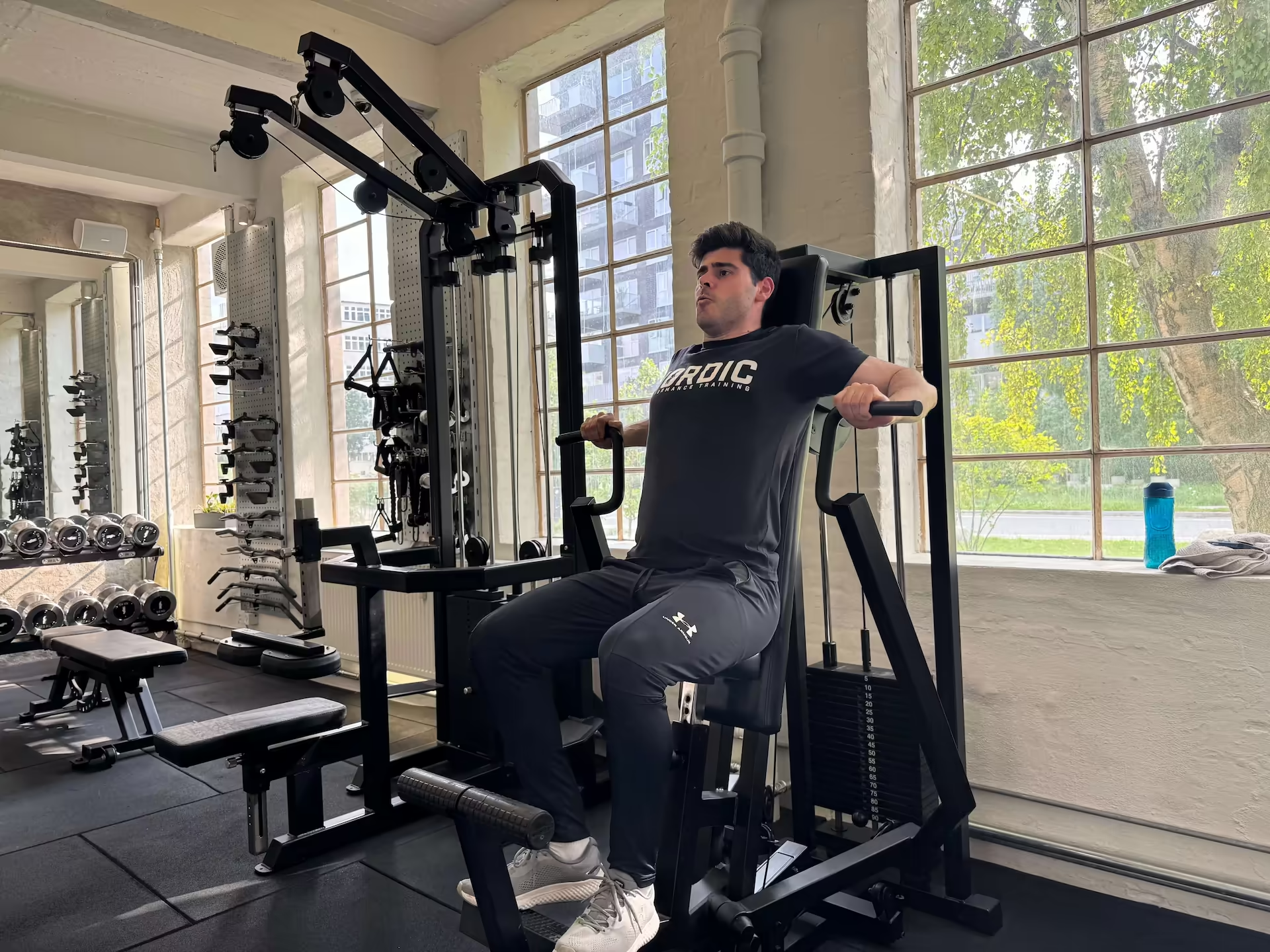
Hack squat is a machine-based squat exercise where you stand with your back and the back of the pelvis against an angled pad — typically angled around 45 degrees — and the shoulders under two padded shoulder pads. From that position, you squat down to full depth and press yourself back up.
Because the machine is angled, the weight doesn't press directly down through the body as with a back squat. This means less momentum builds up on the way down, the transition at the bottom feels more controlled, and the movement is generally smoother to perform.
It's a compound exercise — it moves both the hip and knee joint — but it's simultaneously more isolated than a back squat, because the machine guides the movement path and removes the need for active stabilisation of the upper body, the coordination of the squat movement itself, and the balance requirement.
The primary muscles are quadriceps — the front thigh muscle that extends the knee — as well as adductor magnus, the large inner thigh muscle, and gluteus maximus, the large glute muscle, both of which extend the hip. Note that the hamstrings are not primarily involved in a squat — that's one of the reasons we always combine hack squat with leg curl in our programme. Additionally, soleus, the deep calf muscle, also gets good stimulus in the exercise.
Many underestimate hack squat because it's a machine. "It doesn't train stabilising muscles," goes the argument. But that's a misunderstanding of what strength training is for. Because the machine removes the technical and balance demands, you can lift heavier and get closer to failure. This means a higher degree of motor unit recruitment — and therefore more activation across all involved muscles, including those that stabilise.
Think of it this way: if high stability demands were the most important thing in strength training, a squat on a balance board would be the best exercise. But everyone intuitively knows that's a bad idea — because you simply can't lift heavy enough to create a real training effect. Effective strength training is about creating an environment that allows a high degree of activation from the brain, so as many muscle fibres as possible are recruited and loaded with sufficient mechanical tension over time. And you do that most effectively in exercises where everything that works against this is minimised.
One thing is worth mentioning: hack squat machines vary greatly in quality. Many have bad experiences with the exercise — sore knees, unnatural movement, excessive soreness — and that's often due to the machine, not the exercise. A good hack squat machine follows the body's natural movement path and feels smooth throughout the entire movement. It's a difference you feel from the first rep.
Why we choose hack squat at Nordic Performance Training
It's not a coincidence that both Frank and André achieved their best results after they switched to machine training. It's a pattern we see again and again — and there are concrete professional reasons for it.
André wasn't the world's 15th best crossfitter when he started with us. He was an ambitious athlete who lacked the strength and was struggling with pain that held him back. Technically, he was already world class — and mentally he had it fully in place. What he was missing were the physiological adaptations that underlie raw strength: muscle mass and the ability to recruit more muscle fibres. We added those — via hack squat and our other machine training — without draining the surplus he needed for CrossFit and all the other training he had to get through.
Here are the reasons why we choose hack squat:
The machine removes the learning curve — and lets you train hard from day one. Back squat is a skill. It requires months of technique practice, good mobility in ankles, hips, and shoulders — and even then, it's difficult to perform optimally for many bodies. Hack squat requires no long learning period. You sit in the machine, adjust, and train. From the first session. This means the early strength gains — which primarily come from the nervous system's ability to activate more muscle fibres — can be achieved much faster, because you're not spending energy on coordinating a complex free weight exercise.
Back squat is more of a sport than an exercise. That's not the same as saying it's bad. But getting good at back squat requires specific practice in precisely back squat — just like getting good at running requires that you run. If you want to compete in powerlifting or weightlifting, back squat is indispensable. But for most people — who just want to get stronger, healthier, and more robust — it's not necessary to master a complex free weight exercise to achieve that. Think of cardio: a bike and a run both provide cardiovascular adaptation. But the bike requires less technique and is easier to recover from. Hack squat is the bike. Back squat is the run.
Your energy is not unlimited. Every training session, you start with 100%. Hack squat drains less of that energy than back squat — not because the exercise is easier, but because it places fewer demands on coordination, balance, and mental focus. This means you can use more of your energy on what actually delivers results: pushing the muscles hard. And it means you can get through a good training session also on days when you're tired, have slept poorly, or are pressed for time. We see it consistently: clients who train in good machines maintain their training more easily over time — because it's manageable to show up and give it their all, even when everyday life is hard.
"Sitting under a heavy barbell after a long workday doesn't appeal to most people. It doesn't appeal to us either — so why would we make our clients do it?" — Kasper, physiotherapist at Nordic Performance Training
The machine gives better control and progression. The fixed movement path means you can focus exclusively on working hard — not on keeping your balance or stabilising a barbell. This makes it easier to maintain consistent technique and easier to increase the load progressively. And because the movement path is fixed, you can't unconsciously cheat through a set by adjusting the technique along the way. Strength is only achieved if you lift more under the same technical conditions — and the machine requires you to do that. Want to see how hack squat fits into a complete training programme? Read our Full Body guide.
As part of personal training at Nordic Performance Training, hack squat is a fixed part of our leg programme for almost all clients — regardless of level.
Technique: How to do hack squat correctly
Setup
Place the feet at shoulder-width distance on the platform with the toes slightly pointing outward. Adjust the foot position — higher or lower on the platform — so you can squat all the way down while the entire foot remains in contact with the surface. Press the back firmly against the pad and place the shoulders under the padded pads. A slight forward hip tilt helps the back remain stable during the movement.
Check the position actively: if you come up on your toes at the bottom, you're probably standing too low on the platform — it can also be because the nervous system and quadriceps are not yet strong enough to control the deep position, but foot position is the first thing you adjust. If you're standing too high, the pelvis moves away from the pad at the bottom and tips in under you. Find the position where the entire foot and the back remain in contact throughout the entire movement.
Execution
Bend the knees and lower yourself in a controlled manner. Let the knees follow the direction of the toes — they may move slightly inward as a natural part of the movement, but they should not collapse inward uncontrollably. Lower yourself to full depth — as far down as feels comfortable with full foot contact and flat back against the pad.
A cue that helps many: think of actively "pulling" yourself down into the good bottom position — not just resisting the weight. This gives a more controlled descent and makes the exercise markedly more comfortable for the knees.
From the bottom: press evenly through the entire foot and drive yourself upward. Avoid bounce at the bottom — the transition from the downward to the upward phase should be controlled and even. Extend the legs fully at the top, but you don't need to lock the knees.
The neck remains neutral throughout the entire movement.
Tempo and control
Control is more important than speed. Lower yourself slowly — 3 seconds — and push on the way up. If it feels uncomfortable in the knees at the bottom, you can gradually squeeze harder on the way up and take it easy in the deep position until you build more strength and control there.
If you can't control the downward phase or you don't maintain full foot contact, the weight is too heavy. Start lighter than you think you need to and build from there. See a demo-video here.
The most common mistakes
The heels lift from the platform. A sign that you're probably standing too low on the platform. Adjust the foot position higher and reduce the weight. The entire foot should be in contact with the platform throughout the entire movement.
The knees fall inward uncontrollably. A little bit of internal rotation is natural — the knee follows inward as a result of hip rotation, and that's completely normal during a squat. But an uncontrolled collapse inward is a sign that the weight is too heavy. Reduce the weight and focus on the knees tracking the toes.
Uncontrolled transition at the bottom. The transition from the downward to the upward phase should be controlled and even — not an uncontrolled bounce. If the weight builds too much speed on the way down, the body suddenly has to brake a heavy weight in a very short time. That's unnecessarily hard, takes longer to recover from, and increases the risk of discomfort in the knees.
Only half repetitions. Many stop halfway down to be able to use more weight. But full depth is the point — for the best training stimulus and to standardise the movement so you know whether you've actually gotten stronger or just changed the technique. Reduce the weight and go all the way down.
Too much weight too fast. Hack squat is easy to load progressively over time — and it's tempting to increase the weight faster than the technique allows. The goal is actually to get stronger faster than weight is added. This way, you always train submaximally — heavy enough to get stronger, not so heavy that it feels overwhelming or leads to overtraining.
Lack of control in the downward phase. The eccentric phase — on the way down — is at least as important as on the way up. Think of actively pulling yourself down — not falling down. If the weight builds too much speed on the way down, it's suddenly a very heavy weight the body has to brake — that's unnecessarily hard and takes more time to recover from.
Variations and progressions
Reverse banded hack squat. This is the variant we use with all our clients at Nordic Performance Training. A resistance band is mounted over the machine so it assists at the bottom and gradually decreases on the way up — in the middle and top, you lift close to the full weight without assistance. This means slight assistance precisely where the movement is heaviest and the knees are in a position that's unfamiliar for most, and close to full load where the quadriceps are strongest and can produce the most force. It's also easier on the knees in the downward phase, because the band helps decelerate the weight — and this makes the exercise more comfortable and easier to recover from.
Standard hack squat without bands. Works fine without access to bands. Same setup and technique — but without the altered resistance profile. Many find, however, that it's harder on the knees and that they can't load the machine heavy enough without being disproportionately limited at the bottom compared to the rest of the movement.
Tempo and pause as a progression tool. If you experience discomfort at a certain weight but still want to train challengingly, you can reduce the weight and add a 2-3 second pause at the bottom or extend the eccentric phase to 4-5 seconds. This increases time under tension and can provide an effective training stimulus without having to increase the load.
Don't have access to a hack squat machine? Bulgarian split squat is the best alternative — it places similar demands on the quadriceps and is effective without access to a hack squat machine. If you don't have room for split squats, goblet squat with a dumbbell is a good starting point. Pendulum squat is another good alternative we often use, but it's a machine that's often not available in most fitness centres.
Progression is simple: a bit more weight or one more repetition than last time — with the same good technique. Use double progression: train within a fixed range, e.g. 6–8 reps. When you can do 8 with good technique, you increase the weight next time. Read more in our guide to progress in strength training.
Hack squat vs. back squat: What's the difference?
We get that question often. And the answer is more nuanced than most expect.
The biomechanical difference is simple: in hack squat, the back and pelvis are supported against a pad and the movement path is fixed. This provides external stability of the pelvis — precisely where the muscles that perform the movement originate — and it removes the possibility of shooting the hips backward and changing the technique along the way. In back squat, you carry the weight directly on the back and must actively stabilise the entire upper body — without external support.
This means that back squat places far greater demands on mobility, coordination, balance, and technique — and requires markedly more physical and mental energy to perform, even at the same relative effort. But the most important thing is what happens with the actual muscle activation: because hack squat removes the technical and coordinative demands, you can get closer to fatigue and recruit more muscle fibres. It's harder to achieve high levels of recruitment in a free weight exercise like back squat — not because the exercise is bad, but because the nervous system uses capacity on coordinating and stabilising instead of exclusively activating the muscles that need to be trained. In a back squat, you therefore train more coordination and technique — and that limits the ceiling for the other adaptations.
Back squat is not a bad exercise. But in our perspective, it's more of a skill that's necessary within specific sports like weightlifting and CrossFit than it is an exercise.
If you want to compete in powerlifting or weightlifting, back squat is indispensable — and we fully support that choice. But for most people who want stronger legs, better health, and a training routine they actually do consistently — hack squat makes more sense. And the strength is fully transferable to free weights when relevant — André Houdet set personal records in all his lifts precisely because the physiological adaptations he built via machine training transferred directly to his technique with the bar.
On top of that comes the practical aspect: hack squat has a markedly lower barrier to getting started. You don't need to spend months practising the technique — often several times per week — before you can train it hard enough for it to have a real effect. You get good and effective training from the first session. For many, that's the difference between an exercise they actually do consistently, and one they never really get started with.
Back squat has one clear practical advantage: it can be done almost anywhere with a barbell and a rack. The same applies to front squat, which shares hack squat's more upright torso — but places great demands on wrist and shoulder mobility. If you don't have access to a hack squat machine, Bulgarian Split Squat is the most accessible alternative.
If you want to supplement hack squat with an exercise that targets gluteus maximus in the shortened position at the top — rather than the lengthened position at the bottom as hack squat does — then read our glute bridge guide.
Hack squat and pain
Hack squat is one of the most gentle squat variants for many with back and knee pain — not because the weight doesn't load the body, but because the machine provides external stability of the back and pelvis and the movement path is fixed. You can't shoot the hips backward or change the technique along the way, and with reverse banding, the resistance profile matches your strength curve — slight assistance at the bottom and full load where you are strongest. This creates a controlled environment where you can train hard without unnecessarily loading the back and knees.
For lower back pain, hack squat is therefore often a good alternative to back squat. Read more in our guide to exercises for back pain.
For knee pain, hack squat is generally well tolerated when performed with correct technique and full depth — and reverse banding makes it even more gentle in the deep position. See our guide to knee exercises for more on that connection. Want to know more about how to build strength progressively and safely? Read our complete strength training guide.
Frequently Asked Questions About Hack Squat
Can I do hack squat with a disc prolapse?
Yes, in many cases. The machine provides external stability of the back and pelvis, and with reverse banding, the resistance profile matches the strength curve — this creates a controlled environment that's gentle on the spine. Pain response is individual, and we always recommend starting light and working within an acceptable pain range.
Is hack squat good for the knees?
Yes — with correct technique and full depth. Controlled loading through full range of motion strengthens the muscles around the knee and improves stability. Reverse banding assists in the deep position and makes the exercise more comfortable for the knees.
What's the difference between hack squat and back squat?
Hack squat provides external stability via back support and a fixed movement path — back squat requires you to actively stabilise the entire upper body with the weight directly on the back. Hack squat lets you get closer to fatigue and recruit more muscle fibres — because the nervous system doesn't use capacity on coordination and stabilisation.
What's the difference between hack squat and leg press?
Hack squat provides a more upright and natural squat movement — leg press places you in a pre-flexed hip position, which changes which muscles are most active and increases the pressure against the back from behind. Many find leg press uncomfortable for that reason. We don't use leg press at Nordic Performance Training — hack squat is our preferred machine-based squat variant.
What are the disadvantages of hack squat?
You need access to a hack squat machine — that's the primary limitation. Without a machine, Bulgarian Split Squat is the best alternative. Additionally, hack squat doesn't train the hamstrings — that's why we always combine it with leg curl in our programme.
How many sets and repetitions should you do in hack squat?
3 sets of 6–8 repetitions is a good starting point. The weight should be challenging, but not so heavy that you lose control of the downward phase or can't reach full depth. Use double progression: when you can do 8 repetitions with good technique, you increase the weight next time.
Ready to train the legs more effectively?
Hack squat is our preferred squat variant — and as you've read, it's a professional choice, not a matter of convenience.
If you'd like help getting started, or want to make sure you actually feel it in the legs and not in the lower back — then book a free start-up conversation. Either in our private training centre in Copenhagen or as a call, if that suits you better. We'll go through what makes sense for you specifically.
References
Contreras, B., Vigotsky, A. D., Schoenfeld, B. J., Beardsley, C., & Cronin, J. (2015). A comparison of gluteus maximus, biceps femoris, and vastus lateralis electromyographic activity in the back squat and barbell hip thrust exercises. Journal of Applied Biomechanics, 31(6), 452–458. https://doi.org/10.1123/jab.2014-0301
Schwanbeck, S., Chilibeck, P. D., & Binsted, G. (2009). A comparison of free weight squat to Smith machine squat using electromyography. Journal of Strength and Conditioning Research, 23(9), 2588–2591. https://doi.org/10.1519/JSC.0b013e3181b1b181
Schwanbeck, S. R., Cornish, S. M., Barss, T., & Chilibeck, P. D. (2020). Effects of training with free weights versus machines on muscle mass, strength, free testosterone, and free cortisol levels. Journal of Strength and Conditioning Research, 34(7), 1851–1859. https://doi.org/10.1519/JSC.0000000000003349
Plotkin, D. L., Rodas, M. A., Vigotsky, A. D., McIntosh, M. C., Breeze, E., Ubrik, R., Robitzsch, C., Agyin-Birikorang, A., Mattingly, M. L., Michel, J. M., Kontos, N. J., Lennon, S., Frugé, A. D., Wilburn, C. M., Weimar, W. H., Bashir, A., Beyers, R. J., Henselmans, M., Contreras, B. M., & Roberts, M. D. (2023). Hip thrust and back squat training elicit similar gluteus muscle hypertrophy and transfer similarly to the deadlift. Frontiers in Physiology, 14, 1279170. https://doi.org/10.3389/fphys.2023.1279170
Table of Contents
Related Blog Posts


I’ve worked as a personal trainer for over 12 years and as a physiotherapist for over 10 years — and co-founded Nordic Performance Training with Lucas 8 years ago to give clients a professional and structured way to train. Since then, I’ve helped hundreds of people build strength, stay consistent, and feel better through evidence-based methods that actually work.
Along the way, I’ve completed advanced certifications and mentored under leading experts in various fields, and I’ve taught many trainers and physiotherapists internationally.
On this blog, I share the same practical tools, insights, and strategies we use every day at Nordic — so you can train smarter, stay consistent, and get real results.



Related Blog Posts
.svg)