







Lateral Raise: Technique, Variations and Common Mistakes
Lateral raise is one of the exercises that most often goes wrong in gyms. Not because the exercise is hard in itself — but because it invites mistakes. Too heavy weight, too much momentum, and less than optimal technique. And for many it ends with shoulder pain they don't understand.
Lasse, 39, from Amager, trained reasonably regularly when he came to us — but didn't see great results and had a number of exercises that often gave him pain. Lateral raise was one of them. He used too heavy weight, threw the weight up with momentum, and lifted straight out to the side rather than in the shoulder blade's natural plane. The result was irritation at the top of the movement and at times even outright pain in the shoulder.
We slowed the tempo down, corrected the technique, and found the weight that was precisely heavy enough to give him the right muscle-building and strength-increasing stimulus — but not so heavy that the technique crumbled and the shoulder was provoked.
We explained and showed him why dumbbell lateral raise is heaviest precisely at the top, where the lateral shoulder musculature is weakest and the shoulder joint itself is most exposed. Additionally, we showed him cable lateral raise and cable y-raise as alternatives that match the shoulder musculature's strength curve and train the shoulder outside the part of the movement that bothered him.
We also taught him pain theory — that pain during lateral raise almost never means the exercise is dangerous, but that the load doesn't match what the shoulder is ready for.
Dumbbell lateral raise became his regular shoulder exercise — it was practical and easy to train together with leg extensions after the big compound exercises. He followed double progression, got stronger week by week, and most importantly he had no more pain. And then he freed up a whole lot of time to spend with his family, since he now only trained twice per week instead of four.
"Lateral raise is one of the exercises where the technique is most often far from optimal — and where it rarely takes more than a couple of simple adjustments for it to suddenly feel just right. It's mostly about daring to say it: 'That weight is too heavy.' And explaining why. When people understand that dumbbell lateral raise is heaviest precisely where they are weakest, then it makes sense to go down in weight — and then the progress truly begins. One step back, to be able to take two steps forward." — Simon, physiotherapist at Nordic Performance Training
Lateral raise is a core exercise in our programme — and this guide explains precisely how to do it correctly, which variants exist, and when to use which.
What is lateral raise?
Lateral raise — also called side laterals or sidehæv in Danish — is an isolation exercise for the shoulders. You lift the arms out to the side against resistance to or above shoulder height. That's the movement. Simple in its basic form, but with important nuances that determine whether the exercise feels good and produces progress — or potentially ends with shoulder irritation or pain and a lack of the results you want from the exercise.
Lateral raise is the primary exercise for training the lateral deltoid, the small rotator cuff muscles underneath, as well as a part of the larger muscles that make up the upper back musculature. No other exercise isolates the medial deltoid — the middle part of the shoulder musculature — in the same way. It's the muscle that gives the shoulders the characteristic round and broad appearance, and which rarely gets sufficient direct stimulus in compound exercises like pressing and pulling exercises.
Lateral raise can typically be done with dumbbells, cable, or in a machine. All three variants solve the same task, but with slightly different resistance profiles and conditions. More on that below.
Which muscles does lateral raise train?
The primary muscle is the medial deltoid — the middle part of the shoulder musculature.
All four muscles in the rotator cuff are activated to guide and stabilise the upper arm's position in the shoulder joint throughout the movement. They don't work as primary drivers, but as important supporting musculature that ensures the shoulder joint moves in a controlled and safe manner.
Trapezius — the large muscle along the neck and upper back — is activated to a high degree to guide and stabilise the shoulder blade's movement in relation to the upper arm. In technical terms, this is referred to as the scapulohumeral rhythm — the coordinated interplay between shoulder blade and upper arm that, in conjunction with the upper spine's mobility, is a prerequisite for well-functioning shoulder mechanics.
Lateral raise is in other words not an exercise that only targets one muscle — but it's the only exercise that gives the medial deltoid direct and isolated stimulus. That's what makes it indispensable in a complete programme, as it closes one of the few gaps the big compound exercises leave behind. Read more about how lateral raise fits into a complete programme in our Full Body program guide.
Technique: How to do lateral raise correctly
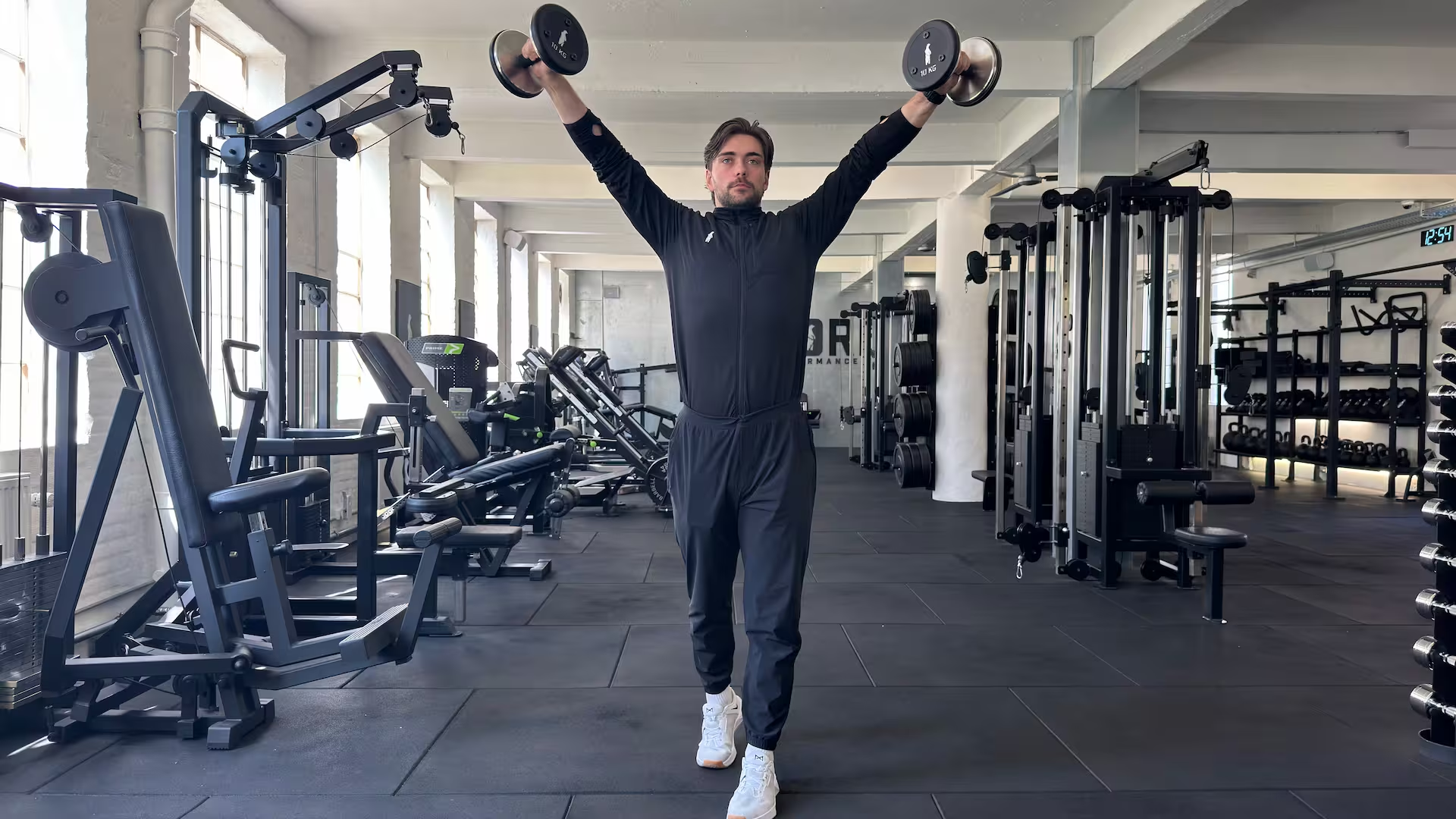
Dumbbell lateral raise
The most common variant and the one we primarily use at Nordic Performance Training. Accessible in almost all gyms and simple to learn — but requires attention to detail.
Setup: Stand or sit with a dumbbell in each hand down along the side of the body. A slight bend in the elbows — approximately 5-10 degrees.
Plane and direction: Don't lift directly out to the side. The shoulder blade lies at a natural angle forward on the rib cage — approximately 30 degrees in front of the frontal plane. It's in this plane — the scapular plane — that the shoulder moves most naturally and with the least risk of discomfort in the shoulder joint. Lift the arms slightly forward rather than purely out to the side.
Lifting height: As a starting point, we lift to approximately 120 degrees of shoulder elevation — and if it feels fine, you can go all the way up. If you experience discomfort in the upper part of the movement, it's most often because you're not lifting in the shoulder blade's plane, your posture is limiting the shoulder blade's movement, the weight is too heavy — or the shoulder is simply sensitive in that part of the movement and needs to build tolerance gradually.
Tempo: Lift in a controlled manner upward with an accelerating tempo — this matches the strength curve, so you squeeze the most as the weight becomes heavier toward the 90 degrees. Lower slowly in 3 seconds. The eccentric phase is important — you control the weight, not the other way around.
An important detail: Dumbbell lateral raise is heaviest at 90 degrees of elevation — where the shoulder is relatively weaker. This invites using momentum and throwing the weight up if it's too heavy. Use a weight that's heavy enough to feel challenging, but light enough to be lifted in a controlled manner all the way without cheating.
Cable lateral raise
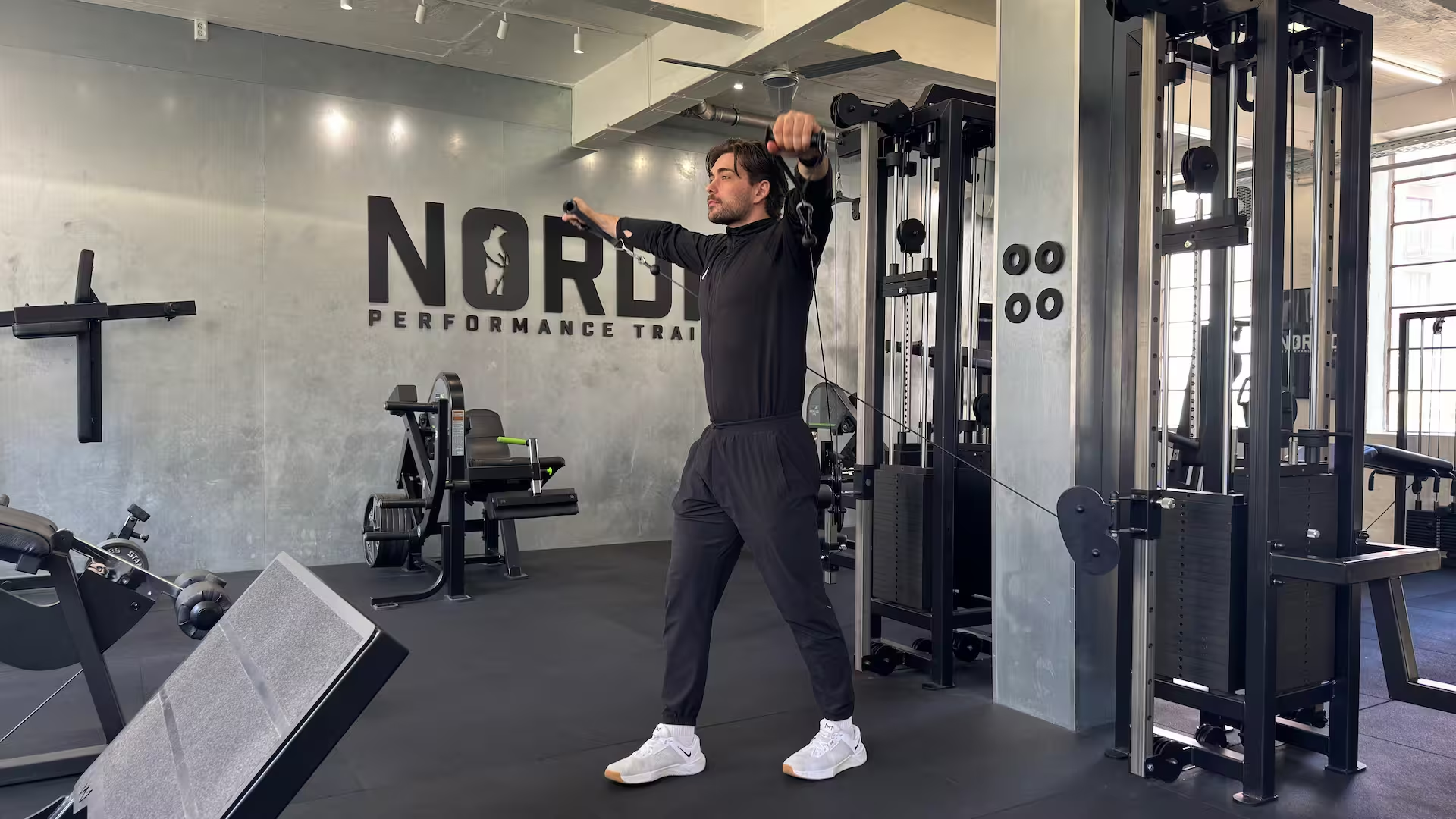
Cable lateral raise provides a more even resistance profile than dumbbells. The cable is heaviest at the bottom — where the shoulder is stronger compared to the top — and decreases toward the top. This provides a more natural match with the body's strength curve and is particularly good for clients who experience discomfort at the top of the movement with dumbbells.
A useful detail: The cable's placement on the machine determines precisely where in the movement the resistance is greatest. The resistance is always greatest when the cable is perpendicular to the arm. A lower placed cable makes it easier at the top — good for clients with shoulder pain who need to build tolerance gradually. It's one of the tools we use to adapt the exercise to the individual client.
Setup: Stand in front of the cable machine with opposite handles in opposite hands, so the cables cross behind the body. Slight bend in the elbows. Lift the arms out and up in the shoulder blade's plane to shoulder height or until the cables hit the underside of the arms.
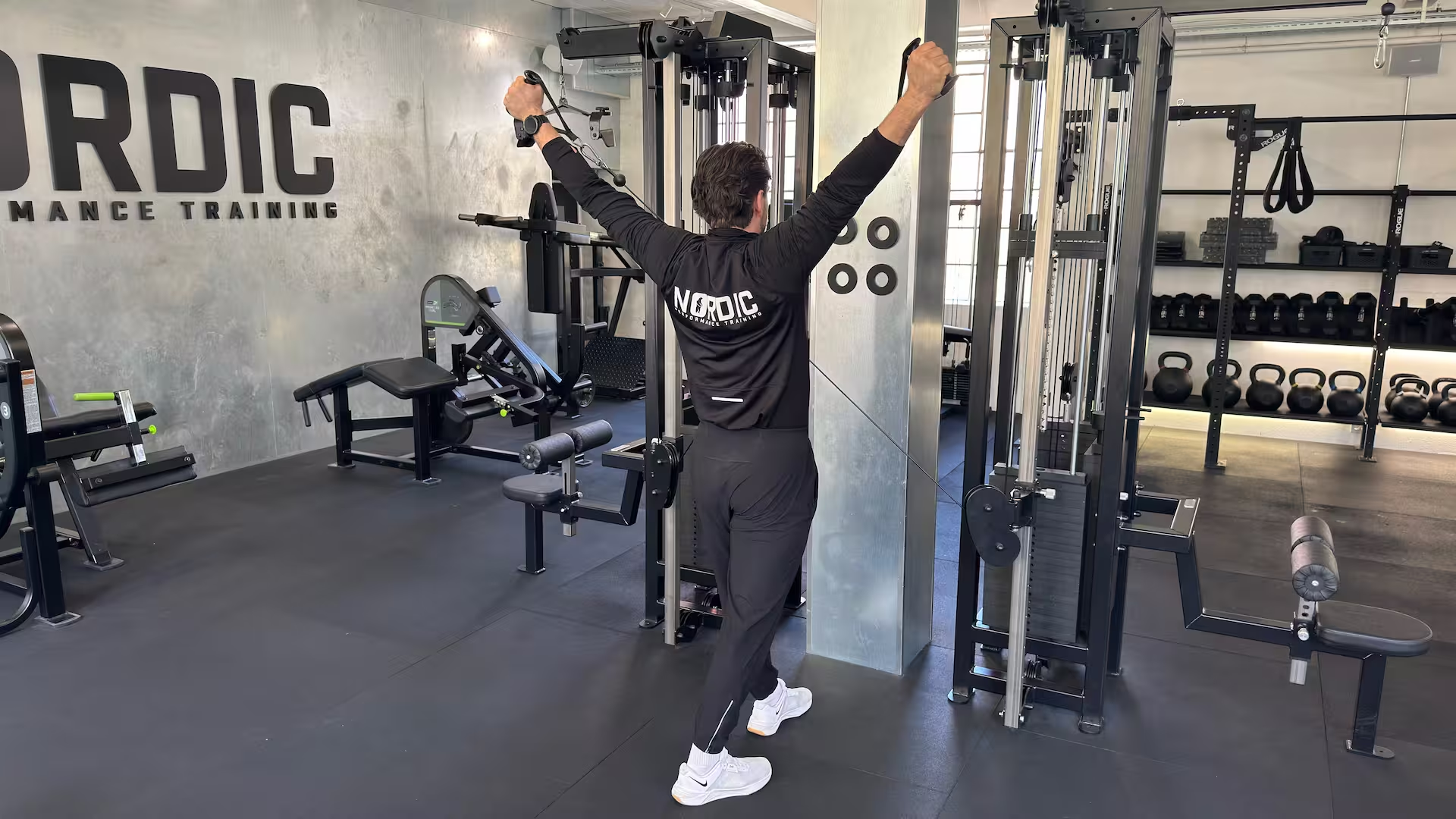
Cable Y-raise
Cable y-raise is a variant that is lifted in a Y-shape — the arms start in front of the body at 90 degrees of elevation and are moved up in a Y-shape. This activates the medial deltoid, upper trapezius, and the lower part of trapezius, which creates an opposing pull on the shoulder blades to stabilise the upper arm's pull on the upper part of the shoulder blades.
Y-raise is particularly good for clients with shoulder pain as the movement bypasses the part of the range of motion that often provokes impingement symptoms. Most people can do it pain-free even with existing shoulder issues — as long as the technique is correct and the weight is appropriate.
Dumbbell lateral raise is our primary variant as it's practical and easy to learn. Cable lateral raise and cable y-raise are the two alternatives we use — either as a supplement or as the primary variant for clients who need a different resistance profile or want to avoid the part of the movement that bothers them.
The most common mistakes
Lateral raise is an exercise many perform less than optimally — and many experience pain with. There's not one definitive factor, but here are the things we see most often.
Too heavy weight and use of momentum. The weight is thrown up with a swing in the body instead of being lifted in a controlled manner. Reduce the weight markedly — you'll be surprised at how challenging it feels with correct technique and without momentum.
Lifting directly out to the side. Many lift the arms in the frontal plane — directly out to the side — rather than in the shoulder blade's plane. This can for some individuals lead to discomfort and impingement symptoms during lateral raise. Lift slightly forward.
Too fast eccentric phase. The dumbbells are released down instead of being lowered in a controlled manner. Always lower in a controlled manner — 2-3 seconds down. This ensures standardisation and that you're in control of the weight the entire way — and that you're not using too heavy a weight.
Elbows too bent. When you bend a lot at the elbow, it's often because the weight is too heavy and you intuitively make the weight easier for the shoulder joint by moving the weight closer to the shoulder joint and limiting the moment arm. But at the same time, a moment arm is created that pulls the shoulder joint toward an internal rotation movement, which the small rotator cuff muscles have to fight against. Additionally, it becomes difficult to know if you're getting stronger, if you're just bending the elbow more and more to make the weight easier — rather than having the same slight bend the whole time.
Too hunched posture. A forward-bent back limits the shoulder blade's ability to move around the rib cage curvature and thereby follow the upper arm as it's lifted — the scapulohumeral rhythm is disrupted. Stand upright with the chest slightly lifted and the shoulder blades pulled slightly back before you start the movement.
Variations
Dumbbell lateral raise
Our primary variant. Practical and accessible in almost all gyms. You can easily take a set of dumbbells over to another machine and run the exercises alternately, just as we do in our programmes, where lateral raises are paired with either leg extension or glute bridge.
Cable lateral raise
Good variant for those who experience discomfort at the top with dumbbells. Provides a more even resistance profile that matches the shoulder's strength curve better. The cable's placement adjusts precisely where in the movement the resistance is greatest — a tool we use to adapt the exercise to the individual client.
Cable Y-raise
Lifted in a Y-shape from 90 degrees of elevation and up. Trains the medial deltoid, upper trapezius, and the lower part of trapezius. Good for clients with shoulder pain as the movement bypasses the part of the range of motion that most often provokes symptoms. Can be used as the primary variant for those who can't do the two other variants pain-free.
Machine lateral raise
A machine lateral raise is the next step for very advanced individuals who want to maximise the activation of the lateral shoulder musculature. The machine provides external stability, which means all energy can go to the actual shoulder work. It can also be done unilaterally — one shoulder at a time — which overcomes the bilateral strength deficit and gives even higher muscle activation per side. Not necessary for the vast majority, but if you have access to a good machine, it can be very effective.
Lateral raise and shoulder pain
Lateral raise is one of the exercises most often associated with shoulder pain — but it's almost never the exercise itself that's the problem. It's the technique and the load.
The so-called "painful arc" — the range of motion between approximately 60 and 120 degrees of elevation — is where the structures in the shoulder joint have the least space. If something is sensitive, it will to a greater degree be provoked within this interval. If you use too heavy a weight and/or lift in a less technically optimal way, it increases the chance of provoking these structures. But if you adjust both weight, technique, and your understanding of why it hurts, the discomfort disappears for the vast majority.
For those who still experience pain after technique adjustments, we have exercise alternatives like the aforementioned cable lateral raise and cable y-raise. The resistance profile matches the shoulder's strength curve better and the movement can be adapted to bypass the part of the movement that bothers — while the shoulder gradually builds strength and tolerance.
That's precisely the approach we used with Lasse. Not just giving up on the exercise or training through the pain — but finding the variant and load his shoulder was ready for, and from there building progressively.
Pain doesn't mean stop. It just means you need to make an adaptation.
If you have persistent shoulder pain, read more in our guide to impingement in the shoulder or frozen shoulder — or see our other shoulder exercises.
Frequently Asked Questions About Lateral Raise
What is lateral raise?
Lateral raise is an isolation exercise for the shoulders where the arms are lifted out to the side against resistance to or above shoulder height. The primary muscle is the medial deltoid — the middle part of the shoulder musculature that gives the shoulders width. Can be done with dumbbells, cable, or machine.
What does lateral raises target?
Lateral raise primarily targets the medial deltoid. All four rotator cuff muscles are activated to stabilise the shoulder joint throughout the movement. Trapezius is activated to guide the shoulder blade's movement in relation to the upper arm — what's called the scapulohumeral rhythm.
What are side lateral raises?
Side lateral raise is a synonym for lateral raise — same exercise, just with "side" added to specify the direction. Both terms are used in a training context.
What is lateral raise called in Danish?
Lateral raise is called sidehæv in Danish. "Lateral raise" is, however, the most common term in Danish training context — and the term people most often search for.
Are lateral raises pull or push?
Lateral raise is neither pull nor push in the traditional sense — it's an abduction movement where the arms are lifted away from the body. It's typically classified as a shoulder isolation that complements both pulling exercises and pressing exercises in a complete programme.
Cable or dumbbell lateral raise — what's best?
Both are effective. Dumbbell lateral raise is most accessible and simple to learn — our primary variant. Cable lateral raise provides a more even resistance profile that matches the shoulder's strength curve better and is particularly good for clients who experience discomfort at the top of the movement with dumbbells. If you have access to both, you can benefit from varying.
What's the difference between lateral raise and face pull?
Lateral raise trains the medial deltoid — the lateral shoulder. Face pull primarily trains the rear deltoid and the external rotators in the shoulder. The two exercises complement each other, but in our system, lateral raise and our pulling exercises cover the same muscles face pull trains — so we don't use it as part of our programmes.
What's the difference between lateral raise and shoulder press?
Shoulder press is a compound exercise that primarily trains the deltoids, the upper part of the chest, and triceps. Which part of the shoulder dominates depends on the grip and elbow position — a wider grip width with the elbows out activates the medial deltoid more. Lateral raise isolates the medial deltoid directly and is a natural supplement regardless of which shoulder press variant you use.
Want to train with us?
Lateral raise is one of our core exercises — and one of the exercises that most often surprises clients with how much progress they can see when the technique is in place and the progression is systematic.
Book a free start-up conversation and find out how personal training in Copenhagen could work for you — either in our private gym or as a call, if that suits you better.
References
Coratella, G., Tornatore, G., Longo, S., Esposito, F., & Cè, E. (2020). An electromyographic analysis of lateral raise variations and frontal raise in competitive bodybuilders. International Journal of Environmental Research and Public Health, 17(17), 6015. https://doi.org/10.3390/ijerph17176015
Phadke, V., Camargo, P. R., & Ludewig, P. M. (2009). Scapular and rotator cuff muscle activity during arm elevation: A review of normal function and alterations with shoulder impingement. Revista Brasileira de Fisioterapia, 13(1), 1–9. https://doi.org/10.1590/S1413-35552009005000012
Serrão, F. V., Foerster, B., Spada, T. C., de Oliveira, A. S., & Siriani, A. O. (2020). Different shoulder exercises affect the activation of deltoid portions in resistance-trained individuals. Journal of Human Kinetics, 75, 5–14. https://doi.org/10.2478/hukin-2020-0051
Table of Contents
Related Blog Posts



I’ve worked as a personal trainer for over 12 years and as a physiotherapist for over 10 years — and co-founded Nordic Performance Training with Lucas 8 years ago to give clients a professional and structured way to train. Since then, I’ve helped hundreds of people build strength, stay consistent, and feel better through evidence-based methods that actually work.
Along the way, I’ve completed advanced certifications and mentored under leading experts in various fields, and I’ve taught many trainers and physiotherapists internationally.
On this blog, I share the same practical tools, insights, and strategies we use every day at Nordic — so you can train smarter, stay consistent, and get real results.



Related Blog Posts
.svg)