








Marathon Running Program: Beginner to Advanced
42,195 kilometres. Marathon. It's the distance where both the psyche and physiology are truly tested – and where respect for energy systems truly matters.
Marathon is not just a race. It's a journey that starts months before the starting gun and continues long after you cross the finish line. It's the distance where everything needs to be in place: training, nutrition, mental strength, pacing, recovery, and understanding of energy systems. Make a mistake in just one area, and "the wall" at 28-35 km will remind you of it.
Important: This guide assumes that you have run at least one half marathon. If you haven't yet, we recommend starting with our half marathon running program and getting that experience first. Going from 0 to marathon typically takes 12-18 months – but training up to marathon from half marathon is realistic in 12 weeks with the right structure and respect for the distance.
With personal training, we've helped many runners cross the marathon finish line – from those who just want to complete their first Copenhagen Marathon, to ambitious runners chasing sub-3 hours. And if there's one thing we've learned, it's this: a good running program for marathon is not about running as many kilometres as possible, but about training strategically, mastering nutrition, and respecting the 42,195 kilometres as the ultimate endurance test it is.
This guide is for you who wants to run marathon – whether it's your first or your fastest. We give you 3 free marathon programs of 12 weeks, adapted to your level, based on physiological principles and practical experience from runners across Copenhagen.
Why run marathon?
Marathon is the ultimate endurance test for recreational runners. The distance has an almost mythical status – from the Greek legend of Pheidippides to modern majors like Berlin, London, New York, and Chicago. Completing a marathon places you in an exclusive club: only about 0.5% of the world's population has ever done it.
For a person of 75 kg, marathon means a calorie burn of approximately 3,000-3,500 calories – more than most burn in a day and a half. But the calories are of course not the big gain here, but it illustrates how extreme it actually is.
A marathon gives you:
- Proof that you can master one of the most ultimate endurance challenges
- Deep experience with nutrition, hydration, and energy management under extreme load
- Mental robustness that forever changes your approach to all of life's challenges
- Access to the world's most prestigious running events (Berlin, London, New York, Chicago, Boston, Tokyo)
- A lifelong identity as a marathon runner – something no one can take from you
- Understanding of what your body and mind are truly capable of
Research shows that endurance training at marathon level not only improves fitness and heart health, but also cognitive functions, sleep quality, stress resistance, and even life expectancy. For many of our clients, marathon doesn't just become a race – it becomes a defining moment in their lives.
Success stories from Nordic Performance Training in Copenhagen
Mads, 38, engineer from Valby
Before: Had completed three half marathons with a PR of 2:05:03. Dreamed of marathon but was afraid of the distance and "the wall" he had heard so much about. Unsure if he could dedicate enough time with a full-time job and two children.
After 12 weeks with Program 1 (Half Marathon to Marathon): Completed Copenhagen Marathon in 4:52:18, extremely emotional the last 2 kilometres and described it as "the best and hardest experience of my life." Has now signed up for Berlin Marathon next year.
"I was convinced that marathon was for 'real' athletes – not for an office worker with two kids. But the program taught me that it's about consistency and structure, not talent. The long Sunday runs of 25-30 km were mental game-changers. When I crossed the finish line in Copenhagen, I knew I could handle anything."
Katrine, 44, project manager from Østerbro
Before: Experienced half marathon runner with a PR of 1:38:04. Had attempted marathon once but dropped out at km 34 due to cramps and energy depletion. Wanted to prove to herself that she could complete it.
After 12 weeks with Program 2 (new PR of 3:44:12): Completed Berlin Marathon in 3:44:12 with a negative split and felt strong all the way to km 38. Has lowered her resting heart rate from 52 to 46 bpm.
"The first time I attempted marathon, I thought half marathon training could just be scaled up. I was wrong. This time I learned to respect the distance – carb loading, gels every 5th kilometre, and the long runs of about 30 km in training. Crossing the finish line in Berlin after having dropped out the year before was incredibly liberating."
Peter, 34, doctor from Frederiksberg
Before: Experienced runner with a marathon PR of 3:14:07. Wanted to break the 3-hour barrier but had hit a plateau despite high training volume of 80+ km per week and repeated overuse injuries.
After 12 weeks with Program 3 combined with our Full Body Program 1x per week (3:14:07 to sub-3:00): Ran London Marathon in 2:56:44, average heart rate 168 bpm (88% of max). Has improved his VO2max from 56 to 59 ml/kg/min. Had no overuse injuries or irritations along the way.
"Breaking 3 hours was an obsession for me for three years. I trained more and more but just got overtrained and injured. Nordic's running program combined with their full body strength training programm taught me that structure and quality beat quantity and willpower every time – fewer junk miles, more focused tempo work and genuine recovery and a generally stronger body. When I saw 2:56 on the clock at the finish line in London, I couldn't stop laughing. Three years of work culminated in that moment."
What is a good marathon time?
Marathon times vary enormously depending on age, gender, training background, and natural predispositions. The most important thing is to focus on your own progression rather than comparing with others.
Benchmarks for different levels:
Beginners (4:30-5:30): Solid first attempt if you have a half marathon base. Focus is on completing – time is secondary.
Lightly trained (4:00-4:30): Good performance for regular recreational runners. Requires structured training and a good nutrition strategy.
Trained (3:30-4:00): Places you in the top 25-35% of Danish marathon runners. Requires dedicated training, good running economy, and experience with the distance.
Well-trained (3:00-3:30): Often requires several years of experience and periodised training. Under 3:30 places women in the top 10-15% and men in the top 15-20%.
Elite (under 3:00): Requires exceptional VO2max, running economy, and mental strength. Under 3:00 places men in the top 5-7% and women in the top 1-3%. Boston Marathon qualification for many age groups.
Remember: A "good" time is a time that represents progress for you. Successful marathon is about crossing the finish line with an experience you're proud of – regardless of the time on the clock.
Marathon-specific knowledge: From half marathon to 42,195km
What's the difference physiologically?
Marathon is not just "double half marathon." Here are the crucial differences:
Energy systems:
- Half marathon: Primarily carbohydrate burning with some fat burning
- Marathon: Critical dependence on fat burning – your glycogen stores only last to approximately 28-32km without supplementation
Glycogen stores:
- Half marathon: You can run out if you don't take in energy along the way, but it's often manageable
- Marathon: "The wall" at km 28-35 is real – without correct nutrition along the way, you will with great certainty hit it
Muscle fatigue:
- Half marathon: Significant muscular exhaustion
- Marathon: Extreme muscular breakdown – your quadriceps and calves will protest violently the last 10km
Mental challenge:
- Half marathon: Km 14–18 is "the dark place."
- Marathon: Km 30–38 is "no man's land" – where both body and mind can completely break down.
Recovery:
- Half marathon: 1-2 weeks of light training
- Marathon: 3-4 weeks of recovery minimum, many experience "post-marathon blues"
"The wall" – What it is, and how you avoid it
"The wall" typically occurs between km 28-35, when your glycogen stores are depleted. The symptoms are:
- Sudden, extreme fatigue
- Legs feel like concrete
- Mental fog and disorientation
- Pace drops drastically (often 1-2 min/km slower)
- Emotional instability (many cry or want to stop)
How to avoid the wall:
- Carb loading the last 3-4 days – fill the glycogen stores completely
- Start conservatively – the first 10km should feel TOO easy
- Fuel early and regularly – first gel at km 5-7, then every 20-30 min
- Train long runs with nutrition – teach your stomach to absorb during running
- Respect the distance – marathon is not a half marathon you just continue
Pacing strategies for marathon
Negative Split Approach (strongly recommended for most)
Start 15-20 seconds/km slower than your goal pace for the first 10km, hold steady km 10-30, and fight to hold pace km 30-42.
Example – goal 4:00 (5:41/km pace):
- Km 1-10: 5:50-5:55/km (save glycogen, find the rhythm)
- Km 11-30: 5:41-5:45/km (steady state, fuel every 5km)
- Km 31-35: 5:45-5:50/km (accept that it gets hard)
- Km 36-42: Everything you have – hold it together
Advantages:
- Saves glycogen for the critical last 12km
- Avoids "exploding" at km 30
- Mental boost from overtaking others at the end
- Physiologically optimal – less muscle damage early
Even Split Approach (only for very experienced)
Hold exactly the same pace the entire way. Requires perfect knowledge of own capacity, exceptional discipline, and experience from several marathons.
Example – goal 3:00 (4:16/km pace):
- Km 1-42: 4:16/km (±3 seconds)
Prerequisites:
- Minimum 3-4 completed marathons
- Precise knowledge of own anaerobic threshold
- Mental strength to hold pace when it hurts
Important pacing rule for everyone
The first 10km should feel too easy. If you feel strong at km 10, you're on the right track. If you already feel like you're "at work" at km 10, you've started too fast – and you will pay the price after km 30.
Nutrition for marathon: Before, during, and after the race
Nutrition is where marathon fundamentally differs from all shorter distances. Mistakes here will ruin your race – guaranteed.
The week before the race (Carb Loading)
7-4 days before:
- Normal diet, light training
- Focus on hydration (urine should be light yellow)
3-4 days before (critical carb loading phase):
- Increase carbohydrate intake to 8-12g per kg body weight
- Reduce fat and protein to make room for carbohydrates
- Reduce fibre markedly to avoid stomach problems
- Drink plenty of water (but avoid overhydration)
- Expect weight gain of 1-2kg (that's glycogen + water – completely normal)
The evening before:
- Large carbohydrate-rich meal at 18-19: pasta, rice, potatoes, bread
- Avoid new foods – eat ONLY what you know
- Minimal fibre, no spices, no alcohol
- Go to bed early (even if you can't sleep – rest counts too)
Race morning (3-4 hours before start)
- 2-3g carbohydrate per kg body weight (e.g. oatmeal with banana, honey, and raisins)
- 400-600ml water
- Avoid fat and too many fibres
- Coffee if you're used to it (helps with both energy and toilet)
60-90 minutes before:
- 200-300ml water or sports drink
- Light snack if hungry (energy bar, banana)
30 minutes before:
- 1 gel with water (if you're used to it)
- 100-150ml water
During the race (CRITICAL – this determines your race)
You MUST take in carbohydrates and fluids systematically during marathon. Your body weight determines how much:
Practical plan for ~4 hour marathon:
For faster races (under 3:30):
- Same basic principle, but gel every 6-7km can be sufficient
- Minimum 5-6 gels over the entire distance
- Sports drink at all depots supplements your gel strategy
IMPORTANT RULES:
- Test EVERYTHING in training first – your stomach needs to get used to absorbing carbohydrates during running
- Start nutrition EARLY – don't wait until you're hungry or tired
- Take gel WITH water – not sports drink (too much sugar at once)
- Have backup gels – depot can be empty or have the wrong product
- Know your gels – only use brands you've tested in training
Popular gel brands:
Shopping tip: For your first marathon, buy 10-12 gels of the brand you've tested in training. Use 7-8 during the race and have the rest as backup in your drop bag or with family and friends along the route.
After the race (Recovery – the next 24-72 hours)
0-30 minutes after:
- Protein + carbohydrate combination IMMEDIATELY (chocolate milk, recovery shake)
- Goal: 20-30g protein + 50-100g carbohydrate
- Begin rehydration (500-1000ml fluid in the first hour)
- Eat even if you're not hungry
2-4 hours after:
- Proper meal with protein, carbohydrates, and vegetables
- Continue fluid intake
- Avoid alcohol the first 24 hours (inhibits recovery)
The next 3-5 days:
- Increased protein intake (1.8-2.2g/kg) for muscle repair
- Anti-inflammatory foods (fatty fish, berries, vegetables)
- Extra sleep (8-10 hours if possible)
- Only light movement (walks, swimming)
Mental strategy: Mastering the 42,195 kilometres
Marathon tests your mental strength in a way no other distance does. Here's how you handle the six phases:
Km 1-10: "The controlled start"
Mental state: Excitement, adrenaline, temptation to start too fast. Everyone around you is running too fast.
Strategy: Extreme discipline. It should feel TOO slow.
Mantra: "I'm running my own race. The first 10km is warm-up."
Concrete techniques:
- Ignore ALL runners who overtake you – you'll see them again at km 35
- Focus on breathing: calm, deep, controlled
- Check pace on the watch constantly – don't trust the feeling
- Take first gel at km 5
- Smile and enjoy the atmosphere – this is the easy part
Km 11-20: "Stick to the plan"
Mental state: You feel strong, the rhythm is found, and the temptation to increase the pace is great. This is the dangerous phase.
Strategy: Stay with the plan. Your feelings are lying. You are NOT stronger than you thought – you'll pay later.
Mantra: "Feelings are not facts. I'm holding my pace. The marathon starts at km 30."
Concrete techniques:
- Resist the temptation to "make up time" or follow faster runners
- Fuel systematically: gel at km 10, km 15, km 20 – no exceptions
- Mental check every 5th km: "Can I hold this pace for 2+ more hours?"
- If you feel fantastic: that's good, but not a green light
- Save your mental reserves – you'll need them
Km 21-25: "The halfway illusion"
Mental state: You've run the half marathon distance. It feels like a milestone – but it's a trap.
Strategy: Understand the maths: 50% of the distance ≠ 50% of the effort. The hardest part is still waiting.
Mantra: "Half the kilometres. Not half the work. I'm exactly where I should be."
Concrete techniques:
- Don't celebrate too early – save it for km 40
- Carbohydrate intake at km 25 is critical – your body is preparing for the wall
- Find a runner with similar pace and hang on
- Prepare yourself mentally: the next 15km will be the hardest of your life
- Briefly visualise how it will feel to cross the finish line
Km 26-30: "The wall"
Mental state: Glycogen stores are depleting. Legs are getting heavy. Pace may drop. This is where most people hit the wall.
Strategy: Nutrition, nutrition, nutrition. And accept that it gets hard now.
Mantra: "The wall is not a sign that I'm failing. It's a sign that I'm fighting. Gel in, pain out."
Concrete techniques:
- Take gel at km 25 AND km 30 (follow the plan) – regardless of whether you feel a need
- If pace drops: accept it, panic doesn't help
- Focus on cadence – keep the legs going, even if they're slow
- Drink at every depot – dehydration makes everything worse
- Say to yourself: "This is what I've trained for"
Km 31-38: "No man's land"
Mental state: Unknown territory. Everything hurts. Doubt. "Why am I doing this?" Body and mind can completely shut down. This is where marathons are won or lost.
Strategy: Survival. Minute by minute. Accept the pain – it won't disappear, but you can bear it.
Mantra: "The pain is temporary. Stopping is permanent. I AM a marathon runner."
Concrete techniques:
- Break the distance into small pieces: "Only to the next kilometre sign"
- Count steps: 100 steps at a time
- Take gel at km 35 – you need every carbohydrate
- Remember your hardest training session: "I've survived hard things before"
- Visualise the finish line and the feeling of crossing it
- Say out loud: "I'm not stopping" – your brain believes what you say
- If you become very emotional, that's completely okay, almost everyone does
Km 39-42,195: "The final push"
Mental state: Extreme exhaustion, but also hope and maybe a final adrenaline kick. "I'm ALMOST there."
Strategy: All in. Every fibre of your body and mind. You haven't saved for later – there is no later.
Mantra: "This is what I've trained for in 12 weeks. I am a marathon runner. No one can take this from me."
Concrete techniques:
- Countdown: "Only 3km. Only 2km. Only 1km. Only 500m. Only 200m."
- Increase cadence if possible – even small quick steps help
- Enjoy the spectators – they're cheering for YOU
- Feel the adrenaline – your body has saved a final reservoir for you
- When you see the finish line: Give absolutely EVERYTHING you have
- Raise your arms when you cross – you've earned it
- Let the emotions come – you've just done something extraordinary
Different training types in a marathon program
Marathon training builds on the same principles as shorter distances, but with crucial additions and adjustments.
Easy runs (Z2)
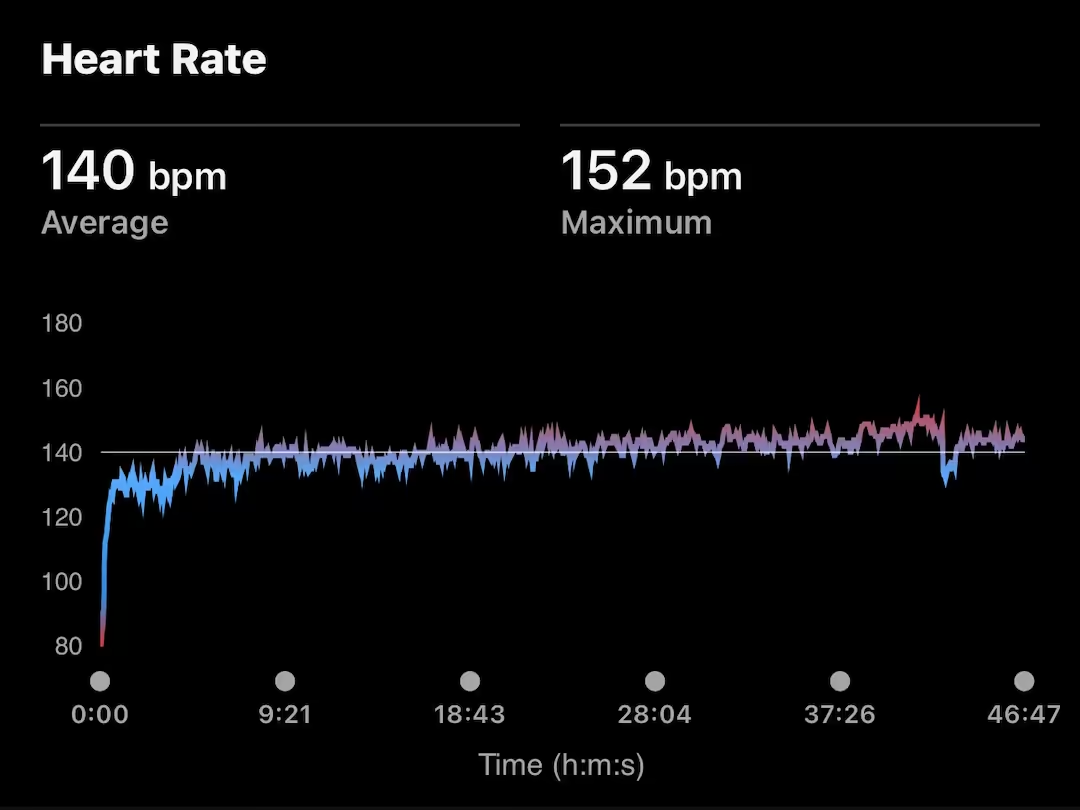
The foundation for all marathon training. Here you run at a pace where you can talk in full sentences (70-80% of your max heart rate).
Note: Zone 1 training (50-70% max HR) exists but is primarily used by ultra runners. For marathon runners with limited time, Z2 provides superior aerobic development per training minute.
Why it's EXTRA important for marathon: You build the aerobic base that enables you to burn fat efficiently – crucial for a distance where glycogen stores don't last the entire way.
The 80/20 distribution, where approximately 80% of training takes place at low intensities and 20% at high intensities, is supported by recent meta-analyses. This polarised approach proves particularly effective for improvement of VO2max, especially in well-trained athletes and in shorter training periods (under 12 weeks).
Marathon-specific: Your Z2 runs will be longer than for shorter distances – typically 10-16km as "normal" easy runs.
Long runs (Long Runs)
The MOST IMPORTANT element in marathon training. These runs accustom your body to running for many hours and train you in taking in carbohydrates along the way.
Progression:
- Week 1-4: 20-24km
- Week 5-8: 26-30km
- Week 9-10: 30-32km (peak)
- Week 11-12: Taper down to 16-20km
Tempo: Primarily Z2 (conversational pace), but the last 8-12km can include marathon-pace sections to simulate race fatigue.
Why they're crucial: Long runs train your body to burn fat, strengthen your muscles and tendons for repeated loading, and give you mental experience with running for many hours.
Important rules for long runs:
- Never more than 35km (diminishing returns + injury risk)
- Take in carbohydrates EXACTLY as you will on race day
- Run at the same time as your race starts
- Use the same clothes and shoes as you'll use for the race
- Treat the last 10km as mental training
Tempo runs and threshold training (Z3/Z4)
Running at a pace that feels "comfortably hard" – approximately 80-90% of max heart rate. For marathon, these runs are typically 12-20km.
Note: Technically, tempo runs are Z3 (aerobic threshold), while threshold runs are Z4 (anaerobic threshold), but for practical training purposes, this Z3-Z4 range develops similar adaptations.
Purpose: Raises your anaerobic threshold so you can hold a higher pace longer.
Types:
- Steady marathon pace: 14-18km at exact marathon tempo
- Progressive: Start easy, finish at marathon pace or faster
- Broken tempo: 3-4 × 4-5km at marathon pace with short rest
Interval training (Z4/Z5)
Shorter, intense intervals of 800-2000m. Improves VO2max and running economy.
Note: Intervals make up a smaller part of marathon training than for 5km/10km – focus is more on threshold and long runs. But they're still important for developing speed.
Typical marathon intervals:
- 6-8 × 1000m with 2 min rest
- 5-6 × 1200m with 2 min rest
- 4-5 × 1600m with 2-3 min rest
Purpose: To improve your fitness and ability to hold a high pace over longer time.
Strides
Short, controlled accelerations of 80-100 metres performed at the end of easy runs. Perform 3-6 strides with 30-60 seconds of fast running (approximately 90% of your sprint speed) followed by full recovery between each repetition.
How to perform strides:
- Jog at easy pace (Z2)
- Accelerate gradually over 20 metres to approximately 90% of your top sprint
- Hold the speed for 30-60 seconds
- Decelerate gradually over 20 metres
- Jog on or walk slowly until you're fully recovered (heart rate should come down)
- Repeat 2-5 more times
When: After easy runs (Easy Runs), when the muscles are warm but before you're tired. Never on rest days.
Why strides are invaluable: Strides improve running economy, neuromuscular coordination, and make your running pace feel natural without creating fatigue. They're one of the most time-efficient ways to improve your marathon performance – and keep your fast-twitch muscle fibres active when you run very slowly in training.
Personal recommendation: I like to do 3-4 strides at the end of my easy runs, but never allow the heart rate to stay elevated, as it's still an easy run.
Before you start – Important preparation
Equipment – What you actually need
You don't need expensive equipment to run marathon. But the right equipment makes training more comfortable, more precise, and reduces the risk of injuries.
Running shoes – Your most important equipment
For marathon, shoe choice is even more important than for shorter distances. You'll be running in these shoes for 3-5+ hours – comfort is crucial.
Beginners: Start with maximally cushioned running shoes – soft, shock-absorbing, and forgiving.
Lightly trained: Combine max cushioned shoes for long runs and a daily trainer for tempo sessions.
Experienced runners: We recommend the following rotation:
- Maximal cushioning (long runs and recovery)
- Daily trainer (daily use and tempo)
- Race shoes (only for race day and 2-3 test runs)
IMPORTANT RULE: NEVER run marathon in new shoes. Your race shoes should have minimum 50-80km before race day.
Our favourites:
Hydration vest (Essential for marathon training)
For long training runs over 20km, you need to bring fluids and nutrition. A hydration vest is almost obligatory for marathon training.
Recommended hydration vests:
- Salomon Active Skin 4/8 (industry standard)
- Nathan VaporKrar (good for larger runners)
- Camelbak Ultra Pro (robust and reliable)
- Ultimate Direction Ultra Vest (good capacity)
Tip: Choose a vest with room for minimum 1 litre of fluid + 6-8 gels.
Clothing
The best materials for running are polyester, nylon, spandex, bamboo, and merino wool, because they're breathable, moisture-wicking, and flexible.
Avoid cotton, as it absorbs moisture, becomes heavy, and increases the risk of discomfort and chafing during running.
CRITICAL for marathon: Test your race outfit on minimum two long runs (25km+). Chafing and abrasions only show up after 2-3 hours – and you don't want to discover problems on race day.
Anti-chafing: Use vaseline or BodyGlide on:
- Nipples (obligatory for men)
- Inner thighs
- Under the arms
- Feet (between toes and on heel)
GPS watch and heart rate measurement
A GPS watch is essential for marathon training. You MUST be able to:
- Track pace on long runs
- Monitor heart rate zones
- Maintain structure in intervals
- Analyse your training over time
Top 3 GPS watches:
Important for marathon: Make sure your watch has battery life for 4-5+ hours of GPS tracking. Nothing is worse than a watch that dies at km 35.
Heart rate monitor
A heart rate monitor (typically chest strap) can provide higher accuracy than optical heart rate measurement from the wrist – especially during long runs.
Top heart rate monitors:
Conclusion: Start with good shoes and a phone app. Add GPS watch when you get serious. Running belt or hydration vest is necessary for the long runs.
WarWarm-up, cool-down, and minimising injuries
Warm-up is important, but it's not a magic solution. It's especially important to warm up well before harder training like intervals and tempo runs. For long, easy runs, thorough warm-up is normally not necessary – the first kilometres function as warm-up.
But the most important thing for avoiding injuries is to take care of your training volume. Marathon training involves high volume, and injury risk increases markedly if you increase too quickly.
Research shows that approximately 40% of runners experience injuries every year – and in most cases, it's due to excessive loading, not lack of warm-up or stretching exercises.
Warm-up (5-10 minutes)
Standard warm-up before most running sessions:
- 3-5 minutes of slow jogging or brisk walking (Z1-Z2)
- 3-5 minutes with varied tempo (short 15-30 second accelerations)
Optional dynamic exercises (especially before intervals):
- 10 × leg swings forward/backward per leg
- 10 × hip circles per direction
- 10-15 × high knees on the spot
- 20-30 bodyweight squats or 10-15 split squats per leg
Cool-down (5-10 minutes)
Standard cool-down:
- 5-10 minutes of slow jogging, walk/jog combination, or brisk walking
Optional static stretching:
- Calves: 30-60 seconds per leg
- Quads: 30-60 seconds per leg
- Hamstrings: 30-60 seconds per leg
- Hip flexors: 30-60 seconds per side (particularly important for marathon runners)
Listen to your body – distinguish between soreness and injury
Normal soreness:
- Diffuse muscle fatigue 24-72 hours after long runs
- Improves with light movement and warmth
- Doesn't affect running style or function
Warning signs of injury:
- Sharp, localised pain during running
- Pain that worsens with activity
- Swelling or visible inflammation
- Pain that lasts more than a week
- Pain that changes your running style
IMPORTANT RULE FOR MARATHON TRAINING: Better to lose a week of training than to lose your entire marathon. If you're in doubt, take an extra rest day.
If you experience warning signs, you should take a break and possibly seek help from a physiotherapist or running coach. You can also read our articles about knee pain, runner's knee, hip pain, shin splints, muscle strains, sprained ankles or back pain.
Basic running technique
The most important thing first: It's not your running style that determines whether you get an injury. It's how you dose your training.
The most well-documented factor for prevention of running-related injuries is load management – that is, how quickly and how much you gradually increase your training volume.
Basic principles for good load management
- Increase slowly and evenly in volume or intensity (max 10% per week)
- Listen to your body – onset pain should be respected
- Use appropriate running shoes for your needs
- Ensure sufficient recovery – sleep, food, and rest count too
- Include cut-back weeks every 3-4 weeks (reduce volume by 20-30%)
Good, general advice on running style
Cadence (step frequency): Research shows that a higher cadence (around 170-190 steps per minute) can improve biomechanics. For marathon runners, consistent cadence throughout the entire race is a sign of good running economy.
Landing pattern: It's not about heel vs. forefoot. The most important thing is that you don't overstride – that is, land with your foot far in front of your body.
Posture: Avoid "leaning back" with bent hips. Think "tall spine" and a slightly forward-leaning posture. This becomes extra important in the last 12km of marathon, when fatigue sets in.
Relaxation: Tense shoulders, arms, and hands cost unnecessary energy. Aim for a relaxed, elastic run – especially important over 42km.
Choose your free marathon running program
Here you get 3 structured programs for different starting points. All programs follow the same physiological principles and assume that you have completed at least one half marathon.
Each program contains 4-5 weekly running sessions.
The last 2 weeks before your marathon are critical. Week 11 reduces volume by ~30-40%, week 12 by ~50-60%. Intensity is maintained, but duration is lowered markedly. This lets the body recover and fill the glycogen stores.
Running program 1: From Half Marathon to Marathon (12 weeks)
For you who has completed half marathon and wants to manage your first marathon
This program gradually builds your endurance and accustoms you to running (and fuelling) over much longer time. The goal is to complete – not to set records.
Week 1-4: Building aerobic base
- Session 1: 10km easy run (Z2) + 4 strides
- Session 2: 5×800m (Z4), 2 min rest
- Session 3: 8km easy run (Z2)
- Session 4: Long run: 20-24km (Z2) – start practising nutrition!
- Session 5 (optional): 6-8km easy run or walking
Week 5-8: Distance building
- Session 1: 12km easy run (Z2) + 5 strides
- Session 2: 4×1200m (Z4), 2 min rest
- Session 3: 10km with 5km tempo (Z3-Z4) in the middle
- Session 4: Long run: 26-30km (Z2) – full nutrition strategy every time
- Session 5 (optional): 8-10km easy run
Week 9-10: Peak phase
- Session 1: 14km easy run (Z2) + 6 strides
- Session 2: 3×2000m (Z4), 2 min rest
- Session 3: 12km with 6km marathon pace
- Session 4: Long run: 30-32km (Z2) – full race simulation with nutrition
- Session 5 (optional): 8km easy run
Week 11: Taper week 1
- Monday: 10km easy (Z2) + 4 strides
- Wednesday: 4×1000m at marathon pace, 2 min rest
- Friday: 6km easy run
- Sunday: 18-20km easy run
Week 12: Race week
- Monday: 6km easy + 4 strides
- Wednesday: 3×800m at race pace, 90 sec rest
- Friday: 4km shakeout + 4 strides OR rest
- Sunday: MARATHON – goal: complete and enjoy it!
Pacing tip: Start 20-30 sec/km slower than you think. The first 10km should feel far too easy. You'll thank yourself at km 35.
Have more time? Repeat week 1-4 once before continuing to week 5 for a 16-week build-up. This gives extra aerobic base and is particularly recommended if it's your first marathon.
Running program 2: From 4:30 to 3:45 (12 weeks)
For you who has completed marathon and wants to improve your time significantly
This program focuses on raising your aerobic capacity and improving your ability to hold marathon pace over longer time.
Week 1-4: Building aerobic base + tempo introduction
- Session 1: 12km easy run (Z2) + 5 strides
- Session 2: 5×1200m (Z4), 2 min rest
- Session 3: 10km tempo (Z3-Z4)
- Session 4: Long run: 22-26km (Z2)
- Session 5 (optional): 10km easy run
Week 5-8: Marathon tempo focus
- Session 1: 14km easy run (Z2) + 6 strides
- Session 2: 6×1000m (Z4-Z5), 90 sec rest
- Session 3: 14km with 8km at marathon pace (~5:20/km)
- Session 4: Long run: 28-32km with last 10km at marathon pace
- Session 5 (optional): 10-12km easy run
Week 9-10: Peak phase and race specificity
- Session 1: 14km easy run (Z2) + 6 strides
- Session 2: 4×1600m (Z4-Z5), 2 min rest
- Session 3: 16km at marathon pace (~5:20/km)
- Session 4: Long run: 30-32km with 12km at marathon pace
- Session 5 (optional): 8km easy run
Week 11: Taper week 1
- Monday: 10km easy (Z2) + 5 strides
- Wednesday: 4×1000m at marathon pace, 90 sec rest
- Friday: 6km recovery jog
- Sunday: 16-18km with 6km at marathon pace
Week 12: Race week
- Monday: 6km easy + 5 strides at marathon pace
- Wednesday: 3×800m at race pace, 90 sec rest
- Friday: 4km shakeout + 4 strides
- Sunday: MARATHON – goal: 3:45 (5:20/km pace)
Pacing tip: Start at 5:25-5:30/km for the first 10km. Km 11-30 at 5:20/km. Km 31-42: hold 5:20 as long as you can, accept that it gets hard.
Have more time? Repeat week 1-4 and/or week 5-8 once for a 16-20 week build-up. More weeks with high volume give a better aerobic base and increase the chance of hitting your time goal.
Running program 3: From 3:30 to sub-3:00 (12 weeks)
For experienced marathon runners with a solid base and high ambitions
This program requires dedication and experience. Focus on high quality, race-specific pace, and mental toughness. Sub-3:00 is elite territory.
Week 1-4: Strengthen aerobic base
- Session 1: 14km easy run (Z2) + 6-8 strides
- Session 2: 6×1200m (Z4-Z5), 2 min rest
- Session 3: 12km tempo (Z3-Z4)
- Session 4: Long run: 26-28km (Z2)
- Session 5 (optional): 12km easy run
Week 5-8: VO2max + Marathon tempo
- Session 1: 16km easy run (Z2) + 8 strides
- Session 2: 5×1600m (Z5), 2 min rest
- Session 3: 16km at marathon race pace (~4:15/km)
- Session 4: Long run: 30-34km with 14km at marathon pace
- Session 5 (optional): 12-14km easy run
Week 9-10: Sharpness + Specificity
- Session 1: 16km easy run (Z2) + 8 strides
- Session 2: 4×2000m (Z4-Z5), 2 min rest
- Session 3: 18km at marathon pace (~4:15/km)
- Session 4: Long run: 32-35km with 16km at marathon pace
- Session 5 (optional): Light activity
Week 11: Taper week 1
- Monday: 10km easy (Z2) + 6 strides
- Wednesday: 4×1200m at marathon pace, 90 sec rest
- Friday: 6km easy run
- Sunday: 18-20km with 8km at marathon pace
Week 12: Race week
- Monday: 8km easy + 6 strides at marathon pace
- Wednesday: 4×800m at race pace, 90 sec rest
- Friday: 5km shakeout + 4 strides
- Sunday: MARATHON – goal: sub-3:00 (4:15/km pace)
Pacing tip: Start at your goal pace (4:15/km) from km 1. Sub-3:00 requires discipline, experience, and trust in the training. Fuel early and often – you can't reach sub-3:00 without perfect nutrition.
Have more time? For sub-3:00, it's strongly recommended to repeat week 1-4 and week 5-8 once for a 20-week build-up. More weeks with high volume and marathon tempo work give significantly better prerequisites for breaking the 3-hour barrier.
Guide to intensity zones / heart rate zones
For many new runners, training terminology can seem confusing. Here is a simple, practical guide to how you should train at different intensities.
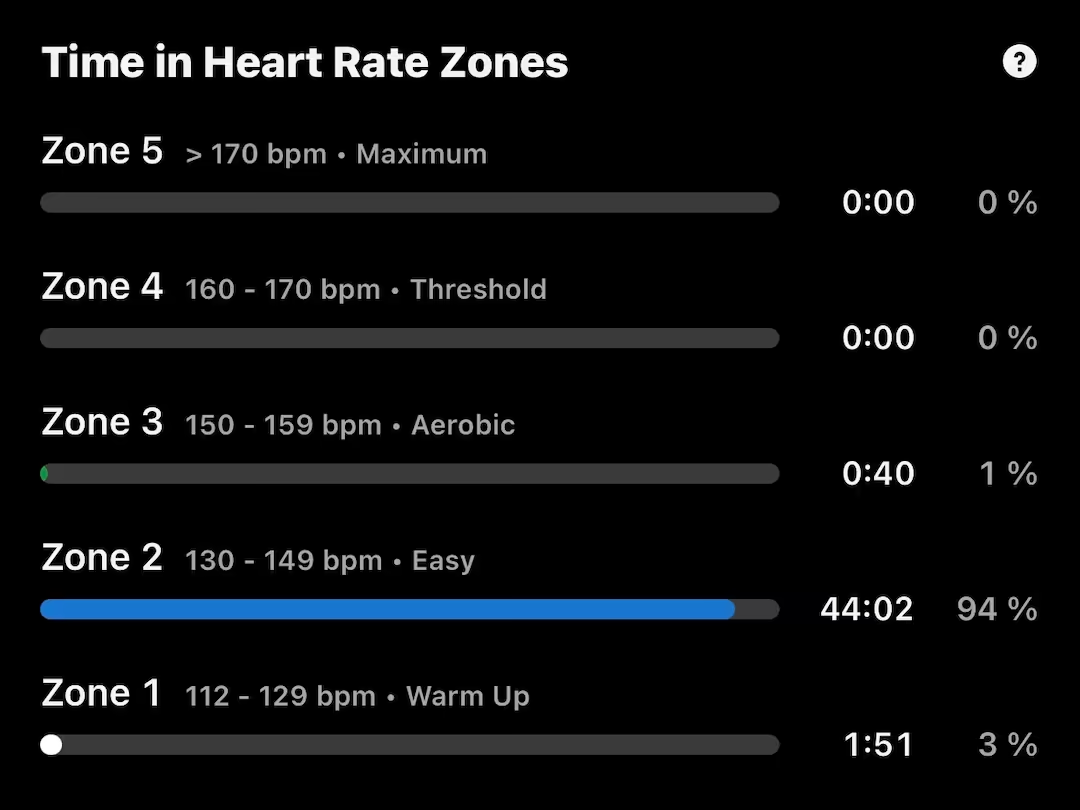
Zone 2 – Easy pace (Conversational pace)
This is your base pace. You should be able to talk in full sentences while running.
- Approximately 70-80% of your maximum heart rate
- Feels "comfortably hard" – you can physiologically continue for several hours
- This builds your aerobic base and makes up the majority of your total running training
- For marathon: This is the pace for the majority of your long runs
Zone 3-4 – Tempo/Threshold
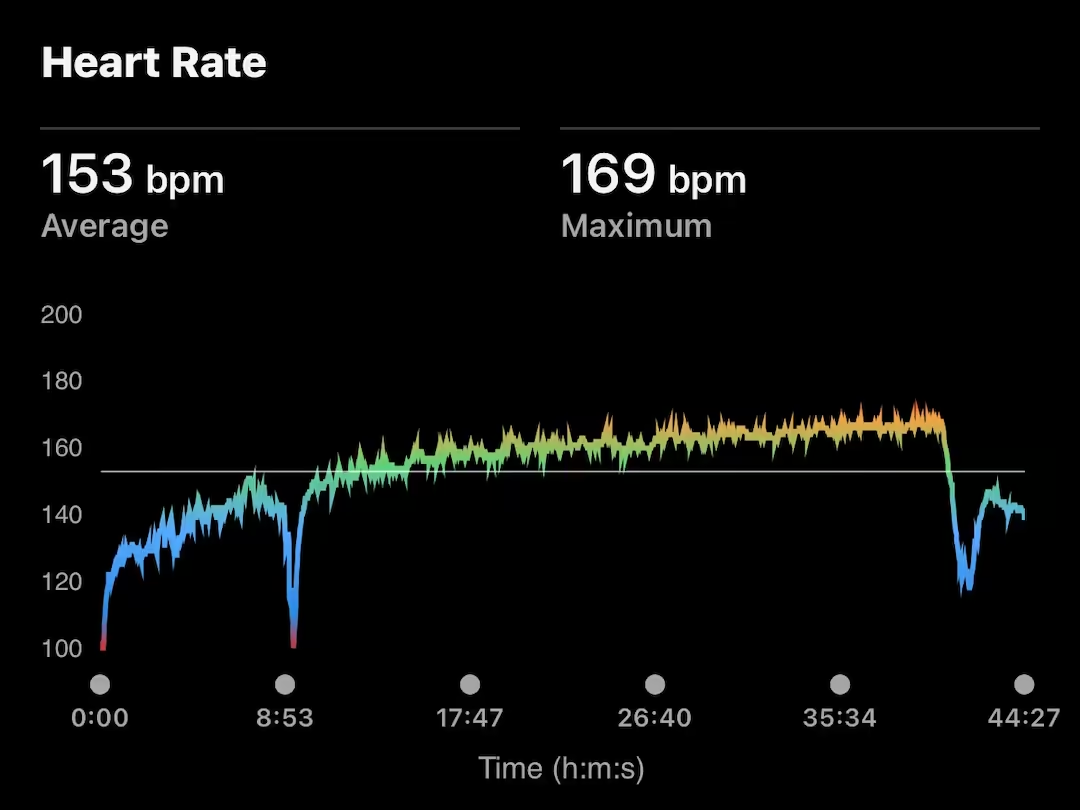
You can say individual words or short sentences, but not hold a longer conversation.
- 80-90% of your maximum heart rate
- The pace you can hold for 20-75 minutes depending on level
- Improves your "anaerobic threshold"
- For marathon: Your marathon pace typically sits at the low end of this zone
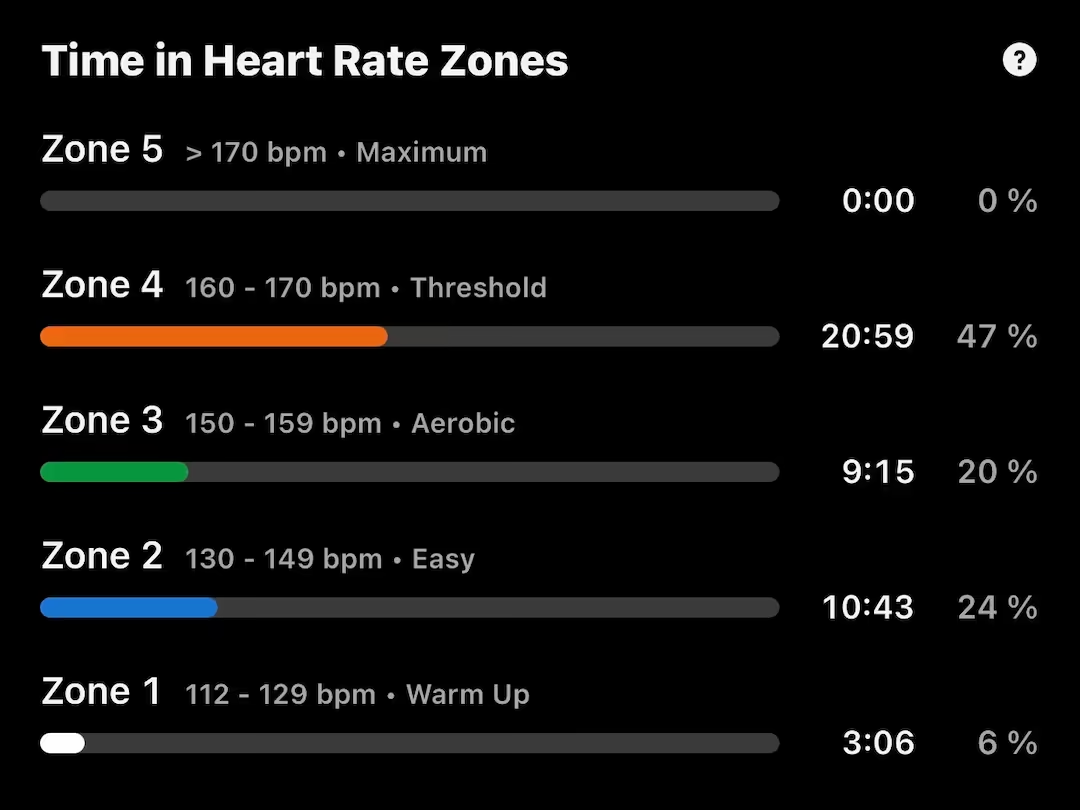
Zone 4-5 – Intervals
Zone 4 – "Very hard"
- You can only say individual words
- 80-90% of max HR – close to your 10km pace
- Feels hard but sustainable for 15-30+ minutes
Zone 5 – "Everything you have"
- Talking is impossible
- 90-100+% of max HR
- Typically sustainable for 1-5 minutes


Practical intensity control without heart rate monitor
Talk method:
- Z2: You can say the entire sentence "I'm running around the lakes right now" naturally
- Z3-Z4: You need to take 1-2 breaths in the middle of the sentence
- Z4-Z5: You can only say "I'm running" before you need to catch your breath
- Z5: You can't talk at all
RPE scale (Rate of Perceived Exertion) 1-10:
- Z2: 5-6/10 (easy to moderate effort)
- Z3-Z4: 7-8/10 (hard effort)
- Z4-Z5: 8-9/10 (very hard effort)
- Z5: 10/10 (maximal effort)
The science behind the zones
Each intensity zone stimulates different physiological adaptations:
Z2 training develops your cardiovascular system, increases the number of mitochondria in your muscles, and improves fat burning. For marathon, this is CRITICAL – you will burn a massive amount of fat during the race.
Z3-Z4 training improves your body's ability to transport and use oxygen efficiently. It raises the speed at which you can run without accumulating lactic acid.
Z4-Z5 training pushes your heart-lung system to maximum capacity and improves your neuromuscular power.
Running routes, motivation & practical advice
Copenhagen's best marathon training routes
Refshaleøen + Amager Strandpark + Dragør (30-35km)
- Starting point: Øresund Metro Station
- Route: To Refshaleøen → Return to Amager Strandpark → Around the airport along the coast → Dragør Fort → return same way
- Terrain: Flat, primarily asphalt
- Advantages: Minimal traffic, varied scenery. Perfect for the long runs.
The Harbour Run Extended (28-32km)
- Starting point: Langelinie
- Route: South along the harbour via Kastellet → Inderhavnen → Islands Brygge → Kalvebodbroen → return via Fælleden/Royal Golf
- Terrain: Flat, asphalt
- Advantages: Scenic along the water, many depots along the way if you plan it.
The Lakes + Fælledparken + Utterslev Mose + Damhussøen + Valby (30 km)
- Start: Dronning Louises Bro
- Route: The Lakes → Fælledparken → Ryparken/Utterslev Mose → Damhussøen → Valbyparken → Søndermarken → Frederiksberg Have → return
- Terrain: Mix of asphalt and gravel, slightly undulating
- Advantages: Varied nature and parks, many water options, good paths for both running and cycling, toilets along the way. The route alternates between lakes, green areas, and small hills, which makes it mentally easier and more motivating.
Copenhagen Marathon route
Tip: Run the official Copenhagen Marathon route as training 3-4 weeks before the race. It gives you a mental advantage on race day – you know exactly what's coming.
Maintain continuity through 12 weeks
The biggest challenge in marathon training is maintaining motivation over 12 weeks. Here are concrete strategies:
Plan your long runs:
- Schedule them on the same weekday (typically Sunday)
- Plan the route and nutrition the day before
- Lay out clothes and equipment the evening before
- Arrange with a running partner – the long runs are MUCH easier with company
Train at the same time:
- Morning runs (6:30-7:30): Fewer people, starts the day positively
- Lunch break (12:00-13:00): Perfect for shorter training sessions
- After work (16:00-18:00): Good way to end the workday
Find support:
- Running partner or training group
- Online communities (Strava groups)
- Local running clubs (Sparta, FIF, Copenhagen Marathon)
- Share your goals with friends and family
Nutrition, recovery, and strength training
Daily diet for marathon training
Daily diet:
- Carbohydrates: 6-10g per kg body weight on training days (higher on long runs)
- Protein: 1.6-2.0g per kg body weight for optimal recovery
- Focus on whole grains, fruit, vegetables, lean protein
- Healthy fats from nuts, avocado, olive oil
Around training:
- 2-3 hours before running: Light meal with carbohydrates
- During long runs (2+ hours): 60-90g carbohydrate per hour
- 30-60 minutes after running: Combination of protein and carbohydrates (recovery shake)
Fluids:
- Drink 200-400 ml water 15-20 minutes before running
- During long runs: 400-800ml per hour depending on temperature and sweat rate
- Remember electrolytes on runs over 90 minutes
Rest days are training days
Recovery is CRITICAL for marathon training:
- Preferably 1-2 rest or active recovery days per week
- 8-9 hours of sleep (even more important than for shorter distances)
- Take light walks on rest days
- Consider massage or foam rolling after long runs
- Cut-back weeks every 3-4 weeks (reduce volume by 20-30%)
Strength training for marathon runners
Structured strength training can improve your running economy and potentially reduce injury risk – especially important for marathon where the loading is extreme.
Benefits of strength training for marathon runners:
- Injury prevention: Strong muscles, tendons, and joints can better handle the repeated impacts over 42km
- Improved running economy: Stronger leg and core muscles mean less energy expenditure
- Increased power: Helps you maintain form and speed in the last 12km
- Better posture: A strong core maintains good running technique when fatigue sets in
Recommendation: 1-2 weekly full-body strength training sessions. Reduce to 1 time per week in the last 4 weeks, and stop strength training entirely in the taper week.
For concrete strength training programs designed for everyone including runners, read our Full Body guide.
Frequently Asked Questions About Marathon
How long does it take to train up to a marathon?
12 weeks with a solid half marathon base. If you have more time, you can extend to 16-20 weeks for a stronger aerobic base. If you're starting from scratch without running experience, you should count on 18-24 months: first 5km, then 10km, then half marathon, and finally marathon.
Should I take gels during marathon?
Yes – it's not optional. Take 1 gel every 5th kilometre from km 5 (7-8 gels total for most). Heavier runners (85-100+ kg) need larger gels or double doses. Always test in training first.
What is a good first marathon time?
4:30-5:30 is realistic for first-time runners with half marathon experience. Focus on completing – time is secondary. You can always improve next time.
How many kilometres should I run per week?
50-70 km/week (beginners), 65-85 km/week (trained), 80-110 km/week (elite) in peak weeks. Quality beats quantity – follow the program rather than chasing random kilometres.
What do I do if I hit "the wall"?
Slow pace drastically, take gel and fluids, walk if necessary. The wall is typically caused by too fast a start or insufficient nutrition. Prevent it by starting conservatively, fuelling from km 5, and carb loading properly the last 3-4 days.
Can I run marathon without having run half marathon first?
No – it's strongly advised against. Half marathon gives you critical experience with nutrition, pacing, and your body's reactions over longer time. Skipping this step increases injury risk and gives a worse experience.
How long does it take to recover after a marathon?
3-4 weeks of light training minimum. Rule of thumb: 1 day per mile run (~26 days). "Post-marathon blues" is normal – listen to the body and don't force a comeback.
What's the difference between half marathon and marathon training?
Longer long runs (30-35km vs. 18-22km), critical focus on nutrition during running, and significantly more mental preparation. Both use 12-week programm, but marathon requires higher volume and nutrition mastery.
Should I run the full marathon distance in training?
No – never. Maximum is 32-35km. Running full marathon in training requires too long recovery and increases injury risk without proportional gain.
Conclusion
Running marathon is not about talent or special physical prerequisites. It's about following a structured plan over longer time, mastering nutrition, and building the mental strength to push through "the wall" and the last 12 kilometres.
Regardless of which program you choose, remember:
- Progression happens gradually – respect the 42,195km
- Nutrition is not optional – it's absolutely crucial
- The long runs are your most important training – prioritise them over everything else
- The taper weeks feel strange, but they work
- ALWAYS start too slowly – you'll thank yourself at km 35
- The most important race is the next race
After you've crossed your first marathon finish line, your life will never be quite the same. You'll know that you can handle things you didn't think were possible. You'll have proven to yourself that discipline, patience, and hard work pay off.
Maybe you'll improve the time next year. Maybe you'll run Berlin, London, or Boston. Maybe you'll just enjoy the feeling of being one of the few people on the planet who has completed a marathon.
The most important thing is that you start. Choose the program that fits your level, put your first long run in the calendar, and take the first step toward the 42,195 kilometres.
If you want professional strength training and guidance for your marathon training to maximise your results and reduce the risk of injuries along the way, we offer a free start-up conversation where we can discuss how we best support your goals.
Remember: 42,195 kilometres. It sounds impossible. But with the right plan, it's just one step at a time – 55,000 times.
References
Kakouris, N., Yener, N., & Fong, D.T.P. (2021). A systematic review of running-related musculoskeletal injuries in runners. Journal of Sport and Health Science, 10(5), 513–522. https://doi.org/10.1016/j.jshs.2021.04.001
Oliveira, P.S., Boppre, G., & Fonseca, H. (2024). Comparison of polarized versus other types of endurance training intensity distribution on athletes' endurance performance: A systematic review with meta-analysis. Sports Medicine, 54(8), 2071–2095. https://doi.org/10.1007/s40279-024-02034-z
Wu, H., Brooke-Wavell, K., Fong, D.T.P., Paquette, M.R., & Blagrove, R.C. (2024). Do exercise-based prevention programs reduce injury in endurance runners? A systematic review and meta-analysis. Sports Medicine, 54(5), 1249–1267. https://doi.org/10.1007/s40279-024-01993-7
Gabbett, T.J. (2016). The training-injury prevention paradox: Should athletes be training smarter and harder? British Journal of Sports Medicine, 50(5), 273–280. https://doi.org/10.1136/bjsports-2015-095788
Anderson, L.M., Martin, J.F., Barton, C.J., & Bonanno, D.R. (2022). What is the effect of changing running step rate on injury, performance and biomechanics? A systematic review and meta-analysis. Sports Medicine - Open, 8, 112. https://doi.org/10.1186/s40798-022-00504-0
Casal-Hernandez, S., Martin-Miguel, I., Escriche-Escuder, A., Alonso-Calvete, A., & Abecia-Inchaurregui, L.C. (2024). Risk factors for running-related injuries: An umbrella systematic review. Journal of Sport and Health Science. https://doi.org/10.1016/j.jshs.2024.04.009
Burke, L.M., Hawley, J.A., Wong, S.H.S., & Jeukendrup, A.E. (2011). Carbohydrates for training and competition. Journal of Sports Sciences, 29(S1), S17–S27. https://doi.org/10.1080/02640414.2011.585473
Rapoport, B.I. (2010). Metabolic factors limiting performance in marathon runners. PLoS Computational Biology, 6(10), e1000960. https://doi.org/10.1371/journal.pcbi.1000960
Table of Contents
Related Blog Posts



I’ve worked as a personal trainer for over 14 years and as a physiotherapist for over 8 years — and co-founded Nordic Performance Training with Kasper to give clients a professional, private, and structured training environment where results actually last. In that time, I’ve overseen more than 15,000 sessions and helped hundreds of clients rebuild after injuries, gain strength, improve their health, and stay consistent.
My approach combines practical experience with evidence from the latest research, making training both effective and realistic.
On this blog, I share the same methods we use every day at Nordic — so you can cut through the noise and focus on what truly works.



Related Blog Posts
.svg)