








Herniated Disc: Symptoms, Exercises and Treatment
Oscar, 48, project manager from Tårnby, had been dealing with recurring back and leg pain for several years. Not constant — but at regular intervals the episodes returned and lasted for weeks at a time. The pain radiated down the leg, and sometimes it got so bad that he could barely sit at his office.
He had been to many different practitioners: physiotherapist, chiropractor, body therapist, osteopath. Each time he received a new theory about what was wrong. Eventually he had an MRI. It showed a herniated disc at L4/L5. Together with a thorough review where the doctor pointed and explained the "problem" on the images, he received a piece of advice that stuck: "You should probably avoid heavy lifting for the rest of your life."
That is the exact opposite of what a person with back pain needs to be told. Not because it is meant badly — the doctor wanted the best for him. But the statement plants an idea that the back is fragile, that loading is dangerous, and that he must from now on live a more careful life. This is what we call a nocebo effect: information that in itself worsens the condition. And it stands in contrast to what the research actually shows — namely that the vast majority with a herniated disc get significantly better, and that gradual loading is one of the most effective paths to get there.
When Oscar came to us, he was therefore first and foremost afraid. Afraid to bend down for his shoes. Afraid to work in the garden. Afraid to resume everything he had loved doing. And he worried a great deal about his back after seeing his scan images at the doctor's.
Our approach was the direct opposite of everything else he had tried. Instead of focusing on making his pain disappear from one day to the next, we systematically built up his capacity and focused on what he could do, despite the pain. We started light on machines where he felt safe, with a weight that was challenging without being overwhelming or uncomfortable. From there we increased the load gradually over weeks and months.
The pain was not ignored, but it was no longer what we oriented ourselves by and what filled his entire "treatment." We validated his experience but focused on what was within our control — not on what wasn't.
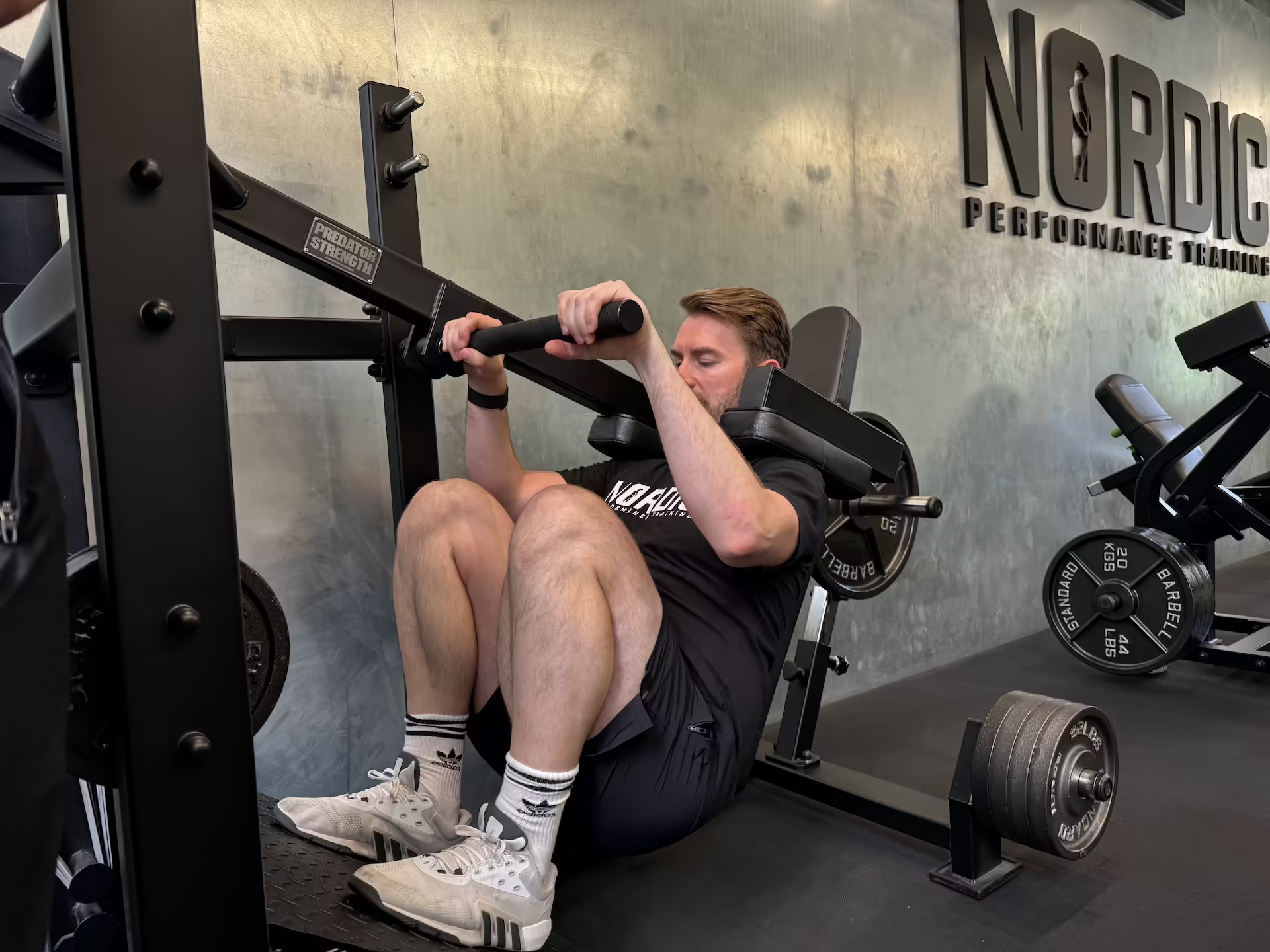
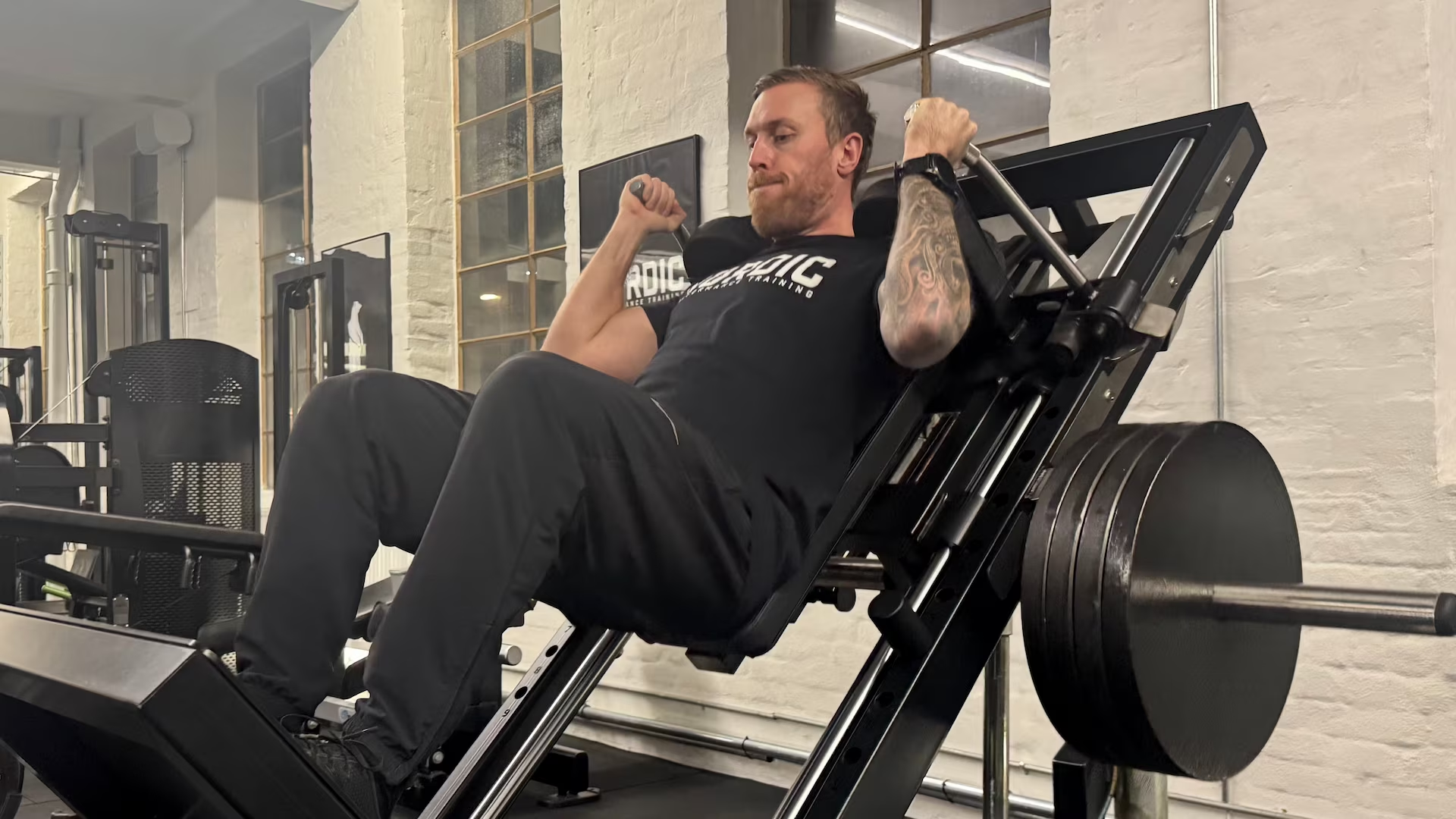
With the structured and optimistic progression, Oscar is today, a year later, able to hack squat 100 kg for 8 repetitions. He hasn't had an episode in over a year, apart from a bit of ordinary soreness and discomfort once in a while — exactly like most other people with a back experience. But the biggest thing for him is something else:
"The best part is not that the pain is gone. It's that the fear of the pain is gone. I no longer walk around waiting for when the next episode of lower back pain will come." — Oscar
His story illustrates something that underlies our entire approach: We don't spend a long time testing, diagnosing or looking for what is "wrong." If it is safe to load the body — and it is for the vast majority — then the way forward is not to find weaknesses and search for problems, but to calm what hurts and build up again. Get the symptoms under control, build the capacity up. That is the principle this entire article and our training is built upon.
What is a herniated disc?
We rarely go particularly deep into the pathology with our clients. Not because anatomy and biomechanics aren't exciting and important to know as a health professional — but because a hyperfocus on structures, phases and diagnoses often does more harm than good. The more time you spend drawing, pointing and explaining "this is where it's wrong," the more you reinforce the experience that something is broken and needs to be repaired. The phenomenon where information in itself can worsen symptoms is called nocebo — and it is well-documented in the area of back pain.
So the short version: A herniated disc occurs when part of the disc's soft core pushes out through the firm outer ring. Between each of the spine's 24 vertebrae sits a disc — a flexible cushion with a firm outer ring (annulus fibrosus) and a soft core (nucleus pulposus). If the bulging affects nerve tissue, it can cause pain, radiating symptoms and in some cases reduced sensation or strength in the extremity the nerve supplies.
There are several degrees — bulging (mild protrusion), protrusion (local bulging where the ring holds), extrusion (the core has broken through), and sequestration (a piece has broken free). The words sound dramatic. And that is precisely where we want to slow down.
Here is the most important point in the entire article:
Disc changes — including what is called a herniated disc — are a completely normal part of aging. Just like wrinkles. Just like grey hair. Just like tendons and ligaments that gradually change throughout life.
We expect to get wrinkles. We expect our hair to change color. But when the same thing happens inside the back, it suddenly becomes a "disease" that needs to be treated. That is a misconception that costs many people their sense of safety and belief in their own body.
One of the most cited studies in the field, a systematic review by Brinjikji and colleagues from 2015, examined MRI scans of the spine in people without back pain. The results are worth knowing when you are told that "there is something" on your own scan:
29 percent of 20-year-olds had disc protrusion — without symptoms 30 percent of 20-year-olds had disc bulging 50 percent of 40-year-olds had disc bulging 60 percent of 50-year-olds had disc bulging 84 percent of 80-year-olds had disc bulging
For disc degeneration — the more general age-related changes — the numbers are even higher: 37 percent of 20-year-olds and 96 percent of 80-year-olds, still entirely without back pain.
In other words: If we took 10 random 50-year-olds off the street, all of whom feel healthy and pain-free, and scanned them, we would find disc changes in the vast majority. An MRI finding of a herniated disc does not necessarily tell you why you are in pain.
Early-stage herniated disc — what does it mean?
"Early-stage herniated disc" is not a precise medical diagnosis. It is typically what the doctor or radiologist writes when the scan shows a mild protrusion — a slight bulging that does not break the ring or press on nerve tissue. In many cases, it is a completely normal finding that says nothing specific about the cause of the pain.
The problem is that the language sounds dramatic. "Early-stage" suggests that something is on its way to getting worse. But that is not what the image shows. The image shows a structure that for many would also look that way without pain.
Herniated disc in the lower back
The vast majority of herniated discs occur in the lower back, typically at the two lowest levels — L4/L5 and L5/S1 (lumbar herniated disc). That is not coincidental. These two segments are the ones that move the most in daily life and that have the greatest range of motion in the lumbar region. That is why "herniated disc L5/S1 symptoms" is also one of the most common variants we encounter in practice.
The symptom picture varies greatly from person to person. Some experience local pain in the lower back. Others have radiating pain into the buttock, thigh, calf or foot. Tingling and numbness in the legs is common, and some experience brief loss of strength — for example a sensation that the leg doesn't quite "respond" when walking on the heel or tiptoe. Some get pain when coughing, sneezing or in certain positions, and a few experience pain that spreads toward the groin.
It can sound severe when you see it written in black and white. But it is important to hold on to two things: First, most of these symptoms are temporary and subside as the body adapts. Second, the intensity of the symptoms doesn't say much about how serious it is. Even severe symptoms with radiating pain typically improve over weeks and months with the right approach.
When the pain radiates down the leg, it is commonly called "sciatica." Sciatica is not a diagnosis in itself — it is a description of the symptom when nerve tissue becomes irritated, often by a herniated disc. But not always. Sciatica can also be caused by other things, for example spinal stenosis (a narrowing of the canal where the spinal cord and nerves run, which can produce similar radiating pain) or irritation from hip or lower back muscles.
Herniated disc-related sciatica can be extremely uncomfortable. But the point from the previous section still applies: What you are experiencing right now is not a permanent condition. Most cases get better with time, with activity and with gradual loading — regardless of whether the herniation can be seen on an MRI or not.
Herniated disc in the neck
A cervical herniated disc — herniated disc in the neck — is less common than in the lower back but follows the same logic. The most common levels are C5/C6 and C6/C7.
The symptom picture resembles what we see in the lower back, just in the upper body. Some experience one-sided neck pain. Others get radiating pain into the shoulder, upper arm, forearm or hand. Tingling and numbness in the arm or fingers is common, and some experience a sensation that the arm or hand doesn't quite "respond" — for example when holding a coffee cup or turning a key. Some also experience headache that starts in the neck.
As with the lower back, the following applies here: The symptoms can seem severe, but they are for most people temporary. And just as in the lower back, MRI findings of herniated disc in the neck are extremely common in healthy people without symptoms. A single finding is not in itself an explanation for the pain — it is the connection between symptoms, examination and images that together give a meaningful picture.
Herniated disc in the mid-back
Herniated disc in the thoracic spine (mid-back) is rare. This is because the area is more stable than the lower back and neck respectively, partly because the ribs support it from the sides. Symptoms can be local pain in the mid-back with possible radiating pain along the ribs or, in rare cases, symptoms from the nerves — for example tingling, numbness or a feeling that something doesn't "respond" as it usually does.
If you are told you have a thoracic herniation, it is often an incidental finding — and rarely the primary cause of your symptoms.
Symptoms of a herniated disc
We have already covered the most common symptoms in the preceding sections — pain, radiating symptoms, tingling, numbness and in some cases reduced strength. The intensity can range from a mild nuisance to severe pain that significantly affects daily life. But remember what we mentioned earlier: How severe it feels doesn't say much about how serious it is. Most cases improve over weeks and months, regardless of how intensely it started.
A symptom that is often overlooked: fatigue.
Many with a herniated disc experience an exhaustion that can be difficult to explain. It has several causes. Persistent pain is mentally and physically tiring — the nervous system is working at full throttle. Poor sleep due to the pain amplifies it. And if you have limited your activity for weeks or months, you lose conditioning and muscle mass, which makes everyday tasks more strenuous.
Here it is important to understand: Inactivity makes the fatigue worse, not better. Movement and gradual loading are part of the solution — both for the pain and for the energy.
Acute warning signs
There are a few symptoms that always require acute medical evaluation — even though they are rare:
Sudden loss of strength in both legs Changes in control of bladder or bowel Numbness around the genitals, anus and inner thighs ("saddle anesthesia")
These symptoms may indicate cauda equina syndrome — a condition where the nerve bundle at the bottom of the spine becomes compressed. It is rare but requires acute evaluation. If you experience these symptoms, you should call a doctor or go to the emergency department immediately.
Treatment of a herniated disc
Here comes the most important part.
The classic reaction to a herniated disc diagnosis is fear. Fear of moving, fear of loading, fear of doing something that "makes it worse." And sometimes that fear is even reinforced by the professionals you encounter: "Avoid lifting over 10 kg." "No squats." "Be careful with the back."
It is well-meaning advice. But it is not the approach with the best evidence.
The modern, evidence-based approach to herniated disc is broadly the same as for back pain in general: keep going, move, and build up strength gradually. That is the approach recommended as the first choice by international clinical guidelines — including the Lancet's major report from 2018.
With us, we work from three principles that can be boiled down to: calm the symptoms, stay active, and build up again.
Calm the symptoms. The first thing is not about a specific exercise or position. It is about getting an overview. We sit down with you, go through what you have experienced, validate your frustration and any concerns — and give you a realistic explanation of what is actually happening and what the prognosis is. For the vast majority, that prognosis is good. When you understand that, and when you have a concrete plan for what to get started with, a large part of what makes the pain worst — the uncertainty — typically falls into place. From there we can begin training as early as your body can tolerate it — and that is usually right away. There is almost always something we can do.
Gradual adapted loading. We find a starting point that matches what the body can tolerate right now and build up from there. It is not about pushing through the pain. The pain may be present to a mild degree, but the most important thing is to find the right level and increase the load in a controlled and systematic manner over time — not in sudden jumps.
Strength training of the entire body — based on what you need to be able to do in your life. Not isolated back exercises. We actually believe those can do more harm than good (and we will return to that further down). Instead, it is about a well-structured full-body program that trains precisely what is needed for the back to get both muscular support and the general capacity that daily life and your leisure time demand. Conditioning — walking, cycling, swimming or running at a pace that suits you — is an excellent supplement, both for the heart, the mood and the pain management itself.
All of this happens within a framework we call the 3 C's. It is our own operating system for what good personal training should look like — developed from the biopsychosocial understanding of pain, but translated into how we actually work with our clients:
Correct — the training itself. Choosing the right exercise, setting it up properly, adjusting the execution and using simple, clear instructions so the movement feels right in your body.
Connect — the relationship in the session. Tone of voice, safety, encouragement, reading your body language and supporting you in real time.
Contextualize — the meaning behind it all. Using analogies you understand, respectfully challenging ingrained beliefs ("squats are dangerous for the knees") and explaining why precisely that exercise matters for your life and your goals.
That is the framework that ensures the training doesn't just become a series of exercises, but a process you get through well — also on the days when it's hard.
"Our approach to herniated disc is not advanced. We rarely need to spend a long time testing, finding 'weaknesses' or making specific diagnoses in order to help you. If it is safe to load you — and it is for the vast majority with a herniated disc — then the way forward is to load the entire body gradually. Not to find something that needs to be fixed. And just as importantly: It happens in an environment where you understand what the plan is, feel safe and take ownership of your own rehabilitation. It is as much about taking back the ownership as it is about training heavy." — Mathias Busk, physiotherapist and personal trainer at Nordic Performance Training
Training is pain relief in itself
One of the most underappreciated effects of training is that it dampens pain directly — also outside the area being trained. The phenomenon is called exercise-induced hypoalgesia (EIH), or in plain terms: exercise-induced pain dampening. It is well-documented in the research and one of the most robust effects we have within non-medical pain management.
What happens? When you do a focused strength training session — for example chest press, pulldown, hack squat and leg curl — your nervous system sends out a whole series of signals that have a broad pain-dampening effect. Pressure pain thresholds (how much pressure is needed before something hurts) increase by 15-20 percent after a single training session. The effect is seen not only in the muscles being trained, but also elsewhere in the body — including in the lower back, even if you have trained the legs. That is one of the reasons we rarely train the back directly in clients with back pain. We don't need to in order to get the pain-dampening effect — and it can even have the opposite effect, as we will get to further down.
The effect has several mechanisms:
Endogenous pain inhibition. The body activates its own pain-dampening system — called the descending system. These are nerve pathways that from the spinal cord and upward modulate how pain signals are processed before they reach consciousness. These are the same pathways that are affected by opioids, but activated naturally and without side effects.
Release of endorphins and endocannabinoids. Training increases the level of the body's own pain-dampening substances.
The nervous system "turns down" the sensitivity. With prolonged pain, the nervous system often becomes hyper-sensitive — it reacts more strongly and for longer to the same stimulus than it should. This is called central sensitization. Repeated training can over time normalize that sensitivity, so the body once again reacts proportionally to what it is exposed to. This does not mean that you merely learn to "tolerate more" — it means that the pain response itself becomes more muted.
And then there is the psychological and social layer, which should not be underestimated: Being seen, heard and guided by a professional who believes you can get better — that in itself has a measurable effect on pain. Training that takes place in a safe environment with human contact and understanding works better than the same training performed alone in a large gym or at home with an exercise pamphlet from the physiotherapist.
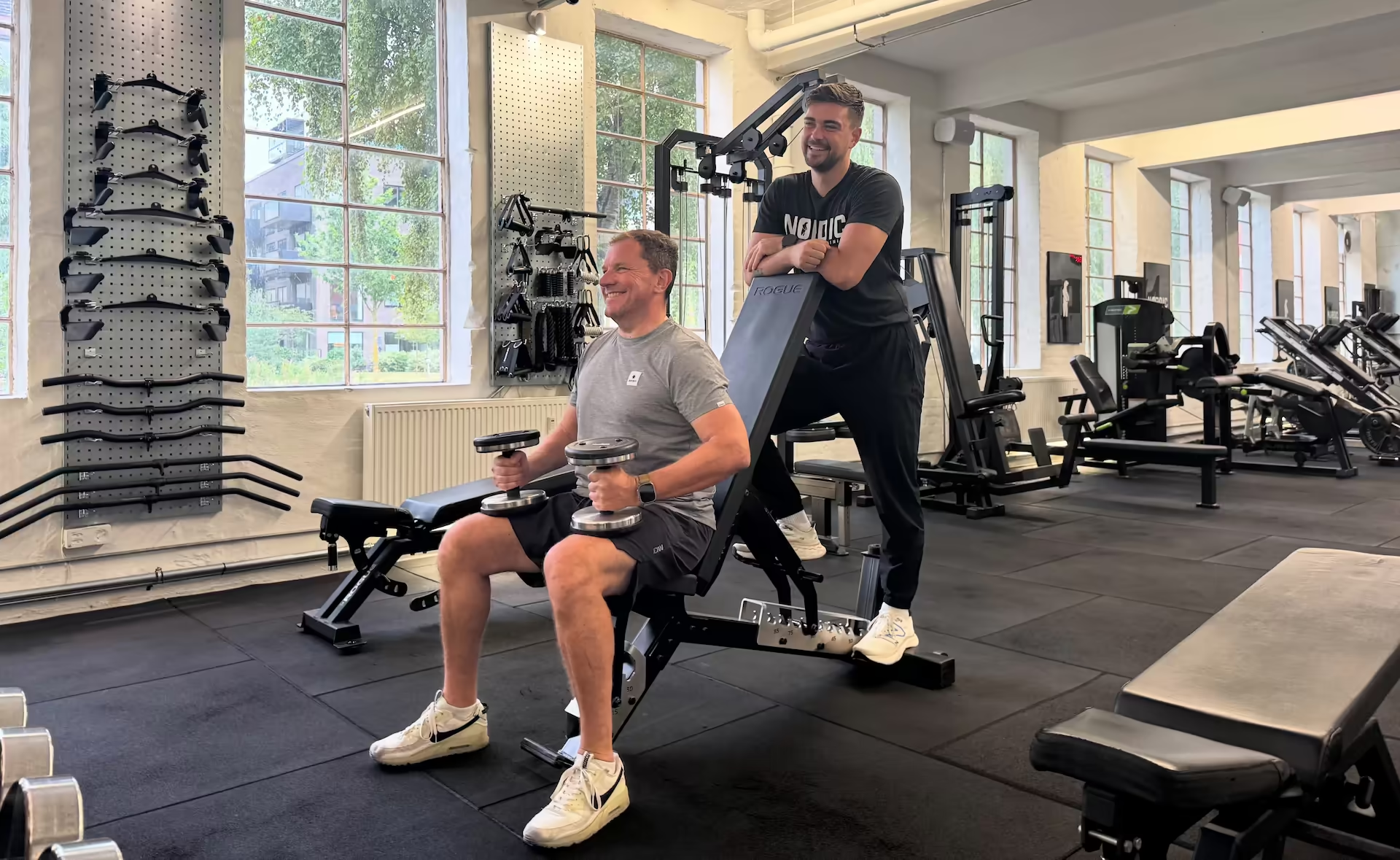
That is why our clients always train one-on-one with a personal physiotherapist. But they don't train alone in the room. There are typically other clients present who are also working on their own programs with their own physiotherapist. This creates a private training center with a very special energy: You have the full, individual attention during the session itself, but you are surrounded by other people who, like you, are taking ownership of their own body and development. That motivates in a way an empty room never can.
Pain is not merely a signal of tissue damage. Pain is multifactorial — it is influenced by physical, psychological and social factors at the same time. Body, mind and surroundings work together as one system. That is one of the reasons why two people with the exact same MRI finding can experience the pain vastly differently — and it is one of the reasons why good treatment is never purely physical.
Why isolated core training and passive treatments don't work very well
Here is one of the most widespread misconceptions in the physiotherapy industry: That back pain is about a "weak core," and that the solution is the plank, McGill big three, McKenzie exercises or transversus abdominis activation on a table. On top of this comes an entire undergrowth of passive niche treatments — laser therapy, shockwave, acupuncture, ultrasound, mobilizations and kinesio tape. They have in common that they feel as if "something is happening" in the moment, but don't change much about the underlying condition.
That approach has dominated clinics for decades. But the evidence that isolated core training and passive niche treatments are better than ordinary strength training or ordinary activity is weak — and the premise itself has been thoroughly challenged. Eyal Lederman published in 2010 one of the most cited reviews in the field, precisely titled "The Myth of Core Stability," which is worth reading if you want to dive into the topic.
The problem with isolated core training is threefold:
The load is too low to create real strength adaptation and thereby trigger the pain-dampening effect from training that we reviewed above.
There is no progression. You cannot meaningfully increase the load in a plank week by week in the same way you can in a hack squat.
It hyperfocuses on the area that hurts. This reinforces the nervous system's perception that "something is wrong here," rather than broadening the focus to what the body as a whole can do.
The body is not a collection of isolated parts. When you do a hack squat, the entire trunk musculature — including the so-called "deep" muscles, and often to a greater degree than in the isolated core exercises — works together as a unit to stabilize the back. You get the entire core effect, plus a massive pain-dampening response from the entire lower body, plus systemic strength, plus the experience of becoming stronger and more robust. All of that, a plank will never be able to give you.
And honestly: Who wants to do the plank again and again? It doesn't feel good, it's not motivating, and it's hard to stick with over time. Hack squat with increasing weight is something entirely different — you feel the progress, you see it in the numbers, and it becomes part of a life where you do something for your body, not something against it.
That is why our clients with back pain don't spend time on floor exercises for the "deep abdominal muscles" or laser treatments. They do real strength training — for the entire body. It functions as treatment right now, and it is simultaneously an investment in a training habit that keeps working when the pain has subsided. Over time it becomes the classic "one step back, two steps forward" — the episodes may still come on rare occasions, but each time the body is in a better starting position than last time.
Resorption: The body helps you
Here is something very few are told when they receive the diagnosis:
Most herniated discs shrink or disappear entirely on their own over time.
A systematic review by Chiu and colleagues followed patients with MRI-verified herniated discs who were treated conservatively. The results are encouraging — and they go a bit against intuition:
Sequestration (the most pronounced finding): 96 percent resorbs Extrusion: 70 percent resorbs Protrusion: 41 percent resorbs Bulging: 13 percent resorbs
The point is paradoxical but important: The more pronounced the herniation is, the greater the probability that the body breaks down and removes it. The "worst" herniations on MRI are not necessarily the hardest to recover from. Rather the opposite.
We often use analogies when we explain physiological things to our clients (this is an example of the "Contextualize" part of our 3 C approach — translating the professional language into something relatable or something that fits into your worldview). For this we typically use two:
The first: Think about how the body handles a wound on the skin. If you get a small scratch, the skin is irritated for a long time, and the healing happens quietly and slowly. If, on the other hand, you get a larger, deep wound, the body initiates a powerful inflammatory response — it reddens, it swells, it becomes warm, it hurts. It feels much worse. But it is precisely that response that draws repair materials to the area and builds new tissue. The severe reaction is not a danger signal — it is the body's repair machinery at full throttle.
The second: Bone fractures follow the same logic. It is counterintuitive, but a clean fracture where the bone breaks completely through often heals faster and more neatly than a greenstick — a partial break where the bone is only broken on one side. When the body gets a clear signal that something needs to be repaired, it gets to work at full force. The half signal gives a half reaction.
It is the exact same principle with a herniated disc. The pain and inflammation you experience around a pronounced herniation is not necessarily a sign that something is getting worse. It is often a sign that the body's repair crew is in full swing. This also explains why a diagnosis that sounds dramatic on paper often has a better prognosis than expected.
This does not mean you should wait passively for the body to resolve it. It means that while the body does its work in the background, you can use the time to become stronger and build capacity — rather than becoming weaker in fear.
The disc adapts to loading — just like all other tissue
There is a widespread belief that the disc is a fragile structure that is gradually broken down through life by the loading we subject it to. Loading equals wear and tear. But the research points to something else.
Belavy and colleagues (2017) scanned the lumbar spines of long-distance runners, joggers and sedentary control subjects. The counterintuitive finding: The runners' lumbar discs were larger, thicker and more hydrated than those of the sedentary subjects. The disc had not been damaged by being loaded. It had adapted. The same pattern has since been confirmed in a larger study by Owen and colleagues (2021), who compared 308 athletes across different sports with 71 control subjects.
This is consistent with what we know from other tissues in the body. Muscles become stronger from being loaded. Bones become denser. Tendons become more resilient. The disc is not an exception — it is also a living, adaptive tissue that responds to the loading it is subjected to.
The loading that appears to be most beneficial for the disc is dynamic and vertical (axial) — the type the body experiences during walking, running and strength training like hack squat. That is often the type of loading we start with in clients who have just recovered from an acute episode, because it is both effective and provides a sense of safety where the back is supported. If there is a need for less total loading on the back at the start, we use a pendulum squat, where the legs get roughly the same stimulus with a lower total weight.
But this does not mean that other movements are dangerous. Forward bending, rotation, side bending — all of this is normal, healthy movement that the back is built to do. Over time, most of our clients will also work with those movements in their training and daily life, and that is only a good thing. A back that can only handle vertical loading is not a strong back. A strong back is one that can tolerate all the movements life requires — and that has been built up to it gradually over time.
The point is not that a specific movement is the only right one. The point is that the disc — just like the muscles, bones and tendons — becomes more robust from being used. Not from being spared.
Pain medication
Something important has actually happened in this area in Denmark. In 2025, the Danish Health Authority published new national clinical recommendations for acute lower back pain. The conclusion was clear: Paracetamol, NSAIDs and opioids should not be routinely used for ordinary back pain. The evidence for effect is limited, and opioids in particular have a significant potential for misuse. In February 2026, the Danish Health Authority followed up with the public information campaign "Drop the pills: Painkillers don't work for back pain."
This does not necessarily apply 1:1 for everyone with a herniated disc and radiating pain — that is a more complex situation, and there may be cases where short-term pain medication helps you get started with movement. But the direction is clear: less medication, more activity.
We are physiotherapists, not doctors. So we don't give recommendations about which medication you should or shouldn't take — that is a conversation you should have with your doctor. Our point is simply that pain medication is not the treatment itself. At most it is a tool to get started with what actually works: movement and gradual loading.
Surgery — when is it relevant?
Surgery is a topic worth being nuanced about.
For most with a herniated disc, surgery is not the first path. The three situations where it becomes relevant are:
Cauda equina syndrome — acute surgery, as described above Progressive neurological deficits that are not improving, e.g. worsening paralysis or loss of strength Persistent severe pain after prolonged conservative treatment, where quality of life is significantly impaired
There is an interesting nuance in the research: Studies comparing microdiscectomy (the most common operation for herniated disc in the lower back) with conservative treatment show that surgery can provide faster pain relief in the first weeks and months. But after 1-2 years, for the majority of patients there is no significant difference between the two groups.
This does not mean that surgery is never the right decision. It means that for most people you have good time to try an adapted approach first.
Here we want to be honest about our role: We are not doctors. We don't assess whether you should have surgery or not. That decision is made by you together with a specialist. Our job is to train you as well as possible — and we have worked with many clients who have had microdiscectomy and subsequently built significant strength with very good results. Surgery does not preclude strength training. On the contrary, it can often be the perfect way to get a new start.
Healing time — what can you expect?
There is no universal timeline. But the typical courses look like this:
The first days to weeks: The worst pain begins to subside for most people. Movement and light activities are usually beneficial, even though it can feel counterintuitive.
4-8 weeks: For most people, the pain is significantly better. This doesn't necessarily mean completely gone, but function is typically improved, and you can begin to build more targeted strength.
3-6 months: Many are back to their normal activities. If you train systematically, you are often stronger than you were before.
6-12 months: The period where most herniations have been resorbed or are significantly smaller on MRI.
If you still have significant pain after 6-8 weeks with an adapted approach, it is time to get a professional to look at the course again.
Exercises for a herniated disc
Here is a point many are not aware of: There are no specific "herniated disc exercises." There are strength training exercises that build up the general capacity that makes your back stronger and more resilient. And at the same time — as we touched on earlier in the article — they build up your belief in your own body's abilities, dampen pain directly through the nervous system and make the entire experience of having a body feel safer. These are the ones we use with our clients — regardless of whether they have a herniated disc, lower back pain or no back problems at all.
The five exercises that are central to our approach

1. Hack Squat
Hack squat is a machine-based squat where the weight is guided in a fixed track. This means you can load the legs heavy without having to worry about balance or technically complicated movement patterns to the same degree as with free squats. For many with a herniated disc, it is an ideal first squat variation, because you can start very light and gradually increase the load while the back and pelvis are supported by the backrest. Hack squat trains the quadriceps, glutes and adductors, and the back muscles/core work statically to keep you stable. Read more in our hack squat guide.
2. Bulgarian Split Squat
Split squat trains one leg at a time and requires the pelvis and lower back to be stabilized without an external stability source like the one you get from e.g. hack squat. This provides strong activation of the glutes, quadriceps and adductors — all muscle groups that support the lower back. If you don't have access to hack squat, split squat is one of the best alternatives, and it has the advantage that you can work with relatively small total load while the total muscle activation is high. Read more in our split squat guide.
3. Glute Bridge
Glute bridge targets the glutes directly. Strong glutes are one of the most important factors for a well-functioning hip and lower back region. The exercise can be started light and loaded progressively in our Glute Drive machine — and is a central part of our programs for clients with back problems.Read more in our glute bridge guide.
4. Leg Curl
Leg curl isolates the hamstrings. The hamstrings have a direct mechanical connection to the pelvis, and strong hamstrings provide better support for the lower back region during daily loading, training and running. Read more in our leg curl guide.
5. Leg Extension
Leg extension isolates the quadriceps. A strong quadriceps is important for everyday movements — getting up from a chair, walking stairs, lifting things from the floor. The exercise can be dosed very precisely, and for many clients with back pain it is one of the first machines we use, because the load on the back is minimal. Read more in our leg extension guide.
Progression means everything
These exercises are not magical in themselves. The magic lies in doing them systematically and gradually becoming stronger. We use double progression: you work your way up in repetitions with the same weight, and when you reach the top of the repetition range in all sets, you increase the weight. This is how we ensure that you get stronger week by week — not just "move a little."
Reactive, not in advance
We start at a point that feels manageable and build out from there. If an exercise provokes pain, we adjust reactively — swap it out, lower the load or pause it. We don't hyperfocus on avoiding specific movements in advance. The body reports in by itself if something isn't working, and then we react to it.
If you have pain in the lower back specifically, you can also read our article about lower back pain exercises, which covers the same approach in more detail for lower back pain in general.
Prevention
Prevention of herniated disc, or relapse after an episode, is not about "sparing" the back. It is about building up the capacity that makes it more robust:
Strength training 1-2 times per week. It is the best investment you can make in your back. Strong muscles around the lower back, glutes and legs provide better support and distribute the load in daily life. Our Full Body program builds precisely this capacity, and all the exercises in this article are part of it.
Avoid prolonged inactivity. The back needs movement. Long periods on the couch, immobilization strategies or fear-driven avoidance of activity are far worse for your back than loading it.
The back is built for loading. Walk, lift, squat, run. It is not dangerous. It is what the back is designed for.
The best prognostic factors after a herniated disc are not how "nice" your MRI looks. They are how strong and active you are — and equally important, how you think about your body and your pain. The mindset is an equal partner to the training itself.
The most important thing the process gives you: knowing you can handle the next one
Many believe that the safe choice is to avoid loading the back. But here reality is turned on its head: It is far more risky for your back and your long-term health in general to avoid strength training than it is to accept the quite small risk that comes with doing it.
How small is that risk really? Research shows that traditional strength training sits at approximately 0.24 to 1 injury per 1,000 training hours. By comparison, running sits at approximately 7-8 injuries per 1,000 hours, and team sports like football at 15 to over 80. In other words: Running is eight times more risky than strength training. Playing football is 15 to 80 times more risky. And those are still activities we encourage people to do. Even with everyday activities like gardening and cleaning, injuries can occur — it's just not something we count or think about, and we therefore don't see those kinds of chores as being dangerous either.
Our own experience aligns with the numbers. In the over eight years we have been helping people here at Nordic Performance Training, we have never experienced a client being injured during a training session with us — despite hundreds having trained with us, many with pain, many with diagnoses, many of all ages. Of course it can happen that a client experiences soreness or pain during an exercise — but when it does, we always make it a learning experience: the body is not destroyed by being loaded, and we can always train our way out of it again. It is precisely that learning that over time makes people more robust — not less.
Inactivity is not a neutral state — it is an active decision to let the body become weaker.
Relapse of back pain is common. Studies show that approximately a third of people who have just recovered from an acute episode experience a new episode within the first year. Other, broader definitions put the number even higher. It is not because you have done something wrong. It is simply what can happen when you are the owner of a body and a nervous system.
But here is the important difference: What happens next time depends a great deal on what you learned the first time.
If the first time you were told that your back is fragile and needs to be protected, then the next relapse easily becomes a catastrophe. The pain shows up, and it shows up together with the thoughts: "It's happening again. Maybe it will be worse this time. Maybe I need surgery. Maybe I've broken something."
This way of thinking about your pain has a name in the research — pain catastrophizing. And it is one of the most robust predictors of how intense a pain you experience, how long it lasts, and how great your risk is of developing prolonged pain or chronicity.
The brain actually makes pain worse when it believes something is dangerous. Think about this example: You are walking down the street in the evening, and suddenly you hear fast footsteps behind you. In the second you believe someone is about to catch up to you with bad intentions, the entire body goes into alarm mode — the heart pounds, muscles tense, every little sound from the surroundings feels intense and threatening. A moment later, a jogger overtakes you with music in their ears. The tension disappears, the body calms down. The actual situation was harmless the entire time. It was the brain's interpretation that created the entire physical response.
This is how the body's pain system works all the time — also with back pain. If the brain interprets the pain as "something dangerous is happening," it turns up the signal. If the brain interprets the same pain as "something temporary and harmless," it turns it down.
This is the other side of the nocebo effect we touched on in the intro: The expectation of something dangerous worsens the experience — also physically. This is precisely what happens when the doctor says "avoid heavy lifting for the rest of your life," or when a practitioner again and again directs all attention to precisely the area that hurts. We often see this in clients who have been in that type of treatment for a long time: The mindset becomes fragile. People begin to "check in" all the time, constantly directing their awareness toward the pain — and thereby becoming more sensitive to it. Not because something has gone wrong with the back. But because the nervous system has been trained to focus on the alarm signals.
But if you on the other hand have been through a process where you experienced that you got better, that you became stronger, and that the pain did not mean damage — then you have something very valuable with you next time. You know what it is. You know it will pass. You know what to do. You don't panic.
Think of it as the difference between being completely new at a workplace versus having been there for five years. The new employee gets stressed by every little unexpected event — a rude email, a deadline, a difficult customer. The experienced one knows that these are normal fluctuations that always sort themselves out. It is the exact same situation, but the experience is entirely different, because the experience has provided calm. This is how it works with the body too.
And then the relapse often becomes shorter, milder and easier to handle. Research supports this too: People who have learned to handle a previous episode constructively typically get through the next one faster.
This is perhaps the most important thing a good process with us gives you: not a guarantee that you will never be in pain again, but a belief that you can handle it if it happens. That is the long-term gain.
When should you see a doctor?
Most people with herniated disc symptoms do fine with an adapted, active approach. But some situations require medical evaluation:
Acute — call immediately or go to the emergency department: Loss of strength in both legs Changes in control of bladder or bowel Numbness around the genitals, anus and inner thighs (saddle anesthesia)
Time for an evaluation within days: Progressive (worsening) neurological deficits — growing weakness, increasing numbness Sudden onset of loss of strength in one leg or one arm
Time for a planned evaluation: Pain that does not improve after 6-8 weeks with an adapted approach Pain after trauma (fall, accident) Symptoms accompanied by fever, unexplained weight loss or general malaise
If you are in doubt, contact your doctor. There is no reason to walk around worrying when a conversation can clarify the situation.
FAQ about herniated disc
How do you know if you have a herniated disc?
The only way to diagnose a herniated disc with certainty is with an MRI. But here it is important: An MRI finding alone is not enough to make the diagnosis, because herniated discs are extremely common in people without pain. It is the connection between symptoms (pain, radiating symptoms, possible neurological deficits), clinical examination and imaging that together give a meaningful picture.
Is it good to walk with a herniated disc?
Yes. Walking is one of the best things you can do. Walking is low-intensity, rhythmic loading that reduces stiffness, improves mood and keeps the back mobile. For most people with a herniated disc, walking is a safe and beneficial activity from day one. If certain walking postures or distances worsen the symptoms, adjust, but try to walk regularly, including short walks.
How long does a herniated disc take to heal?
Most people experience significant improvement within 4-8 weeks. Full healing and resorption of the herniation itself on MRI can take 6-12 months. But function — what you can do in daily life — typically improves far earlier. How long the process takes depends more on how systematically you build strength and activity than on what the MRI shows.
Can you train a herniated disc away?
No, not directly. You cannot "train" the herniation back into place. But structured strength training is one of the most effective approaches for reducing pain, improving function and lowering the risk of relapse. At the same time, the body works in the background to resorb the herniation over months. So no, training doesn't remove the herniation, but it often removes what is worst about having one.
Can a herniated disc cause fatigue?
Yes. Persistent pain is tiring, poor sleep amplifies it, and prolonged inactivity lowers conditioning and muscle mass. It is a combination that quickly leads to exhaustion. The best countermeasure is not more rest, but gradual movement and strength training that rebuilds capacity and improves sleep.
Should you take sick leave with a herniated disc?
It depends on how severe the symptoms are and what kind of work you have. But the research is quite clear on one thing: Prolonged sick leave is associated with a worse prognosis, and the longer you are away from work, the harder it can be to return. The best approach is usually to have a dialogue with your employer about adjustments — fewer hours, changed tasks, alternating between sitting and standing — so you can contribute as much as possible without worsening the condition.
What is an early-stage herniated disc?
"Early-stage herniated disc" is not a precise diagnosis, but a formulation often used for a mild protrusion on an MRI — a slight bulging that does not break the disc's outer ring. It sounds more dramatic than it is. For many people, it is a normal age-appropriate finding without clinical significance.
Herniated disc and sciatica — what is the connection?
Sciatica is a symptom — pain that radiates from the lower back down the leg along the sciatic nerve. Herniated disc is the most common cause of sciatica, but not the only one. If you have sciatica, you don't automatically have a herniated disc, and conversely you can have a herniated disc without experiencing sciatica. Regardless of which of the two you have, the approach is the same: gradual movement, strength training and time.
Ready to move forward?
If you have been diagnosed with a herniated disc and have become afraid to use your back, we understand. It is one of the scenarios we see most often in our personal training in Copenhagen. Our clients typically come with a fear of moving and leave again with a back they trust.
Book a free start-up conversation and hear how personal training in Copenhagen can look for you — either at our private training center or as a call, if that suits you better.
References
Brinjikji, W., Luetmer, P. H., Comstock, B., Bresnahan, B. W., Chen, L. E., Deyo, R. A., Halabi, S., Turner, J. A., Avins, A. L., James, K., Wald, J. T., Kallmes, D. F., & Jarvik, J. G. (2015). Systematic literature review of imaging features of spinal degeneration in asymptomatic populations. American Journal of Neuroradiology, 36(4), 811–816. https://doi.org/10.3174/ajnr.A4173
Chiu, C. C., Chuang, T. Y., Chang, K. H., Wu, C. H., Lin, P. W., & Hsu, W. Y. (2015). The probability of spontaneous regression of lumbar herniated disc: a systematic review. Clinical Rehabilitation, 29(2), 184–195. https://doi.org/10.1177/0269215514540919
Hayden, J. A., Ellis, J., Ogilvie, R., Malmivaara, A., & van Tulder, M. W. (2021). Exercise therapy for chronic low back pain. Cochrane Database of Systematic Reviews, 9, CD009790. https://doi.org/10.1002/14651858.CD009790.pub2
Foster, N. E., Anema, J. R., Cherkin, D., Chou, R., Cohen, S. P., Gross, D. P., Ferreira, P. H., Fritz, J. M., Koes, B. W., Peul, W., Turner, J. A., & Maher, C. G. (2018). Prevention and treatment of low back pain: evidence, challenges, and promising directions. The Lancet, 391(10137), 2368–2383. https://doi.org/10.1016/S0140-6736(18)30489-6
Sundhedsstyrelsen (2025). Nationale kliniske anbefalinger for brug af paracetamol, NSAID og opioider til behandling af akutte lænderygsmerter hos voksne. https://www.sst.dk/nyheder/2025/medicin-virker-ikke-mod-akutte-laenderygsmerter
Sundhedsstyrelsen (2026). Drop pillerne: Smertestillende virker ikke på rygsmerter. https://www.sst.dk/nyheder/2026/drop-pillerne-smertestillende-virker-ikke-paa-rygsmerter
Belavy, D. L., Quittner, M. J., Ridgers, N., Ling, Y., Connell, D., & Rantalainen, T. (2017). Running exercise strengthens the intervertebral disc. Scientific Reports, 7, 45975. https://doi.org/10.1038/srep45975
Owen, P. J., Hangai, M., Kaneoka, K., Rantalainen, T., & Belavy, D. L. (2021). Mechanical loading influences the lumbar intervertebral disc. A cross-sectional study in 308 athletes and 71 controls. Journal of Orthopaedic Research, 39(5), 989–997. https://doi.org/10.1002/jor.24809
Lederman, E. (2010). The myth of core stability. Journal of Bodywork and Movement Therapies, 14(1), 84–98. https://doi.org/10.1016/j.jbmt.2009.08.001
Rice, D., Nijs, J., Kosek, E., Wideman, T., Hasenbring, M. I., Koltyn, K., Graven-Nielsen, T., & Polli, A. (2019). Exercise-induced hypoalgesia in pain-free and chronic pain populations: state of the art and future directions. The Journal of Pain, 20(11), 1249–1266. https://doi.org/10.1016/j.jpain.2019.03.005
Wertli, M. M., Eugster, R., Held, U., Steurer, J., Kofmehl, R., & Weiser, S. (2014). Catastrophizing — a prognostic factor for outcome in patients with low back pain: a systematic review. The Spine Journal, 14(11), 2639–2657. https://doi.org/10.1016/j.spinee.2014.03.003
Keogh, J. W. L., & Winwood, P. W. (2017). The epidemiology of injuries across the weight-training sports. Sports Medicine, 47(3), 479–501. https://doi.org/10.1007/s40279-016-0575-0
Table of Contents
Related Blog Posts


I’ve worked as a personal trainer for over 14 years and as a physiotherapist for over 8 years — and co-founded Nordic Performance Training with Kasper to give clients a professional, private, and structured training environment where results actually last. In that time, I’ve overseen more than 15,000 sessions and helped hundreds of clients rebuild after injuries, gain strength, improve their health, and stay consistent.
My approach combines practical experience with evidence from the latest research, making training both effective and realistic.
On this blog, I share the same methods we use every day at Nordic — so you can cut through the noise and focus on what truly works.



Related Blog Posts
.svg)