







Spinal Stenosis: Symptoms, Exercises and Treatment
Poul, 56, works in private equity and had been dealing with back pain for six years when he first came to us. Six years where every day felt like a battle against his own body. Two operations for spinal stenosis were already behind him. The third was on the drawing board with the neurosurgeon.
In meetings and at gatherings, he had to sit down or lean forward over the table, round the lower back to "make room for the nerves in the back," as a practitioner had explained to him. Standing upright for more than a couple of minutes was not an option. It affected his work. It affected his life.
He had tried everything: physiotherapy, chiropractic, Body SDS, osteopathy. Also personal training with another trainer — but a training approach built on bodyweight, free weights and mobility exercises, where it was difficult to make real progression, and where the focus was constantly on fixing the problem in his back. Each practitioner had their own theory about what was wrong and their own recommendations.
When he came to us, his head was filled with competing explanations of precisely what was mechanically screwed together wrong in his back. He had become an expert in his own diagnosis. He talked about his pain at every training session and was visibly affected by the pain. His conversations constantly returned to "the injury," "the problem inside the back." He was more unsure than ever about whether he could even trust his body.
We introduced him calmly to our approach, where the focus is gradually shifted away from the "mechanical problem," and instead focused on what we could actually control: systematic strength training, gradual progression and an optimistic mindset that slowly shifted from "what is wrong with my back?" to "what can I do to become stronger?"
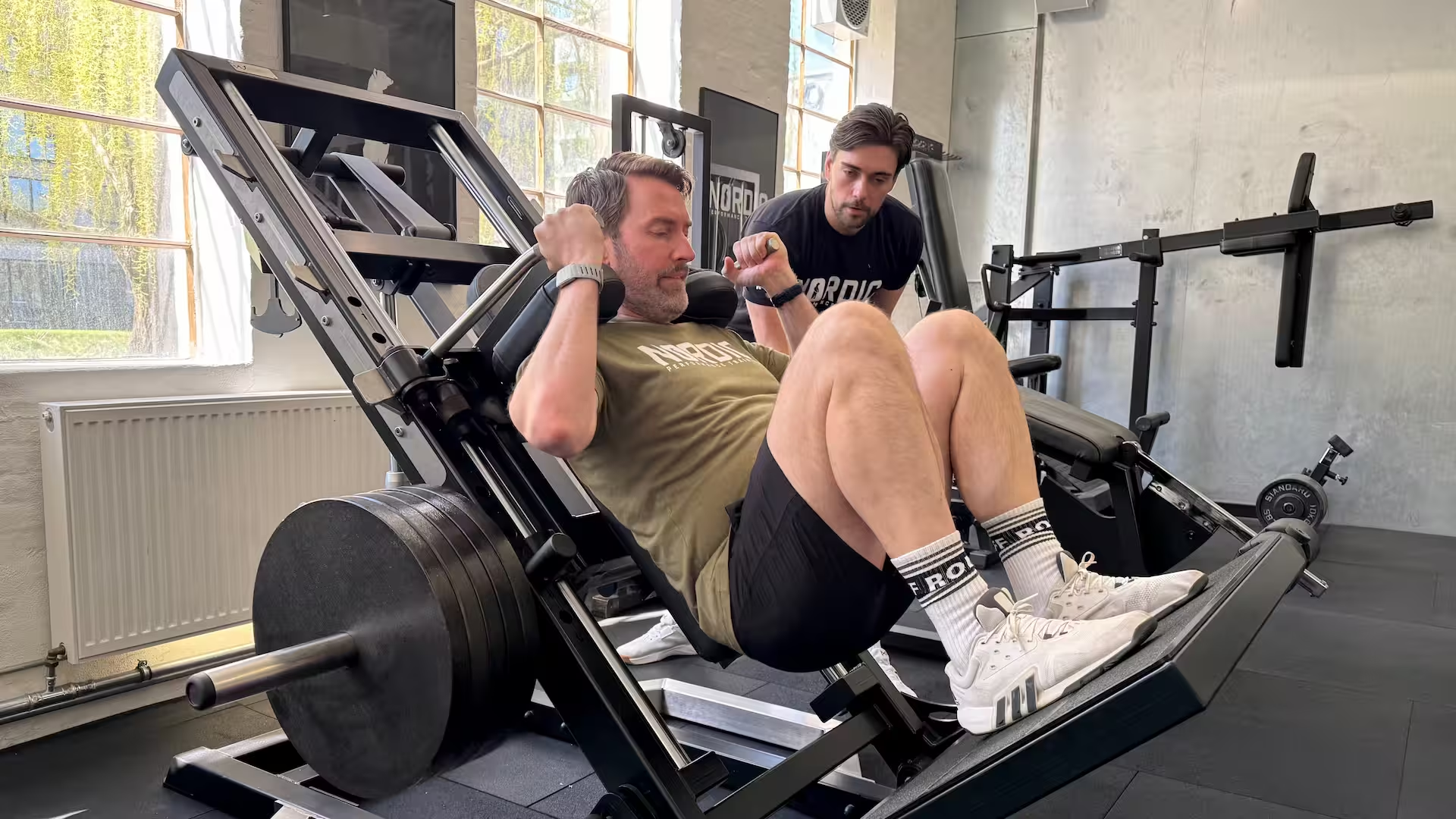
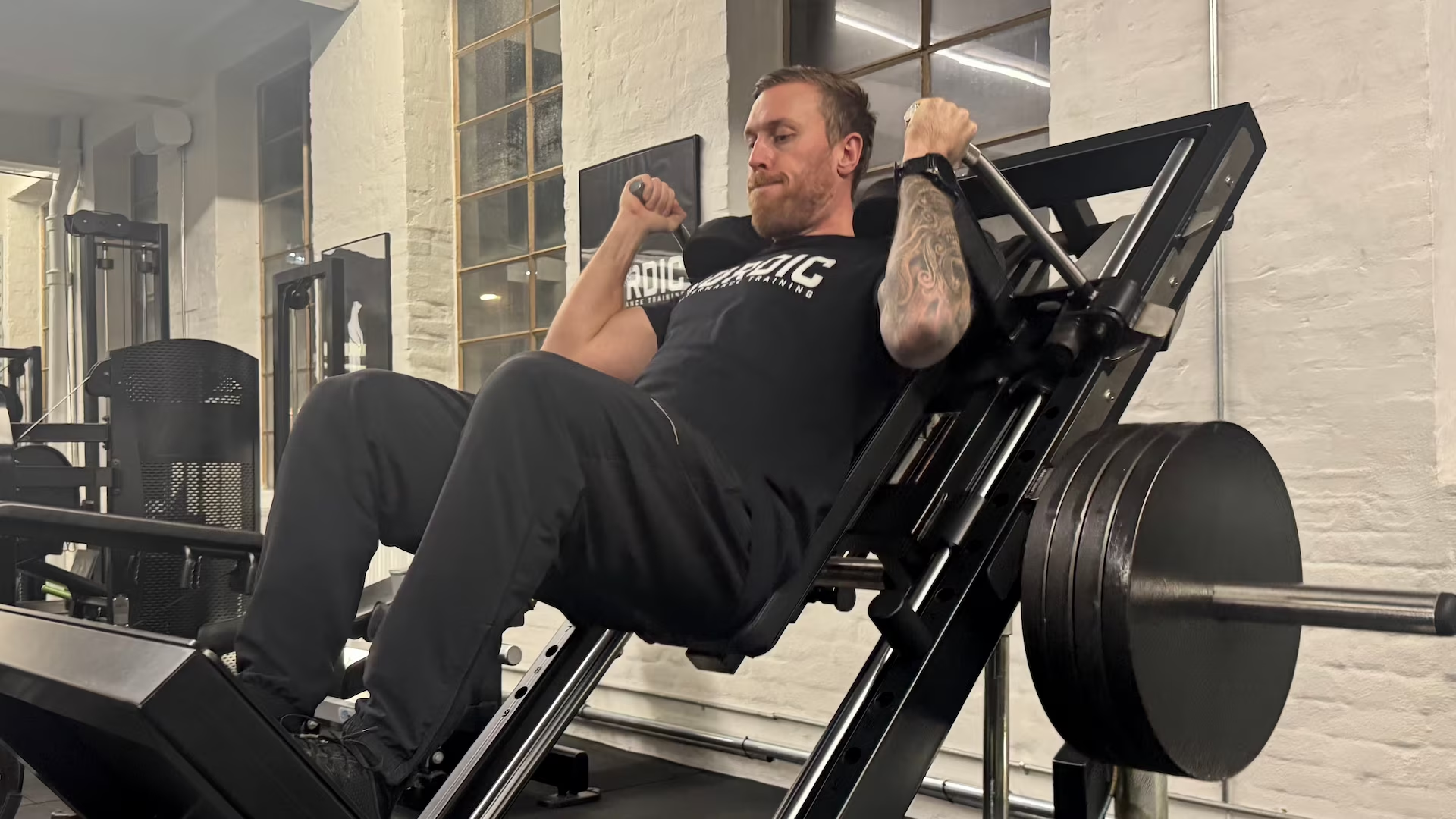
The first 12 weeks he trained twice a week. And after that he has been coming consistently once a week for now 2 months. We started very calmly — for example with hack squat with no weight at all. Today he does 60 kg for 8 repetitions. Without pain.
He can stand and walk around during an entire training session without having to sit down or round the lower back. He has started running again — something he hadn't done in six years, and something he had never imagined as possible again.
"What changed everything for me was that Kasper gradually shifted my focus from what was wrong with my back and instead directed it toward what I could do to become stronger. It sounds banal. But after six years with the opposite approach, it feels completely absurd that I didn't do it sooner." — Poul
Poul's story is not a guarantee that everyone with spinal stenosis will get the same result. But it illustrates a fundamental part of how we work — and why it often works, also for people who have tried all the targeted treatments before they come by for their introductory consultation with us.
What is spinal stenosis?
With us, we rarely go particularly deep into the pathology with our clients. The more time you spend drawing, pointing and explaining "this is where it's wrong," the more you reinforce the experience that something is broken and needs to be repaired. That phenomenon is called nocebo — and it is particularly widespread within back problems.
But to have a shared frame of reference: Spinal stenosis is a narrowing of the space in the spine where the spinal cord and nerves run. The narrowing can occur in the lower back (lumbar spinal stenosis), in the neck (cervical spinal stenosis), and in rarer cases in the mid-back. In some people, the narrowing causes symptoms such as leg pain, tingling, numbness or reduced strength. In others, it causes nothing. Why that is, we will return to in a moment.
The most important point about spinal stenosis:
It is not a disease. It is an age-related change.
Think of it a bit like osteoarthritis in the knee. The structure of the joint changes gradually over the years — it is a completely normal part of aging. But how much it bothers you in daily life depends not only on how the joint looks on an X-ray. It depends on how strong the muscles around the joint are, how well the nervous system handles the signals, and how much the body as a whole is trained to handle load. Two people with the exact same osteoarthritis on X-ray can experience it entirely differently.
Spinal stenosis follows the same logic. The structure of the spinal canal changes gradually over the years — disc changes, thickened ligaments and other age-related changes. But how much it bothers daily life depends on many other factors than the narrowing itself. That is good news. Because it means that even though we cannot change the structure, we can change everything that surrounds it — and that is actually where the real experience of spinal stenosis is determined.
The research backs it up. The large Framingham study examined CT scans of the spine in a general population group. The result was striking: Among the people who had measurable spinal stenosis on the scan, approximately 80 percent had no symptoms at all. Other studies have found that radiologically moderate to severe stenosis is found in up to 80 percent of adults over 40 years of age — without necessarily causing problems.
This does not mean that the symptoms are imaginary in those who have them. It means that the finding itself on an MRI is not a verdict. It is an image of a normally aging spine, and that in itself is not the same as a diagnosis.
Are herniated disc and spinal stenosis the same thing?
No. They are related but different conditions.
A herniated disc is typically an acute event where part of the disc's core pushes out and affects nerve tissue. Spinal stenosis is a gradual narrowing of the spinal canal that typically develops over many years through a combination of disc changes, thickening of ligaments and other age-related changes.
Both conditions can cause sciatica-like symptoms — meaning pain, tingling or numbness that radiates down the legs. But they arise in different ways. The good thing is that the fundamental approach — gradual loading, strength training and time — works well for both.
Symptoms of spinal stenosis
The classic symptom of spinal stenosis in the lower back is called neurogenic claudication. The word sounds complicated but means something quite simple: The legs begin to hurt, become heavy or feel "dead" when you walk or stand upright for an extended period. The symptoms typically subside when you sit down or bend forward — for example when you lean on a shopping cart or a railing.
It is not a coincidence that bending forward helps. When you bend forward, you open up the spinal canal a bit more and give the nerve tissue more space. That is also the reason many with spinal stenosis instinctively find a "safety position" — round the lower back, lean forward, sit down. That is not a bad habit. It is the body's way of offloading. That was precisely the position Poul involuntarily sought in every meeting and every gathering. Today he can stand and walk around during an entire training session without rounding the lower back or sitting down. The safety position is not a permanent state — it is the body's temporary solution until capacity and confidence are built up again.
The symptom picture varies greatly from person to person. Some experience leg pain when walking or standing that improves when sitting or bending forward. Others have tingling or numbness in the legs. Many experience brief loss of strength — a sensation that the leg doesn't quite "respond" when stepping up a stair or getting off a bus. Reduced walking distance is also common. Some also get back pain, but often it is the leg symptoms that dominate. And some experience that their balance deteriorates over time.
It can sound severe when you read the list. But remember what we have covered: The symptoms are not a verdict, and they are not permanent. Most people experience significant improvement with the right approach.
Spinal stenosis in the neck — cervical stenosis
Cervical spinal stenosis (spinal stenosis in the neck) is less common than in the lower back but follows the same logic. The symptoms are different because it is the neck's nerve roots and spinal cord that are affected. Many experience neck pain or radiating pain to the arms, forearms or hands. Tingling or numbness in the arms or fingers is common, and some experience reduced fine motor skills — it becomes harder to button a shirt, open a glass container or write. In more pronounced cases, balance and gait can also be affected.
Cervical stenosis is also primarily managed with strength training and gradual loading, but it requires a bit more individual adaptation — and in more pronounced cases, medical evaluation is important because the spinal cord is directly involved.
Balance and spinal stenosis
Many with spinal stenosis experience that their balance deteriorates. There are several reasons for this: Nerve tissue in the legs gets disrupted feedback to the brain, muscles become weaker from reduced activity, and confidence in moving disappears slowly, making people stiffer and less agile.
The good news is that strength training improves balance — both directly (stronger legs provide more force and better coordination to draw on) and indirectly (confidence in the body grows when you experience that you can load it). We see it constantly in our clients: Balance is not a separate ability that needs to be trained in isolation. It is a byproduct of having a strong body you can trust. We have written more extensively about this in our article on how to train balance.
Neuropathic pain in spinal stenosis
A particular type of symptom in spinal stenosis is called neuropathic pain — pain that originates from the nerve tissue's irritation rather than muscles or joints. It often feels different from "ordinary" pain: burning, stinging, electric, sometimes like icy cold or a tingling current. It can be uncomfortable, but it is rarely dangerous. And like all other symptoms of spinal stenosis, it often responds well to gradual loading and strength training.
Acute warning signs
There are a few symptoms that always require acute medical evaluation — even though they are rare:
Sudden loss of strength in both legs Changes in control of bladder or bowel Numbness around the genitals, anus and inner thighs (saddle anesthesia)
These symptoms may indicate cauda equina syndrome — a condition where the nerve bundle at the bottom of the spine becomes compressed. It is rare but requires acute evaluation. If you experience these symptoms, you should call a doctor or go to the emergency department immediately.
Treatment of spinal stenosis
The most important thing to know about treatment of spinal stenosis: Conservative treatment — strength training and gradual loading — is the first choice for most. Not rest. Not surgery as a first step. Not passive treatments.
This is not just something we say. It is the conclusion in the best research we have in the field. A large Danish-relevant study from 2015 directly compared physiotherapy with surgical decompression in people who were already scheduled for surgery. After two years, there was no meaningful difference in how well the two groups were doing. A corresponding Cochrane review the following year reached the same conclusion: Surgery did not provide a clear advantage over conservative treatment, and 10-24 percent of those who were operated on experienced complications. There were none of those in the conservative group.
This does not mean that surgery is never the answer. It means that for most, it is not the first path. It also means that the complication risk should be taken seriously — up to one in four actually gets complications — and that you should consider whether you are ready for the rehabilitation period that follows surgery. None of those considerations exist with conservative treatment.
With us, we work from the same three principles as with all back problems: calm the symptoms, stay active, build up again. This happens in a collaboration between you and your personal physiotherapist — one with technical expertise who can plan the training correctly, whom you feel comfortable being with, and who acknowledges and supports you along the way. Equally important: one who can explain why we do what we do — and why we don't do what others might suggest — in a way that makes sense to you. We have put that framework into words in the form of the 3 C's, which we explain in detail in our herniated disc article.
One of the more surprising things we explain to our clients is that training in itself has a pain-dampening effect — also on areas that are not what you are training. When you do a hack squat or a chest press, something happens in the nervous system that makes the entire body less pain-sensitive for a period afterwards. That is one of the reasons we rarely train core directly in clients with back pain. We actually don't need to — and there are good professional reasons for that. Researchers have since 2010 challenged the widespread belief in "core stability" as the solution to back pain (Eyal Lederman wrote a much-cited review with precisely the title "The Myth of Core Stability"), and the evidence shows again and again that isolated core training is no better than ordinary strength training. We go more in depth with this in our article about lower back pain exercises.
That puzzled Poul at the beginning of his program. Why were we training arms at one point? That had nothing to do with his back, he thought. But that was precisely the point. It helped his back, not despite being non-specific — but because it was non-specific. The pain-dampening effect of training is broader than the area you are working with. And when the focus is shifted away from the back and toward what you can do — chest press, a pulldown, a leg curl — then the attention shifts away from the problem and toward the progress. That is a big part of why it works.
We use a metaphor to explain this — we call it the Pain Circle: Imagine that your pain is a small circle. That is the discomfort itself. Around it is a larger circle that represents everything you can do: your capacity, your strength, your belief in your own body. At the beginning of a program, the pain circle fills a lot, because the capacity circle is small. But as you build strength and experience that you can move without fear, the outer circle grows. The pain doesn't necessarily disappear from one day to the next — but it fills less, because so much has been built up around it. If you want to see what this looks like in practice with a real person, read the story about Isabella, who overcame her knee pain — it gives a concrete picture of how we work with the Pain Circle in a program.
"We cannot control the structural changes in the back. Honestly, it doesn't matter either. What we can control is the training, the systematic progression and the mindset you work from. The brain is plastic — what you focus on becomes your reality. We never promise improvement, but the research and our experience show again and again that it works. And should it against expectations not work on your symptoms, then you have at least become stronger, more robust, and can live a better life — even if the pain is there. But if you want to be a bit blunt about the mindset: It's always important to be strong anyway, pain or no pain." — Kasper Vinther, physiotherapist
Walking as training — and how we structure it
In clients with spinal stenosis, walking is a central part of the treatment. But the typical advice "try to walk more" is insufficient — not because walking is the problem, but because it is too unstructured. If you just walk more without a plan, you often end up provoking the symptoms, becoming frustrated and pausing again. That is precisely the cycle we want to break out of. What works is a plan with a starting point and a gradual progression — where you adjust based on how the body responds.
With us, we use a concrete progression that can be done at home or in a gym — as long as you have access to a treadmill where you can adjust the incline. We start with walking with an incline. Why? Because walking uphill automatically brings you into a slightly forward-leaning position — and that position feels better for most people with spinal stenosis symptoms. That is why it is a good starting point: you can walk longer without discomfort, and the body gets the loading it needs.
From there we gradually lower the incline as tolerance increases. First from 10 to 7 percent, then to 4, then to flat. And eventually many can walk outdoors again — longer and longer distances. Poul went from being able to stand for a few minutes to being able to go on real running sessions where he alternates between running and walking.
If you don't have access to a treadmill, the principle can still be used outdoors — it just requires a bit more creativity. An important detail is that you should only walk uphill, not downhill — walking downhill instinctively makes you lean backward, and that is the opposite of what you need. One of our clients solved it elegantly by walking up Amager Bakke at the incineration plant and then taking the elevator down. He got the forward-leaning walk he needed on the way up — and skipped the backward-leaning part entirely. That is precisely how we think: understand the principles, and you can find solutions that fit your life.
Pain medication, acupuncture and other passive treatments
The Danish Health Authority's new national recommendations from 2025 state that paracetamol, NSAIDs and opioids should not be routinely used for back pain. We review this more thoroughly in our herniated disc article. Talk to your doctor — our point is simply that pain medication is not the treatment, but at most a tool to get started with what actually works.
The same applies to passive treatments such as acupuncture, shockwave, laser, ultrasound, mobilizations, epidural steroid injections and kinesio tape. The evidence is weak to non-existent, and they don't solve what spinal stenosis actually requires: capacity, strength, confidence in moving — and equally important, an understanding of your situation, a concrete plan and a person who helps, challenges and cheers you on while shifting your mindset along the way.
Surgery — when is it relevant?
Surgery (typically decompression, possibly with fusion) can be relevant in selected situations:
Cauda equina syndrome — acute surgery, as described above Progressive neurological deficits that are not improving — e.g. growing paralysis or loss of strength Persistent, severe symptoms after 3-6 months of conservative treatment, where quality of life is significantly impaired
We want to be honest about our role here: We are not doctors. We don't assess whether you should have surgery or not. That decision is made by you together with a specialist, and it should be made on an informed basis — based on your symptoms, your function, your quality of life and your dialogue with the surgeon.
Our job is to train you as well as possible — regardless of whether surgery is part of your plan or not. If surgery is necessary, the strength training beforehand will also mean that you recover markedly faster afterwards. You have a better conditioned body, and you already know how to train effectively. That is an enormous advantage in rehabilitation. And if surgery is not necessary, well then you have still gained all the same benefits: better strength, better coordination, better mindset, greater tolerance for loading.
Poul himself has been through two operations before he came to us and was scheduled for a third. The third never happened. That does not necessarily mean that his previous operations were wrong — we genuinely cannot know that. But we see that the strength training meant that a new operation no longer seemed necessary.
Exercises for spinal stenosis
There are no specific "spinal stenosis exercises." There are strength training exercises that build general capacity, making the body stronger and more robust. These are the exact same exercises we use in our Full Body program for all our clients — regardless of whether they have spinal stenosis, lower back pain or no back problems at all. What varies from person to person is weight, repetitions, tempo and the technical adjustments we make for the individual.
That is a deliberate part of our approach. When life feels complex — with pain, diagnoses, scans, conflicting advice from different practitioners — the last thing you need is for the training to also become complicated. Our core product is the opposite: simple and effective. Safety and simplicity in the midst of a complex situation. That is what allows you to get started safely — and continue as effortlessly as possible forever.
The five exercises that are central to our approach:
Hack Squat — the ideal first exercise, because you can start with no weight at all and gradually increase the load while the back and pelvis are supported by the backrest. That was how Poul started. First with 0 kg, now with 60 kg — without it feeling harder than at the beginning.
Bulgarian Split Squat — trains one leg at a time and provides high muscle activation with relatively small total load on the back. Also challenges the core musculature to a high degree.
Pendulum Squat — even lower total load on the back than hack squat, ideal at the start for clients with spinal stenosis or those who are generally not comfortable with too much weight on the shoulders yet.
Glute Bridge — strong glutes are one of the most important factors for a well-functioning hip and lower back region.
Leg Curl and Leg Extension — both exercises can be dosed very precisely and load the back minimally, making them ideal at the start.
We use double progression: you work your way up in repetitions with the same weight, and when you reach the top of the repetition range, you increase the weight. We start at a point that feels manageable and adjust continuously.
What we don't use
You will notice that deadlifts and specific "core exercises" are not in our program. That is not because we are principally opposed to them. It is because we prioritize that the training feels good for you from the first session. Deadlifts require a lot of learning, technical details and mental energy, and for many clients — especially those who are in pain and have a fragile mindset around their back — it is an unnecessary introduction of complexity and a potentially negative experience.
The brain is plastic. What you associate training with becomes part of how you experience training. We want strength training to become something you associate with progress, safety and positive experiences. That is what makes you continue training in the long term.
Prevention
Prevention of spinal stenosis itself is not possible — it is an age-related change. But prevention of symptoms and functional impairment is absolutely possible: strength training 1-2 times per week, avoid prolonged inactivity, and keep going. The classic advice "be careful with your back" is the worst possible guidance. With us, we turn it around: Be careful about being inactive. That is the real risk. Our Full Body program builds precisely this capacity.
The best prognostic factors for spinal stenosis are not how pronounced the stenosis is on MRI. They are how strong and active you are — and how you think about your body and your pain. We have written extensively about mindset, catastrophic thinking and why a good program makes relapses easier to handle in our herniated disc article.
When should you see a doctor?
Most people with spinal stenosis symptoms do fine with an adapted, active approach. But some situations require medical evaluation:
Acute — call immediately or go to the emergency department: Loss of strength in both legs Changes in control of bladder or bowel Numbness around the genitals, anus and inner thighs (saddle anesthesia)
Time for an evaluation within days: Progressive neurological deficits — growing weakness, increasing numbness Markedly worsened balance or walking function
Time for a planned evaluation: Symptoms that do not improve after 6-8 weeks with an adapted approach Severe symptoms that markedly affect quality of life Symptoms accompanied by fever, unexplained weight loss or general malaise
If you are in doubt, contact your doctor.
FAQ about spinal stenosis
What are symptoms of spinal stenosis?
The classic symptoms are leg pain when walking or standing that improves when sitting or bending forward. Tingling, numbness, reduced strength in the legs, reduced walking distance and sometimes balance problems are also common. With spinal stenosis in the neck, symptoms can include radiating pain to the arms and reduced fine motor skills. Symptoms vary from mild to debilitating but respond well to gradual loading and strength training for most people.
Can spinal stenosis be cured?
Spinal stenosis is an age-related change, so "cured" is the wrong framing — the spinal canal doesn't become larger again on its own. But the symptoms can be markedly reduced or disappear entirely with the right approach. Strength training, gradual loading and time work for most people. Function can improve dramatically — walking distance increases, pain subsides, strength and balance improve. It is not a cure in the narrow sense, but it is often an entirely different life.
What is the best treatment for spinal stenosis?
Gradual strength training and movement is the first choice. A large randomized study from 2015 showed that physiotherapy delivered the same results as surgical decompression after two years. The Cochrane review from 2016 confirmed that there is no clear advantage to surgery over conservative treatment. Passive approaches such as acupuncture, shockwave and prolonged medication are not effective. Surgery is relevant in selected cases but should not be the first step.
Are herniated disc and spinal stenosis the same thing?
No, but they are related. A herniated disc is typically an acute event where the disc's core pushes out and affects nerve tissue. Spinal stenosis is a gradual narrowing of the spinal canal over many years. Both can cause sciatica-like leg pain, but they arise in different ways. The fundamental treatment — gradual loading and strength training — works well for both conditions.
Can spinal stenosis resolve on its own?
The stenosis itself — meaning the mechanical narrowing of the spinal canal — does not reverse on its own. But the symptoms can subside significantly, and many experience becoming nearly or entirely symptom-free without surgery. This typically requires a combination of gradual loading, strength training and time.
Is spinal stenosis cancer?
No. Spinal stenosis is not cancer, and it does not develop into cancer. It is a gradual narrowing of the spinal canal due to age-related changes in the spine's structures — disc changes, thickening of ligaments and osteoarthritis. It can cause uncomfortable symptoms, but it is not malignant and it is not dangerous.
Is spinal stenosis hereditary?
There is a minor genetic component — some families have a tendency toward faster development of degenerative spinal changes. But spinal stenosis is primarily driven by aging and lifelong loading on the back, not by direct inheritance. Strong muscles, an active lifestyle and a healthy mindset matter far more than genetics.
Can spinal stenosis affect balance?
Yes, it is not uncommon. Nerve involvement can cause reduced feedback from the legs to the brain, and reduced activity over time makes muscles weaker and balance worse. Strength training improves balance — both directly through stronger legs and better coordination, and indirectly through regained confidence in your own body.
What happens after spinal stenosis surgery?
After surgery (typically decompression), there is a rehabilitation course of 3-6 months before you are back to normal functional level. The first weeks are about healing tissue. From there it is about gradual strengthening and loading. Patients who follow a structured strength training program after surgery have better long-term outcomes than those who receive purely passive rehabilitation.
Shift the focus from what is wrong to what you can do
If you have been diagnosed with spinal stenosis and are unsure about what to do — we understand. We see it often in our personal training in Copenhagen, and we have good experience helping people like you through the process.
Book a free start-up conversation and hear how personal training in Copenhagen can look for you — either at our private training center or as a call, if that suits you better.
References
Lurie, J., & Tomkins-Lane, C. (2016). Management of lumbar spinal stenosis. BMJ, 352, h6234. https://doi.org/10.1136/bmj.h6234
Zaina, F., Tomkins-Lane, C., Carragee, E., & Negrini, S. (2016). Surgical versus non-surgical treatment for lumbar spinal stenosis. Cochrane Database of Systematic Reviews, 1, CD010264. https://doi.org/10.1002/14651858.CD010264.pub2
Delitto, A., Piva, S. R., Moore, C. G., Fritz, J. M., Wisniewski, S. R., Josbeno, D. A., Fye, M., & Welch, W. C. (2015). Surgery versus nonsurgical treatment of lumbar spinal stenosis: a randomized trial. Annals of Internal Medicine, 162(7), 465–473. https://doi.org/10.7326/M14-1420
Kalichman, L., Cole, R., Kim, D. H., Li, L., Suri, P., Guermazi, A., & Hunter, D. J. (2009). Spinal stenosis prevalence and association with symptoms: the Framingham Study. The Spine Journal, 9(7), 545–550. https://doi.org/10.1016/j.spinee.2009.03.005
Brinjikji, W., Luetmer, P. H., Comstock, B., Bresnahan, B. W., Chen, L. E., Deyo, R. A., Halabi, S., Turner, J. A., Avins, A. L., James, K., Wald, J. T., Kallmes, D. F., & Jarvik, J. G. (2015). Systematic literature review of imaging features of spinal degeneration in asymptomatic populations. American Journal of Neuroradiology, 36(4), 811–816. https://doi.org/10.3174/ajnr.A4173
Lederman, E. (2010). The myth of core stability. Journal of Bodywork and Movement Therapies, 14(1), 84–98. https://doi.org/10.1016/j.jbmt.2009.08.001
Sundhedsstyrelsen (2025). Nationale kliniske anbefalinger for brug af paracetamol, NSAID og opioider til behandling af akutte lænderygsmerter hos voksne. https://www.sst.dk/nyheder/2025/medicin-virker-ikke-mod-akutte-laenderygsmerter
Table of Contents
Related Blog Posts
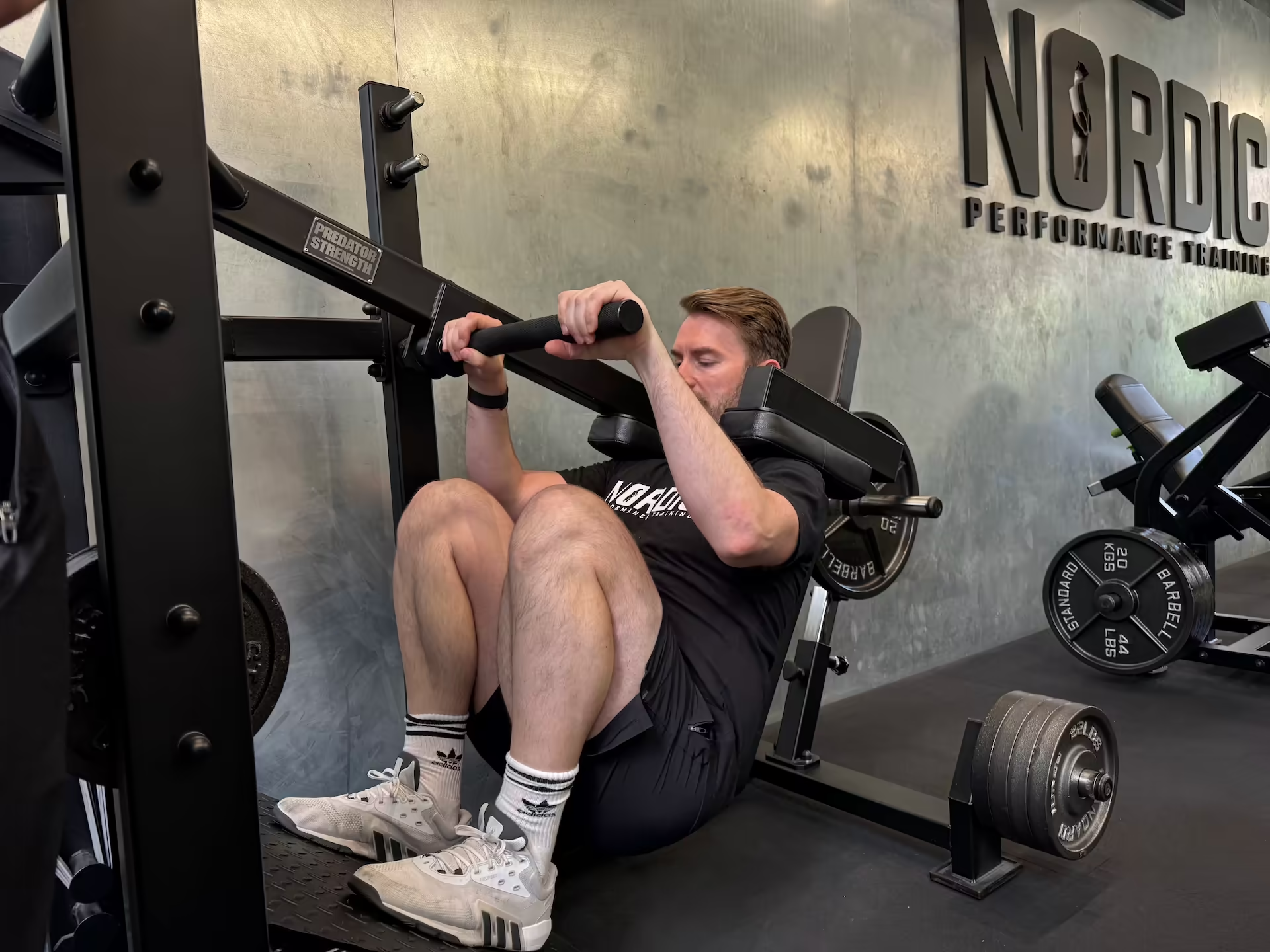


I’ve worked as a personal trainer for over 12 years and as a physiotherapist for over 10 years — and co-founded Nordic Performance Training with Lucas 8 years ago to give clients a professional and structured way to train. Since then, I’ve helped hundreds of people build strength, stay consistent, and feel better through evidence-based methods that actually work.
Along the way, I’ve completed advanced certifications and mentored under leading experts in various fields, and I’ve taught many trainers and physiotherapists internationally.
On this blog, I share the same practical tools, insights, and strategies we use every day at Nordic — so you can train smarter, stay consistent, and get real results.



Related Blog Posts
.svg)