







Every transformation here is real — written by the client’s own coach.
These stories show how structured, consistent strength training works across different goals, ages, and starting points.
Each story shows a real process — what the client struggled with, how we structured the training, and the results that followed.
Riad, 51: Pain-free after 11 years of back pain and 2 surgeries
Riad had trained since he was 17. Strength training, running, martial arts — all of it was a fixed part of his life, through the police academy and further into his career.
Then in 2011 he got severe lower back pain. A herniated disc between the fourth and fifth lumbar vertebra. Treated with surgery. And the year after: relapse and another surgery.
What followed was 11 years of constant pain and stiffness in the lower back. Not the kind that comes and goes, but the kind that is there every day.
"I had in a way given up," Riad said. "I thought that was just how it was. I had learned to live with 'my handicap.'"
Again and again he tried to restart his training. And again and again his back locked up and knocked him back. The pain returned, and the hope disappeared a little more each time.
After starting structured strength training 2 times per week with us, Riad is today completely pain-free. He runs 5 km in under 30 minutes. He does Romanian Deadlifts with 80 kg — an exercise that for over a decade he had been told was unthinkable for his back. And his "handicap" has become a part of the past.
Here is how a 51-year-old man discovered that 11 years of wrong focus didn't mean his back was broken. It just needed the opposite of what he had been recommended.
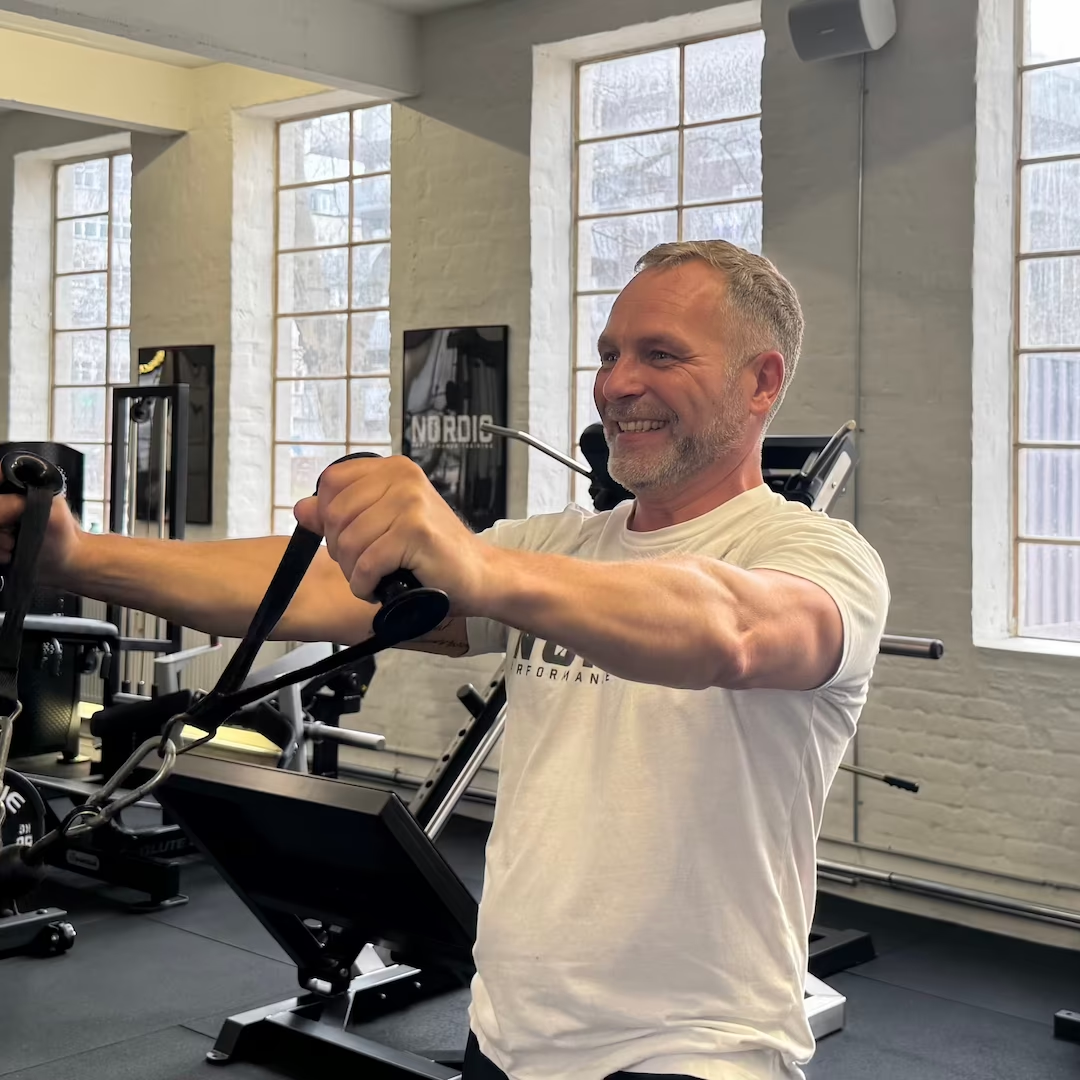
11 years with the wrong focus
After the two surgeries, Riad did what most people would do. He sought help. Chiropractors. Physiotherapists. Body therapists. Yoga. Running. He tried everything.
And he was always told the same thing: Do McKenzie exercises. Train your core. And whatever you do — avoid bending forward.
So that's what he did. For 11 years.
"For far too long I had focused on not leaning forward and trained my core," Riad said. "But the solution lay in activating the posterior chain and daring to bend forward."
It is a pattern we see again and again. People with back pain who are told that certain movements are dangerous. That the back must be protected. That certain exercises must never be performed. And then they do exactly that. They avoid, protect and take care. And become weaker with each passing year.
Riad's back was not broken. It had been underloaded for over a decade. It was weak, but not fragile. But no one had ever questioned that approach.
Daring to bend forward
When Riad started with us, we turned everything upside down.
Already from the first session, we said something that went directly against everything he had heard in 11 years: It is allowed to bend forward. And more than that. We asked him to do it with weight.
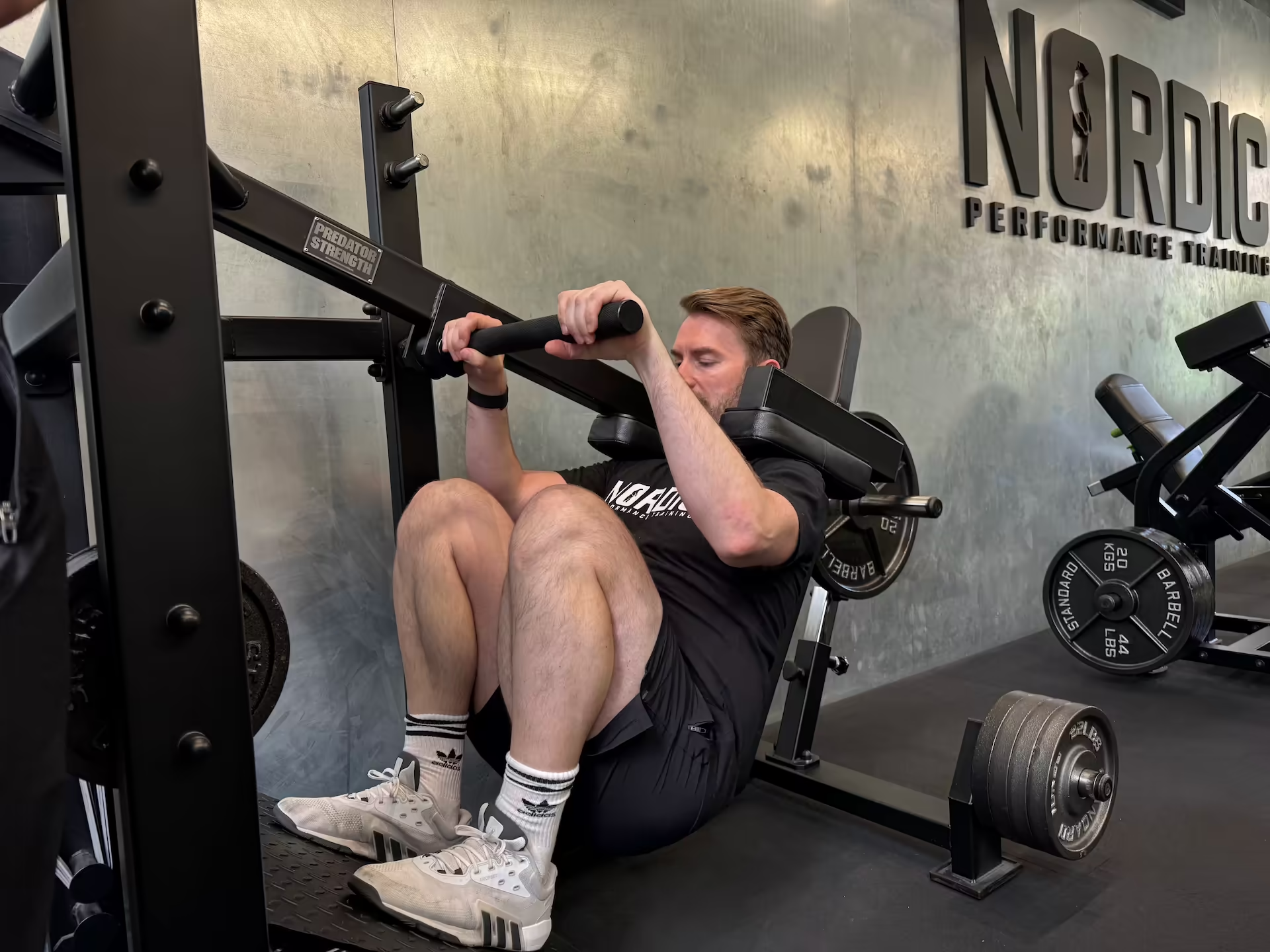
Romanian Deadlift. The exercise that was "completely unthinkable" in Riad's world.
"Already from the start I was guided that it is allowed to bend forward," Riad told us. "At the same time I was supposed to do deadlifts, which was completely unthinkable in my world. But I could immediately feel that my posterior chain was being activated and that I could feel my back in a way I haven't been able to in over 10 years."
That was what changed everything. Not a new diagnosis or a new practitioner. But doing the opposite of what everyone had warned him against.
"For far too long I had focused on not bending forward. But the solution lay in activating the posterior chain, daring to bend forward again and building general strength of the entire body." — Riad
When the shoulder locked in the middle of progress
Just as Riad was in the process of rebuilding his back, a new challenge hit: His left shoulder locked. A frozen shoulder is a condition that can take up to 3 years to get through.
"When my shoulder started hurting, I was afraid I would give up again," Riad said. "It seemed a bit hopeless."
For many, that would have been enough to stop. Yet another setback. Yet another reason to wait.
But we changed the training program so he could continue training everything his body could do and only adjusted what required it.
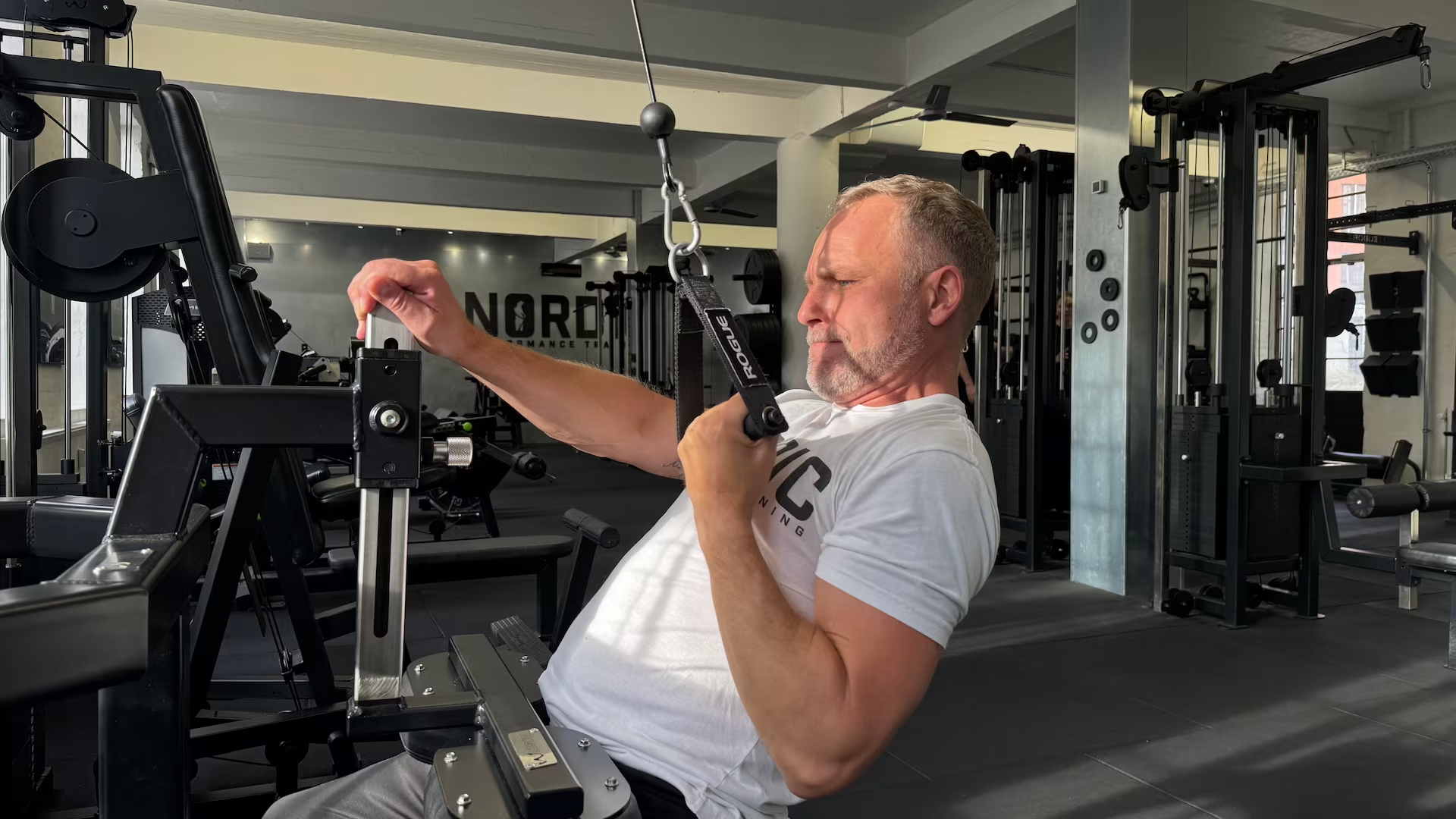
Cable Pulldowns were temporarily replaced by Cable Rows, because his shoulder couldn't reach overhead. As mobility returned, we switched to Single Arm Cable Pulldowns with a slightly leaned-back position that didn't require full overhead range of motion. And we added Cable Y-Raises to gradually strengthen the full overhead range of motion.
Everything else ran as normal. The training didn't stop — it adapted.
"My trainer said that even if you had broken nearly your entire body, you can train the part that can move," Riad recalled. "There was compassion and empathy, but no pity. That approach was what I needed. Someone who backed me up without wrapping me in cotton wool."
"Even if you had broken nearly your entire body, you can train the part that can move. There was compassion and empathy, but no pity. That was exactly the approach I needed." — Riad
Riad's transformation
After 2 years of structured training — 2x Full Body per week:
Strength gains:
- Romanian Deadlift: 30 kg → 80 kg (+167%) — the exercise that was "completely unthinkable"
- Hack Squat: 25 kg → 55 kg (+120%)
- Leg Extension: 20 kg → 45 kg (+125%)
- Seated Leg Curl: 30 kg → 55 kg (+83%)
- Dumbbell Chest Press: 17.5 kg → 27.5 kg (+57%)
- Single Arm Cable Pulldown: 45 kg → 65 kg (+44%)
- Cable Y-Raise: 12 kg → 20 kg (+67%)
Pain-free:
- 100% pain-free in the back after 11 years of constant pain
- Full range of motion in back and shoulder
- Frozen shoulder completely resolved
Functional capacity:
- Runs 5 km in under 30 minutes pain-free
- Can move freely without fear
- More energy in a demanding leadership role
Consistency:
- 96% attendance (completed 184 out of 192 planned sessions) with planned holidays along the way
- Sticking with training for the first time in over 20 years
- No burnout, no unwanted pauses, no frustrating restarts
Identity shift:
- From "someone with a bad back who never properly recovers" to "I have completely forgotten my handicap"
- From fear of movement to trust in his body
- From giving up to the strongest shape in 15 years
"I haven't felt as strong as I do now in the last 15 years. It's a strange thought when you've turned 50." — Riad
Why the wrong focus kept him stuck for 11 years
Riad's story shows something simple: It is not always the problem itself that keeps you stuck. It can be the way you try to solve it.
For 11 years he was told that the problem was his back and that the solution was to protect it. Train core without heavy lifts. Avoid bending forward. Be careful. Spare the back.
But the body is complex, and things are connected. A focus that is only about avoiding pain doesn't make the back stronger. It makes it weaker.
"I understand now that for years I focused on protecting my back in the belief that it was fragile, while what it actually needed was to become stronger. I had had the wrong focus for far too long."
The solution was not more protection. It was making the back stronger — gradually, systematically and with a trainer who dared to challenge the advice he had been given for 11 years.

Ready to shift the focus?
Riad spent 11 years protecting his back. Two surgeries. Countless practitioners. Everyone said the same thing. No one helped.
The solution was not more protection — it was structured strength training with a positive focus on what his body could actually do.
"If you have lived with pain for years, followed all the advice and still haven't moved forward — then maybe you don't need more of the same advice. Maybe you need an entirely different approach."
Book a free start-up conversation at our private gym in Copenhagen, and experience how structured strength training can do what years of treatment could not.
Because your back rarely needs more protection. It needs more strength.
Table of Contents
Other Client Stories
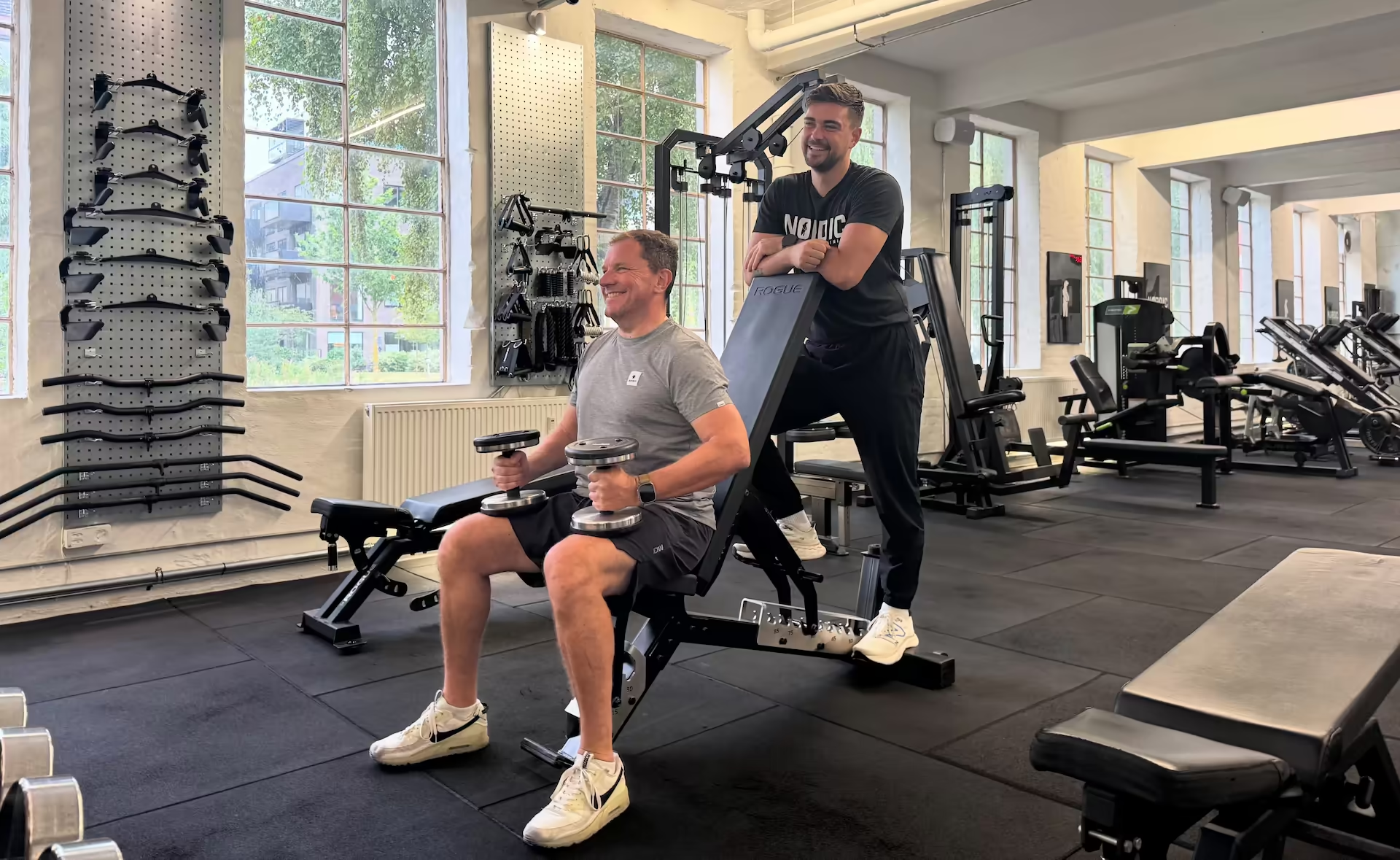

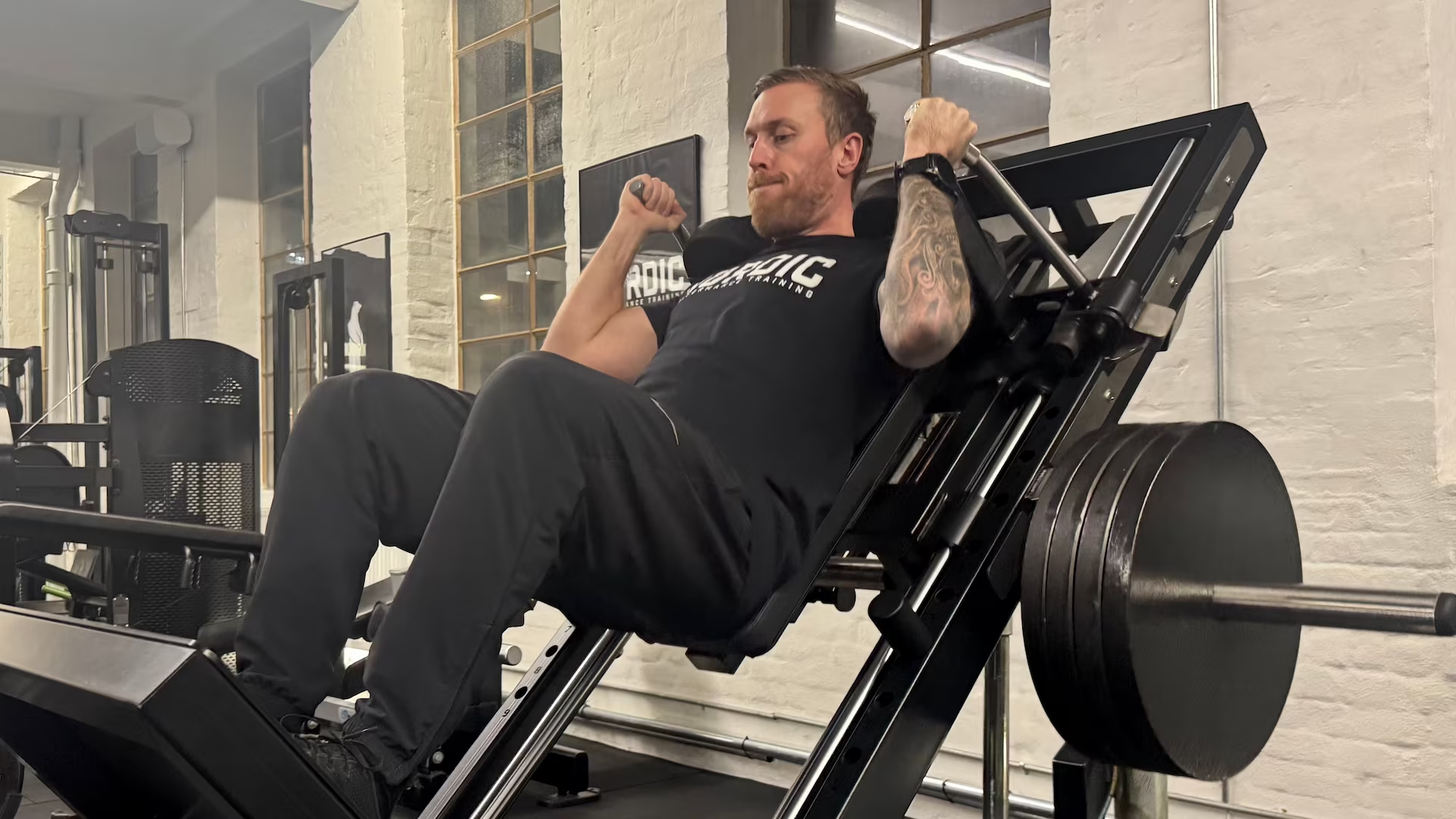
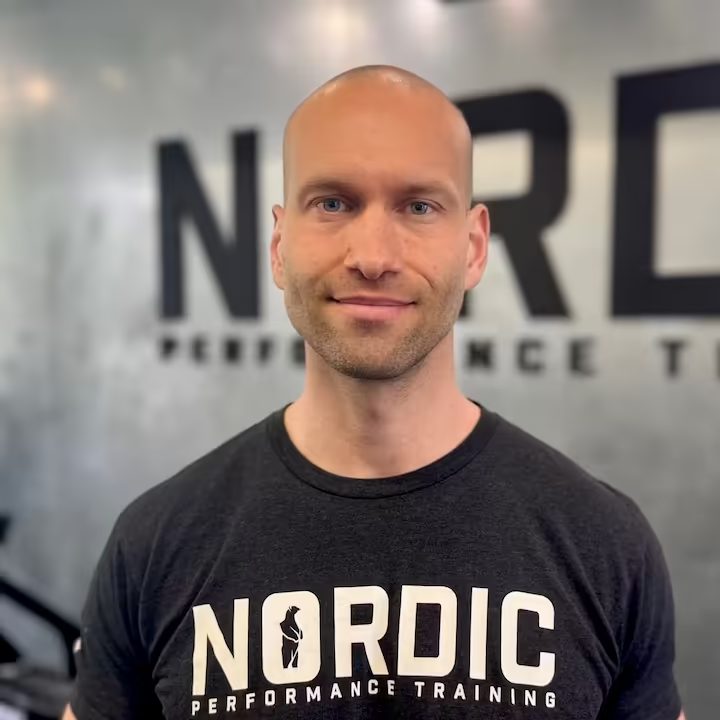
I’ve worked as a personal trainer for over 14 years and as a physiotherapist for 8 years — and co-founded Nordic Performance Training with Kasper to give clients a professional, private, and structured training environment where results actually last. In that time, I’ve overseen more than 50,000 sessions and helped thousands of clients rebuild after injuries, gain strength, improve their health, and stay consistent.
My approach combines practical experience with evidence from the latest research, making training both effective and realistic.
On this page, I share real client stories — so you can see what structured, consistent training looks like in practice.


Other Client Stories

.svg)