







Every transformation here is real — written by the client’s own coach.
These stories show how structured, consistent strength training works across different goals, ages, and starting points.
Each story shows a real process — what the client struggled with, how we structured the training, and the results that followed.
Sebastian, 51: Dislocated shoulder to stronger in 12 weeks
Sebastian dislocated his shoulder on the first day of a ski trip. When he got home and was examined at the hospital, he was told that it would be at least six weeks before he could wash his own hair.
As a self-employed electrician, it wasn't just an injury. It was a risk to his livelihood.
"I was afraid that my injury would prevent me from doing my work," Sebastian told us. "I had pain as soon as I lifted my arm. I couldn't even get it up to horizontal. And I didn't know when or if it would become normal again."
He contacted us the day after he landed in Denmark. Not because he had tried everything else first, but because he had trained with us before and knew that we could give him a professional assessment and a plan to get back.
After the first session, he could already get his hand up to his head again. After six weeks, he had full range of motion. And after 12 weeks with one workout per week, he was completely pain-free and stronger than before the injury.
Here is how a self-employed electrician learned that you don't need to wait for the pain to disappear before you can start training again.
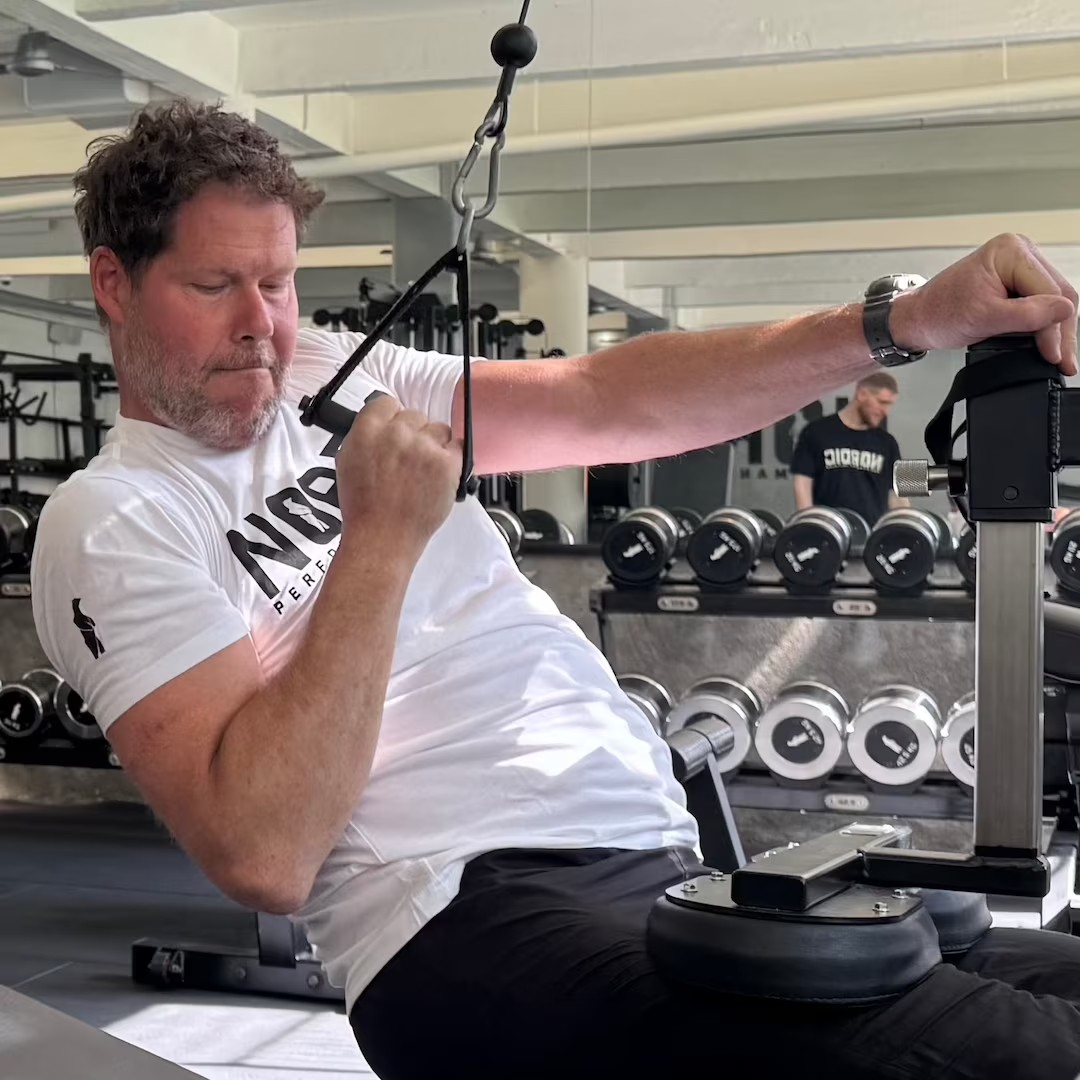
When an injury threatens your livelihood
For most people, a dislocated shoulder is painful and frustrating. For Sebastian, it was existential.
As a self-employed electrician, he uses his arms all day. He often has his arms overhead, pulls cables, drills and screws and carries heavy loads. Without a functional shoulder, he couldn't perform his work. And without work, he had no income.
"I wasn't just nervous about my shoulder," Sebastian said. "I was nervous about what it would mean for my business, my finances and my entire daily life."
The hospital had examined him and confirmed there was no fracture. But the message was clear: Minimum six weeks of waiting. Take care of the arm. Let it heal.
Sebastian didn't have six weeks to give. He needed a plan — not waiting time.
First session: From fear to hope
When Sebastian showed up for his first workout, he could barely lift his arm. Anything above horizontal was impossible. And he was afraid of making it worse.
But instead of wrapping him in cotton wool and sending him home with instructions to wait, we got started. Carefully, but actively. We found the movements he could do without pain and worked from there.
"The most important thing I learned was that I didn't need to be pain-free to be able to train," Sebastian said. "We used the pain as a guideline for when I could increase the load. It was a completely different approach than just waiting."
And then something happened that he hadn't expected: After the first session, he could get his hand up to his head again. The movement the hospital had said would take at least six weeks.
"It gave me hope and dampened my fear," Sebastian recalled. "Suddenly I could see that this would go faster than I thought."
"I thought I had to take care in order to get better, and that I had to be pain-free before I could train again. It was exactly the opposite." — Sebastian
Progress from session to session
Sebastian's program was simple: One session per week. Same exercises. Gradually increased load, guided by what the body could handle that day and good dialogue along the way.
The exercises Sebastian trained:
- Machine Chest Press
- Cable Pulldown
- Cable Y-Raise
- Incline Dumbbell Curl
- Overhead Cross Cable Tricep Extension
- Pendulum Squat
- Leg Curl
No complicated rehabilitation exercises. No resistance bands. Just structured strength training that met him where he was and built on from there.
"The development from session to session was motivating," Sebastian said. "It was frustrating that the pain was there in the beginning. But I reminded myself of how much more I could gradually do, and that even though the pain was there, it was less and less frequent."
The timeline spoke for itself:
After the first session: Could get his hand up to his head again. Went to work the next day. After 6 weeks: Full range of motion in the shoulder. No worries about work tasks. After 12 weeks: Completely pain-free. Stronger than before the injury.
All of it with one workout per week.
"I understand now that simple and effective strength training doesn't just work for keeping my body strong and healthy — it also works when injuries occur." — Sebastian
Sebastian's transformation
After 12 weeks of structured training — 1x Full Body per week:
Strength gains:
- Machine Chest Press: 40 kg → 60 kg (+50%)
- Cable Pulldown: 52 kg → 70 kg (+35%)
- Cable Y-Raise: 6 kg → 12 kg (+100%)
- Incline Dumbbell Curl: 7 kg → 12.5 kg (+79%)
- Pendulum Squat: 7.5 kg → 20 kg (+167%)
Pain-free:
- Completely pain-free after 12 weeks
- Full range of motion in the shoulder
- No limitations in work or leisure
Functional capacity:
- Can do his work as an electrician without accommodating the shoulder
- Can go on ski trips and live actively without worries
- Stronger than before the injury
Identity shift:
- From "afraid of losing my active lifestyle and my business" to "strong and robust"
- From fear of using the arm to forgetting there was ever a problem
- From taking care to pushing forward
What Sebastian learned
Sebastian's story shows something simple but important: You don't need to wait for the pain to disappear before you can start doing something about it.
The hospital said six weeks of waiting. And for many, that would have been the plan: Wait. Take care. Hope for the best.
But Sebastian chose an active approach. He trained with the pain — not against it. Used it as information instead of as a roadblock. And the result was that he came back faster and stronger than anyone had predicted.
"I can do my work fully without considering the scope of the tasks," Sebastian said. "And I dare to go on ski trips with my children again."
Ready to come back stronger after an injury?
Sebastian dislocated his shoulder and was told it would be at least 6 weeks where he would struggle with just being able to wash his hair. Already after the first workout, that was no problem. Six weeks later he was back to normal, and 12 weeks later he was stronger than ever.
If you have an injury that is holding you back from your work or your active life, you don't need to wait for it to resolve on its own. Active, structured training can get you back faster and stronger.
Book a free start-up conversation at our private gym in Copenhagen, and get a professional assessment of how to best move forward.
Because the body doesn't get stronger from waiting. It gets stronger from being used.
Table of Contents
Other Client Stories
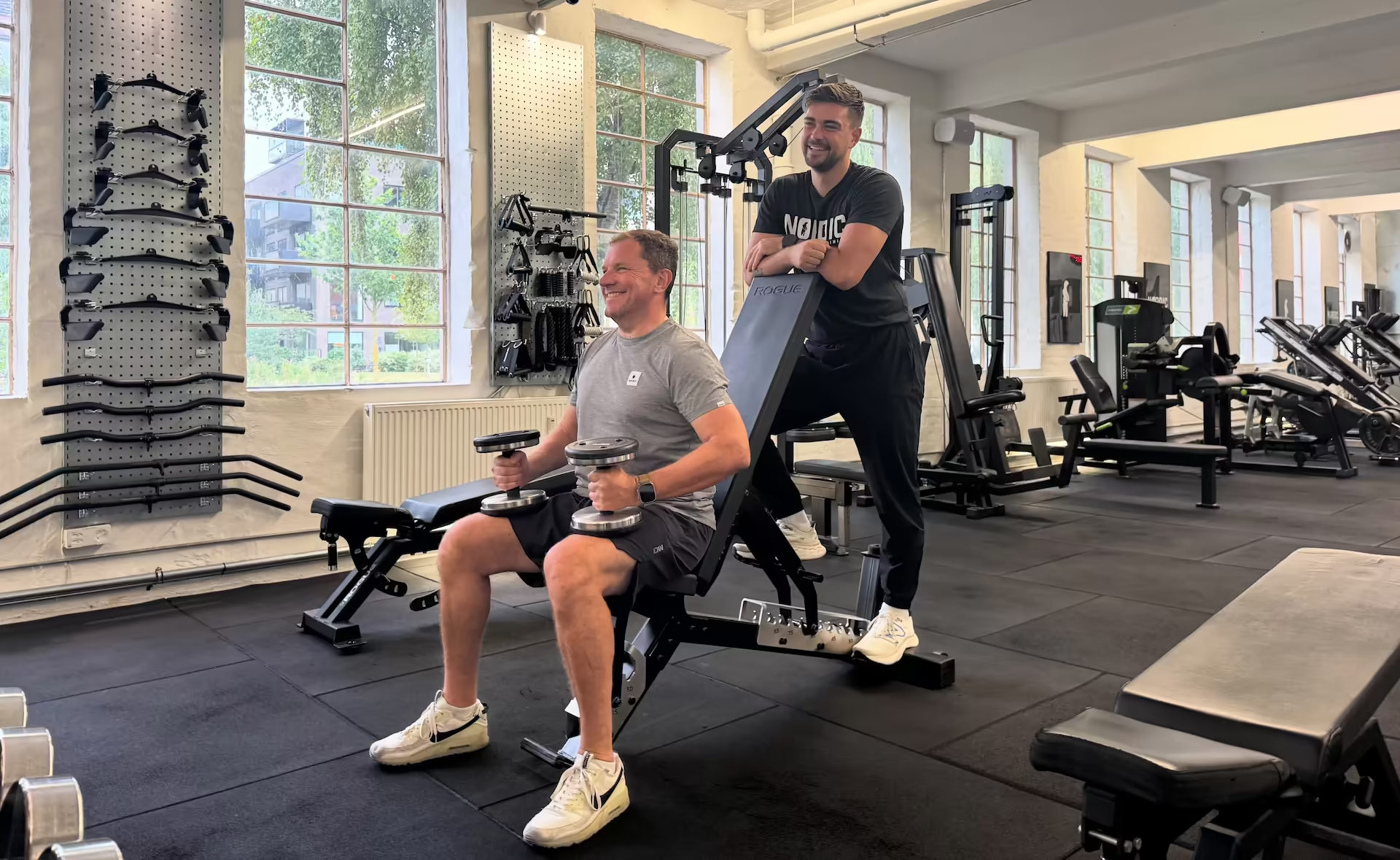


I have worked as a personal trainer and physiotherapist for many years, and I bring a calm and professional presence to every session — so my clients feel safe and confident, regardless of their starting point. I help them create structure, consistency, and the habits that lead to real and lasting results.
My approach is clear, effective, and sustainable, and I have extensive experience helping clients train safely and effectively — even with pain.
On this page, I share real client stories — so you can see how structured, patient training creates strength, confidence, and lasting results.


Other Client Stories


.svg)