







Every transformation here is real — written by the client’s own coach.
These stories show how structured, consistent strength training works across different goals, ages, and starting points.
Each story shows a real process — what the client struggled with, how we structured the training, and the results that followed.
Jakob, 33: One hour a week was enough to get started
Jakob knew perfectly well that he should strength train. That wasn't where the problem lay.
"I just didn't know how," he told us. "And especially not how to do it effectively when I realistically only had once a week. I honestly thought it didn't matter when I didn't have more time than that. So better not to bother."
As a self-employed person, he had for years postponed it. Not because he didn't want to, but because he had calculated that the requirement was greater than he could deliver. Three to four times a week, he thought. And when he could only fit one in, it didn't make sense to start.
That assumption is in itself a reason to never get started. But it isn't true. Fortunately.
"I have enough self-awareness to know that doing it on my own doesn't work for me," Jakob said. "But it's hard to take the leap and get help when the training market is so opaque."
In January he took the leap. And at the introductory consultation we established that one workout per week was what he could commit to.
Here seven months later, he trains two times per week, runs three times alongside and has set his sights on running Copenhagen Half next year.
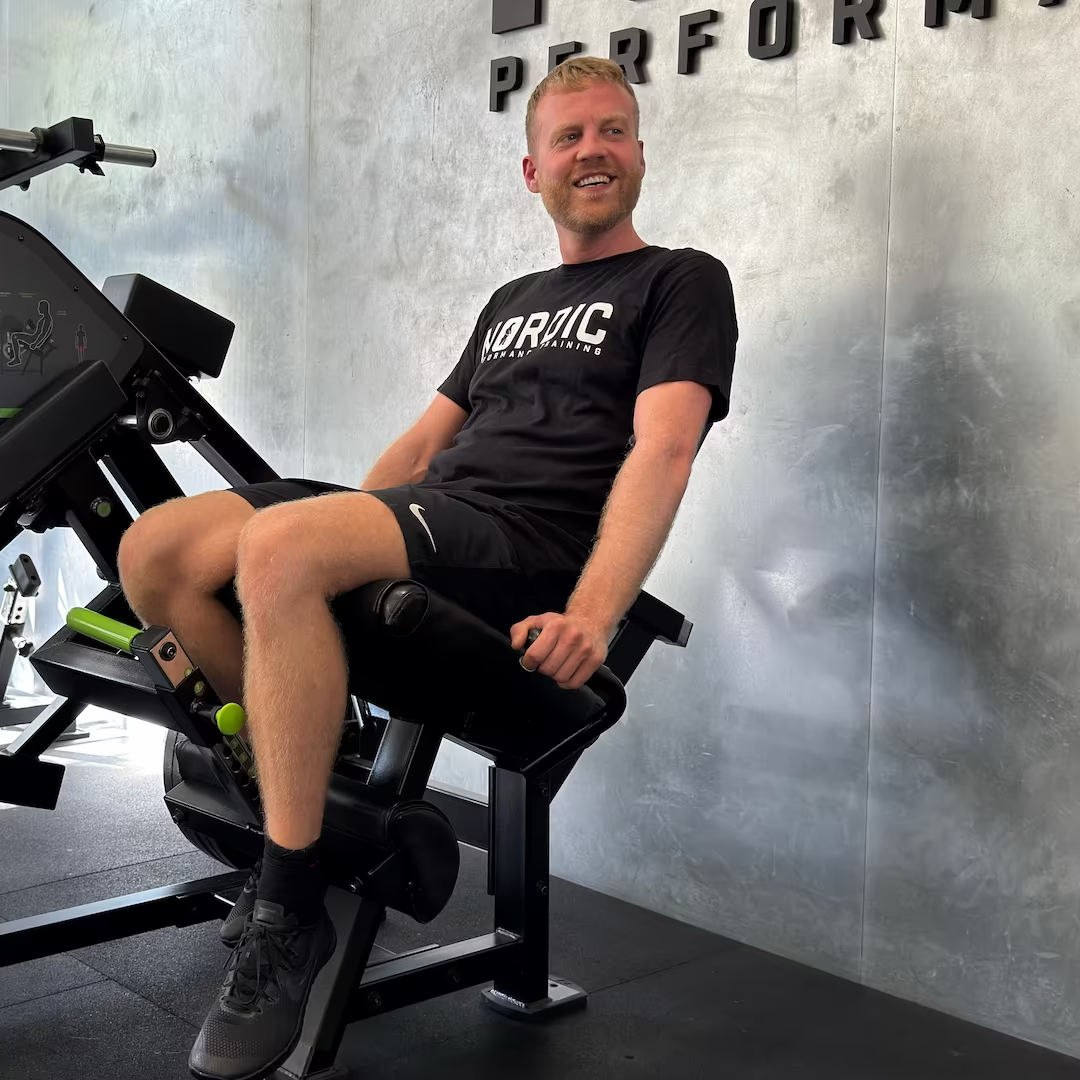
When the assumption was the barrier
Jakob's problem was not time. It was not motivation. It was his own assumption about how much was needed.
He had played football in periods, a couple of times a week. But structured strength training he had never gotten started with. And the longer time went on, the more he began to believe that it just wasn't for him.
"I thought you had to train three to four times a week before it was even worth getting started," Jakob said. "So when I could only fit one in, I thought it didn't matter anyway."
It is one of the most common reasons people never get started. Not because they don't want to. But because they have calculated that they can't deliver what they believe is required. And so they don't start.
But one hour a week is not a half-hearted effort. It is a real strength training dose, as long as the training is just effective and performed correctly.
That was the first thing Kasper told him. Not that strength training is healthy and good for him — Jakob knew that, as most people do. But how little is actually needed when that one hour is used properly.
"I honestly thought it didn't matter when I didn't have more time than that." — Jakob
The decision was made at the right time
Jakob's biggest concern was not about the training.
"There I trusted Kasper and the concept," he said. "But I was nervous about whether I could keep my commitment and actually show up. That's where it has gone wrong for me before."
So that became the starting point for the plan. Not what would be optimal, but what was realistic. Once a week. Fixed time. Booked in 12-week periods, where any holiday days are addressed in advance.
The decision was made at the introductory consultation, by a rested version of Jakob. Not on a Tuesday afternoon by someone who has had a terrible day and has to decide whether he can be bothered.
We didn't suggest more. There was no reason to commit him to two or three times a week when one was what he could sustain. If you can do more later, you can always reassess at the next period.
"Because we had a conversation about what was realistic for me, and I then committed to precisely that and nothing more, it has worked fantastically," Jakob told us. "The fixed times mean that I plan my weeks around the training instead of the other way around. That has made all the difference."
The exercises Jakob trained:
- Machine Chest Press
- Cable Pulldown
- Hack Squat
- Lying Hamstring Curl
- Leg Extension
- Dumbbell Lateral Raise
- EZ-Bar Cable Curl
- Cable Triceps Extension
The same eight exercises all the way through. And that is deliberate. Jakob should not spend his one weekly hour learning new exercises all the time, but on getting stronger in the ones he already knows and is gradually getting better at performing.
The four missed workouts
There have been busy periods in the business. Jakob missed four workouts in seven months.
And this is actually where the story gets interesting.
"Had I not had fixed times, it would have fizzled out the first time I missed one," he told us. "Miss it once, and that's enough to fall out of the habit. But because there was a new workout in the calendar the following week, I was committed to getting back on track right away. I wasn't allowed to get stuck in my all-or-nothing mindset and brood over how annoying it was to lose a workout that in the long run is completely insignificant."
We are programmed as humans to be pessimistic, and that is why it's easy to fixate on the workouts we might miss due to unforeseen events in our lives. But the reality is simply that it is a prerequisite for all the others being completed. Without the fixed times, Jakob would not have completed thirty-six workouts and missed four. He would have trained zero times, just as he had done for years.
"It's so important that if I missed a workout because of work, there was just a new one in the calendar the following week. I didn't have to start over. I just had to show up on Tuesday, not dwell on it and look forward." — Jakob
The hour has to be worth showing up for
We don't promise a transformation. We promise the best hour of the day.
It may sound like a detail, but it isn't. You do notice an effect right away — energy, capacity, a good feeling in the body. But the results people come for take months. They are built from individual workouts that stack on top of each other.
A lot of marketing around training is about what you avoid. Lifestyle diseases. Ailments. Poor health in twenty years. That is true enough, but it rarely motivates anyone to cycle to training on a cold and rainy Tuesday evening.
That is why every single hour has to be worth showing up for in itself. Not because you rationally know it prevents something in the future you can't even feel yet. But because it gives something here and now.
"It's not just that the training is effective and that it feels good," Jakob said. "It's that I spend the hour with Kasper. It's fun, optimistic and affirming, and he knows an incredible amount but makes sure it's easy to understand."
That is also part of the reason he is still going and enjoying it here seven months later, with no plans to stop.
For Jakob, it was about everything fitting together. Nice surroundings. Professional people he trusts. A workout he knows works.
"And a structure that both fits my life and ensures that I actually get there," as he puts it.
When the numbers carry you through
Progress can be seen in the numbers long before it can be felt in daily life. That is important when you have just started.
"It's just great to be able to see your progress in black and white, week by week," Jakob said. "It's very motivating, also in the first weeks when you can't quite feel the big difference in daily life yet."
Cable Pulldown went from 48 kg to 66 kg. Lying Hamstring Curl from 30 kg to 45 kg. Chest Press from 45 kg to 50 kg, with more repetitions. Hack Squat and Leg Extension increased significantly, and so did the arm exercises.
It is not an argument that once a week is just as good as twice. It isn't, when you look at it in a vacuum. But you have to consider that the biggest difference happens from zero to once a week. The jump from there to twice and especially from twice to three times is smaller, relatively speaking. Once a week, done properly, is enough for real progress, as long as the training is planned correctly and performed properly. And it is infinitely much better than the zero times he had had for years.
Jakob's transformation
After 7 months of structured training, 1-2x Full Body per week:
Strength gains:
- Leg Extension: 30 kg → 70 kg (+133%)
- Hack Squat: 15 kg → 45 kg (+200%)
- Lying Hamstring Curl: 30 kg → 45 kg (+50%)
- EZ-Bar Cable Curl: 42 kg → 60 kg (+43%)
- Cable Pulldown: 48 kg → 66 kg (+38%)
- Dumbbell Lateral Raise: 6 kg → 8 kg (+33%)
- Machine Chest Press: 45 kg → 50 kg, with more repetitions
- Cable Triceps Extension: 32 kg → 36 kg, with more repetitions
Consistency:
- 36 completed workouts in 7 months
- 4 missed workouts due to unforeseen events in the business
- Fixed times in 12-week periods meant he always got back on track every time work got in the way
New habits:
- Now trains 2x per week: 1x with Kasper and 1x on his own
- Runs 3x per week
- Has set his sights on running Copenhagen Half next year
Identity shift:
- From "someone who knew perfectly well what he should do and never did it" to "someone who trains"
- From believing once a week didn't matter to knowing it was enough to get started
- From postponed decision to something that just runs by itself
"Now I train two times a week and run three. I've set my sights on running Copenhagen Half next year. A year ago I would have laughed at that sentence." — Jakob
The road to two workouts per week
After approximately four months, Jakob started adding an extra workout on his own.
It was not a random side benefit. It was the plan, from the moment it became clear that he wanted more.
Normally we handle all the practical aspects. Setting up exercises, logging in the app, equipment that is fetched and put away. As a client, your only job is to show up. But if you want to be able to train on your own alongside, you need to learn everything it takes to manage it on your own. And that is often more demanding than people expect.
So along the way, Kasper has gradually given him those skills.
The order matters here. Jakob didn't start training more before he was sure that his daily life had room for it. He started with once a week because that was what was realistic. And when the routine was in place and he himself wanted more, he was equipped for it.
"I understand now that it wasn't about willpower," he said. "It was about getting an amount of training that fit my life, and training that was effective enough that that amount was enough."

Ready to get started?
If you have postponed strength training because you don't have time for three to four times a week, it may not be time that is the problem. It is the assumption about how much is needed.
One hour a week, used right, is enough for real progress. And it is infinitely much better than zero.
Book a free start-up conversation at our private training center in Copenhagen, and let us figure out what is realistic for your life.
Because it is not about willpower. It is about finding the amount you can actually stick with.
Table of Contents
Other Client Stories
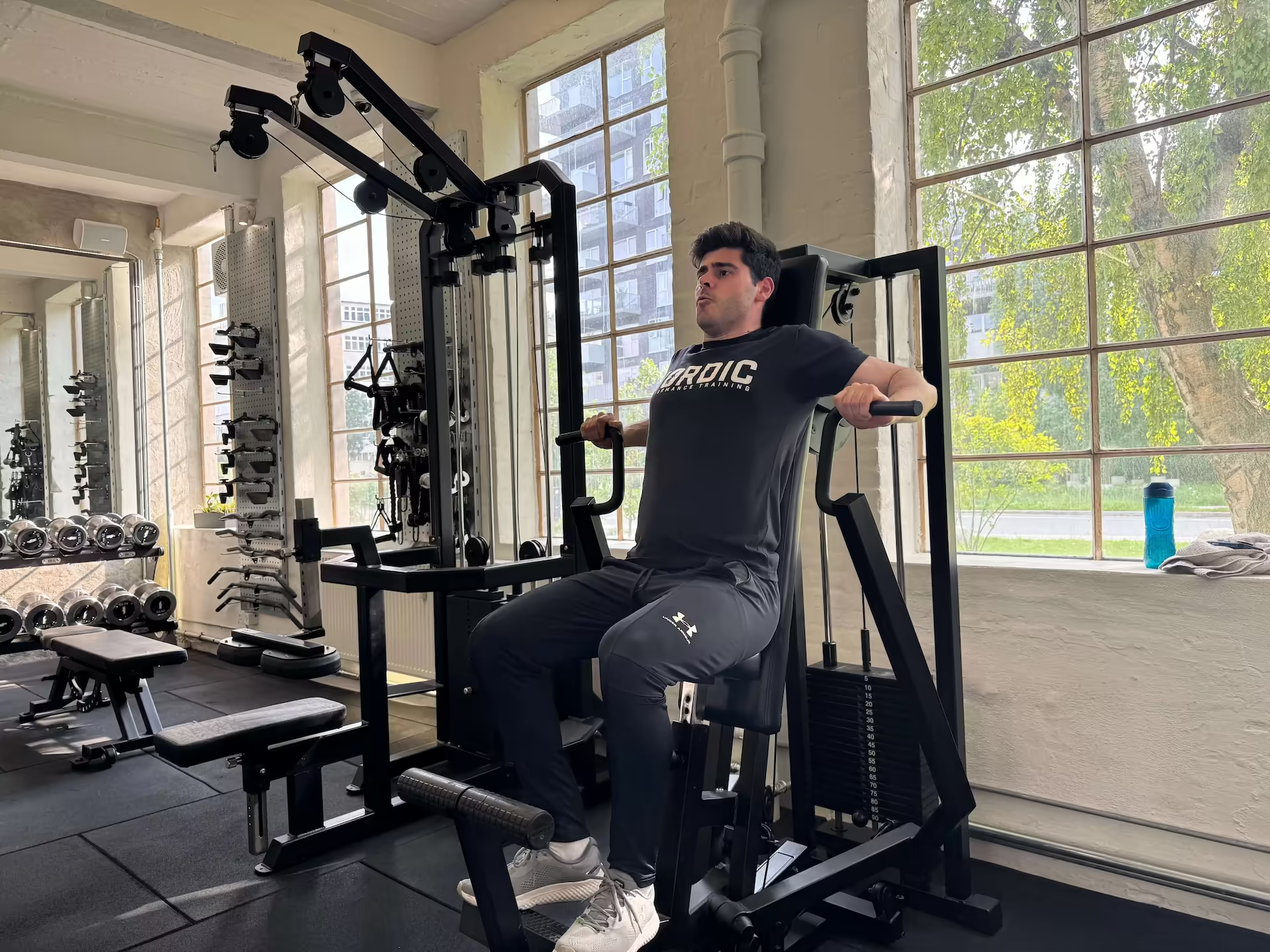



I’ve worked as a personal trainer for over 12 years and as a physiotherapist for over 10 years — and co-founded Nordic Performance Training with Lucas 8 years ago to give clients a professional and structured way to train. Since then, I’ve helped hundreds of people build strength, stay consistent, and feel better through evidence-based methods that actually work.
Along the way, I’ve completed advanced certifications, mentored under leading experts, and I’ve taught many trainers and physiotherapists internationally.
On this page, I share real client stories — so you can see what structured, consistent training looks like in practice.


Other Client Stories


.svg)