







Every transformation here is real — written by the client’s own coach.
These stories show how structured, consistent strength training works across different goals, ages, and starting points.
Each story shows a real process — what the client struggled with, how we structured the training, and the results that followed.
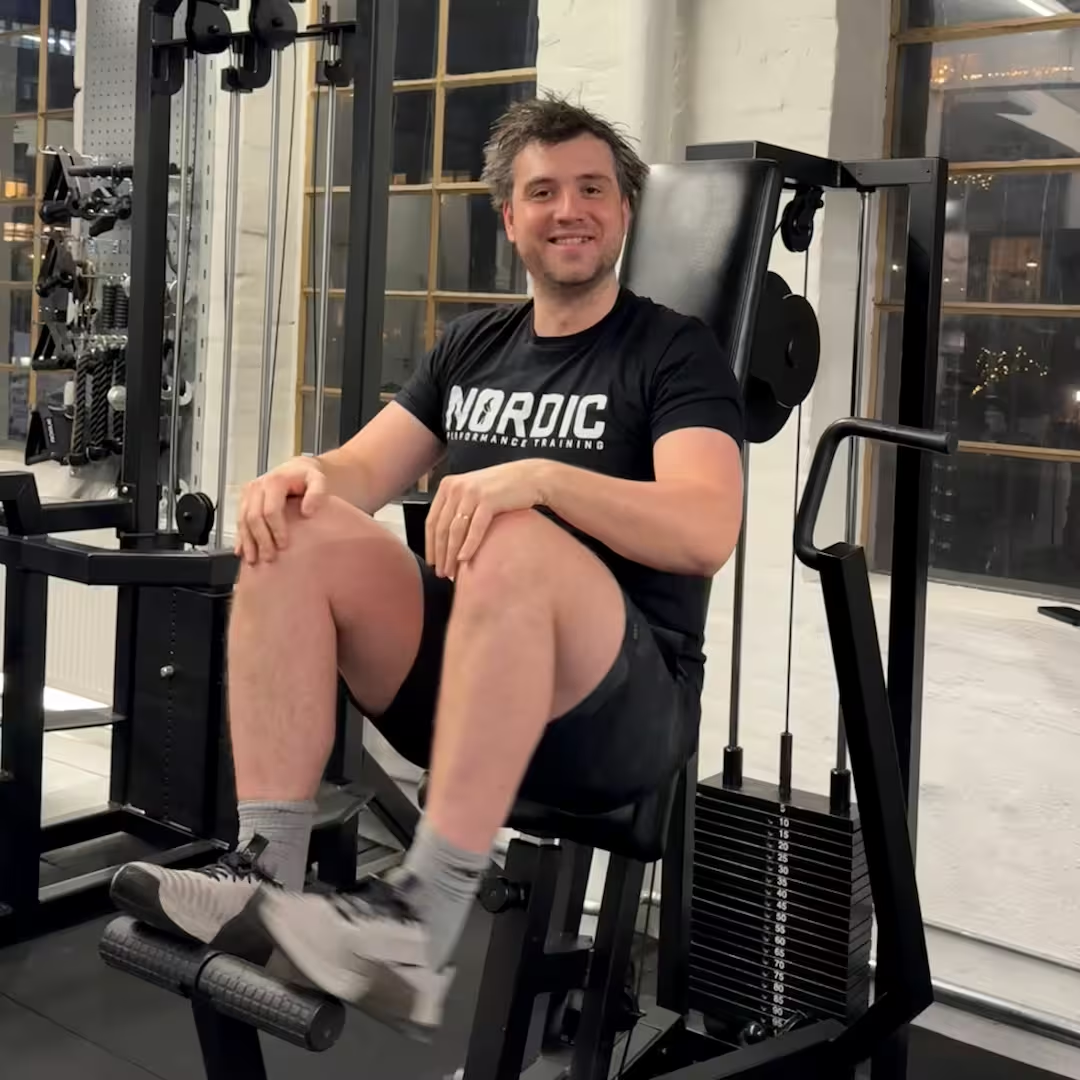
How Ross, a 36-Year-Old Production Coordinator, Dropped the All-or-Nothing Mentality — and Got Stronger Than Ever
Ross had been living in Copenhagen for a few years as an expat. But a new job as a production coordinator meant new colleagues, new social circles, new expectations. A lot of balls in the air.
He had always trained — 4-5 times a week, when the calendar allowed it. But it was a constant juggling act: Training before long workdays. Training after long workdays. Training instead of social events. And when life got too busy? Everything fell apart.
"I thought you had to train at least four to five times a week to see results," Ross said. "I was under the belief that you had to train like the athletes and fitness influencers you saw on social media to build muscle and get stronger, and otherwise it was almost not worth it."
It was the all-or-nothing mentality: Either train hard, intense, many times a week — or drop it completely. And when he couldn't maintain the intensity, he felt like it was a failure.
After 6 months of structured strength training twice a week with us, Ross is not only much stronger. He is performing better in all aspects of his life — both personally and professionally.
Here is how a busy professional discovered that sustainable progress beats unstable sprints — every single time.
When All-or-Nothing Becomes Unsustainable
Ross' problem was not a lack of ambition, motivation, or discipline. It was that his approach to training was founded in what you often see promoted on social media: train as hard as you can 4-5x a week 100% disciplined, until you burn out, get injured, or give up. Then start over.
"I juggled four to five workouts a week with career, social events, and everything that comes with living in a new city," he said. "Some months I managed it. Other months everything fell apart. And then I felt like it was all a failure."
The all-or-nothing mentality is toxic because it creates a yo-yo effect. You train intensely for a period, see some results, burn out, drop out for months, lose all progress and momentum, feel guilt, and start over with the same unsustainable approach.
"I also had knee pain that had been plaguing me for several months," Ross continued. "But I never really knew what to do about it. So I just ignored it and hoped it would go away."
When Ross contacted us, he had decided that now it was time to clean up his training once and for all. New chapter. New approach.
"I had a lot of balls in the air," he said. "I knew I needed structure, a clear plan, and an expert I could outsource the worries to. I wanted to be sure that the time invested in training was actually producing results."
Outsourcing to an Expert
When Ross started with us, the first step was to remove all the uncertainty.
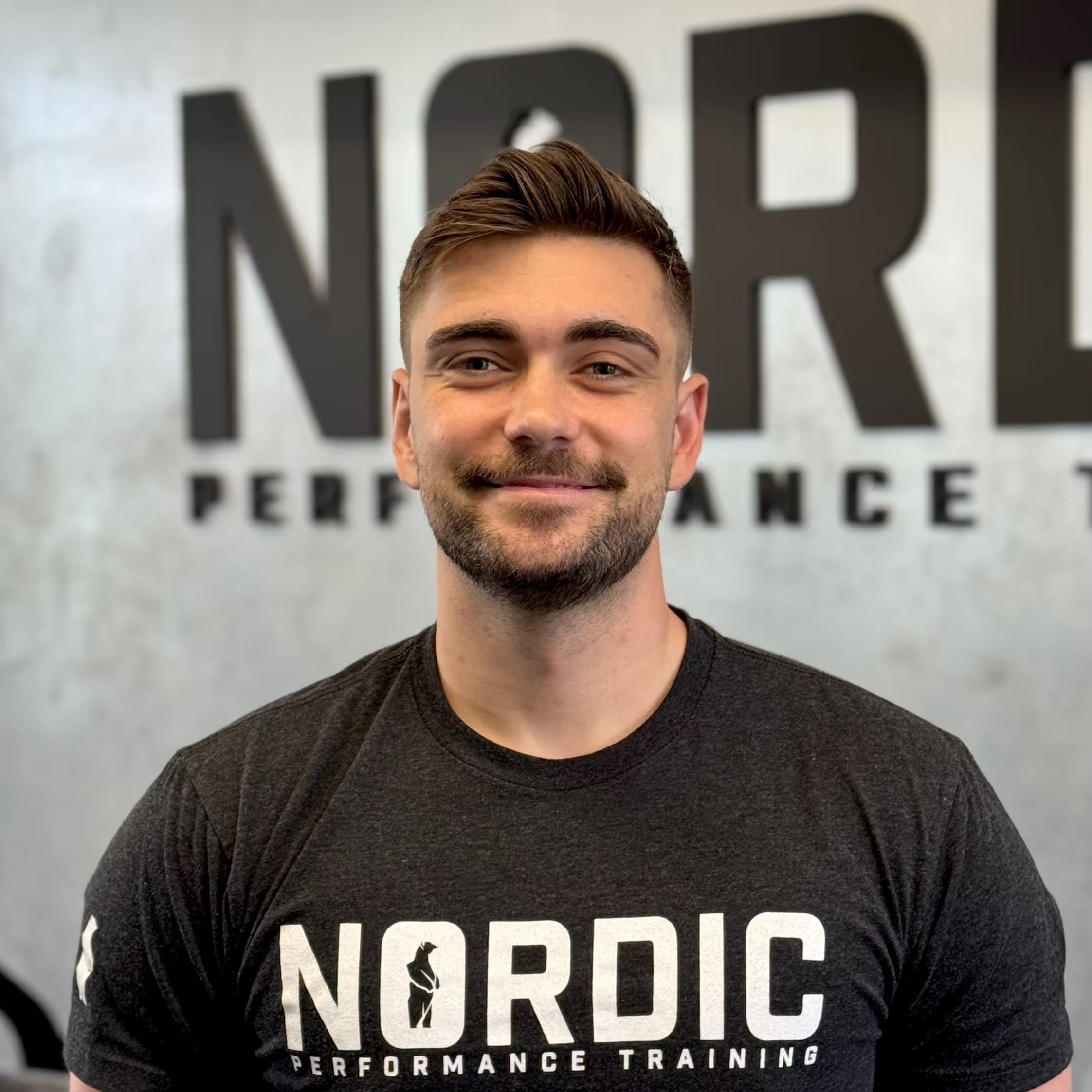
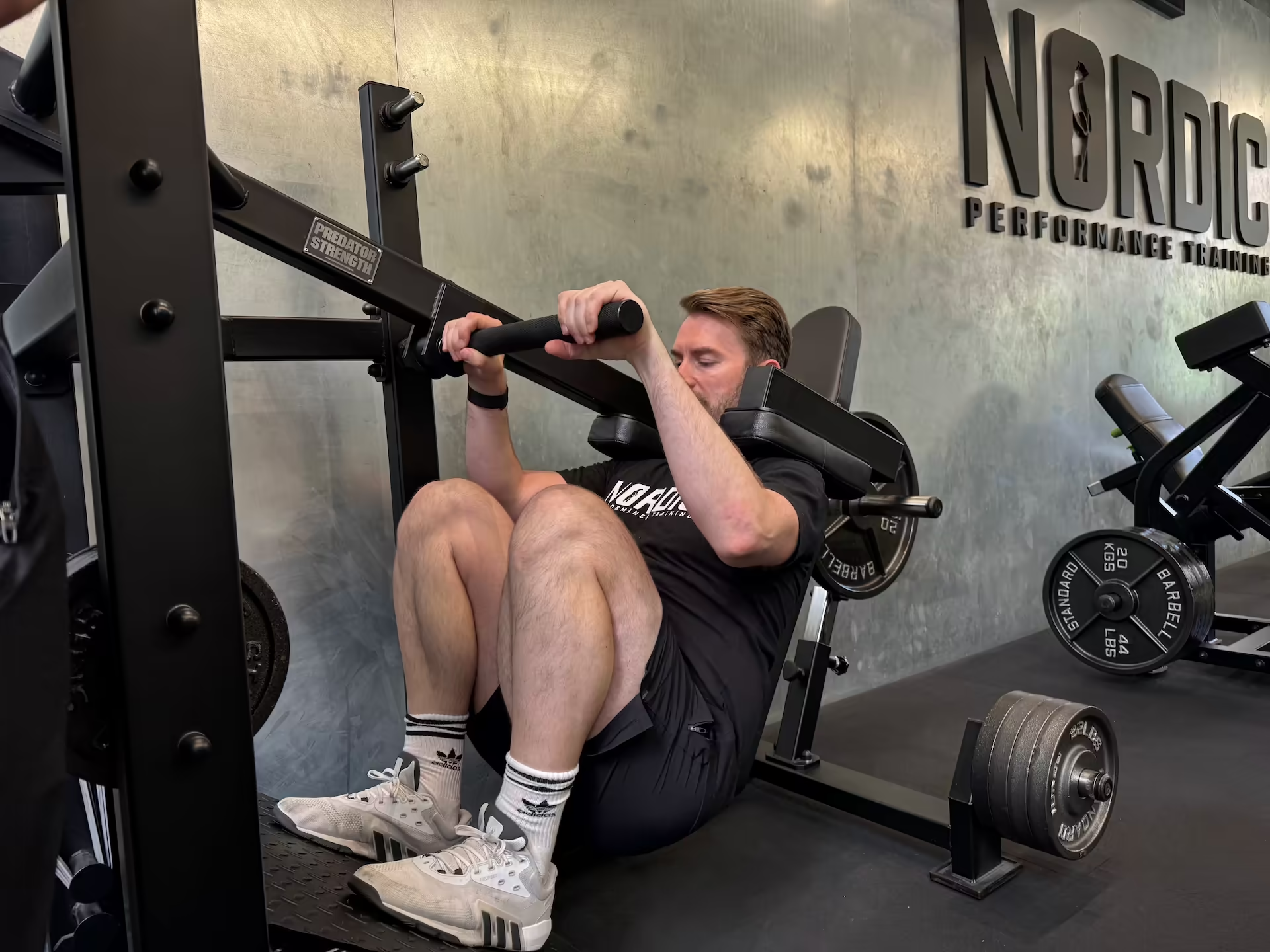
"We put him on a simple, structured, and extremely effective Full Body program," explained Simon, his trainer. "Twice a week. Same exercises every time. Clear progression from week to week. No guesswork. No worries about whether he was doing the right thing."
The exercises Ross trained:
- Machine Chest Press
- Cable Pulldown
- Hack Squat
- Lying Leg Curl
- Leg Extension
- Dumbbell Lateral Raise
- Dumbbell Bicep Curl
- Cable Tricep Extension
Two sessions per week. Six to eight exercises each time. Same structure, week after week. Gradually heavier weights or one more repetition through our progression model double progression.
"It was liberating," Ross said. "I just had to show up twice a week. Everything else was taken care of. No decisions. No worries. Just execute."
The principle was simple: A consistently executed plan twice a week creates better results than unstructured hustle five times a week.
"With just two weekly sessions, you can show up fresh every time," Simon explained. "No accumulated fatigue. No stress about recovery. You can deliver maximum effort because the body is ready."
Ross discovered the difference after just three weeks.
"It changed when I saw, felt, and experienced the results after just three weeks of twice a week," he said. "And the results just kept coming."
"It changed when I saw, felt, and experienced the results after just three weeks of twice a week. And the results just kept coming." — Ross
Ross' Transformation
After 6 months of structured training — 2x Full Body per week:
Strength gains:
- Machine Chest Press: 55 kg → 102.5 kg (+86%)
- Hack Squat: 50 kg → 105 kg (+110%)
- Cable Pulldown: 55 kg → 90 kg (+64%)
- Leg Extension: 30 kg → 70 kg (+133%)
- Dumbbell Bicep Curl: 8 kg → 15 kg (+88%)
- Visibly bigger arms, chest, and shoulders
Consistency:
- 100% attendance through 6 months
- No problems maintaining the rhythm — even during busy weeks
Injury-free:
- No knee pain anymore after several months of discomfort
- Can train completely pain-free
Quality of life:
- More energy in everyday life
- Better mental strength
- Performs better both personally and professionally
Identity shift:
- From all-or-nothing to sustainable consistency
- From "training as something separate" to "fitness as part of the bigger picture"
- From uncertainty to clarity
"Now I can train twice a week and still have time for other things — and generally speaking I just perform much better in all aspects of my life both personally and professionally." — Ross
Why Sustainability Beats Intensity
Ross' story illustrates a fundamental principle that applies both in business and in training: Sustainable, consistent progress beats sprints every single time.
Think of it as the difference between two strategies:
Strategy A (all-or-nothing): Four to five intense workouts per week for three months. Burnout. Three months without training. Guilt. Start over. Repeat.
Strategy B (sustainable): Two structured, intense sessions per week. Every week. All year. For years.
Which strategy creates the most progress over time? Strategy B. Every single time.
"The most important principle I taught Ross was to focus on consistency in a meta-perspective," Simon explained. "Not perfect weeks. Not intense sprints. But consistent progress over years — hopefully for the rest of his life."
Ross was used to four to five sessions a week, so two sessions felt almost too easy. But that was exactly the point.
"When training is so manageable that you can always maintain it — even during the most stressful weeks — then you can build consistency," Simon continued. "And consistency over time creates transformations that no intense sprint will ever be able to match."
Ross' results prove it: 110% increase in hack squat. 133% in leg extension. And most importantly: No dropout. No breaks. Just consistent progress, week after week.
"I understand now that more is not always better, harder is not always better, and that recovery is very important. I now see my fitness more as part of the bigger picture that needs to fit together in my life — and not as something separate." — Ross
Training as Part of the Bigger Picture
One of the most important insights Ross gained was not just about training. It was about how training fits into a life.
"Before, I saw training as something separate," Ross said. "Something I had to grind through alongside everything else. But now I see it as part of the whole. Training gives me energy for work. It gives me mental strength for challenges. It supports my life instead of competing with it."
This shift in perspective is crucial. When training supports your life, it becomes sustainable. When it competes with your life, it becomes unsustainable.
"Ross now performs better in all aspects of his life," Simon said. "Not just physically. But mentally, professionally, socially. Because he has energy and mental strength to tackle everything."
And the bonus? His knee pain, which had plagued him for a long time, disappeared completely.
"We didn't do any specific knee exercises," Simon explained. "We just systematically built strength combined with better recovery. And as Ross got stronger, got a better routine, and recovered better, the pain disappeared completely."
Ready to Outsource Your Training to Experts?
Ross spent years juggling four to five workouts a week without a clear direction. Six months later, he is stronger than ever, pain-free, and performing better in all aspects of his life — with only two weekly sessions.
If you are tired of all-or-nothing cycles, want structure and clarity in your training, and wish to outsource the worries to an expert, then let's have a talk.
Book a free start-up conversation at our private gym in Copenhagen, and experience how two structured workouts per week can create sustainable results — without taking over your life.
Because the best results don't come from intense sprints. They come from sustainable, consistent actions that build on top of each other — week after week, year after year.
Table of Contents
Other Client Stories
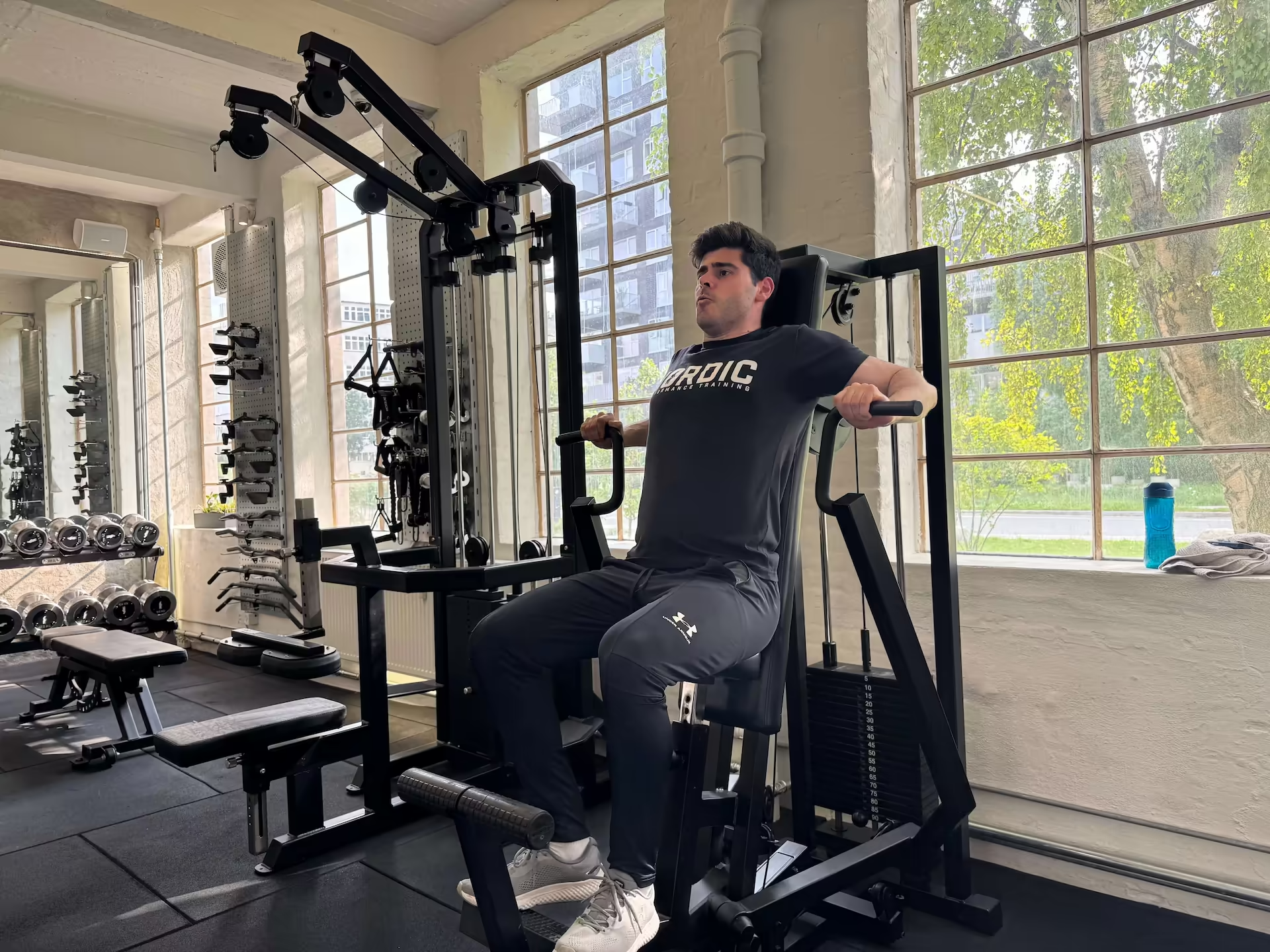


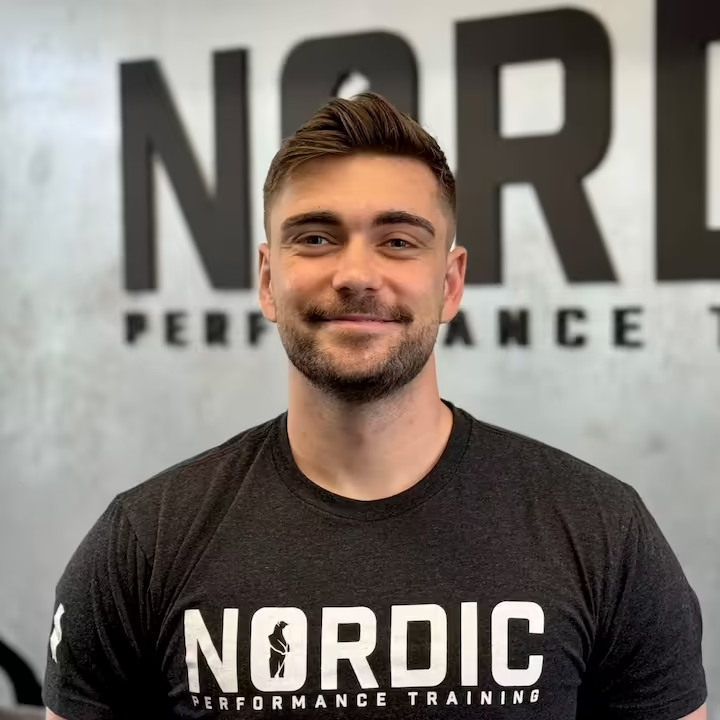
I have worked as a personal trainer and physiotherapist for many years, and I specialize in making complex training principles simple, practical, and easy to apply — whether the goal is to build muscle, improve performance, or simply train with greater confidence.
My focus is on combining clear communication with evidence-based methods, so clients not only know what to do, but also understand why it works.
On this page, I share real client stories — so you can see how structured, sustainable training builds strength, confidence, and lasting results.


Other Client Stories

.svg)