







Every transformation here is real — written by the client’s own coach.
These stories show how structured, consistent strength training works across different goals, ages, and starting points.
How Alex, a 51-Year-Old Self-Employed, Discovered That 2 Workouts a Week Beat 5
Alex had been training for years. Not sporadically or half-heartedly, but consistently. As a 51-year-old self-employed professional, he had always prioritized exercise and health. But when he had to describe his training, he used one word: "A chore."
"I never knew what to do," Alex explained. "Every time I stepped into the gym, it was the same question: What do I do today? Which exercises? How many sets? I spent more time deciding than actually training."
He had followed advice from friends and acquaintances who all swore by the big classic lifts — squats, bench press, deadlifts — and complicated splits with separate days for upper body and lower body. Some recommended four days a week. Others five.
But life as a self-employed didn't allow for four-five perfect training weeks. Clients, deadlines, and unpredictable workdays meant he was constantly behind. Every missed session created guilt. Training became something he had to catch up on — never something he looked forward to.
After six months of 2 weekly structured training sessions with us, Alex is not just stronger than ever. He actually looks forward to each training session. And most importantly: He has found peace in knowing that less frequent is more than enough.
Here is how a busy self-employed discovered that it's not about training most — but about training smartest.
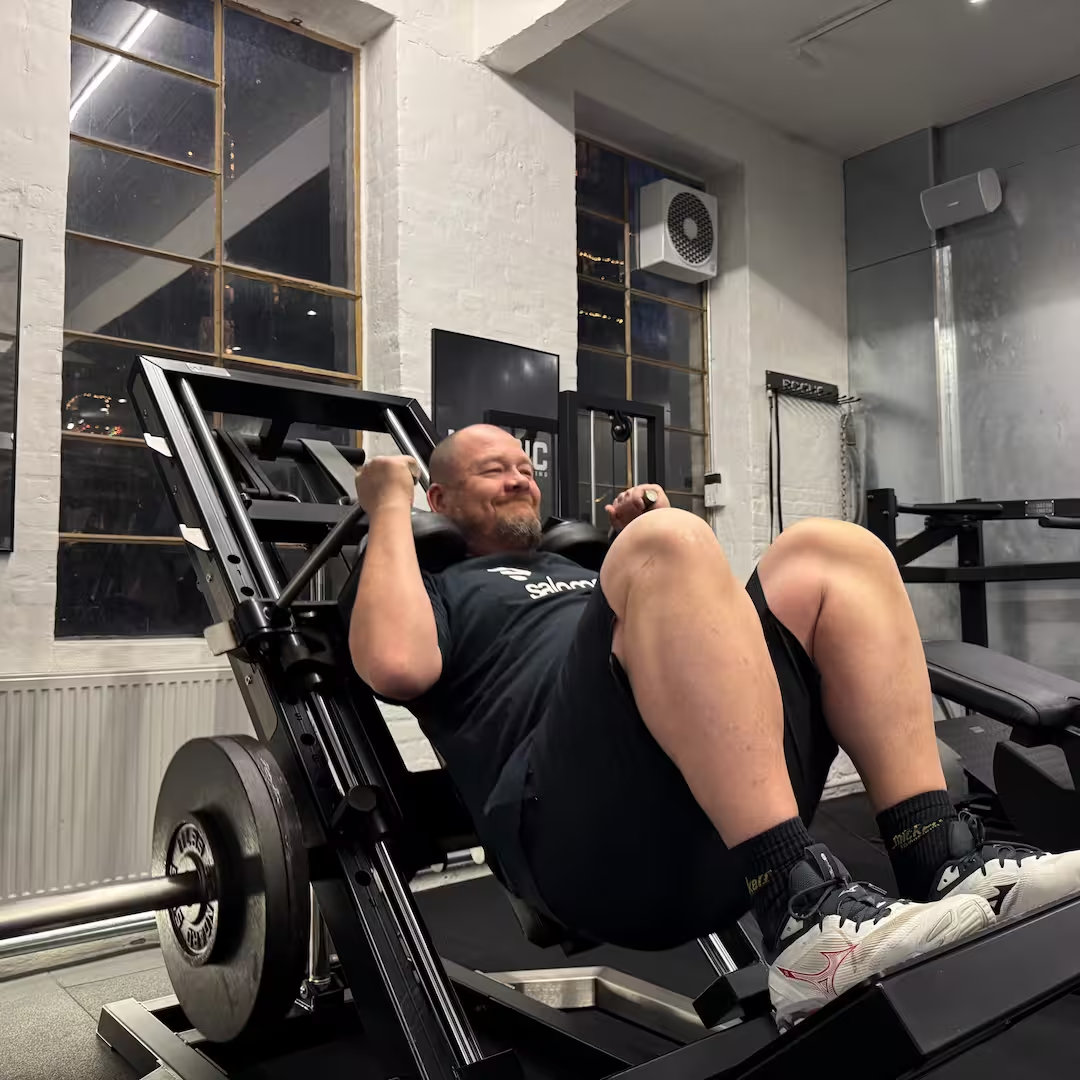
When Training Feels Like Guesswork
Alex's problem wasn't lack of motivation. It was lack of clarity.
"I'd come in, look around and think: What should I do today?" he said. "I'd seen ten different videos about the 'best' chest exercises. Should I do bench press? Dips? Flyes? Push-ups? And how many sets? Three? Four? To failure?"
Every training session started with decisions. Decisions without answers. And when you don't know if what you're doing works, training becomes a mental nightmare.
"The worst part was that I never knew if I was getting stronger," Alex continued. "I did different exercises every week. So how could I know if I was making progress? It all felt like guesswork."
But it wasn't just the confusion that wore on him. It was the expectation that he had to train four-five times a week to get anything out of it.
"I read everywhere that you had to train four-five days a week to see results," Alex said. "And when I only managed two to three sessions, I felt it was a waste of time. Like I wasn't doing enough."
It's a pattern we see all the time: People think more is always better. So when life gets in the way — and it always does — they feel like failures.
The Structure That Changed Everything
When Alex started with us, the first step wasn't to squeeze more training days into his calendar. It was to remove all the confusion.
"We put him on a simple and effective Full Body program," explained Simon, his trainer. "Same exercises every time. Twice a week. Clear progression week to week. No guesswork."
The Exercises Alex Trained:
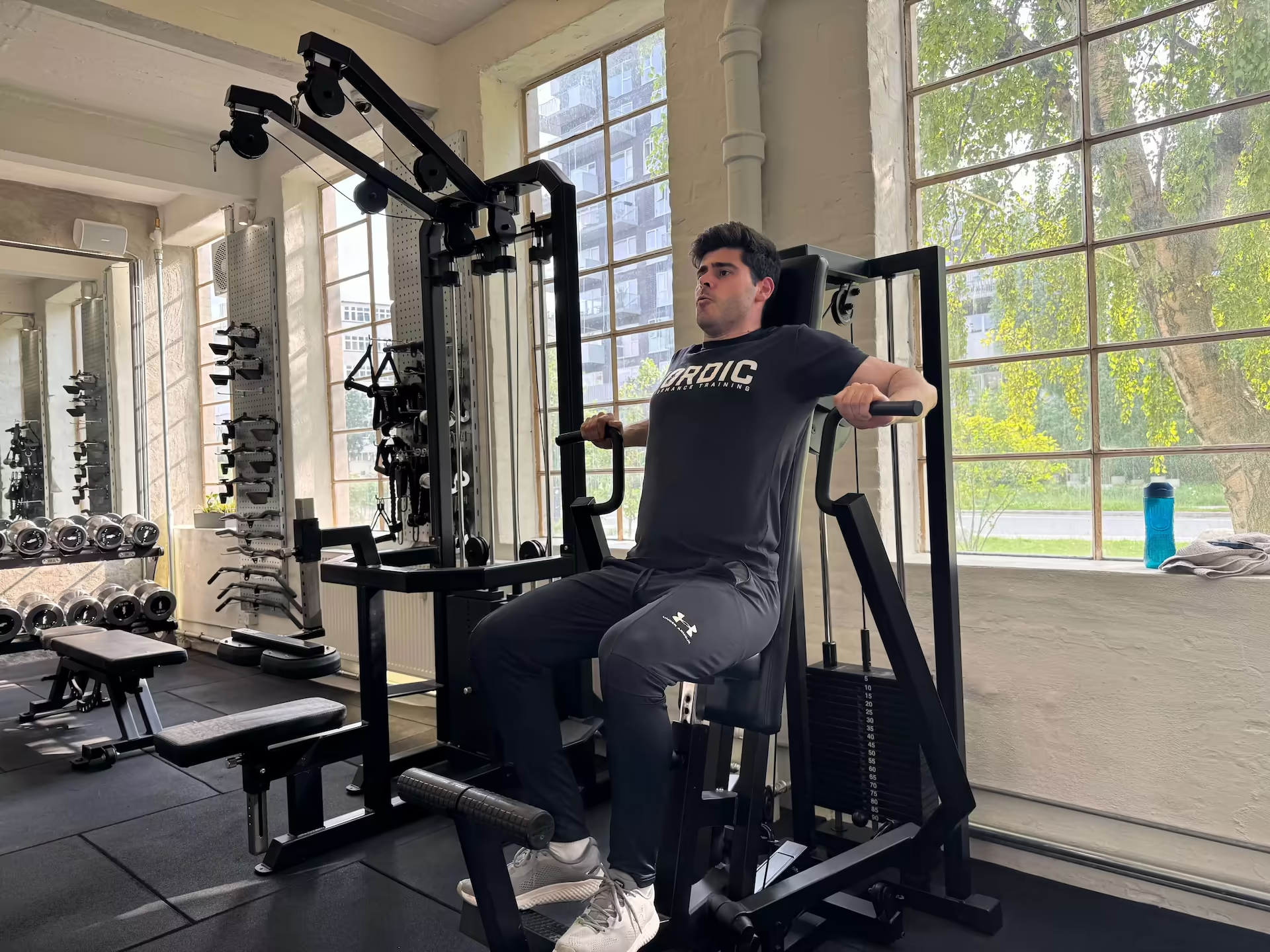
- Machine Chest Press
- Cable Pulldown
- Hack Squat
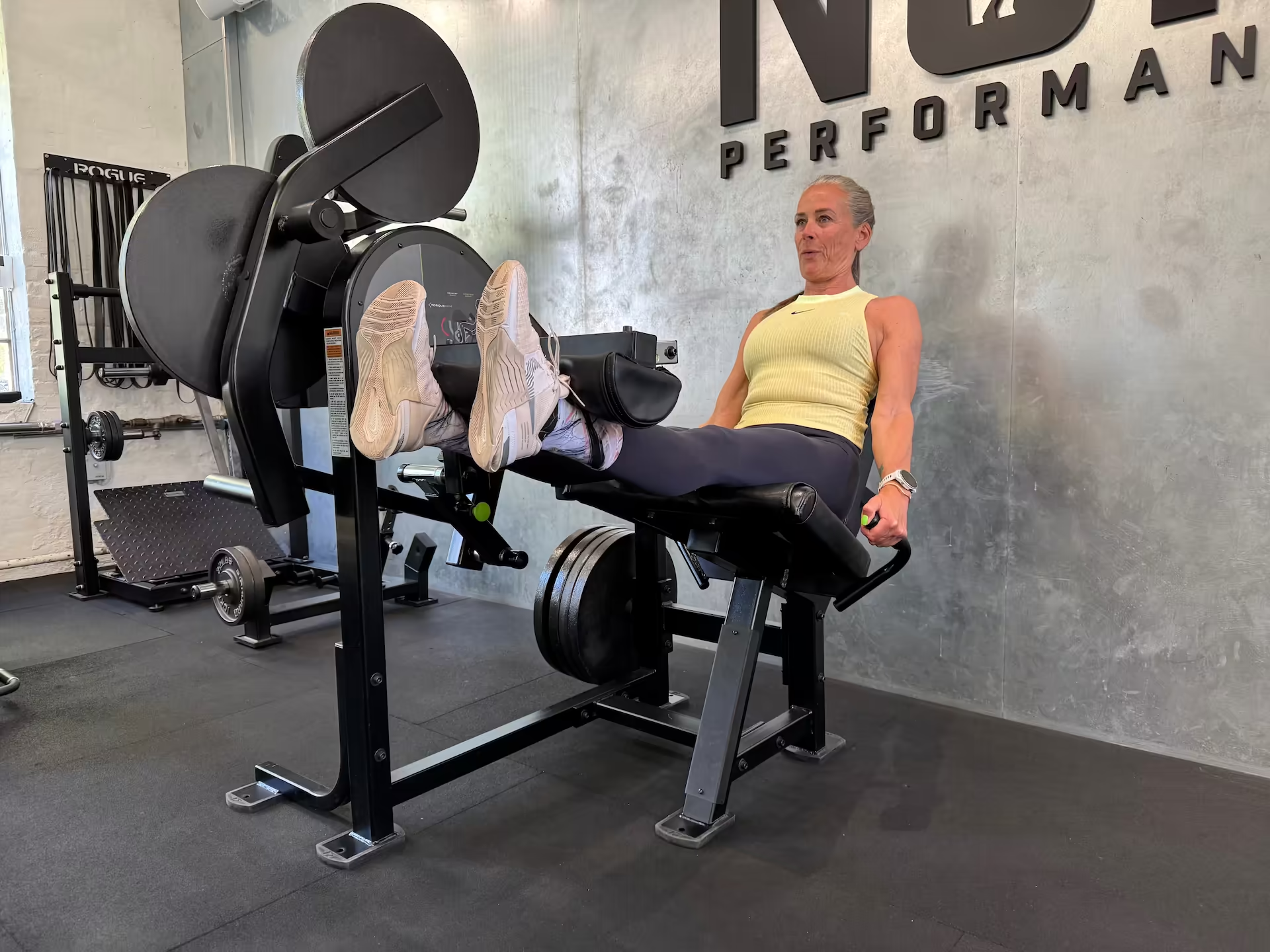
- Lying Leg Curl
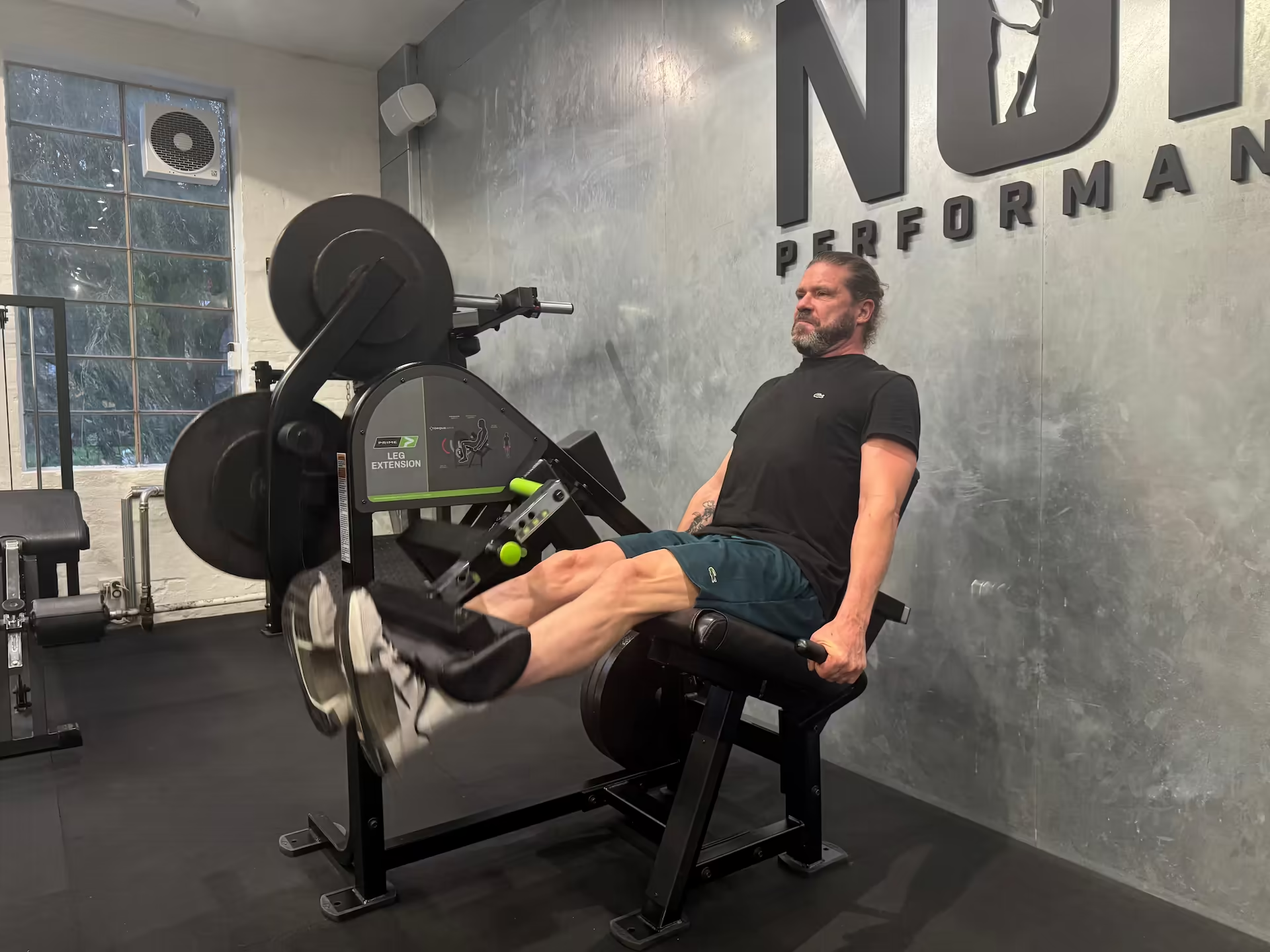
- Leg Extension
- Dumbbell Lateral Raise
- Incline Dumbbell Curl + Cable Triceps Extension
That was it. Six-eight exercises, the same every week. No unnecessary variations. No surprises. Just gradually heavier weights and more reps over time. With good technical execution.
"The first time I came in, I asked if it wasn't too little," Alex said. "I was used to thinking you had to do many different chest exercises to get anything out of it. But Simon explained: 'You don't get stronger by doing more exercises. You get stronger by doing the same carefully selected exercises better.'"
It was a shift in perspective. Suddenly training wasn't about thinking — but about executing.
"Now I just show up, know exactly what to do, and can focus on lifting a bit heavier than last week," Alex said. "It's liberating."
The Breakthrough: Two Sessions Are Enough
The biggest breakthrough didn't come from strength. It came from mindset.
"I thought I had to train four-five times a week," Alex said. "But I actually saw progress with just two sessions. I got stronger. I felt better. And suddenly there was no longer that constant guilt."
Simon had explained it clearly from the start: "Two planned good sessions per week are worth much more than five unstructured ones. And most importantly: It's a rhythm you can actually stick to."
"I thought I had to train four-five times a week. But I actually saw good progress with just two sessions. It was liberating to realize that less can be more." — Alex
Alex often had weeks where work took over. Clients demanding urgent attention. Deadlines pushing everything else aside. In his old mindset, that meant training disappeared completely.
"Now I know that even one session per week is enough to maintain or even get stronger," Alex said. "I'm no longer behind just because I only manage one session. That has removed so much stress."
Alex's Transformation
After 6 months of structured training — 2x Full Body per week:
Strength Gains:
- Machine Chest Press: 50 kg → 100 kg (+100%)
- Hack Squat: 20 kg → 50 kg (+150%)
- Incline Dumbbell Curl: 8 kg → 15 kg (+87.5%)
- Visible muscle development
Consistency:
- 93% attendance over 6 months
- Training went from "chore" to joy
- Can handle busy periods without guilt
Pain Relief:
- Significantly less knee pain
- Can move freely without discomfort
Identity Shift:
- From "Training is something I have to get through" to "Training is something I look forward to"
- From confusion to clarity
- From guilt to peace
"Now I can train on my own and look forward to each session, because it's simple, structured, and not guesswork every time." — Alex
Why This Works for Busy People
Alex's story shows something fundamental: It's not about training more often. It's about training smarter.
When Alex started, he had no structure. Every training session was a new challenge — not physically, but mentally. What should he do? Was it right? Was he getting stronger?
The solution wasn't more training days. It was fewer — but with clear structure and measurable progression.
"When you know exactly what to do, decision fatigue disappears," Simon explained. "You don't need to spend mental energy planning. You just show up and execute."
And when you only train twice a week, each session can be done with full intensity and focus. There's no fatigue from yesterday. No worry about tomorrow. Just this one session — done properly.
"The most important principle I taught Alex was: Training should fit into your life — not the other way around," "His life as self-employed doesn't allow four-five perfect training weeks. But two structured sessions? That he can maintain for years."
Ready for Structure That Actually Fits Into Your Life?
Alex spent years struggling with unstructured training and constant guilt. Six months later he looks forward to each session — because it finally makes sense.
If you're tired of guessing, feeling behind, or thinking you have to train four-five times a week to see results, let's talk.
Book a free start-up conversation at our private gym in Copenhagen and experience how simple, structured training can create real results — without taking over your life.
Because the best results don't come from training most. They come from training smartest — and keeping at it.
Table of Contents
Other Client Stories
I’ve worked as a personal trainer and physiotherapist for many years and I specialize in making complex training concepts simple, practical, and easy to apply — whether the goal is building muscle, improving performance, or training with more confidence.
My focus is on combining clear communication with evidence-based methods, so clients not only know what to do but also understand why it works.
On this blog, I share the same insights and strategies we use at Nordic every day — helping you train with purpose, clarity, and results.


Other Client Stories

.svg)