







Every transformation here is real — written by the client’s own coach.
These stories show how structured, consistent strength training works across different goals, ages, and starting points.
How Søren Rasted from Aqua went from no training experience to being in better shape than most people in their 30s
Søren Rasted walked past our private training center in Copenhagen several times before he finally stepped inside. He had googled us, seen the center from outside, and considered it for quite some time. But as a 55-year-old who had never done strength training before, it felt like a big step.
"I had done some hotel workouts here and there when I was on tour," Søren explained. "But nothing continuous. I just knew I wanted to do something for my health — keep myself young and healthy for as long as possible."
Søren represents something we see often: Intelligent, successful people who come with one ambitious vision about longevity and optimal health — and then drown in information overload. Documentaries, podcasts, social media, gurus promising everything from "biohacking" to "reverse aging." It all sounds important and necessary.
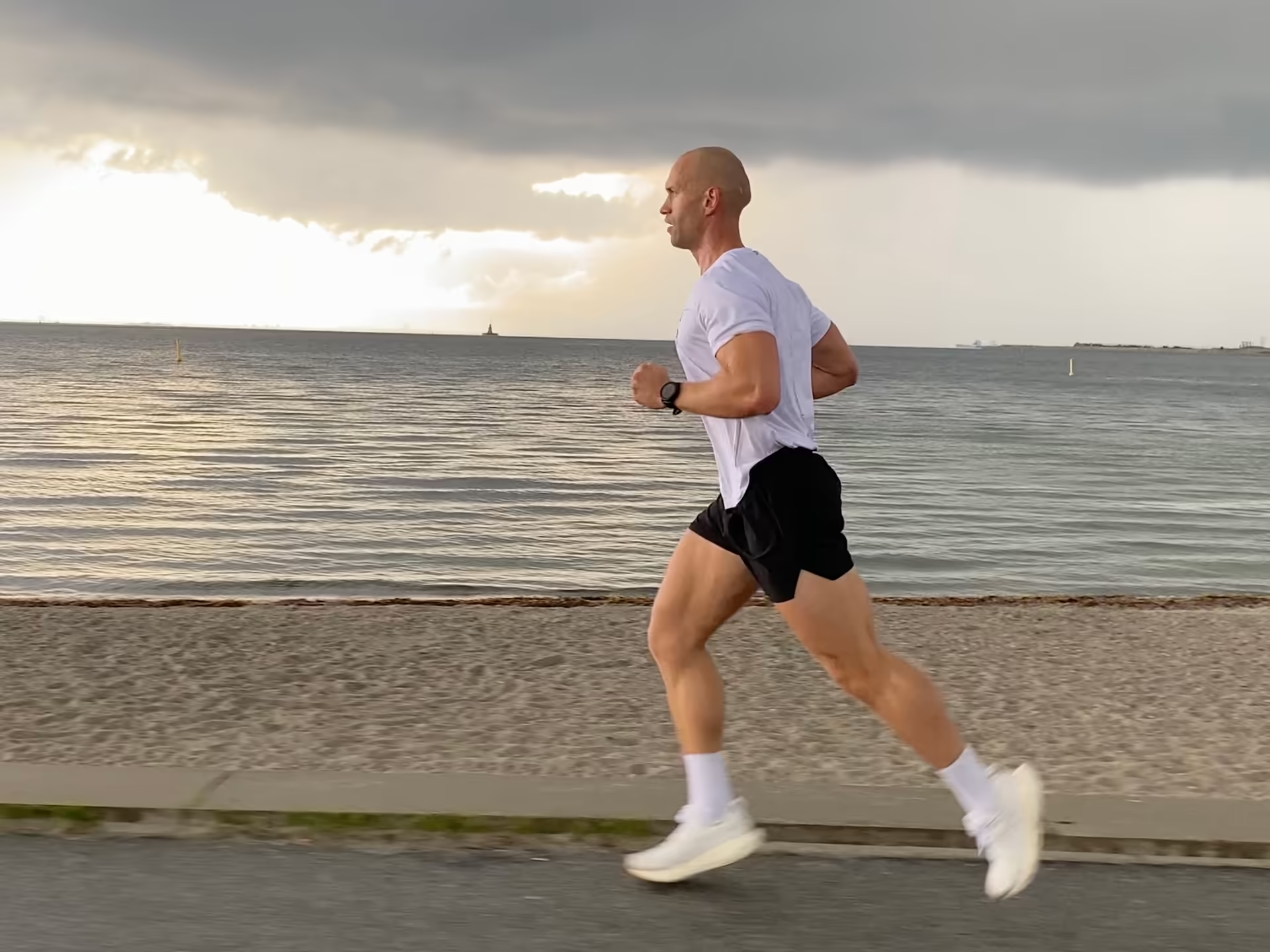
But after 12 months of structured strength training and simple runs, Søren is in better shape than he's ever been. He's gained 8 kg of muscle mass, can run 5 km in under 25 minutes, and is stronger than most men half his age.
That transformation didn't happen by optimizing a hundred variables. It happened by focusing on two things: Increased muscle mass and improved lung capacity.
Here's how a busy musician in midlife figured out that the path to longevity isn't about doing everything perfectly — but about doing what matters most consistently.

When optimization becomes overwhelming
Søren was perfectionistic from the start. He always had been — attention to detail, work ethic, and striving for perfection had been part of his success for decades.
But when it came to training and health, the same approach became a problem.
"I followed all these longevity profiles on social media," he said. "Every day there was something new I should be doing. Supplement with this, avoid that, optimize sleep, track biomarkers, fast in specific ways. It felt like I'd need an entire staff just to keep track of it all."
This is a challenge we encounter often. Especially among professional people who are used to tackling complex problems and seeking the most advanced solutions. They come with ambitions to "do it right" — which in practice means trying to do everything at once.
But the body doesn't work that way. And when you've never trained structurally before, complexity isn't your friend. It's your enemy.
Cutting through the noise
In the first training sessions, I spent time breaking through all the noise.
"You want to stay young and healthy for as long as possible?" I asked. "Then let's look at what actually matters."
The research is unequivocal: Two factors trump almost everything else when it comes to long life and health:
Muscle mass — people with low muscle mass have 11-63 times higher risk of premature death compared to those who have preserved their muscles
Lung capacity (VO2-max) — being in poor shape increases the risk of premature death by 400% compared to being in good shape
Everything else — all the biohacks, the fancy supplements, the advanced protocols — are marginal gains compared to these two things.
"So if we build a program around that, what does that involve?" Søren asked.
"Structured strength training 3 times a week and 1-2 short runs of around 5 km," I said. "That's it. Everything else is noise."
I could see the relief on his face. Not because the task became easy — but because it became clear.
The bank account metaphor: Understanding consistency across a real life
Søren had one concern that came up again and again: "What if I can't be consistent? I have tours, travels, unpredictable periods. What if I can't train?"
This was where I introduced something we use with many clients — the bank account analogy.
"Think of your training as a bank account," I said. "In periods where you have time and opportunity to train 3 times a week, you deposit a lot into the account. In periods where you can only train 1-2 times a week, you deposit a little less — but you're still adding to it. And yes, there will be periods — like when you're on tour — where you withdraw a little from the account. But that's okay, because you've put plenty of money in during the periods when you had the opportunity."
"Training is like a bank account. In some periods you deposit a lot. In other periods you deposit less. And sometimes you withdraw a little. But if you zoom out and look at it over the long term, you build a fortune — just by keeping at it." — Lucas
That metaphor changed everything. Søren stopped thinking in perfect weeks and started thinking in seasons and years. When he was home, he trained 3 times a week with full intensity. When he was on tour, he did what he could — sometimes only one training session a week, sometimes none. And when he came home again, he resumed his regular rhythm.
"It was liberating," he said. "I stopped feeling like a bad week meant I had failed. I just zoomed out and looked at the whole picture."
Simple structure: The same program, week after week
Søren trained with the same basic program for 12 months. Not because it was boring — but because it worked.
The exercises:
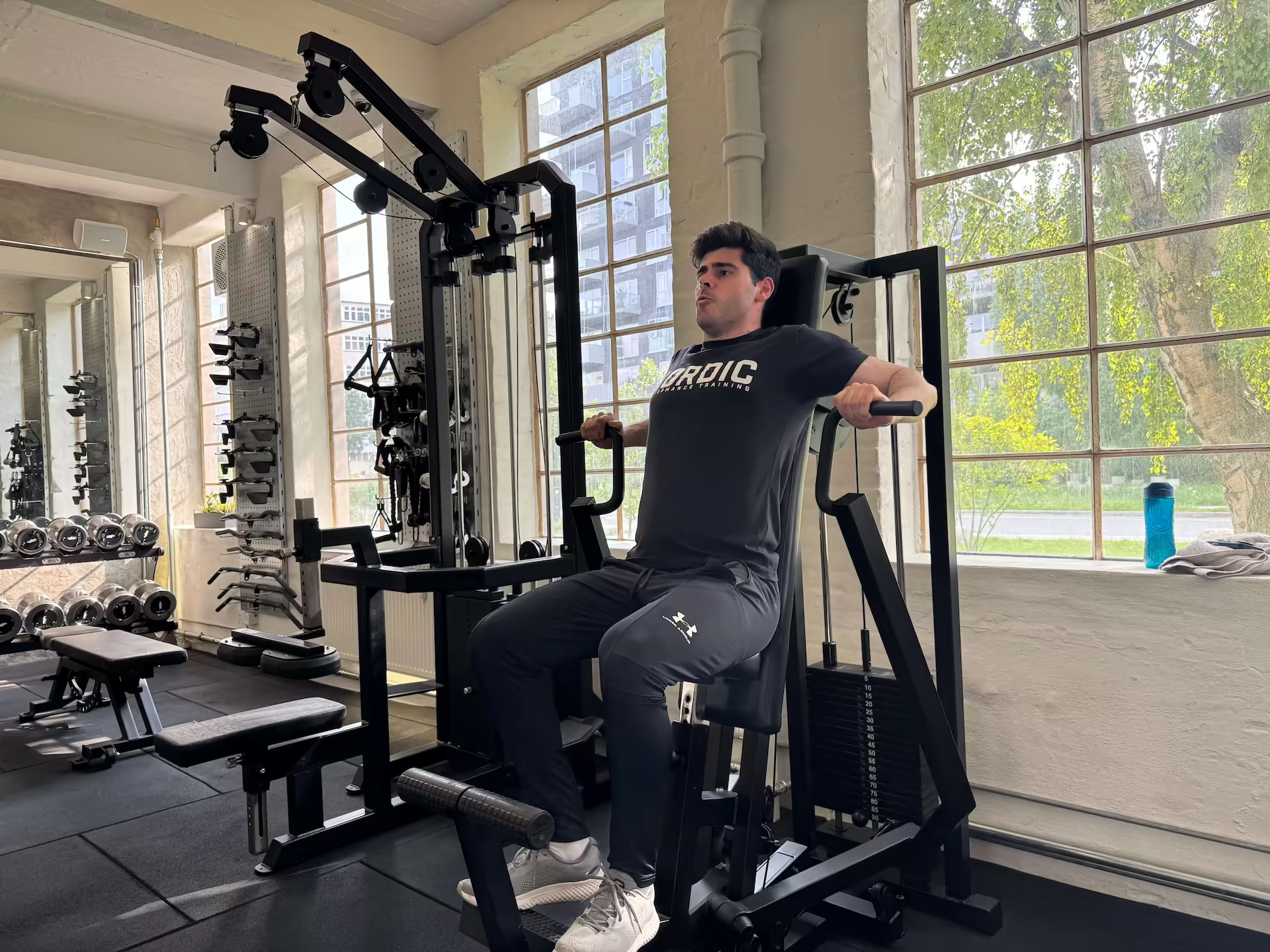
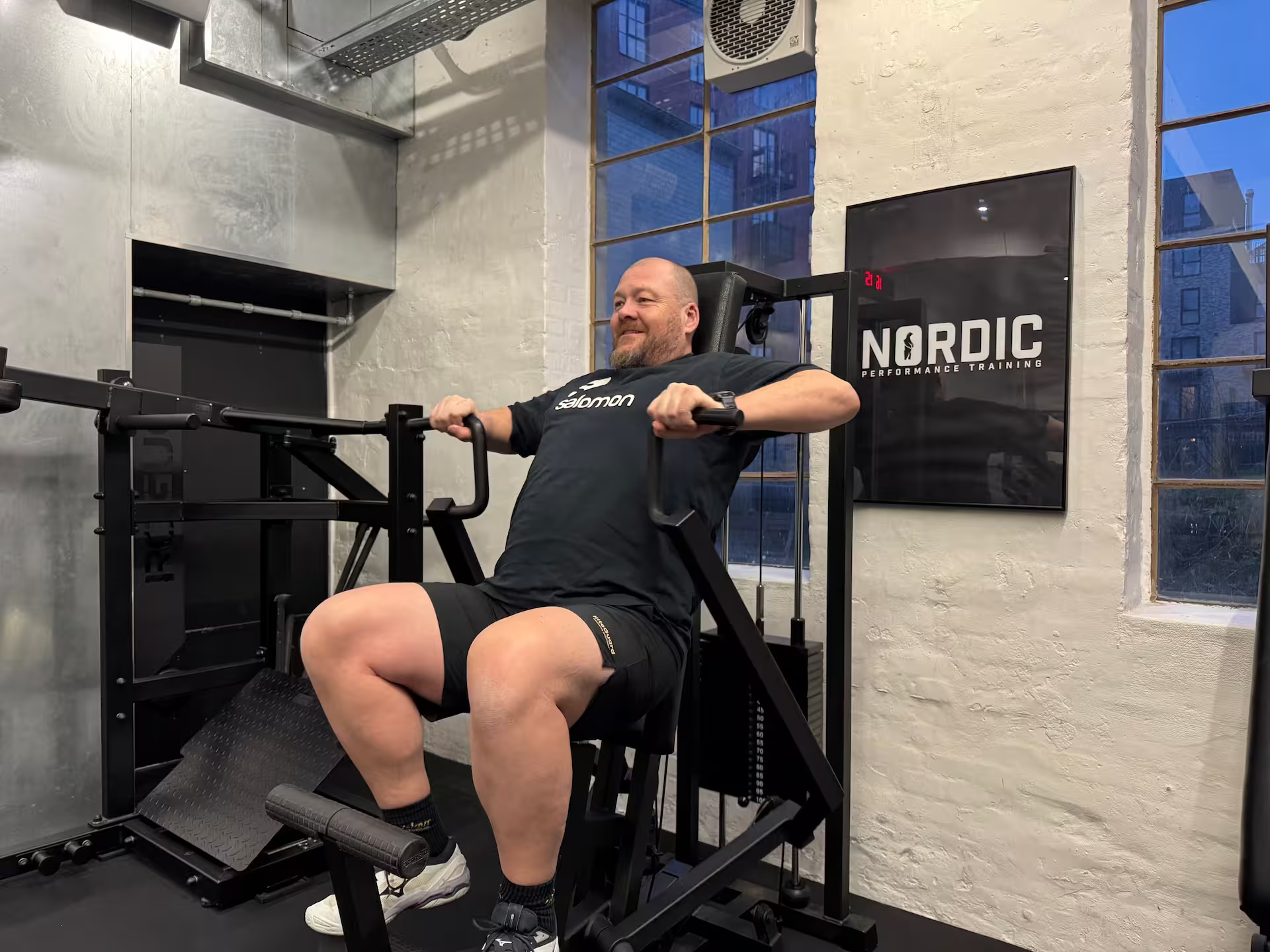
- Machine Chest Press
- Cable Pulldown
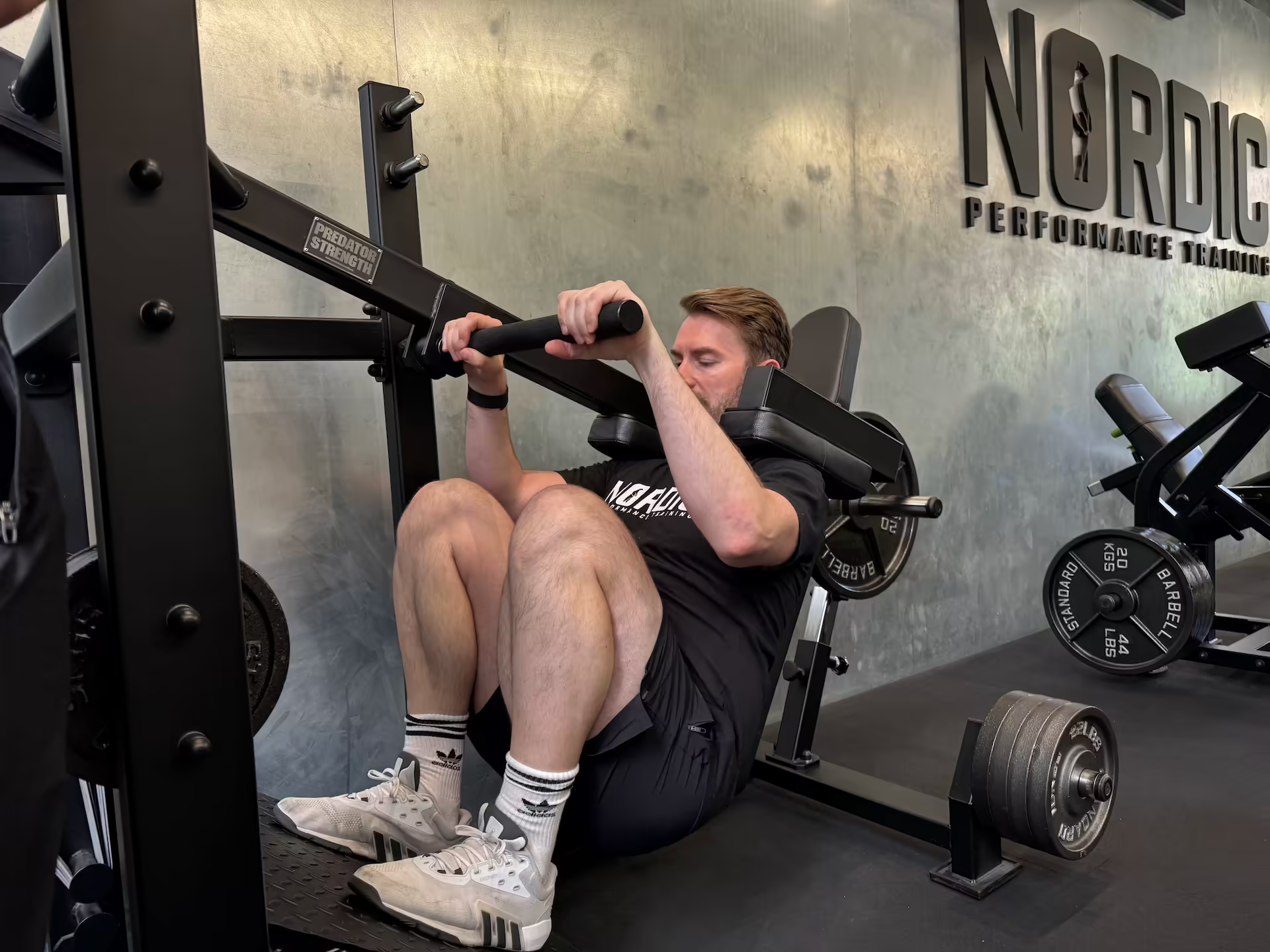
- Hack Squat
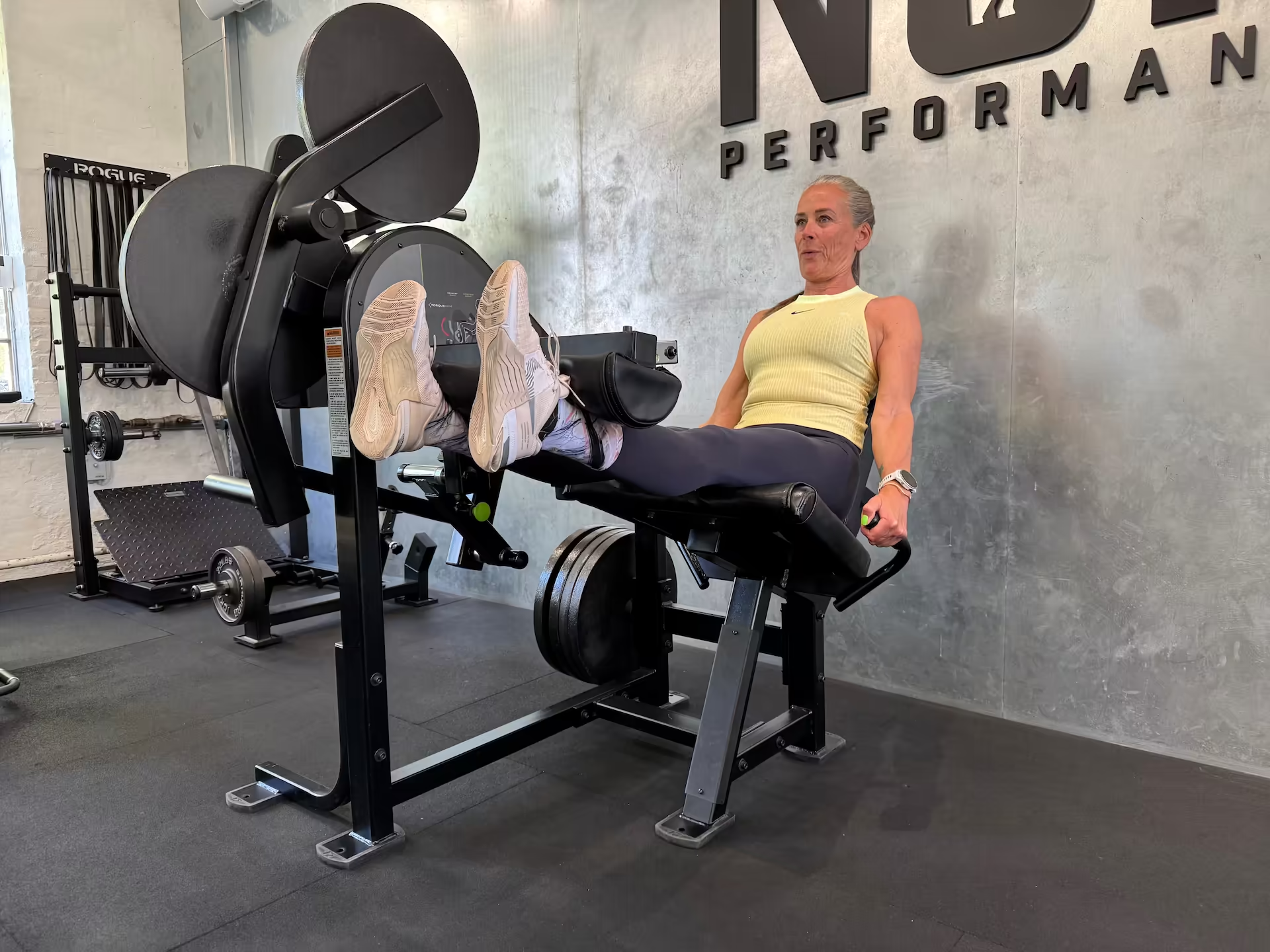
- Lying Leg Curl
- Leg Extension
- Dumbbell Lateral Raise
- Cable Curl + Cable Triceps Extension (when there was time)
Same exercises. Same structure. Just gradually heavier weights and more repetitions, week after week.
"What I valued most was the predictability," Søren said. "I knew exactly what I had to do. I just had to show up and get a little stronger than the week before."
For running, I recommended a Garmin watch and a pair of running shoes. He started with two weekly running sessions: one slow, easy run and one slightly faster, harder run. During tour periods, it became only one run per week. During quiet periods, it became 2-3.
The combination worked. The strength training built muscle mass and strength. The runs improved his lung capacity. No fancy protocols. Just the two things that actually matter.
Søren's transformation
After 12 months of structured training — 3x Full Body per week (when possible) + 1-2 weekly running sessions:
Physical transformation:
- Body weight: 80 kg → 88 kg (+8 kg muscle mass)
- Machine Chest Press: 45 kg → 90 kg (+100%)
- Hack Squat: 30 kg → 70 kg (+133%)
- Visible muscle development
- Runs 5 km under 25 minutes (top 20-30% for men aged 55-59)
Adherence:
- Consistent training over 12 months across tours and travels
- No extended breaks without structured plan for return
- Training became a non-negotiable part of life
Identity shift:
- From "I've never been athletic" to "I'm in better shape than most people half my age"
- From overwhelmed by optimization to clarity about fundamentals
- From perfectionist to pragmatic — focus on long-term sustainability
"At age 55, I'm stronger and healthier than I've ever been. And it's not about doing a hundred things perfectly — it's about doing two things consistently." — Søren
Why this works — even for busy people
Søren's story shows something often overlooked: It's not the amount of information that creates results. It's the ability to focus on what's essential and stick with it long enough for it to work.
When Søren started, he had no training background. No strength to build upon. No experience with progression or volume. But he had two things that mattered:
A clear understanding of what actually matters for long-term health
A simple, structured program he could follow — even with an unpredictable schedule
Most people who fail with training don't fail because they lack motivation. They fail because they try to do too much at once and lose focus on the foundation.
Søren showed that even a 55-year-old who has never trained before can build significant strength and muscle mass — if the approach is realistic and focused.

Ready to focus on what actually matters?
Søren spent months or years considering and researching before he finally started. 12 months later, he's in the best shape of his life — by only focusing on two things: Muscle mass and lung capacity.
If you're tired of information overload and want a clear, structured approach to training that fits into your life, let's have a conversation.
Book a free start-up conversation at our private training center in Copenhagen, and experience how simple, focused training can create real results — regardless of your age or experience.
Because longevity isn't about doing a hundred things perfectly. It's about doing the most important things consistently.
Table of Contents
Other Client Stories
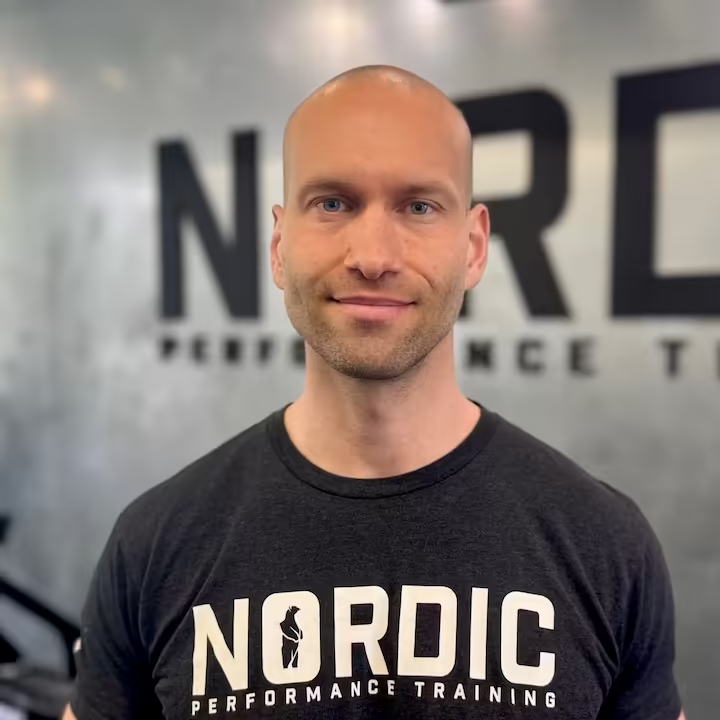
I’ve worked as a personal trainer for over 14 years and as a physiotherapist for 8 years — and co-founded Nordic Performance Training with Kasper to give clients a professional, private, and structured training environment where results actually last. In that time, I’ve overseen more than 50,000 sessions and helped thousands of clients rebuild after injuries, gain strength, improve their health, and stay consistent.
My approach combines practical experience with evidence from the latest research, making training both effective and realistic.
On this page, I share real client stories — so you can see what structured, consistent training looks like in practice.


Other Client Stories

.svg)