





Every transformation here is real — written by the client’s own coach.
These stories show how structured, consistent strength training works across different goals, ages, and starting points.
Each story shows a real process — what the client struggled with, how we structured the training, and the results that followed.
Barbara, 28: From ACL removal to European Championship silver in motocross
Barbara races motocross at World Championship and European Championship level. It is not a sport most people understand until they have tried it themselves. You don't just sit down and accelerate. The entire body works constantly. Arms, shoulders, back and core hold tension to steer the bike through uneven terrain while absorbing impacts and G-forces from jumps and landings of over 20 meters. The heart rate sits at 170-190 throughout the entire heat. It is equivalent to 20-30 minutes of interval training without a break.
In the summer, she crashed and twisted her knee severely. The emergency room took it lightly and sent her home. Two weeks later, she still couldn't extend the leg. The hospital then offered an arthroscopic surgery, as they believed the meniscus was stuck.
She took the surgery. And woke up to a message she hadn't expected: Her ACL had been removed. It was the ACL, not the meniscus, that had folded and was blocking the leg.
"I was afraid that I would never be able to race motocross again," Barbara said.
12 months later, with structured strength training 2 times per week, she was back on the bike. Without an ACL. Without reconstruction. And since then she has won a European Championship silver medal — the best result of her career.
Here is how a motocross racer discovered that a missing ACL doesn't have to mean the end of a motocross career — if the strength is there.
Waking up without an ACL
The crash on the motocross track was violent. The bike spun around in the fall while Barbara's leg was stuck. The knee was twisted and turned with a force that caused massive damage inside the joint. But Barbara was used to falling — it comes with the sport. What she wasn't used to was the leg not being able to move afterwards.
The emergency room at Roskilde Hospital took it calmly. They couldn't see anything decisive on the scan images and sent her home with instructions to wait and see. Two weeks later, the knee was still locked, and she went back to the hospital. They wouldn't offer an MRI but suggested an arthroscopic surgery, as they suspected it was the meniscus that was stuck.
When she woke up from the surgery, the message was different than expected: The ACL had been removed. It wasn't the meniscus that was blocking — it was the ACL that had folded in on itself.
"I couldn't move my leg at all," Barbara recalled. "And then you're told that your ACL is gone. It's hard to imagine that you will ever race motocross again."
Three sets of Pendulum Squat changed everything
Barbara started rehabilitation with us shortly after the surgery. Alongside this, she had been offered rehabilitation through the hospital.
The first workout was the hardest, but also the most important.
"I thought, I can't do anything with that leg," Barbara told us. "But all the machines at Nordic could be adjusted to my level, and then we built on from there."
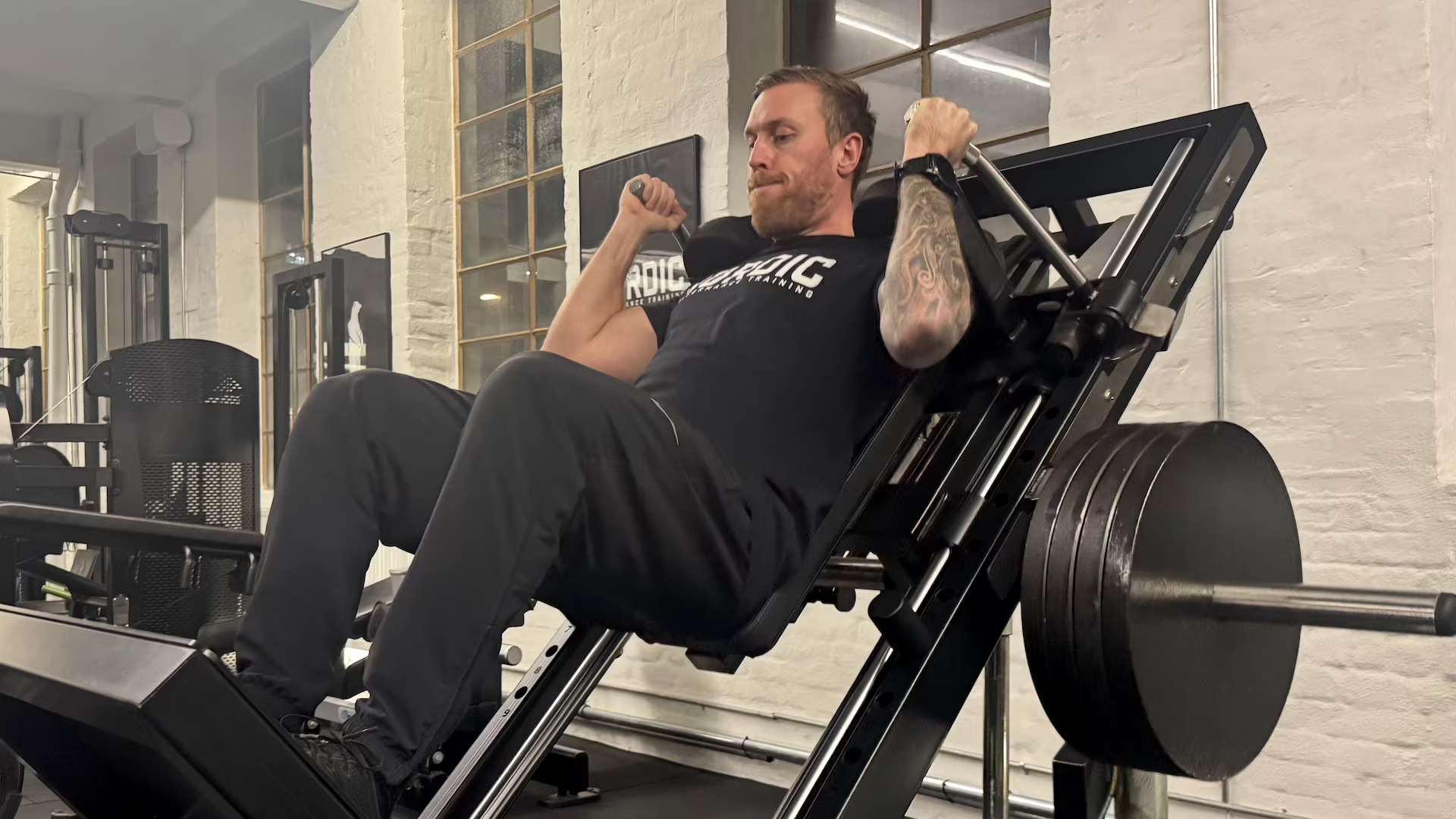
Specifically, we started in Pendulum Squat with counterweight — meaning we added weight on the opposite side of the pendulum, which makes the machine lighter — because her knee could neither bear the machine's normal weight nor bend the knee very much. The first set felt impossible.
"I remember that the first set was 'impossible,' and I thought, this will never work," Barbara said. "But after three sets I could already move my leg more. I left with more range of motion and now had the belief that it would get better."
That was the turning point. Not because the knee was healed, but because she could see that it was already better after one session. And if it could get better in one hour, what could happen over 12 months?
"The first set was 'impossible,' and I thought, this will never work. But after three sets I could already move my leg more. I left with the belief that it would be okay." — Barbara
12 months in three phases
The rehabilitation followed a clear structure over 12 months, 2 times per week:
Weeks 0-6: Protection and light activation. Brace, crutches, maximum 90 degrees of flexion. We worked intensively on mobility in Leg Extension, because full extension of the knee is crucial early in the process, while simultaneously gradually bending the knee more and more in Pendulum Squat at very low loads.
Week 6 to month 6: Regain normal gait and build strength. Gradual increase in both weight and range of motion in Pendulum Squat, Seated Leg Curl and Leg Extension. Cycling and planned walks were added, and from month 3 light running sessions with alternating walking and running started. That continued throughout the winter. It was a big victory.
Month 6-12: More demanding running sessions and intervals were added. Around month 8-9, light motocross sessions were added, and she began to feel comfortable on the bike again.
"There were many frustrating periods where I doubted everything and thought it would never be good," Barbara told us. "But my trainer was calm and listening without speaking into my fear. He acknowledged my thoughts and feelings but never let them steer the direction. That calm and professionalism meant that I was also calm — even on bad days."
The exercises Barbara trained:
- Machine Chest Press
- Cable Pulldown
- Pendulum Squat
- Seated Leg Curl
- Leg Extension
- Cable Y-Raise
- Cable Bicep Curl
- Cable Tricep Extension
"My trainer said that you can always train regardless of the injury. You should of course train smart and make adjustments, but there is never a situation where you can do nothing." — Barbara
Barbara's transformation
After 12 months of structured rehabilitation — 2x Full Body per week:
Strength gains:
- Seated Leg Curl: 10 kg (without full range of motion) → 60 kg (+500% with full range of motion)
- Leg Extension: 5 kg (without full range of motion) → 35 kg (+600% with full range of motion)
- Pendulum Squat: 0 kg (with counterweight and without full range of motion) → 20 kg real resistance (without counterweight and with full range of motion)
- Machine Chest Press: 40 kg → 50 kg
- Cable Pulldown: 60 kg → 70 kg
Consistency:
- 94% attendance (completed 90 out of 96 scheduled training sessions), with planned holidays during the period.
- Structured progression across four programs.
Pain-free:
- 100% pain-free
- Full range of motion in the knee
- No limitations in sport or daily life
Return to sport:
- Back to motocross at Danish Championship, European Championship and World Championship level
- European Championship silver medal after completed rehabilitation — the best result of her career
- Chose NOT to have ACL reconstruction, because the strength training made it unnecessary
- Runs, cycles, plays padel — all without limitations
Identity shift:
- From "someone who might never race motocross, run or walk normally again" to "someone who can do anything I want"
- From fear of the future to the best result of her career
- From patient to athlete
"Now I race motocross at World Championship level again without limitations. I only strength train 2 times per week, my workouts never take more than 60 minutes, and I can make everything work — both motocross, my social life, work and career." — Barbara
Without an ACL — with the best result of her career
Barbara never chose to have her ACL reconstructed. Not because she couldn't, but because it wasn't necessary.
The strength training made it redundant. As long as she maintains her leg training, she has no limitations. No pain. No insecurity in the knee. Which she also proved with a European Championship silver medal.
"Do I still deal with minor things? Yes, of course, it is an extreme sport after all," Barbara said. "But do I feel limited? No. My strength training means that I am in no way hampered by my missing ACL or any of the other injuries I have had over the years."
The most important thing Barbara learned?
"That my body could do far more than I dared to believe. I lost my ACL and thought it was over. What I learned was that strength can replace what you have lost."

Ready to come back stronger?
Barbara had her ACL removed and thought she would never race motocross again. 12 months later she was back at World Championship level — and subsequently achieved the best result of her career with a European Championship silver medal.
If you have an injury that is holding you back, you don't need to wait for it to "go away." Active, structured training can bring you back faster and stronger than you think.
Book a free start-up conversation at our private gym in Copenhagen, and get a professional assessment of how to best move forward.
Because there is always something you can train. And what you can do is often more than enough.
Table of Contents
Other Client Stories
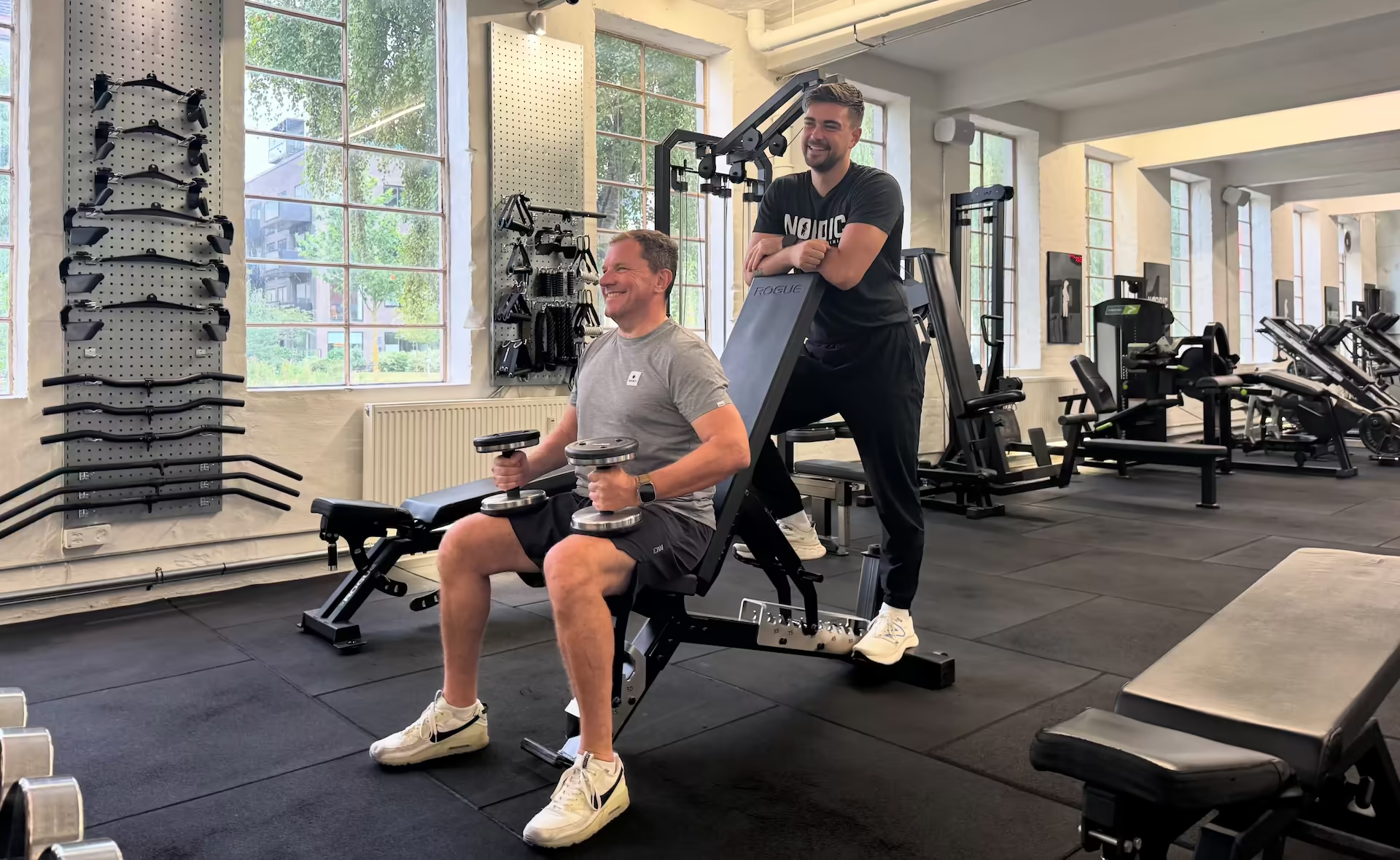

I’ve worked as a personal trainer for over 14 years and as a physiotherapist for 8 years — and co-founded Nordic Performance Training with Kasper to give clients a professional, private, and structured training environment where results actually last. In that time, I’ve overseen more than 50,000 sessions and helped thousands of clients rebuild after injuries, gain strength, improve their health, and stay consistent.
My approach combines practical experience with evidence from the latest research, making training both effective and realistic.
On this page, I share real client stories — so you can see what structured, consistent training looks like in practice.


Other Client Stories

.svg)