







Every transformation here is real — written by the client’s own coach.
These stories show how structured, consistent strength training works across different goals, ages, and starting points.
Each story shows a real process — what the client struggled with, how we structured the training, and the results that followed.
Kasper, 33: Pain-Free Shoulder After 2 Years of Failed Treatment
Kasper had spent two years listening to experts.
Physiotherapists said resistance bands and stabilization exercises. Osteopaths said manual treatment. An orthopedic surgeon suggested surgery. His CrossFit community said free weights and no machines.
Four sources. Four directions. No solution.
As a 33-year-old information specialist, Kasper was used to analyzing conflicting information and finding the right source. But here, each source was an authority within their field. All sounded competent. All had their logic. And all led him further away from the goal.
"I got four different messages from four different experts," Kasper said. "The physiotherapist said resistance bands. The osteopath said manual treatment. The orthopedic surgeon said surgery could be an option. The CrossFit community said free weights. Nothing worked, and I didn't know who to listen to."
At times he followed the physiotherapist's advice: home exercises with resistance bands and small dumbbells. No effect. At times he followed the CrossFit community's advice: heavy free weights, no machines. Only worsening. At times he tried the osteopath's approach: needles, ultrasound, shockwave, stretching, massage. No effect. And in the end, he sat at an orthopedic surgeon's office considering surgery out of pure desperation.
Two years. Four experts. Zero progress. He got weaker, not stronger. Had more pain, not less. And was closer to giving up than ever.
After 12 months of structured strength training 3 times a week, Kasper is today completely pain-free, has gained 10 kg of muscle mass, and is back to CrossFit and Olympic weightlifting and stronger than ever.
Here is how an information specialist discovered that four experts can be wrong at the same time — and that the solution was far simpler than any of them suggested.
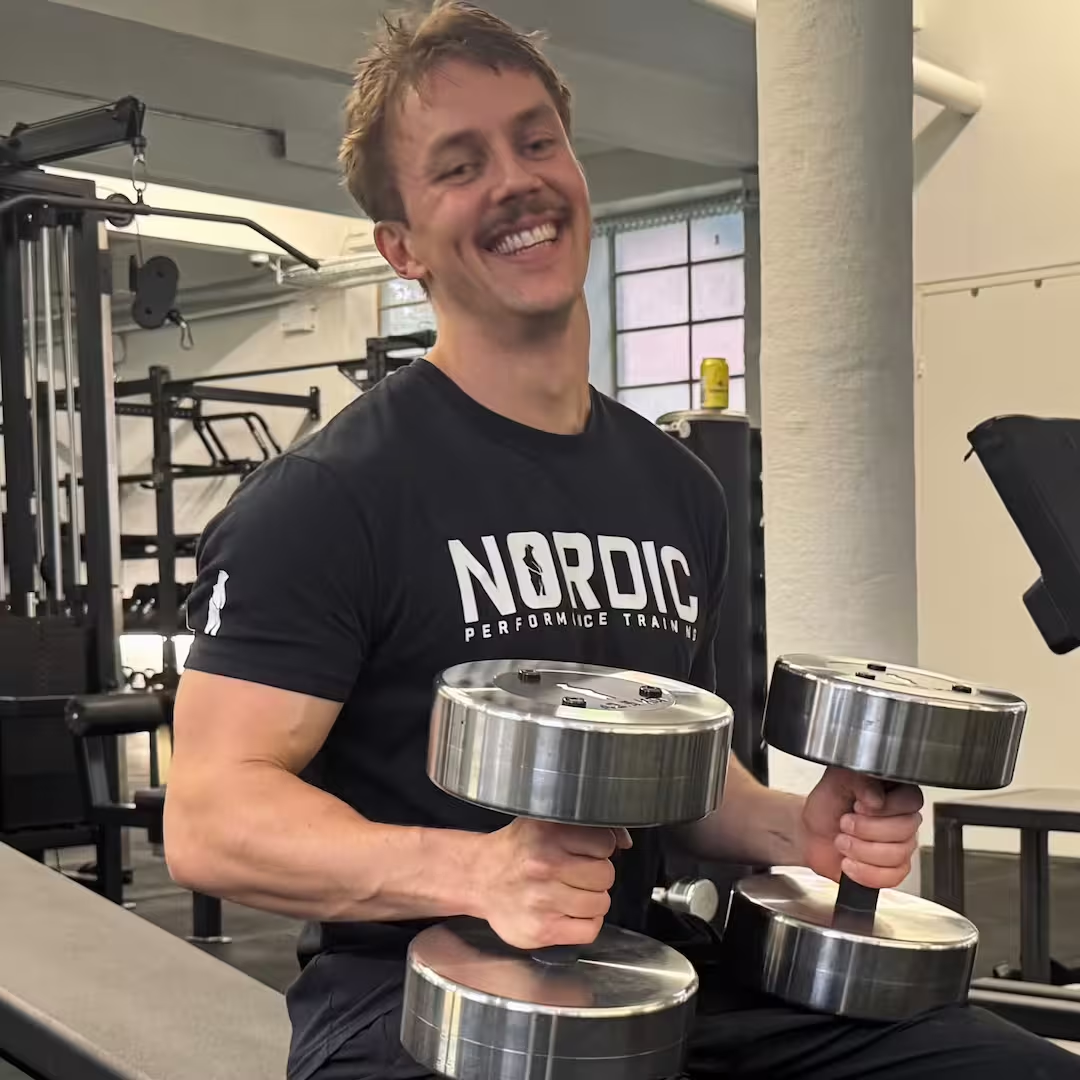
Four experts. Four directions. No solution.
Kasper's shoulder injury started in CrossFit. Everything hurt, but especially pressing exercises overhead were impossible. What followed was two years of rounds between health professionals who each were certain they had the answer.
The physiotherapists said: "Avoid heavy lifting. Focus on stabilizing exercises with resistance bands and small dumbbells. Your shoulder is unstable."
The osteopaths said: "There's something that isn't moving optimally. We can work on that manually."
The orthopedic surgeon said: "We can see some wear in there. We can 'clean' it surgically."
The CrossFit community said: "Machines are not functional. You should use free weights."
"I was trapped between conflicting advice from authorities," Kasper said. "All sounded competent. All had their logic. But the more I listened to, the more confused I became, and the weaker my shoulder got."
None of the advice was based on what actually helped him. The resistance bands didn't make him stronger. The manual treatment had no lasting effect. The surgery was a desperate consideration. And the heavy bars and free weights made everything worse.
Two years of active treatment, and he was in worse shape than when he started. Weaker. More pain-stricken. More defeated. When he contacted us, it was as a last attempt before surgery. He came to us for personal training after he had read our Google reviews and heard that we had helped other CrossFit athletes back to their sport.
What If the Problem Wasn't Instability — But Lack of Strength?
When Kasper started with us, I asked one question that changed everything:
"What if your shoulder doesn't need stabilization? What if it just needs to get stronger?"
"It was the first time anyone said: 'Forget what the others have told you. What if your shoulder just needs to get stronger?'" Kasper recalled. "It was so simple that I almost didn't believe it could work."
But that was exactly the point. For two years, everyone had tried to solve a stability problem. Corrective exercises. Manual treatment. Considering surgical intervention. Nobody had asked the basic question: Is the shoulder even unstable — or is it just too weak for what he demands of it?
The reframe was fundamental: From "unstable shoulder that needs stabilizing" to "weak shoulder that needs strengthening."
And the key to making the shoulder stronger? Machines.
The irony was not lost on Kasper. His CrossFit community had for years told him that machines were "cheating" — not functional, not real training. But machines provided exactly what his shoulder needed: external stability that allowed him to load progressively, without pain, and train with the intensity that actually creates strength development.
With free weights in the beginning, the pain would have limited him to an intensity far from the intensity required to increase strength and muscle mass. The machines removed that barrier.
"It was the first time anyone asked the question: 'What if your shoulder just needs to get stronger?' It was so simple that I almost didn't believe it could work." — Kasper
Function Follows Strength
We built a program that systematically made Kasper's shoulder — and the rest of his body — stronger.
The exercises Kasper trained:
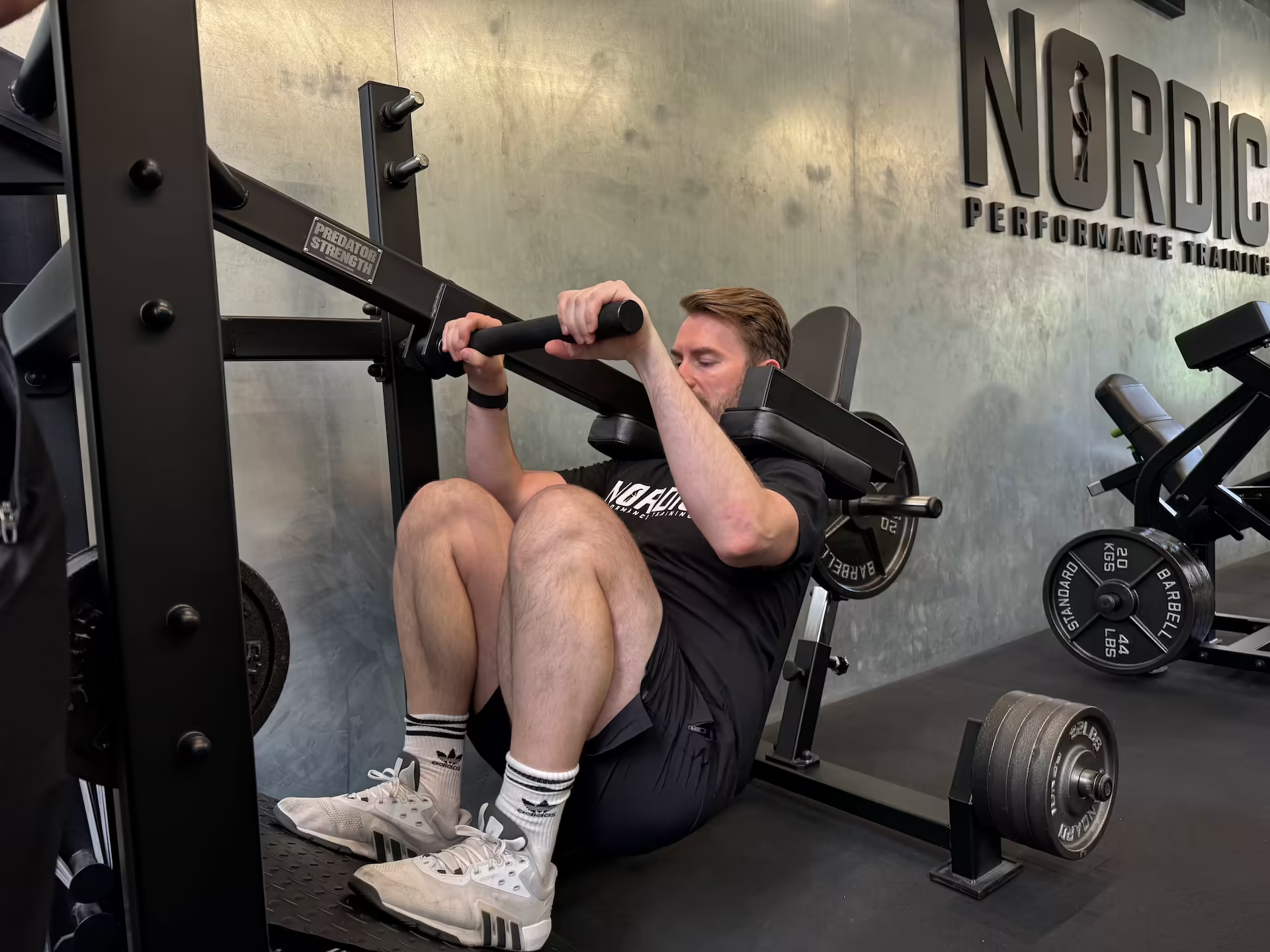
- Machine Chest Press + Dumbbell Chest Press
- Dumbbell Shoulder Press
- Cable Pulldown (Neutral Grip + Wide Grip)
- Cable Row
- Hack Squat + Split Squats
- Lying Leg Curl + Seated Leg Curl
- Leg Extension
- Dumbbell Lateral Raise + Cable Y-Raise
Three sessions per week. Smart load management. Precise technical adjustments along the way to minimize pain and maximize effectiveness. Gradually heavier weights.
The process was not just about throwing weight on a machine. Behind it lay countless coaching adjustments: small changes in grip, angle, tempo, and load that together created an environment where the shoulder could work hard enough to develop real strength — without pain blocking the progress.
As the strength grew, the capacity grew. And as the capacity grew, the pain disappeared. The shoulder didn't need correction. It needed capacity.
After six months, Kasper could do all types of pressing exercises pain-free again — including overhead, with both bars and dumbbells. Exactly the movements that had been impossible for two years.
"After 12 months, I was stronger than before the injury. The irony was that the solution didn't come from any of the four expert sources I had listened to for 18 months. It came from doing exactly the opposite." — Kasper
Kasper's Transformation
After 12 months of structured training — 3x Full Body per week:
Strength gains:
- Dumbbell Chest Press: 20 kg (with pain) → 45 kg (pain-free) (+125%)
- Dumbbell Shoulder Press: 12.5 kg (with a lot of pain) → 37.5 kg (pain-free) (+200%)
- Cable Pulldown: 60 kg → 110 kg (+83%)
- Hack Squat: 80 kg → 150 kg (+87%)
- Visible muscle mass in the upper body
- +10 kg muscle mass over 2 years
Pain-free:
- Completely pain-free after 2 years of constant pain
- All pressing exercises — incl. overhead — performed without discomfort
Functional capacity:
- Back to CrossFit and Olympic weightlifting
- Better at free weights than before the injury
- The machines built the foundation for free weight competence
Identity shift:
- From "My shoulder is unstable and fragile" to "My shoulder just needed to get stronger"
- From "Machines are cheating" to "Machines built the foundation"
- From "I need to stabilize" to "Function follows strength"
"As an information specialist, I know confirmation bias. But I experienced something worse: four authority sources, all with a different 'truth', none with the solution. It taught me that conflicting expert advice is often a sign that you're solving the wrong problem." — Kasper
Why Conflicting Expert Advice Kept Him Stuck
Kasper's story illustrates a problem many know: When multiple different experts give different advice, it is almost impossible to know who to listen to. Not because you lack judgment, but because each one sounds convincing when you hear them individually.
The physiotherapists' focus on stabilization sounded sensible. The osteopaths' manual approach sounded logical. The surgeon's scan results sounded objective. The CrossFit community's philosophy on functional training sounded familiar.
The problem was that all four were solving the wrong problem. They assumed that the shoulder was unstable, damaged, or dysfunctional. Nobody asked: What if it's just not strong enough?
The solution was not more advanced diagnostics or more expert opinions. It was a simpler approach: Make the shoulder stronger. Systematically. Gradually. With the right load management and expert coaching.

Ready to Get Stronger Instead of Getting Treated?
Kasper spent two years on resistance bands, manual treatment, and considerations about surgery. 12 months of structured strength training gave him what none of the experts could: a pain-free shoulder and more strength than before the injury.
If you have received conflicting advice, tried multiple practitioners without results, or are considering a surgical procedure you're not sure about — then maybe you don't need more treatment. Maybe you need structured strength training.
Book a free start-up conversation at our private gym in Copenhagen, and experience how structured strength development can succeed where repeated treatment courses have fallen short.
Because your body rarely needs more correction. It needs more capacity.
Table of Contents
Other Client Stories


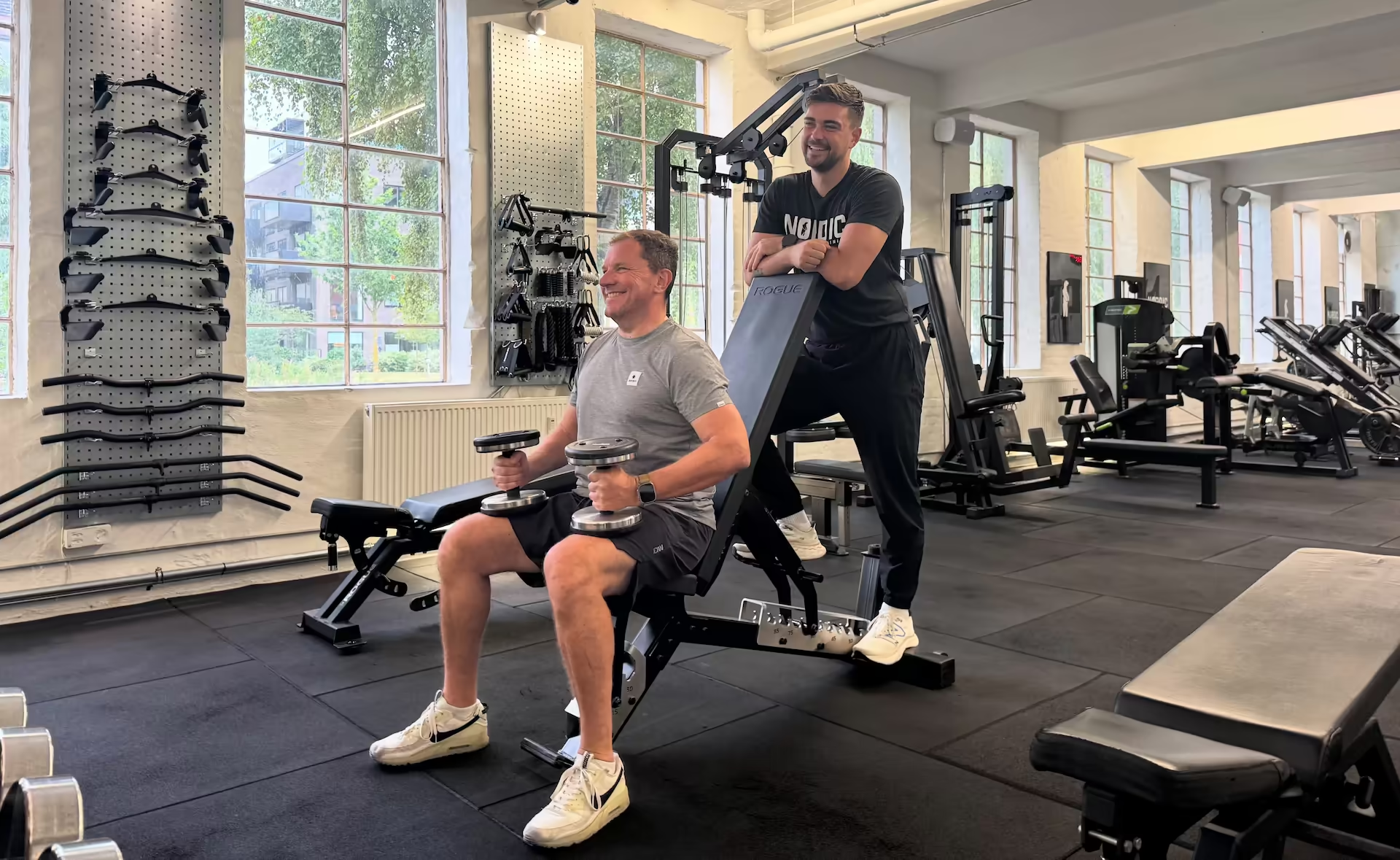
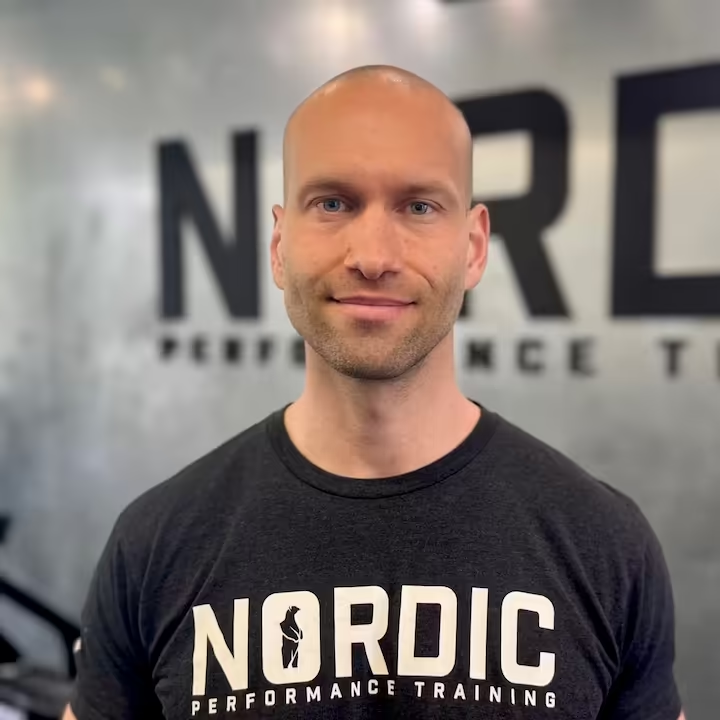
I’ve worked as a personal trainer for over 14 years and as a physiotherapist for 8 years — and co-founded Nordic Performance Training with Kasper to give clients a professional, private, and structured training environment where results actually last. In that time, I’ve overseen more than 50,000 sessions and helped thousands of clients rebuild after injuries, gain strength, improve their health, and stay consistent.
My approach combines practical experience with evidence from the latest research, making training both effective and realistic.
On this page, I share real client stories — so you can see what structured, consistent training looks like in practice.


Other Client Stories


.svg)