







Every transformation here is real — written by the client’s own coach.
These stories show how structured, consistent strength training works across different goals, ages, and starting points.
How Jaki Used Strength Training to Find Normality Through Cancer Treatment
Jaki had always been athletic. In her younger years, she had trained both strength and sprints regularly. But like so many others, work had gradually taken over. More responsibility meant less time for training. And suddenly the years had passed.
Then came the diagnosis: Cancer. And with it came chemotherapy, surgery, and a reality where nothing was predictable anymore.
"I've been used to a chaotic work life, with new things I constantly have to deal with," Jaki explained. "But not knowing how I would feel from day to day, that was a form of unpredictability that was difficult. Some days I could do almost nothing. Other days I had a bit of energy. But nothing was certain."
In that chaos and unpredictability, she needed one fixed point. Something that made sense. Something she could control. Something normal.
After months of structured strength training twice a week — through her entire chemotherapy treatment and beyond — Jaki is not just stronger than before her diagnosis. She has found a foundation she can build on for the rest of her life.
Here is how a professional woman in the midst of life's hardest period discovered that strength training can be about predictability and doing your best, but never more than that.
When Life Becomes Unpredictable
Cancer treatment removes predictability. Side effects come and go. Energy levels fluctuate. Sleep becomes harder. The body feels foreign.
"I never knew how I would feel," Jaki said. "Some days I woke up and could handle a lot of things. Other days I could do almost nothing. The worst wasn't the pain or fatigue — it was the lack of control."
For a woman who had built her career on structure, expertise, and precision, that kind of chaos was almost unbearable.
"I needed something that was predictable," she continued. "An hour of the day where I knew exactly what would happen. Where I could do something good for myself — even on days when I didn't feel like it."
That's where she found us. Not because she wanted to "fight cancer" with strength training — but because she needed normalcy in an abnormal situation.
Why Simplicity Became the Key
Jaki had previously trained with free weights and complex programs. She was used to variation and challenge. But now reality was different.
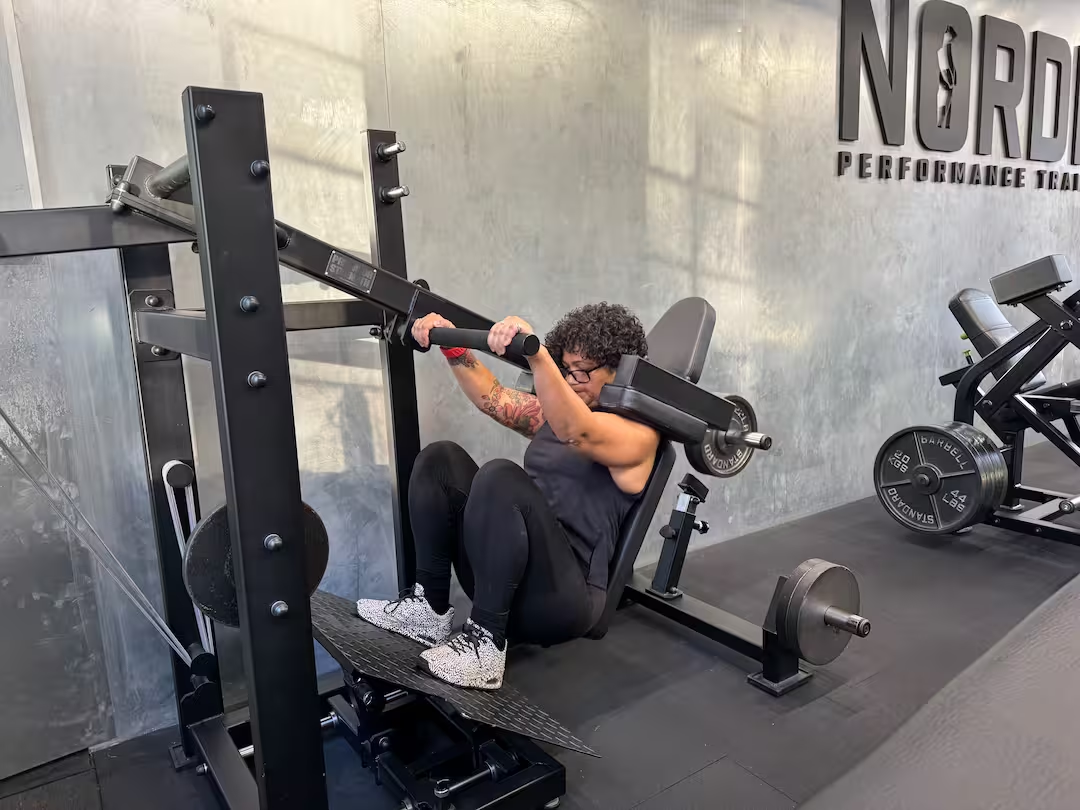
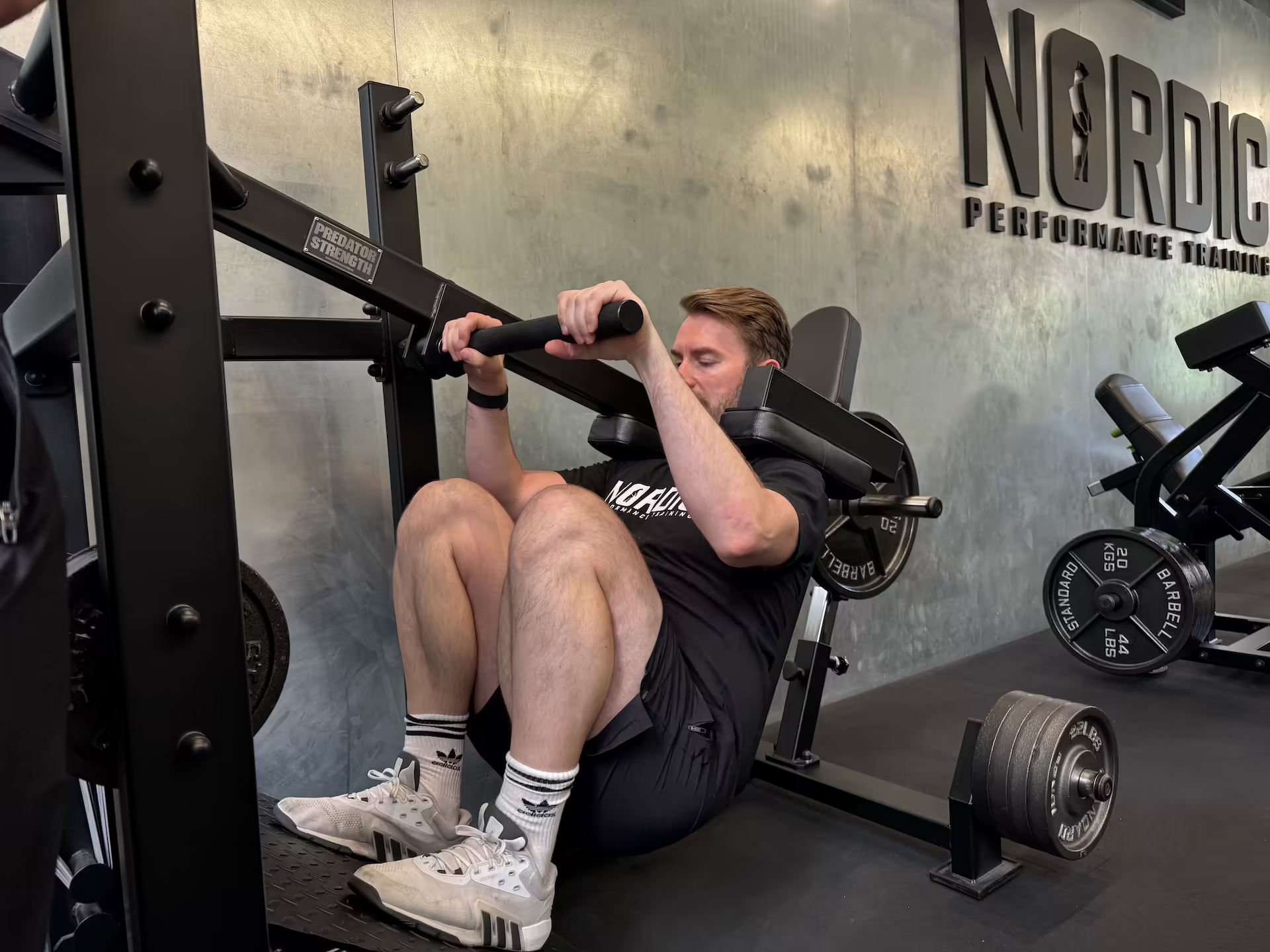
"I explained to her that when the body is neurologically stressed — sleep deprivation, medical treatment, chemo — even simple things become harder," Kasper said. "Free weights require coordination, balance, and focus. Machines challenge these elements to a much lesser degree. They make training less uncomfortable and easier to complete. As we like to say, our machines make it easy to train hard."
Jaki was skeptical at first.
"I thought you had to change exercises often," she said. "And I was afraid that machines weren't hard enough to see results."
But Kasper stuck to the principle: Simplicity, not complexity.
The Exercises Jaki Trained:
- Machine Chest Press
- Cable Pulldown
- Hack Squat
- Lying Leg Curl
- Leg Extension
- Dumbbell Lateral Raise
Four main exercises and two to four isolation exercises. Same structure every time. Machines that made movements predictable and required less mental energy.
"It changed when I learned how simple it is when the exercises are good and the system is so simple and effective," Jaki said.
"Do Your Best, But Never More"
The most important principle in Jaki's journey wasn't to push harder. It was to find the right balance.
"We used a mantra: Do your best, but never more," Kasper explained. "Some days she could lift heavy. Other days it was just about showing up and completing with lighter weight. Both count."
Jaki valued the explanations.
"Kasper used physiological explanations that made sense to me," she said. "As an expert in my own field, I feel secure when I understand the underlying principles. It wasn't just 'do it like this' — it was 'here's why.'"
Load management became the key. Hard enough to create progress. Never so hard that it became overwhelming.
"I understand now how important it is to do what you can — not what you can't," Jaki reflected. "Always do your best, but never more than that."
"I understand now how important it is to do what you can — not what you can't. Always do your best, but never more than that." — Jaki
The Breakthrough: Normalcy in Chaos
The biggest breakthrough didn't come from strength. It came from routine.
"Training became the one hour of the day where I knew what would happen," Jaki said. "Everything else was more chaotic and out of my control. But here? Here I knew exactly what I would do. I knew it would be challenging, but never more than what I could handle. That gave me peace."
Even on days when she felt worst, she showed up.
"I can always manage to train and see my progress," she said. "That has given me something to hold on to."
Jaki's Transformation
After months of 2x weekly training — through chemotherapy and beyond:
Strength Gains:
- Machine Chest Press: 20 kg → 40 kg (+100%)
- Hack Squat: 35 kg → 65 kg (+86%)
- Cable Pulldown: 26 kg → 48 kg (+85%)
- Visible muscle development
Consistency:
- 94% attendance through entire chemotherapy treatment
- Training became a fixed routine — even on difficult days
Physical Health:
- Increased muscle mass
- Lost fat
- DEXA scan showed strong bones
- Easier to manage joint pain and discomfort from treatment
Identity Shift:
- From chaos to control
- From uncertainty to predictability
- From worry about doing enough to peace in doing her best
"Now I can always manage to train and see my progress. That has given me something to hold on to." — Jaki
Why This Works — Even Under the Most Difficult Circumstances
Jaki's story shows something fundamental: Training doesn't need to be complex to work. Quite the opposite.
When Jaki started, her body was already stressed. Chemo. Surgery. Sleep deprivation. Neurological challenge. The last thing she needed was a complicated program with free weights and constant variation.
The solution was structure, simplicity, and load management.
"What made the difference was adapting the training to what Jaki could actually manage," Kasper explained. "Not what a perfect program would look like — but what fit into her reality."
Machines removed unnecessary complexity. Same exercises every week removed decision fatigue. And the principle of "do your best, but never more" gave her peace to show up — even on days when she felt bad.
"She committed from the start," Kasper said. "She bought many sessions and was ready to invest in herself — even in the middle of treatment. That showed she saw the value of having a professional partner."
There Is No Perfect Time to Start
If Jaki had waited for the "right" time, she would never have started.
In the middle of chemotherapy. In one of the hardest periods of her life. That's where she chose to begin.
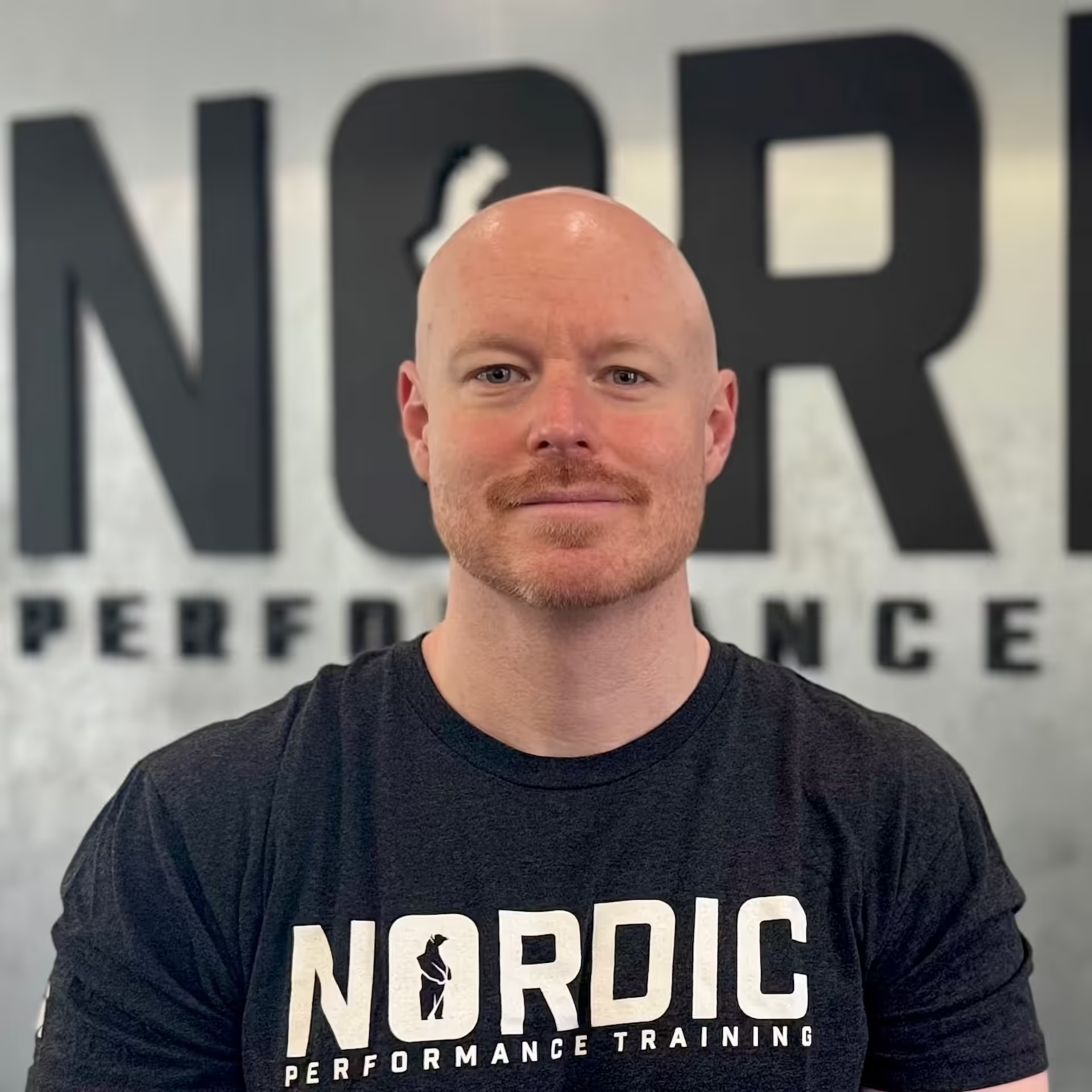
"Jaki started at the most difficult time in her life and still managed to build a solid foundation," Kasper said. "Now, after recovering, she continues. Because the foundation is already laid."
That's what others can learn from her story: There is no perfect time. There is only now.
Ready to Find Structure — No Matter Where Life Is?
Jaki started at the most difficult time in her life. Today she is stronger than before her diagnosis and has a foundation she can build on for the rest of her life.
If you're waiting for the "right" time, it will never come. Life is always something. Work. Family. Challenges. But structure, simplicity, and a professional partner can give you the fixed point you need.
Book a free start-up conversation at our private gym in Copenhagen and experience how structured strength training can create normalcy — even when everything else feels chaotic.
Because the perfect time doesn't exist. There is only now.
Table of Contents
Other Client Stories
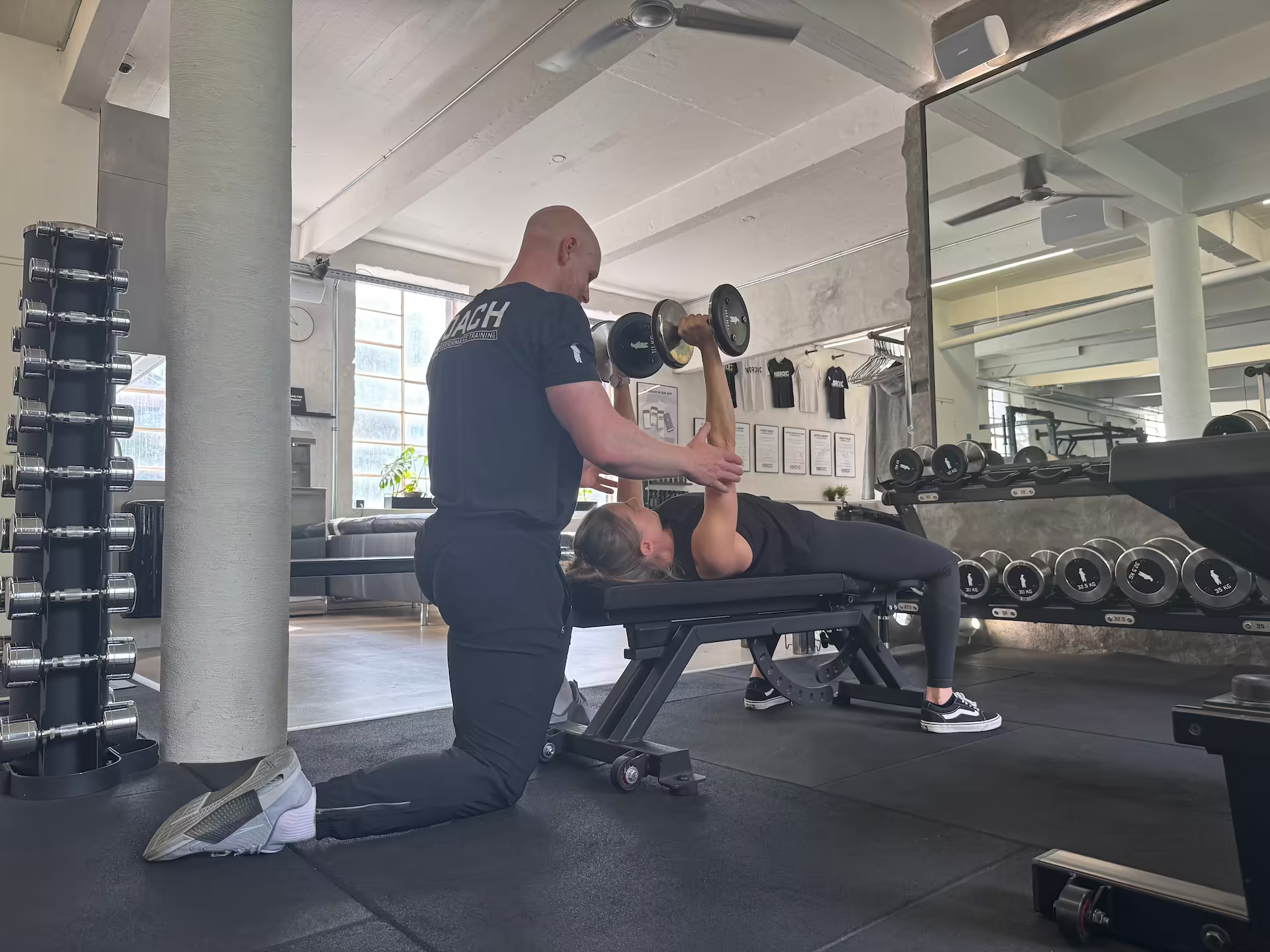

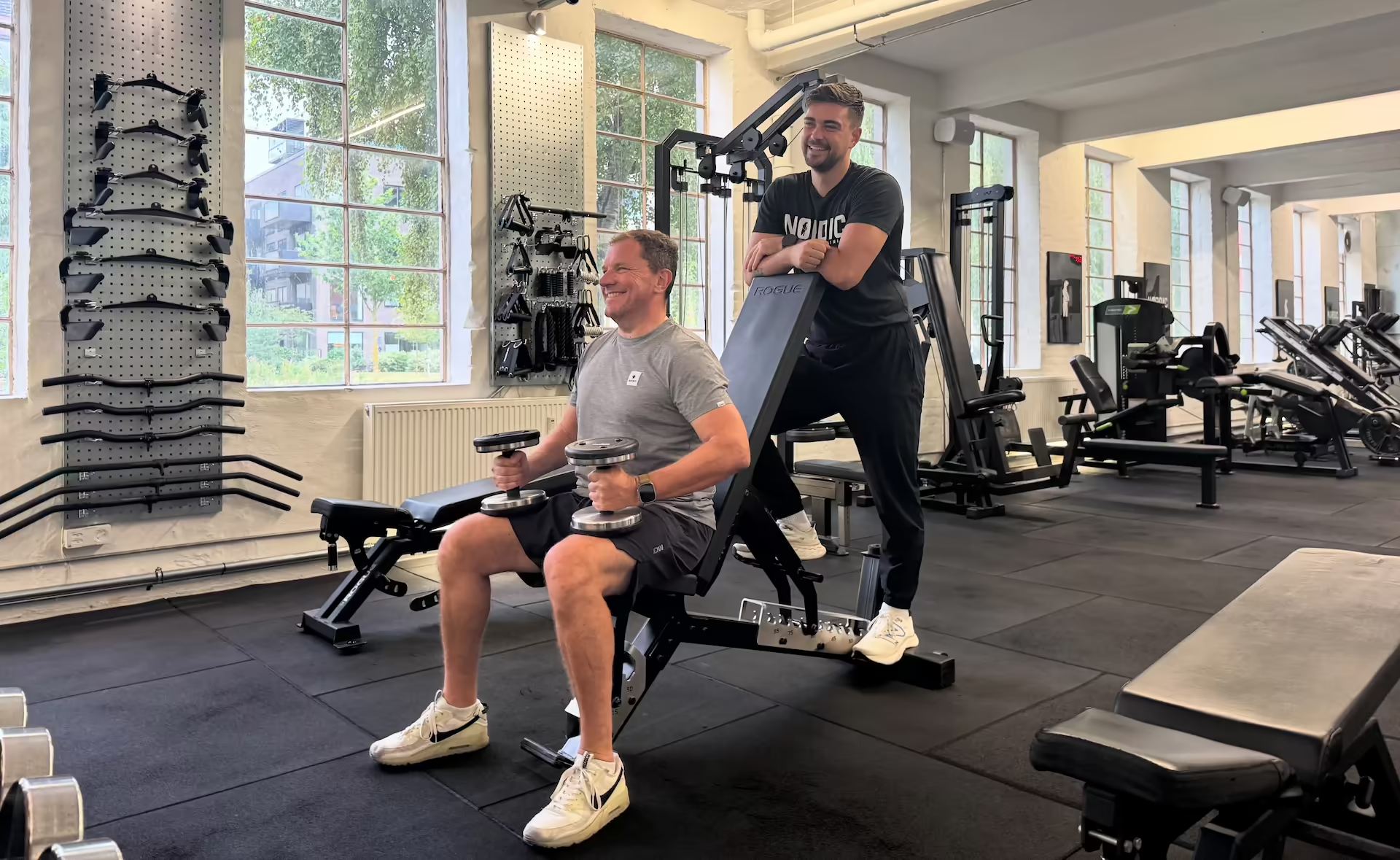
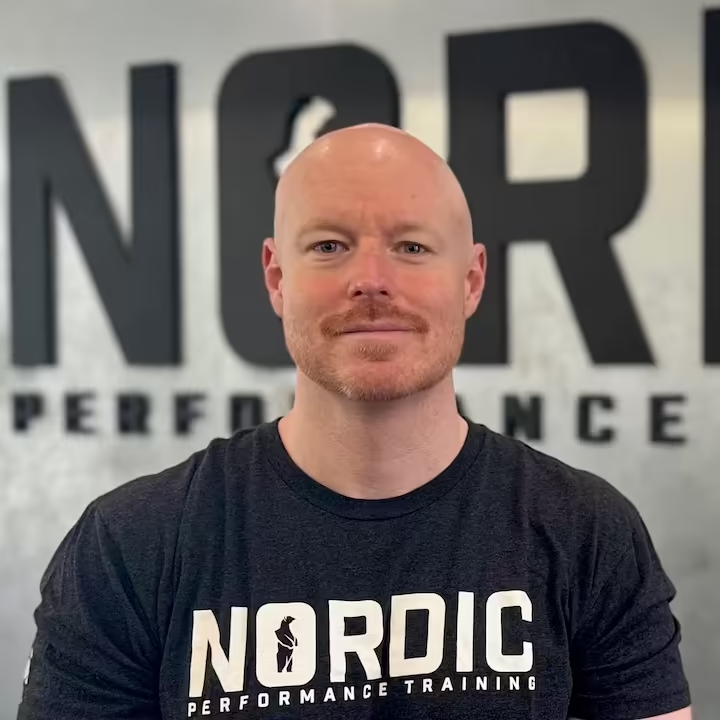
I’ve worked as a personal trainer for over 12 years and as a physiotherapist for over 10 years — and co-founded Nordic Performance Training with Lucas 8 years ago to give clients a professional and structured way to train. Since then, I’ve helped hundreds of people build strength, stay consistent, and feel better through evidence-based methods that actually work.
Along the way, I’ve completed advanced certifications, mentored under leading experts, and I’ve taught many trainers and physiotherapists internationally.
On this page, I share real client stories — so you can see what structured, consistent training looks like in practice.


Other Client Stories


.svg)