







Your Complete Guide to Running a Great Half Marathon (21.1km)
21.1 kilometers. Half marathon. This is the distance where you prove you're a true endurance athlete.
The half marathon is long enough to require serious preparation, but short enough that you can recover relatively quickly and run several per year. It's the distance where nutrition during the run becomes crucial, where mental strength is tested over 1-2 hours, and where pacing mistakes are punished harshly.
Important: This guide assumes you can run 10km. If you can't do that yet, we recommend starting with our [10km running guide] and building your base first. Going from 0 to half marathon typically takes 6-9 months – but from 10km to half marathon, 12 weeks is realistic with the right structure.
At Nordic Performance Training in Copenhagen, we've helped many cross their first half marathon finish line during their personal training with us – from nervous debutants who just want to finish, to ambitious runners chasing sub-1:30. And if there's one thing we've learned, it's this: half marathon success isn't about running as many kilometers as possible, but about training strategically, fueling correctly, and respecting the distance.
This guide is for you who want to run a half marathon – whether it's your first or your fastest. We give you three complete 12-week programs tailored to your level, based on physiological principles and practical experience from runners across Copenhagen.
Why Run a Half Marathon?
The half marathon is the fastest-growing running distance in Denmark. It hits the sweet spot between challenge and accessibility – long enough to feel like a genuine achievement, short enough that it doesn't need to take over your life for months.
For a person weighing 75 kg, a half marathon means burning approximately 1,500-1,800 calories – more than most people burn in an entire day. But the calories are of course not the biggest benefit.
A half marathon gives you:
- Confirmation that you can master long-distance running
- Experience with fueling and hydrating during a run
- Mental resilience that transfers to all areas of life
- A natural stepping stone toward marathon (if that's the goal)
- Access to some of the world's most iconic races (Copenhagen Half, Berlin Half, etc.)
Research shows that endurance training at this level not only improves fitness and heart health, but also cognitive functions, sleep quality, and stress resistance. For many of our clients, the half marathon doesn't just become a race – it becomes a turning point in their relationship with their own capacity.
Success Stories from Nordic Performance Training in Copenhagen
Anne, 36, Marketing Manager from Vesterbro
Before: Had run several 10km races with times around 55-58 minutes. Dreamed of a half marathon but was afraid of the distance and unsure if her body could handle it.
After 12 weeks with Program 1 (10km to half marathon): Completed Copenhagen Half Marathon in 2:14:32, cried at the finish line, and has now signed up for two more half marathons next year.
"I never thought I would be able to run that far. The long Sunday runs were an eye-opener – discovering that the body can do much more than the mind thinks. When I crossed the finish line in Copenhagen, I felt like a completely different person than the one who started the program."
Mikkel, 44, Lawyer from Nordhavn
Before: Experienced 10km runner with a PR of 47 minutes. Had run one half marathon in 2:05, but without structure and with "the wall" at km 16. Wanted to prove he could do it properly.
After 12 weeks with Program 2 (2:15 to 1:45): Ran Berlin Half Marathon in 1:42:18 with a negative split and felt strong the whole way. Has lowered his resting heart rate from 53 to 47 bpm.
"The first time I ran a half marathon, I died at km 16. This time I accelerated. The difference was carbohydrates during the race and the long tempo runs in training. Running 15km at threshold pace in training made 21km at race pace feel manageable."
Sofie, 29, Physiotherapist from Nørrebro
Before: Experienced runner with a half marathon PR of 1:38. Wanted to break the 1:30 barrier but had hit a plateau despite high training volume.
After 12 weeks with Program 3 (1:45 to sub-1:30): Ran CPH Half in 1:28:44, average heart rate 172 bpm (89% of her max). Has improved her VO2Max from 52 to 54 on Garmin.
"I actually trained less than before – but smarter. Focus on quality over quantity, and especially the race-specific tempo runs at 12-16km, were game-changers. Crossing the finish line in sub-1:30 was the culmination of three years of work."
What Is a Good Half Marathon Time?
Half marathon times vary enormously depending on age, gender, training background, and natural abilities. The most important thing is to focus on your own progression rather than comparing yourself to others.
Benchmarks for Different Levels:
- Beginners (2:00-2:30): Solid first attempt if you have a 10km base. Focus is on finishing.
- Lightly trained (1:45-2:00): Good performance for regular recreational runners. Requires structured training.
- Trained (1:30-1:45): Places you in the top 20-30% of Danish recreational runners. Requires dedicated training and good running economy.
- Well trained (1:20-1:30): Requires several years of experience and periodized training. Under 1:30 places women in the top 5-10% and men in the top 10-15%.
- Elite (under 1:20): Requires exceptional VO2max, running economy, and mental strength. Under 1:20 places men in the top 3-5% and women in the top 1-2%.
Remember: A "good" time is a time that represents progress for you. Successful half marathon running is about continuous improvement and crossing the finish line with an experience you're proud of.
Half Marathon-Specific Knowledge: From 10km to 21.1km
What's the Physiological Difference?
A half marathon is not just "double 10km plus a bit." Here are the important differences:
Energy Systems:
- 10km: Primarily carbohydrate burning, aerobic-anaerobic balance
- Half marathon: Mix of carbohydrate and fat burning, primarily aerobic (75-85% of max HR)
Glycogen Stores:
- 10km: Your stores are sufficient without supplementation
- Half marathon: You can run out if you don't fuel along the way (especially over 1:45)
Muscle Fatigue:
- 10km: Primarily cardiovascular challenge
- Half marathon: Significant muscular exhaustion, especially in quadriceps and calves
Mental Challenge:
- 10km: "The difficult middle" is km 4-7
- Half marathon: Km 14-18 is "the dark place" where both body and mind protest
Pacing Strategies for Half Marathon
Negative Split Approach (Strongly Recommended)
Start 10-15 seconds/km slower than your goal pace for the first 5km, hold steady km 6-15, and accelerate km 16-21 if you have the energy.
Example – goal 1:45 (4:58/km pace):
- Km 1-5: 5:05-5:10/km (find the rhythm, save glycogen)
- Km 6-15: 4:58-5:00/km (steady state, fuel regularly)
- Km 16-18: 4:55/km (start pushing)
- Km 19-21: 4:45-4:50/km (everything you have left)
Benefits:
- Saves glycogen for the critical final kilometers
- Avoids "blowing up" at km 15-16
- Mental boost from passing others at the end
- Physiologically optimal – less lactate accumulation early
Even Split Approach (Only for Very Experienced)
Hold exactly the same pace the entire way. Requires perfect knowledge of your own capacity and exceptional discipline.
Race Nutrition: Before, During, and After Half Marathon
Nutrition is where the half marathon fundamentally differs from shorter distances. Mistakes here can ruin an otherwise perfectly prepared race.
The Days Before the Race (Carb Loading)
3-4 days before:
- Gradually increase carbohydrate intake to 7-10g per kg body weight
- Reduce fat and fiber to avoid stomach problems
- Drink plenty of water (urine should be light yellow)
The evening before:
- Large carbohydrate-rich meal: pasta, rice, potatoes
- Avoid new foods – only eat what you know
- Minimal fiber and spices
Race morning (3-4 hours before start):
- 1-2g carbohydrate per kg body weight (e.g., oatmeal with banana and honey)
- 400-600ml water
- Avoid fat and fiber
30-60 minutes before:
- 200-300ml water or sports drink
- Optional: 1 gel or energy bar if you're used to it
During the Race (CRITICAL)
For races over 1:30: You MUST consume carbohydrates along the way. Rule of thumb: 30-60g carbohydrate per hour after the first 45-60 minutes.
Practical plan for ~2-hour half marathon:
- Km 7-8: First gel + water
- Km 14-15: Second gel + water
- Aid stations: Take a sip of water/sports drink at every station (typically every 5km)
For races under 1:30:
- Sports drink at aid stations may be sufficient
- Consider 1 gel at km 12-14 for extra safety
IMPORTANT RULE: Test EVERYTHING in training first. Your stomach needs to get used to absorbing nutrition while running. Use your long runs to find out which gels/sports drinks work for you.
Popular gel brands:
- Maurten (mild taste, good tolerance, but expensive)
- PurePower (good taste, good price)
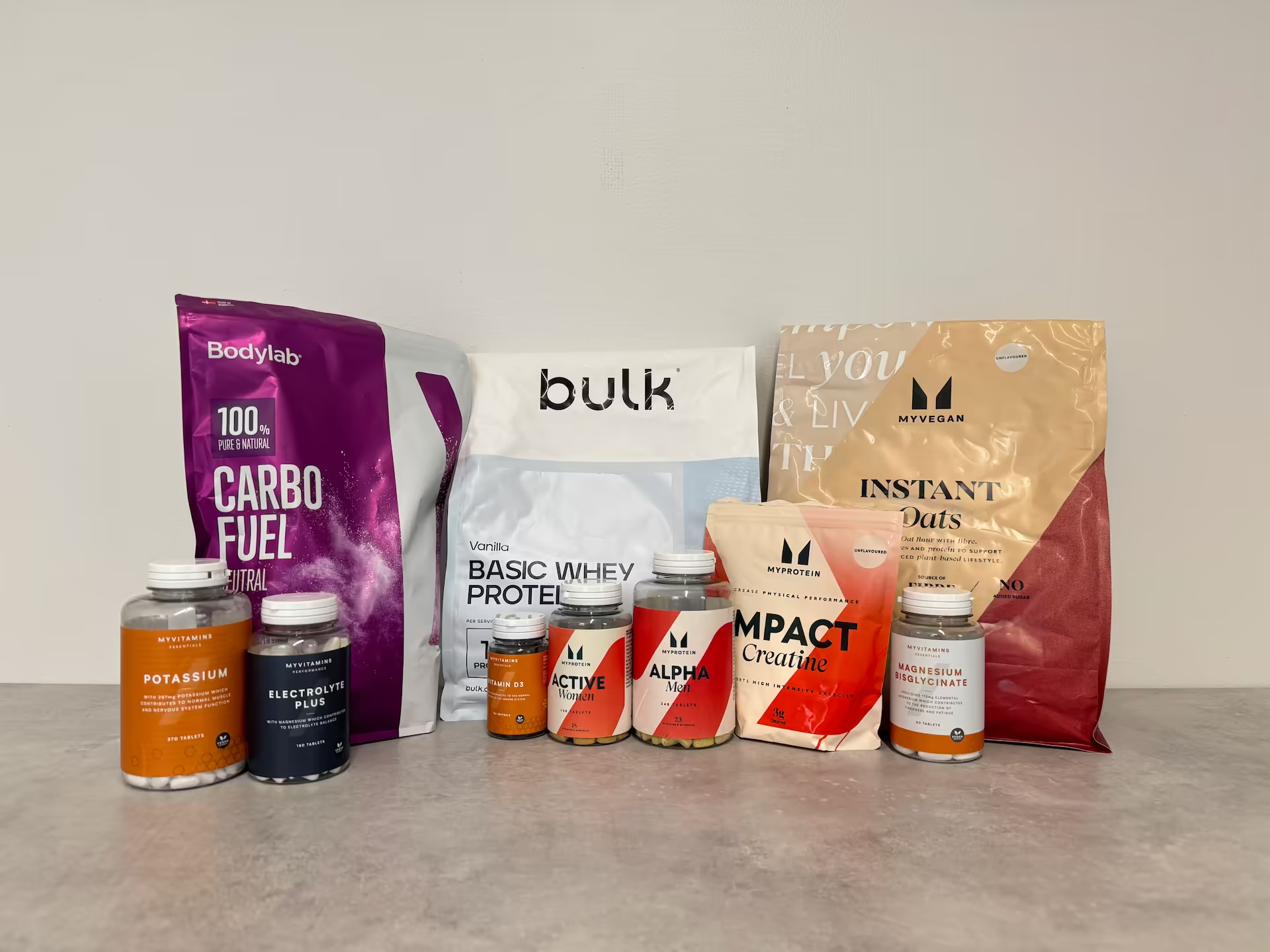
- MyProtein (not the best taste, but cheap)
After the Race (Recovery)
0-30 minutes after:
- Protein + carbohydrate combination (e.g., chocolate milk, recovery shake)
- Goal: 20-30g protein + 40-60g carbohydrate
- Begin rehydration (500-750ml fluid in the first hour)
2-3 hours after:
- Proper meal with protein, carbohydrates, and vegetables
- Continue fluid intake
Mental Strategy: Mastering the 21.1 Kilometers
The half marathon tests your mental strength in a way shorter distances don't. Here's how to handle the different phases:
Km 1-5: "The Eager Start"
Mental state: Adrenaline, excitement, temptation to start too fast
Strategy: Discipline. Hold back even if it feels too slow.
Mantra: "Patience now, speed later. I'm running my own race."
Concrete techniques:
- Ignore runners who pass you – you'll see most of them again at km 18
- Focus on your breathing: calm, controlled
- Check pace on your watch, not the feeling
- Find your rhythm and stay in your zone
Km 6-13: "The Comfortable Middle"
Mental state: Rhythm, flow, "this is actually okay"
Strategy: Maintain, fuel, mental recharge for what's coming
Mantra: "I am exactly where I should be. Enjoy the process."
Concrete techniques:
- Take your planned gel/nutrition at km 7-8
- Smile at spectators – it releases endorphins
- Mental countdown: "Halfway at km 10.5 – I've got this"
- Use the energy from the crowd without getting carried away
Km 14-18: "The Dark Place"
Mental state: Doubt, pain, "why am I doing this?"
Strategy: Survival. Break the distance into small pieces.
Mantra: "One kilometer at a time. The pain is temporary, the pride is permanent."
Concrete techniques:
- Count steps: 100 steps, then 100 more
- Find a runner ahead of you and hang on to their pace
- Visualize the finish line and the feeling of crossing it
- Remember your hardest training: "I've survived worse"
- Take second gel at km 14-15 – you need the energy
- Accept the discomfort – it's part of the experience
Km 19-21.1: "The Final Push"
Mental state: Exhaustion, but also hope – "I'm almost there"
Strategy: All in. No reason to save anything now.
Mantra: "This is what I trained for. I am a half marathon runner."
Concrete techniques:
- Increase cadence by 5-10 steps/min
- Power poses: Shoulders back, chest out, head high
- Countdown: "Only 2km – that's just a few minutes. Only 1km – that's nothing."
- Enjoy the spectators and the atmosphere – this is your reward
- When you see the finish line: Give everything you have left
Different Training Types in a Half Marathon Program
Half marathon training builds on the same principles as shorter distances, but with some important additions.
Easy Runs (Z2)
The foundation for all half marathon training. Here you run at a pace where you can speak in full sentences (70-80% of your max heart rate).
Note: Zone 1 training (50-70% max HR) exists but is primarily used by ultrarunners. For half marathon runners with limited time, Z2 provides superior aerobic development per training minute.
Why it's extra important for half marathon: You build the aerobic base that enables you to burn fat efficiently – crucial for distances over 90 minutes.
The 80/20 distribution, where approximately 80% of training takes place at low intensities and 20% at high intensities, is supported by recent meta-analyses. This polarized approach proves particularly effective for improving VO2max, especially in well-trained athletes and in shorter training periods (under 12 weeks).
Long Runs
The most important element in half marathon training. These runs accustom your body to running for longer periods and train you to consume carbohydrates along the way.
Progression:
- Week 1-4: 12-14km
- Week 5-8: 15-17km
- Week 9-10: 18-20km
- Week 11-12: Taper down to 12-14km
Pace: Primarily Z2 (conversational pace), but some long runs can include tempo sections at the end to simulate race fatigue.
Why they're crucial: Long runs train your body to burn fat, strengthen your muscles and tendons for repeated loading, and give you mental experience with running for a long time.
Tempo Runs and Threshold Training (Z3/Z4)
Running at a pace that feels "comfortably hard" – approximately 80-90% of max heart rate. For half marathon, these runs are typically 8-15km.
Note: Technically, tempo runs are Z3 (aerobic threshold), while threshold runs are Z4 (anaerobic threshold), but for practical training purposes, this Z3-Z4 range develops similar adaptations.
Purpose: Raises your anaerobic threshold so you can maintain higher pace longer.
Interval Training (Z4/Z5)
Shorter, intense intervals of 800-2000m. Improves VO2max and running economy.
Note: Intervals make up a smaller part of half marathon training than for 5km/10km – focus is more on threshold and long runs.
Purpose: To improve your fitness and ability to maintain high pace over longer periods.
Strides
Short, controlled accelerations of 80-100 meters performed at the end of easy runs. Perform 3-6 strides with 30-60 seconds of fast running (approximately 90% of your sprint speed) followed by full recovery between each repetition.
How to perform strides:
- Jog at an easy pace (Z2)
- Accelerate gradually over 20 meters to approximately 90% of your top sprint
- Maintain the speed for 30-60 seconds
- Decelerate gradually over 20 meters
- Continue jogging or walk slowly until you're fully recovered (heart rate should come down)
- Repeat 2-5 more times
When: After easy runs, when muscles are warm but before you're tired. Never on rest days.
Why strides are invaluable: Strides improve running economy, neuromuscular coordination, and make your race pace feel natural without creating fatigue. They're one of the most time-efficient ways to improve your half marathon performance.
Personal recommendation: I like to do 3-4 strides at the end of my easy runs, but never allow the heart rate to stay elevated, as it's still an easy run.
Before You Start – Important Preparation
Equipment – What You Actually Need
You don't need expensive equipment to run a half marathon. But the right equipment makes training more comfortable, more precise, and reduces the risk of injury.
Running Shoes - Your Most Important Equipment
The most important equipment is your shoes. You don't need to get a running gait analysis from a store assistant – unless you're an elite athlete, it's more important that you start with comfort and cushioning rather than biomechanical perfection.
Here are our recommendations based on level:
Beginners: Start with a maximally cushioned running shoe – soft, shock-absorbing, and forgiving, so you can get through the long runs without too much soreness.
Lightly trained: Combine a max cushioned shoe for long runs and a daily trainer for tempo sessions. If the budget only allows for one shoe, choose a versatile daily trainer.
Experienced runners: We recommend the following rotation:
- Maximum cushioning (long runs and recovery)
- Daily trainer (daily use and tempo)
- Race shoe (only for race day and select test runs)
- Bonus: Multiple versions of the above if you're a running shoe enthusiast
Our Favorite Running Shoes
Running Belt or Hydration Vest (Great for Half Marathon-training)
For long training runs over 12-15km, you need to bring fluids and nutrition. This is new compared to 5km and 10km training.
Running belt: Compact, carries 1-2 small bottles + space for gels. Good for runs up to 18-20km.
- Flipbelt (minimalist, fits close)
- Naked Running Band (popular among elite runners)
- Salomon Pulse Belt (good capacity)
Hydration vest: Carries more fluid (500ml-2L), better for very long runs or hot days.
- Salomon Active Skin 4/8 (industry standard)
- Nathan VaporKrar (good for larger runners)
- Camelbak Ultra Pro (robust and reliable)
Tip: Start with a running belt – most half marathon runners don't need a full hydration vest.
Clothing
The best materials for running are polyester, nylon, spandex, bamboo, and merino wool because they're breathable, moisture-wicking, and flexible. If you want to avoid plastic and fossil-based materials, merino wool and bamboo are an obvious choice – they also have natural antibacterial properties that reduce odor.
Avoid cotton as it absorbs moisture, becomes heavy, and increases the risk of discomfort and chafing during running.
Think in seasons – and layer by layer
Summer: As little and as airy as possible. Short tights or shorts, singlet or light t-shirt. Focus on breathability.
Spring/Fall: Same basic structure as summer, but switch singlet to long-sleeved running shirt and short tights to long tights. Layering makes it easy to regulate temperature.
Winter: Requires more consideration:
- Long-sleeved base layer (merino wool if you get cold easily)
- Thicker shirt or light running jacket on top
- Thermal tights or tights + loose pants
- Waterproof gloves, neck gaiter, possibly a hat
In Copenhagen, the weather changes quickly – if in doubt, bring an extra layer. It's much easier to take off than to freeze through your run.
Important for half marathon: Test your race outfit on a long training run. Chafing and scrapes only show up after 60-90 minutes – and you don't want to discover problems on race day.
GPS Watch and Heart Rate Measurement
A GPS watch is almost essential for half marathon training. You can get far with apps like Strava, but a dedicated running watch helps with:
- Pace control during long runs
- Heart rate zones for intensity management
- Structured intervals
- Distance tracking without phone
Top 3 GPS Watches
Apple Watch? Works fine for casual running, but is limited regarding intervals, battery life, and advanced running data. It's still primarily a smartwatch.
Personal recommendation: Make sure the watch has music storage – it's nice to run with music without a phone on the long runs.
Heart Rate Monitor (Extra Precision)
A heart rate monitor (typically chest strap) can provide higher accuracy than optical heart rate measurement from the wrist – especially during intervals and tempo runs.
Top Heart Rate Monitors
Conclusion: Start with good shoes and a phone app. Add GPS watch when you get serious. Running belt or hydration vest is necessary for the long runs.
Warm-up, Cool-down, and Injury Prevention
Warm-up is important, but it's not a magic solution. Many runners believe that a bit of stretching or some hip swings can prevent injuries – but unfortunately, that's not enough. It's especially important to warm up well before harder training like intervals, tempo runs, or threshold sessions. For long, easy runs, thorough warm-up is usually not necessary – the first kilometers serve as the warm-up.
A good warm-up helps reduce the risk of injuries on the day, improves your experience during the run, and helps the body find rhythm. But the most important thing for avoiding injuries is to manage your training volume. If you increase distance or intensity too quickly, you significantly increase the risk.
Research shows that around 40% of runners experience injuries each year – and in most cases, it's due to excessive load, not lack of warm-up, cool-down, or stretching exercises.
Warm-up (5-10 minutes)
For most people, it's about starting slowly and gradually increasing the pace.
Standard warm-up before most running sessions:
- 3-5 minutes of slow running or brisk walking (Z1-Z2)
- 3-5 minutes with varied pace (e.g., short 15-30 second accelerations)
Optional dynamic exercises (especially before intervals or tempo sessions):
- 10 × leg swings forward/backward per leg
- 10 × hip circles per direction
- 10-15 × high knees in place
- 20-30 bodyweight squats or 10-15 split squats per leg
These exercises warm up hips, ankles, and legs and improve mobility without draining energy.
Cool-down (5-10 minutes)
Cool-down isn't magic and isn't necessary, but can help finish the training session calmly.
Standard cool-down:
- 5-10 minutes of slow running, walk/run combination, or brisk walking
Optional static stretching (only if it feels good, no documented effect on recovery):
- Calf: 30-60 seconds per leg
- Quadriceps: 30-60 seconds per leg
- Hamstring: 30-60 seconds per leg
- Hip flexors: 30-60 seconds per side (especially important for half marathon runners)
Important Points
- The harder the training, the more important the warm-up.
- For most recreational runners, it's more important to start slowly, increase gradually, and let the body get used to the load than to do a "perfect" warm-up.
- At Nordic Performance Training, we most often see injuries that occur when people start too hard – with too long, too fast, or too frequent training. Slow, structured progression is more important than anything else.
Listen to Your Body – Distinguish Between Soreness and Injury
Normal soreness:
- Diffuse muscle fatigue 24-48 hours after training (especially after long runs)
- Improves with light movement and heat
- Does not affect running style or function
Warning signs of injury:
- Sharp, localized pain during running
- Pain that worsens with activity
- Swelling or visible inflammation
- Pain lasting more than a week
- Pain that changes your running style
If you experience warning signs, take a break and possibly seek help from a physiotherapist or running coach. Better to lose a week of training than to lose your entire half marathon.
Basic Running Technique
The most important thing first: It's not your running style that determines whether you get injured. It's how you dose your training.
The most well-documented factor for preventing running-related injuries is what we call load management – that is, how quickly and how much you gradually increase your training volume. This applies regardless of whether you land on your heel, midfoot, or forefoot.
Basic Principles for Good Load Management
- Increase slowly and steadily in volume or intensity (max 10% per week)
- Listen to your body – initial pains should be respected, not overridden
- Use appropriate running shoes for your needs
- Ensure adequate recovery – sleep, food, and breaks count too
That said, running style can play a role – but not in the way many think. There is no "perfect" running style, and many of the fastest and most durable runners have running styles that would receive criticism from many experts.
Good, General Advice on Running Style
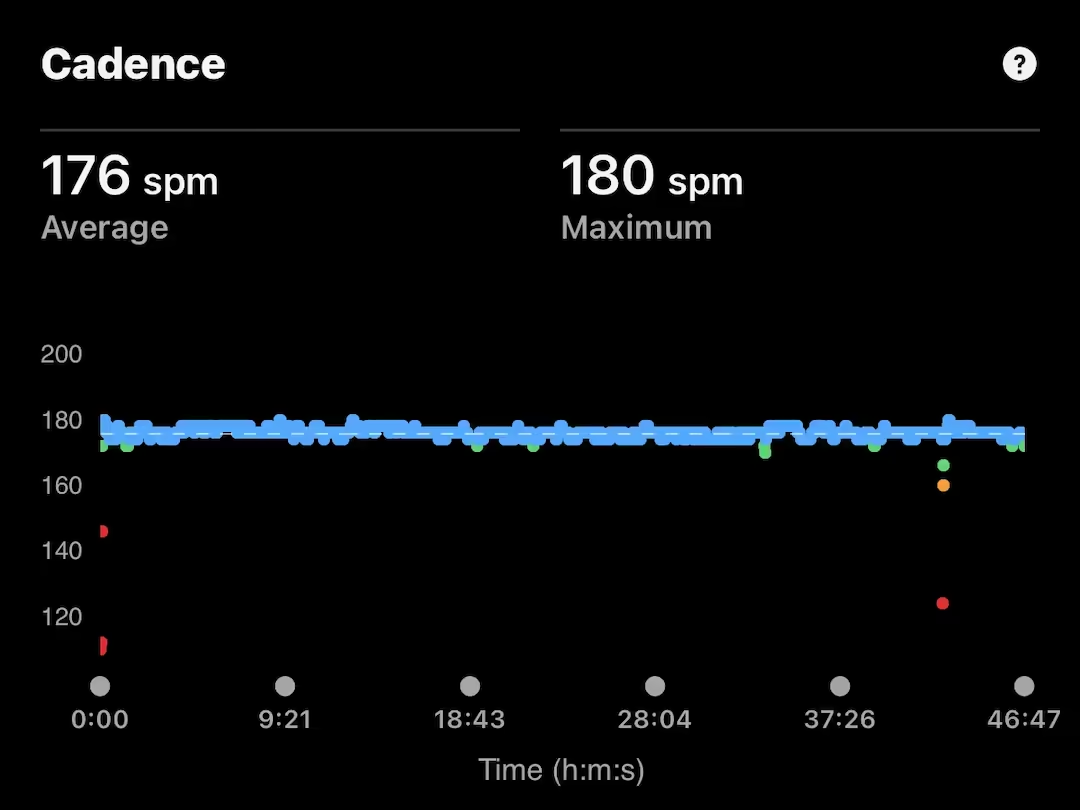
Cadence (step frequency): Research shows that a higher cadence (around 170-190 steps per minute) can improve biomechanics and reduce certain load parameters per step. However, evidence for direct injury prevention is limited. Shorter, more frequent steps can provide potential benefits – but should always be adapted to the individual runner's height, leg length, and natural movement pattern.
Landing pattern: It's not about heel vs. forefoot. There is no clear evidence that one type of landing is better than others. The most important thing is that you don't overstride – that is, land with your foot far in front of your body. This creates braking force and increases load. The goal is to land with your foot approximately under your center of gravity.
Posture: Avoid "leaning back" with bent hips and forward-tilted head. Think "long spine" and a light, collected forward-leaning posture – like a sprinter. This becomes extra important in the final kilometers of the half marathon when fatigue sets in.
Relaxation: Tense shoulders, arms, and hands cost unnecessary energy and discomfort. Aim for a relaxed, elastic run. Lightness and rhythm are more important than precision.
What You Should Be Critical Of
There are many myths about running style – and not all are based on reality:
- "You should run on your forefoot" – not necessarily, and for many it can increase injury risk
- "Minimalist shoes prevent injuries" – this is not documented, and many experience the opposite
- "Pronation is dangerous" – pronation is a natural and necessary part of the foot's shock absorption
- "You should correct running style to avoid injuries" – only in cases of persistent problems and always individually
Conclusion: Focus on What Works
Progressive loading over time is more important than your running style. But if you experience recurring problems, small adjustments in technique can be useful – preferably with professional guidance.
And remember: an "ugly" running style is not necessarily a bad running style. It's efficiency and injury history that count – not aesthetics.
Choose Your Free Half Marathon Running Program
Here you get 3 structured programs for different starting points. All programs follow the same physiological principles and assume you can run 10km.
Each program contains 4 weekly running sessions plus 1 optional day for extra base.
The last 2 weeks before your half marathon are critical. Week 11 reduces volume by ~25%, week 12 reduces by ~50%. Intensity is maintained, but duration is lowered. This lets the body recover while you maintain sharpness.
Running Program 1: From 10km to Half Marathon (12 weeks)
For you who can run 10km and want to complete your first half marathon
This program gradually builds your endurance and gets you used to running (and fueling) over longer periods. The goal is to finish – not to set records.
Week 1-4: Base Building
- Session 1: 8km easy run (Z2) + 4 strides
- Session 2: 5×800m (Z4), 2 min rest
- Session 3: 6km easy run (Z2)
- Session 4: Long run: 12-14km (Z2)
- Session 5 (optional): 5-6km easy run or walking
Week 5-8: Distance Building
- Session 1: 10km easy run (Z2) + 5 strides
- Session 2: 4×1200m (Z4), 2 min rest
- Session 3: 8km with 3km tempo (Z3-Z4) in the middle
- Session 4: Long run: 15-17km (Z2) – practice nutrition!
- Session 5 (optional): 6-7km easy run
Week 9-10: Specificity
- Session 1: 10km easy run (Z2) + 6 strides
- Session 2: 3×2000m (Z4), 2 min rest
- Session 3: 10km with 5km tempo (Z3-Z4)
- Session 4: Long run: 18-20km (Z2) – dress rehearsal for fueling
- Session 5 (optional): 6km easy run
Week 11: Taper Week 1
- Monday: 8km easy (Z2) + 4 strides
- Wednesday: 4×1000m at half marathon pace, 2 min rest
- Friday: 6km easy run
- Sunday: 12km easy run – last long run
Week 12: Race Week
- Monday: 6km easy + 4 strides
- Wednesday: 3×800m at race pace, 90 sec rest
- Friday: 4km shakeout + 4 strides OR rest
- Sunday: Half marathon – goal: finish and enjoy it!
Pacing tip: Start 15-20 sec/km slower than you think. The most important thing is to have energy for the last 5km.
Running Program 2: From 2:15 to 1:45 (12 weeks)
For you who have run a half marathon and want to significantly improve your time
This program focuses on raising your threshold and improving your ability to maintain pace over longer periods.
Week 1-4: Aerobic Base + Threshold Introduction
- Session 1: 10km easy run (Z2) + 5 strides
- Session 2: 5×1200m (Z4), 2 min rest
- Session 3: 8km tempo (Z3-Z4)
- Session 4: Long run: 14-16km (Z2)
- Session 5 (optional): 7-8km easy run
Week 5-8: Tempo Focus + Distance
- Session 1: 12km easy run (Z2) + 6 strides
- Session 2: 6×1000m (Z4-Z5), 90 sec rest
- Session 3: 10km tempo (Z3-Z4)
- Session 4: Long run: 17-19km with last 5km at marathon pace
- Session 5 (optional): 8-9km easy run
Week 9-10: Race Specificity
- Session 1: 12km easy run (Z2) + 6 strides
- Session 2: 4×1600m (Z4-Z5), 2 min rest
- Session 3: 12km at half marathon pace (~5:00/km)
- Session 4: Long run: 20km with 8km at HM pace
- Session 5 (optional): Light activity
Week 11: Taper Week 1
- Monday: 10km easy (Z2) + 5 strides
- Wednesday: 5×1000m at HM pace (~5:00/km), 90 sec rest
- Friday: 6km recovery jog
- Sunday: 14km with 6km at HM pace
Week 12: Race Week
- Monday: 6km easy + 5 strides at HM pace
- Wednesday: 4×800m at race pace, 90 sec rest
- Friday: 4km shakeout + 4 strides
- Sunday: Half marathon – goal: 1:45 (5:00/km pace)
Pacing tip: Start at 5:05/km for the first 5km. Km 6-15 at 5:00/km. Km 16-21: under 5:00/km if you have the energy.
Running Program 3: From 1:45 to sub-1:30 (12 weeks)
For experienced runners with a solid base and high ambitions
This program requires dedication. Focus on high quality in tempo work and race-specific training. Sub-1:30 is elite territory.
Week 1-4: Strengthen Aerobic Base
- Session 1: 12km easy run (Z2) + 6-8 strides
- Session 2: 6×1200m (Z4-Z5), 2 min rest
- Session 3: 10km tempo (Z3-Z4)
- Session 4: Long run: 16-18km (Z2)
- Session 5 (optional): 8-10km easy run
Week 5-8: VO2max + Race Tempo
- Session 1: 14km easy run (Z2) + 8 strides
- Session 2: 5×1600m (Z5), 2 min rest
- Session 3: 12km at HM race pace (~4:15/km)
- Session 4: Long run: 19-21km with 10km at marathon pace
- Session 5 (optional): 10km easy run
Week 9-10: Sharpness + Specificity
- Session 1: 14km easy run (Z2) + 8 strides
- Session 2: 4×2000m (Z4-Z5), 2 min rest
- Session 3: 14km at HM pace (~4:15/km)
- Session 4: Long run: 22km with 12km at HM pace
- Session 5 (optional): Light activity
Week 11: Taper Week 1
- Monday: 12km easy (Z2) + 6 strides at race pace
- Wednesday: 5×1200m at HM pace (~4:15/km), 90 sec rest
- Friday: 8km recovery jog
- Sunday: 16km with 8km at HM pace
Week 12: Race Week
- Monday: 8km easy + 6 strides at HM pace
- Wednesday: 5×800m at race pace (4:10-4:15/km), 90 sec rest
- Friday: 5km shakeout + 4 strides
- Sunday: Half marathon – goal: sub-1:30 (4:15/km pace)
Pacing tip: Start at your goal pace from km 1. Sub-1:30 requires discipline and trust in the training. Fuel early and often.
Guide to Intensity Zones / Heart Rate Zones
For many new runners, training terminology can seem confusing. Here's a simple, practical guide to how you should train at different intensities.
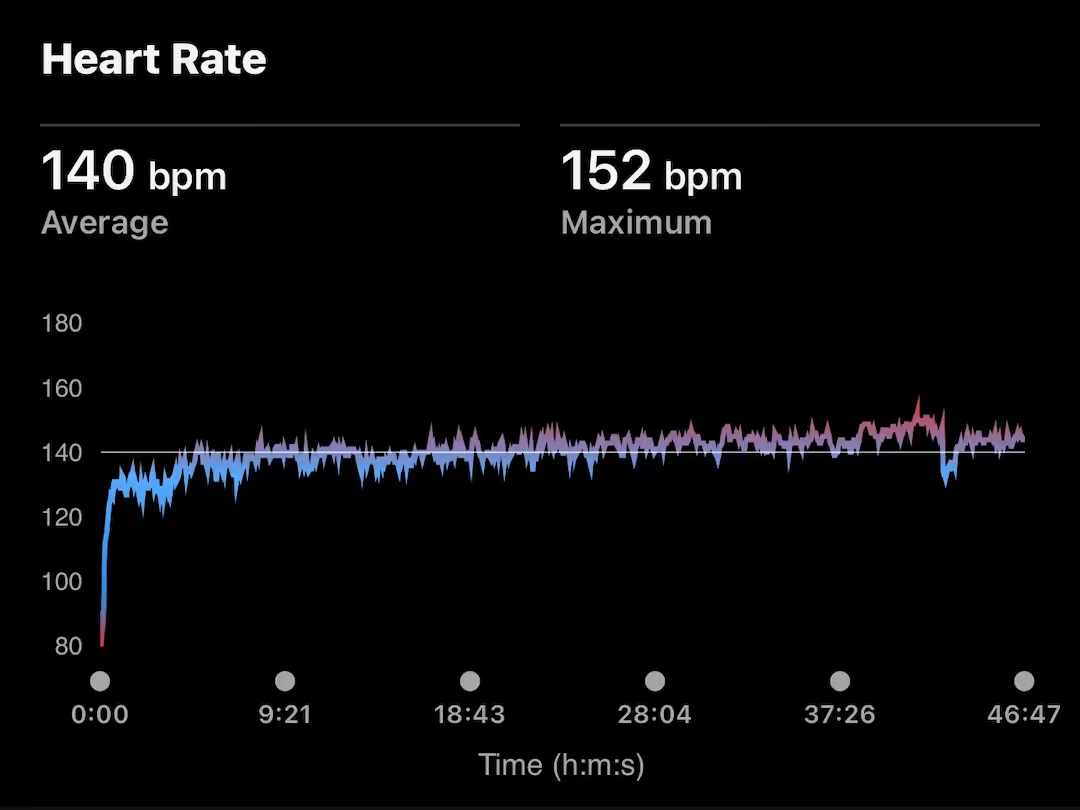
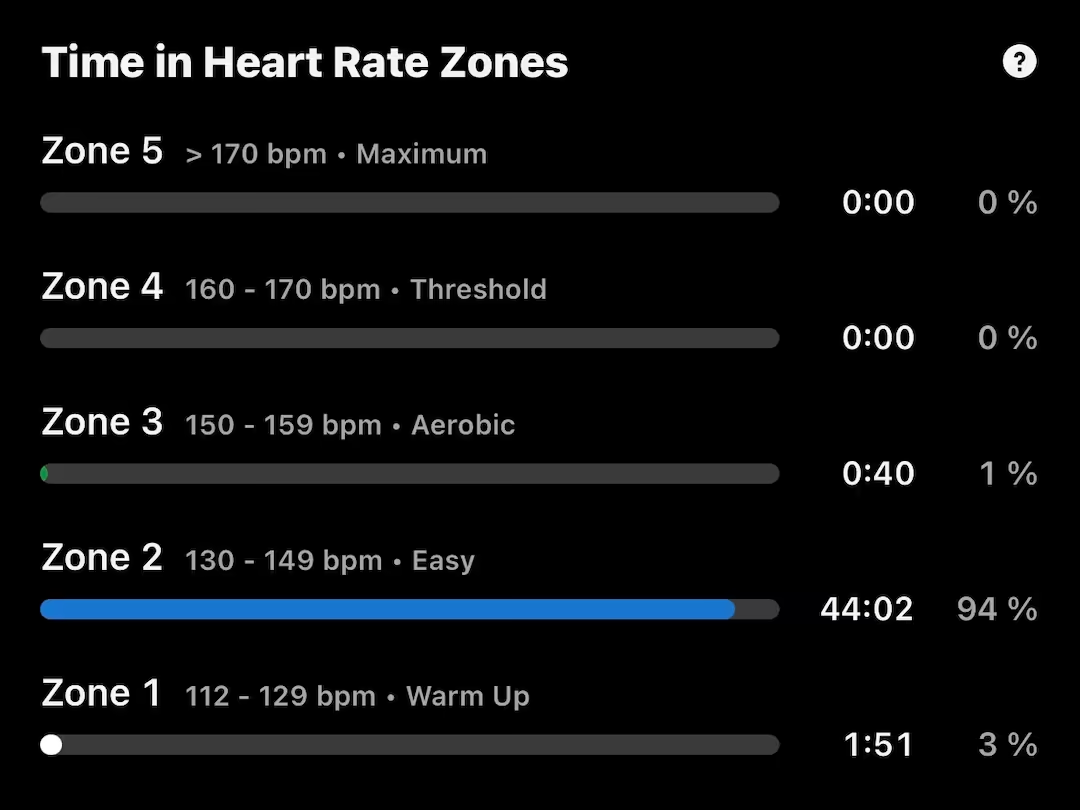
Zone 2 - Easy Pace (Conversational Pace)
This is your base pace. You should be able to talk in complete sentences while running.
- Approximately 70-80% of your maximum heart rate
- Feels "comfortably hard" – you can physiologically continue for several hours
- This builds your aerobic base and makes up the majority of your total running training
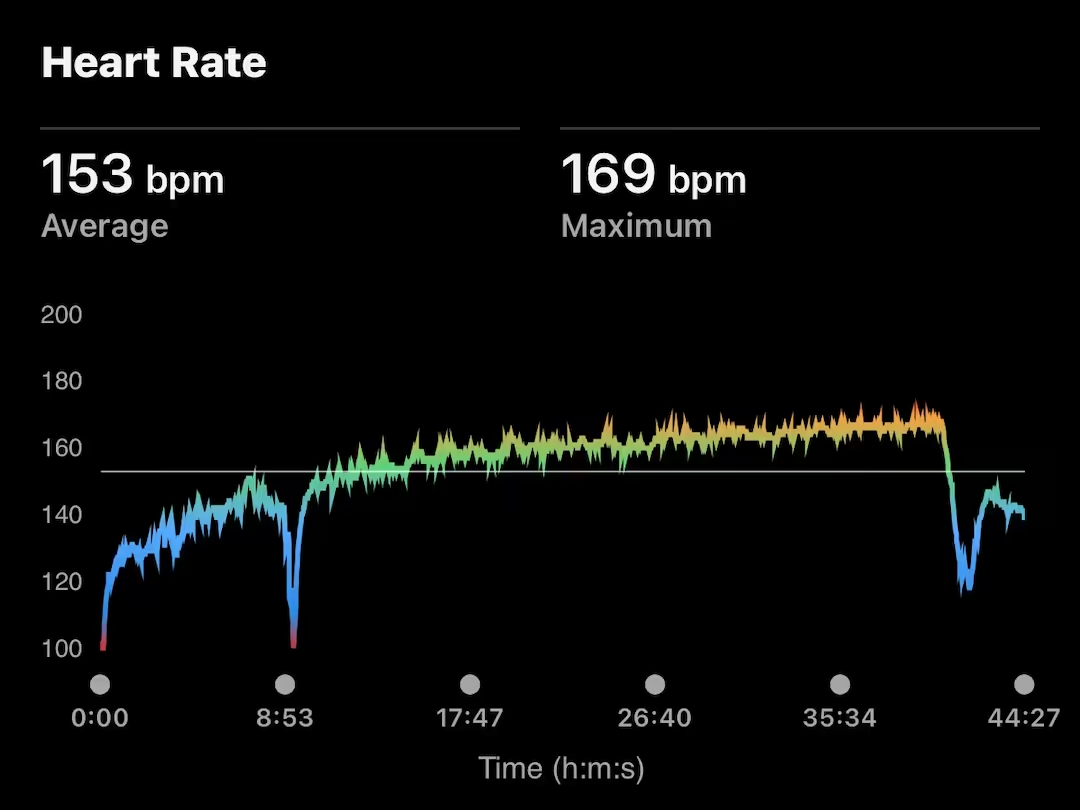
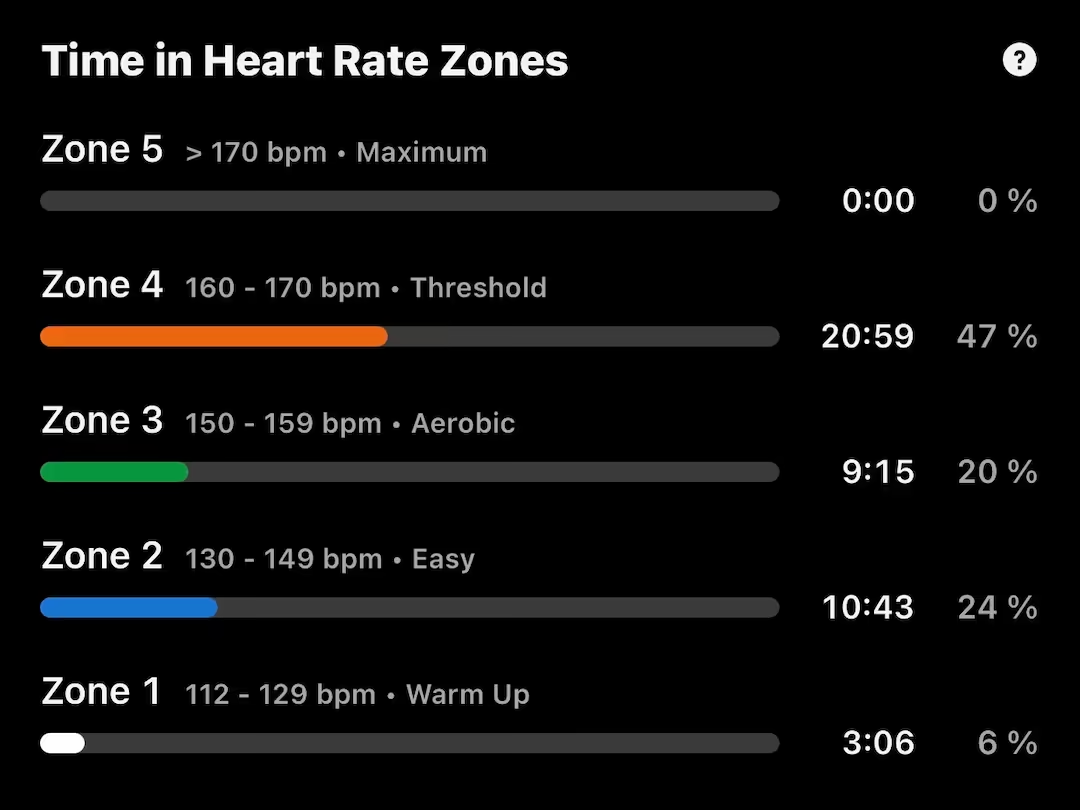
Zone 3-4 - Tempo/Threshold
You can say single words or short sentences, but can't maintain a longer conversation. You're aware of your breathing but not gasping.
- 80-90% of your maximum heart rate
- The pace you can maintain for 20-75 minutes depending on level
- Improves your "anaerobic threshold" – the point where lactic acid begins to accumulate
Zone 4-5 - Intervals
Zone 4 – "Very hard"
- You can only say single words
- 80-90% of max HR – close to your 10km pace
- Feels hard but sustainable for 15-30+ minutes
Zone 5 – "Everything you've got"
- Speaking is impossible
- 90-100+% of max HR
- Typically sustainable for 1-5 minutes, depending on level


Practical Intensity Control Without Heart Rate Monitor
Talk test:
- Z2: You can say the entire sentence "I'm running around the lakes right now" naturally
- Z3-Z4: You need to take 1-2 breaths in the middle of the sentence
- Z4-Z5: You can only say "I'm running" before you need to breathe
- Z5: You can't speak at all
RPE scale (Rate of Perceived Exertion) 1-10:
- Z2: 5-6/10 (light to moderate effort)
- Z3-Z4: 7-8/10 (hard effort)
- Z4-Z5: 8-9/10 (very hard effort)
- Z5: 10/10 (maximum effort)
The Science Behind the Zones
Each intensity zone stimulates different physiological adaptations:
Z2 training develops your cardiovascular system, increases the number of mitochondria in your muscles, and improves fat burning. For half marathon, this is particularly important as you'll burn a significant amount of fat during the race.
Z3-Z4 training improves your body's ability to transport and use oxygen efficiently. It raises the speed at which you can run without accumulating lactic acid.
Z4-Z5 training pushes your cardiopulmonary system to maximum capacity and improves your neuromuscular power.
All three zones are necessary for optimal half marathon performance. The programs balance them strategically to maximize your results.
Running Routes, Motivation & Practical Tips
Copenhagen's Best Half Marathon Routes
Amager Strandpark + Ørestad Loop (21km)
Starting point: Øresund Metro Station / entrance to Amager Strandpark
Route: Amager Strand all the way out toward Kastrup, back via Ørestad and DR Byen
Terrain: Flat, primarily asphalt and firm gravel
Benefits: Minimal traffic, wide path, ocean view on half of the route.
The Harbor Run (21km out-and-back)
Starting point: Langelinie
Route: South along the harbor via Kastellet → Inner Harbor → Islands Brygge → Sluseholmen and return the same way
Terrain: Flat, asphalt, some cobblestones
Benefits: Scenic along the water, relatively few traffic lights, can be adjusted in length. Good for tempo runs.
The Lakes + Frederiksberg + Valby (21km)
Start: Dronning Louises Bro
Route: The Lakes → Frederiksberg Gardens → Søndermarken → Valbyparken → return via same or alternative route
Terrain: Mix of asphalt and gravel
Benefits: Varied and beautiful, many water options, good toilet facilities along the way. Mentally easier due to variation.
Copenhagen Half Marathon Route
Tip: Consider running the official CPH Half route as training before the race. It gives you a mental advantage on race day – you know exactly what to expect and can plan your pacing accordingly.
Maintain Continuity by Making It Easy
The biggest challenge in half marathon training is maintaining motivation over 12 weeks. Here are concrete strategies that work:
Plan your long runs: Your long Sunday runs are the foundation of your half marathon training. Treat them as unbreakable appointments:
- Schedule them on the same day of the week (typically Sunday)
- Plan the route and nutrition the day before
- Lay out clothes and equipment the evening before
- Arrange with a running partner for accountability
Train at the same time: Your best intentions mean nothing if training competes with everything else in your calendar. Many of our clients in Copenhagen find success with:
- Morning runs (6:30-7:30): Fewer people, fresh air, starts the day positively
- Lunch break (12:00-13:00): Perfect for short training sessions
- After work (16:00-18:00): Good way to "shift gears" between work and free time
Find a running partner or group: Long runs are MUCH easier with company. Consider:
- Running with a good friend or partner
- Colleague with the same goal and schedule
- Online communities like Strava groups for Copenhagen runners
- Local running clubs like Sparta, FIF, or Copenhagen Marathon – many have Sunday runs
Nutrition, Recovery, and Strength Training
Diet, Supplements, and Timing
Daily diet for half marathon training:
- Carbohydrates: 5-7g per kg body weight on training days
- Protein: 1.4-1.8g per kg body weight for optimal recovery
- Focus on whole grains, fruit, vegetables, lean protein
- Healthy fats from nuts, avocado, olive oil
Around training:
- 2-3 hours before running: Light meal with carbohydrates (oatmeal, banana, rye bread)
- 30-60 minutes after running: Combination of protein and carbohydrates
- Fluids: Drink 200-400 ml water 15-20 minutes before running
- Remember! Better to need to pee than to dehydrate.
If you want to supplement with dietary supplements, you can benefit from reading our articles on supplements.
Rest Days Are Training Days
Recovery is crucial for half marathon training – perhaps even more important than for shorter distances:
- At least 1-2 rest or active recovery days per week
- 7-9 hours of sleep (extra important during hard training)
- Take easy walks on rest days
- Consider massage or foam rolling after long runs
Remember to strength train!
Strength Training for Runners
One of the most overlooked factors in half marathon training is strength training. Many runners believe that more running training automatically makes them better runners, but research shows something different.
Structured strength training can improve your running economy and potentially reduce injury risk – especially when training is supervised and targeted. But the effect is more nuanced than many think.
Benefits of strength training for half marathon runners:
Injury prevention: Meta-analyses show that general strength training without supervision has no documented effect on running injuries. However, significant injury reduction is found when training is supervised and specifically designed for runners. Strong muscles, tendons, and joints can better handle the repeated impacts from long runs.
Improved running economy: Stronger leg and core muscles mean you use less energy to maintain your running position. This translates directly to better times – especially in the final kilometers when fatigue sets in.
Increased power: Strength training develops power, making you faster and more efficient.
Better posture when tired: A strong core helps you maintain good running technique in the final kilometers of the half marathon – exactly when it matters most.
At Nordic Performance Training, we recommend all our half marathon clients supplement their running training with 1-2 weekly full-body strength training sessions. However, prioritize it lower in the taper weeks.
For concrete strength training programs designed for everyone including runners, read our guide: [Full Body Program (1–3 days/week): Why Less Really Is More [2025 Guide]].
Frequently Asked Questions About Half Marathon
How long does it take to train for a half marathon?
With a solid 10km base, 12 weeks is sufficient for most. If you're starting from scratch (no running experience), you should expect 6-9 months – first build base to 5km, then to 10km, and finally 12 weeks to half marathon.
Do I need to take gels during a half marathon?
Yes, for most runners (especially over 1:30), nutrition along the way is crucial. Rule of thumb: 30-60g carbohydrate per hour after the first 45-60 minutes. Always test in training first – your stomach needs to get used to absorbing nutrition while running.
What is a good first half marathon time?
2:00-2:30 is a realistic goal for first-time runners with a 10km base. Focus on finishing and enjoying the experience – you can always improve the time next time.
How many kilometers should I run per week?
Program 1: 35-50km/week, Program 2: 45-60km/week, Program 3: 55-75km/week. Quality is more important than quantity – follow the program rather than chasing random kilometers.
What do I do if I hit "the wall"?
"The wall" in half marathon is typically due to starting too fast or lack of nutrition. Prevent it by: 1) Starting conservatively, 2) Fueling early and regularly, 3) Training long runs with nutrition. If it happens: slow the pace, take a gel, focus on the next kilometer.
Can I run a half marathon without having run 10km first?
This is not recommended. 10km gives you experience with pace, distance, and your body's reactions. Skipping this step significantly increases injury risk and provides a worse experience.
How long does it take to recover after a half marathon?
Generally 1-2 weeks with easy training. Rule of thumb: 1 day of easy training per mile run (so ~13 days). Listen to your body – soreness and fatigue are normal for the first 3-5 days.
What's the difference between half marathon and marathon training?
Marathon requires longer long runs (30-35km vs. 18-22km), more focus on fat burning, and typically 16-20 weeks of preparation vs. 12 weeks. Half marathon is the perfect stepping stone to marathon.
Conclusion
Running a half marathon isn't about talent or special physical attributes. It's about following a structured plan, learning to fuel your body, and building the mental strength to push through when it hurts.
Regardless of which program you choose, remember:
- Progression happens gradually – respect the distance
- Nutrition during the race is not optional – it's necessary
- Long runs are your most important training – prioritize them
- Taper weeks feel strange, but they work
- The most important race is the next race
After you cross your first half marathon finish line, new possibilities open up. Maybe you'll want to improve the time, try a half marathon in a new city, or maybe the 42.195km are calling you.
The most important thing is that you start. Choose the program that fits your level, put your long run in the calendar, and take the first step toward the finish line.
If you want professional guidance for your half marathon training or want to combine running with structured strength training to maximize results and reduce injury risk, we offer a free introductory consultation where we can discuss how to best support your goals.
Remember: 21.1 kilometers. It sounds like a lot. But with the right plan, it's just one step at a time.
Referencer
Kakouris, N., Yener, N., & Fong, D.T.P. (2021). A systematic review of running-related musculoskeletal injuries in runners. Journal of Sport and Health Science, 10(5), 513–522. https://pubmed.ncbi.nlm.nih.gov/33862272/
Oliveira, P.S., Boppre, G., & Fonseca, H. (2024). Comparison of polarized versus other types of endurance training intensity distribution on athletes' endurance performance: A systematic review with meta-analysis. Sports Medicine, 54(8), 2071–2095. https://doi.org/10.1007/s40279-024-02034-z
Wu, H., Brooke-Wavell, K., Fong, D.T.P., Paquette, M.R., & Blagrove, R.C. (2024). Do exercise-based prevention programs reduce injury in endurance runners? A systematic review and meta-analysis. Sports Medicine, 54(5), 1249–1267. https://doi.org/10.1007/s40279-024-01993-7
Gabbett, T.J. (2016). The training-injury prevention paradox: Should athletes be training smarter and harder? British Journal of Sports Medicine, 50(5), 273–280. https://doi.org/10.1136/bjsports-2015-095788
Anderson, L.M., Martin, J.F., Barton, C.J., & Bonanno, D.R. (2022). What is the effect of changing running step rate on injury, performance and biomechanics? A systematic review and meta-analysis. Sports Medicine - Open, 8, 112. https://doi.org/10.1186/s40798-022-00504-0
Casal-Hernandez, S., Martin-Miguel, I., Escriche-Escuder, A., Alonso-Calvete, A., & Abecia-Inchaurregui, L.C. (2024). Risk factors for running-related injuries: An umbrella systematic review. Journal of Sport and Health Science. https://pubmed.ncbi.nlm.nih.gov/38697289/
Table of Contents
Related Blog Posts

I’ve worked as a personal trainer for over 14 years and as a physiotherapist for over 8 years — and co-founded Nordic Performance Training with Kasper to give clients a professional, private, and structured training environment where results actually last. In that time, I’ve overseen more than 15,000 sessions and helped hundreds of clients rebuild after injuries, gain strength, improve their health, and stay consistent.
My approach combines practical experience with evidence from the latest research, making training both effective and realistic.
On this blog, I share the same methods we use every day at Nordic — so you can cut through the noise and focus on what truly works.



Related Blog Posts
.svg)